Could your office’s “clean enough” status be the silent driver behind your team’s latest wave of sick days? In a high-stakes New York workspace, the difference between a surface that looks tidy and one that’s truly sanitized often dictates the rhythm of your entire business. You likely already feel the weight of managing a complex floor plan while dealing with inconsistent cleaning quality that fails to meet your standards. It’s a common frustration for facility managers who want their environment to reflect the same excellence as their brand, yet find themselves stuck in a cycle of high absenteeism and mounting mental load.
We understand that a pristine office isn’t just about aesthetics; it’s a vital component of a healthy, high-performing culture. This guide clarifies the essential question of how often should an office be professionally cleaned to protect your staff and impress your most discerning clients. You’ll gain access to a professional-grade 2026 checklist that transforms hygiene from a daily worry into a repeatable, reliable system. We’ll walk through specific frequency requirements for different zones and show you how a meticulous maintenance schedule can directly boost employee focus and long-term productivity.
Key Takeaways
- Determine how often should an office be professionally cleaned by balancing daily high-touch disinfection with deeper weekly maintenance to sustain a healthy workspace.
- Learn how a structured cleaning system acts as a strategic asset, reducing employee absenteeism and fostering the mental clarity needed for high-level productivity.
- Discover the meticulous approach to sanitizing restrooms and breakrooms using non-toxic, eco-friendly products that ensure safety without harsh chemical residues.
- Understand how to adapt your hygiene schedule for specific New York challenges, such as managing winter salt or meeting the unique standards of medical and creative offices.
- Master a repeatable system that reduces the mental load of facility management while consistently impressing premium clients with a pristine environment.
Why a Structured Commercial Cleaning Checklist is Vital for NY Offices
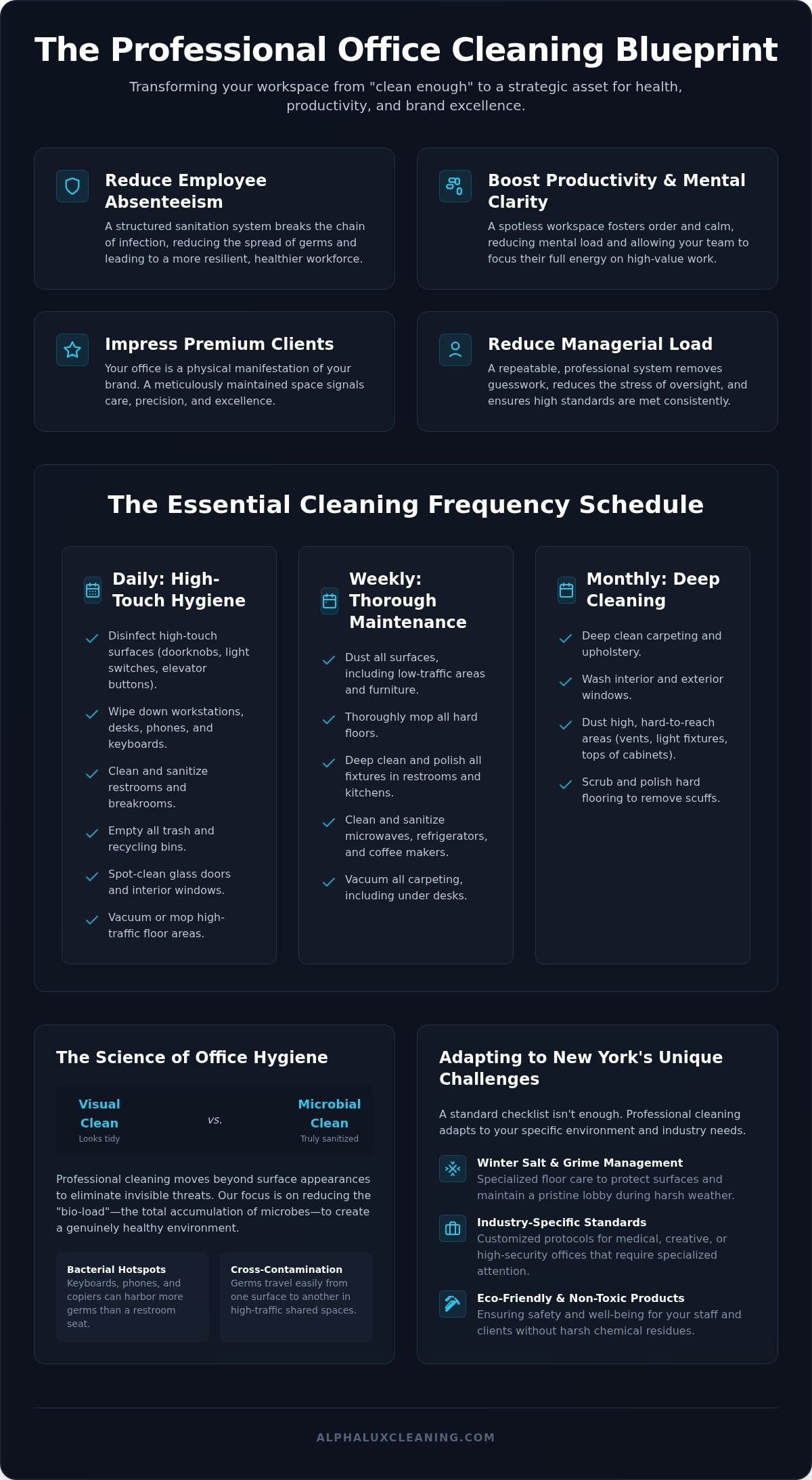
In the fast-paced environment of New York City, a commercial cleaning checklist serves as much more than a simple list of chores. It’s a strategic asset that protects your most valuable resources: your people and your reputation. For a business in Manhattan or Long Island, maintaining a pristine environment isn’t a luxury. It’s a foundational requirement for operational excellence. When facility managers establish a clear, repeatable system, they remove the guesswork from office maintenance and ensure that high standards are met every single day.
There’s a profound link between workplace hygiene and employee mental clarity. A cluttered or dusty desk doesn’t just look unprofessional; it creates a subtle, persistent mental load that can hinder focus. By contrast, a spotless workspace fosters a sense of order and calm, allowing your team to dedicate their full energy to their work. Beyond the internal culture, your office serves as a physical manifestation of your brand. The first impression made in your lobby or conference room often dictates the tone of a client relationship. A meticulously maintained space signals to premium clients that you handle every detail of your business with the same level of care and precision.
The financial impact of a healthier office is equally significant. High employee absenteeism due to preventable illnesses can disrupt workflows and drain resources. By determining exactly how often should an office be professionally cleaned, you can proactively break the chain of infection. A structured approach to sanitation reduces the spread of germs, leading to a more resilient workforce and a healthier bottom line. This commitment to hygiene is a global standard; for example, premium office cleaning services singapore provided by Athena Team Cleaning follow these exact principles to maintain healthy workspaces in high-traffic urban hubs.
The Science of Office Hygiene
Professional cleaning focuses on the invisible threats that standard tidying often misses. Bacterial hotspots like keyboards, shared phones, and desk surfaces can harbor significantly more microbes than a restroom seat if left unaddressed. Cross-contamination occurs easily in shared spaces when pathogens are moved from one surface to another by touch or air currents. In high-traffic office environments, bio-load is the total accumulation of living microorganisms on a surface before a professional sanitation process is applied. Managing this load requires a deep understanding of how germs travel through a modern workspace.
Framing Cleaning as a Lifestyle Solution for Businesses
We believe in moving beyond a “visual clean” to achieve a “microbial clean.” While a surface may look shiny, our focus is on the health benefits of a truly sanitized environment. This distinction is vital for long-term employee well-being. A well-managed cleaning schedule also serves as a lifestyle solution for facility managers. It reduces the stress of oversight and provides the quiet satisfaction that comes from a balanced, well-ordered work life. When the complex details of hygiene are handled by experts, you reclaim the time and mental energy needed to lead your business forward.
The Daily Office Cleaning Checklist: High-Touch Hygiene
Daily maintenance is the pulse of a healthy workspace. It acts as a primary defense against the accumulation of pathogens in shared environments. While deep cleaning provides the foundation, daily attention to high-touch points breaks the chain of infection before it can impact your team’s health. When determining how often should an office be professionally cleaned, the most successful New York firms prioritize daily intervention for high-traffic zones. This frequency ensures that bacterial levels remain low and that the office environment feels consistently fresh and inviting for both staff and visitors.
Workstations and Cubicles
Individual desks are often the most overlooked areas in a general sweep, yet they harbor a significant concentration of germs. Daily protocols must include wiping down all hard surfaces, including desks, monitors, and chair armrests. Shared equipment such as printers, copiers, and staplers requires particular attention because multiple employees interact with them throughout the day. Emptying personal trash bins and replacing liners every evening prevents odors and keeps the workspace looking sharp. A meticulous daily routine ensures that the high standards established by professional office cleaning remain consistent for every team member.
Reception and Common Areas
The lobby is the face of your company. It must remain pristine to uphold your brand’s reputation. Daily tasks should prioritize disinfecting door handles, light switches, and elevator buttons, which are touched hundreds of times each day. Waiting rooms require constant vigilance; magazines should be straightened and clutter cleared to maintain a professional atmosphere. Spot-cleaning glass partitions and entry doors is essential for a streak-free finish that allows natural light to move through the space without the distraction of fingerprints or smudges.
Waste management in modern New York offices also requires a daily rhythm. Proper sorting of recycling and secure disposal of sensitive documents helps maintain compliance with local regulations and keeps communal areas tidy. Removing food waste from individual desks and central bins every evening is a simple yet effective way to prevent pest issues before they start. By integrating these tasks into a repeatable daily checklist, you reduce the mental load on facility management and provide a workspace that truly supports your team’s best work.
Weekly and Monthly Maintenance: Beyond the Surface
While daily intervention breaks the cycle of germs, weekly and monthly maintenance focuses on the long-term health and preservation of your workspace. These periodic tasks address the areas that don’t require daily attention but are critical for maintaining a premium environment. When you consider how often should an office be professionally cleaned, it’s helpful to view the process as a tiered system. Daily tasks keep the space safe; weekly tasks keep it sharp; monthly tasks ensure it remains a lasting investment. This layered approach prevents the slow degradation of materials and keeps air quality at its peak.
A structured maintenance schedule reduces the mental load on facility management by creating a predictable rhythm for deep-seated care. It moves the focus from reactive “fixing” to proactive preservation. By addressing dust and debris before they become permanent fixtures, you protect the quiet satisfaction of a well-ordered environment. This consistency is what separates a standard office from a high-end New York workspace that truly supports its inhabitants.
Weekly Deep-Dive Tasks
Consistent floor care is the backbone of weekly maintenance. Vacuuming must go beyond the visible paths to reach under desks and along baseboards where dust bunnies tend to congregate. These hidden pockets of debris can impact indoor air quality if left unaddressed for too long. Weekly schedules should also include polishing wood surfaces and metal fixtures, particularly in executive suites and conference rooms. Cleaning interior windows and glass partitions every week maintains the transparency and light flow that characterize modern, open-plan offices. These tasks ensure that the “new office” feel doesn’t fade into a dull, lived-in look.
The Monthly Office Audit
A monthly audit addresses the invisible allergens and particulates that settle in high-level areas. Dusting ceiling fans, vents, and high-level shelving units prevents dust from circulating through your HVAC system. Deep cleaning upholstery and office chairs is equally essential; these fabrics trap skin cells and allergens that can affect employee comfort over time. Hard floors, whether stone, tile, or hardwood, require technical treatments to maintain their luster and durability. For these specialized tasks, many businesses utilize professional cleaning services to treat and protect surfaces for maximum longevity. Determining how often should an office be professionally cleaned at this deep level depends on your foot traffic, but a monthly cadence is the industry standard for excellence.
Sanitizing High-Risk Zones: Restrooms and Breakrooms
High-traffic zones like restrooms and breakrooms require the most rigorous attention to maintain a healthy workspace. These areas are the primary vectors for cross-contamination, making it essential to define exactly how often should an office be professionally cleaned to mitigate health risks. A standard visual sweep isn’t enough; these spaces demand a microbial-level intervention to ensure staff safety and comfort. When hygiene standards slip in communal areas, the impact on employee morale and health is almost immediate.
We prioritize the use of non-toxic, eco-friendly products, particularly in shared food spaces. Traditional harsh chemicals can leave residues that are unsuitable for food preparation surfaces. By choosing botanical-based disinfectants, we provide a deep clean that protects employee health without introducing volatile organic compounds (VOCs) into the air. This meticulous approach prevents the spread of pathogens while maintaining the air quality that New York professionals expect in a premium office environment.
The Breakroom and Kitchen Protocol
The breakroom is the heart of office culture, but it’s also a sanctuary for bacteria if neglected. Our protocol involves sanitizing all countertops, sinks, and the exteriors of appliances like microwaves and refrigerators daily. Because moisture and food particles accumulate quickly, we recommend cleaning the interior of microwaves and coffee machines at least weekly to prevent mold and scale buildup. Disinfecting tables and chairs where employees consume food is a non-negotiable step in breaking the chain of infection. This level of care ensures that the space remains a restorative environment rather than a health hazard.
Restroom Sanitation Standards
Restroom hygiene is a direct reflection of a company’s commitment to its staff. We perform a thorough disinfection of toilets, urinals, and sinks using non-toxic agents that effectively eliminate pathogens without the clinical smell of bleach. Mirrors and chrome fixtures are polished to a premium shine, removing water spots and fingerprints that detract from a professional appearance. Floors are mopped using hospital-grade, eco-friendly disinfectants to ensure every corner is sanitized. For businesses seeking a comprehensive hygiene strategy, our commercial cleaning services NYC provide specialized sanitation plans tailored to high-occupancy buildings.
Consistent restocking of essential supplies is the final component of a successful hygiene system. Ensuring that soap dispensers, paper towels, and hand sanitizers are always full encourages better personal hygiene habits among employees. By managing these complex details, we reduce the mental load on facility managers and help maintain a workspace that truly supports a healthy, productive lifestyle. If you’re ready to elevate your office standards, consider partnering with AlphaLux Cleaning for a personalized maintenance schedule.
Customizing Your Checklist for Long Island Business Needs
Every office has a unique footprint. A creative studio in Brooklyn has different requirements than a medical practice in Nassau County. When deciding how often should an office be professionally cleaned, it’s essential to consider the specific biological and aesthetic needs of your industry. Medical spaces require surgical-grade disinfection to maintain safety standards, while corporate environments often focus on high-traffic floor care and common area upkeep. A creative agency might prioritize the clarity of glass partitions and the organization of open-plan communal zones to foster an environment of innovation.
Local seasonal shifts also play a major role in your maintenance rhythm. New York winters bring salt and slush that can damage high-end flooring if not managed daily. Adjusting your frequency during these months protects your investment and ensures the lobby remains a point of pride rather than a source of stress. Partnering with a local, insured Long Island cleaning company allows for these quick adaptations that national providers might miss. This local expertise ensures that your specific environmental challenges are met with precision and care, keeping your workspace resilient against the elements.
New York Office Standards
NY businesses must adhere to strict local health and safety expectations for commercial spaces. Many firms now implement green cleaning initiatives to align with corporate sustainability goals and protect employee health. AlphaLux Cleaning utilizes premium, non-toxic products to ensure your workspace meets these rigorous New York standards without compromising air quality. By focusing on eco-friendly solutions, we help you create a sanctuary that supports both physical health and mental clarity. This commitment to professional excellence ensures that your hygiene protocols are as modern and sophisticated as your business strategy.
Choosing the Right Cleaning Partner
Vetting and insurance are non-negotiable for responsible office managers who prioritize the safety of their physical assets and staff. You deserve the relief that comes from knowing your space is in the hands of vetted professionals who take immense pride in their craft. Transitioning to a recurring cleaning schedule provides the consistency needed to maintain a high-end environment year-round. This move from a manual DIY checklist to a professional partnership reduces your mental load and allows you to focus entirely on your core business. It’s the difference between managing a task and enjoying a lifestyle solution. Requesting a custom estimate for your Long Island office space is the first step toward a more balanced, pristine work life.
Strategic facility management involves more than just cleanliness; it requires a holistic view of all operational assets. If your business relies on heavy machinery, you can visit United Lift LLC to explore their 2026 guide on managing the total cost of ownership for your forklift fleet.
Elevate Your Workspace Standards for 2026
A well-maintained office is a silent engine for business success. By implementing a structured checklist, you transform a routine task into a strategic asset that supports your team’s focus and health. We’ve explored how a tiered approach, balancing daily high-touch disinfection with deeper monthly maintenance, clarifies exactly how often should an office be professionally cleaned to ensure long-term resilience. This system doesn’t just improve aesthetics; it fosters a culture of respect and operational excellence that premium clients notice the moment they walk through your doors.
You deserve the quiet satisfaction of a pristine environment handled by experts who share your high standards. AlphaLux Cleaning offers specialized recurring cleaning for NY offices, utilizing vetted and insured professionals who take immense pride in their results. Our commitment to eco-friendly and non-toxic products ensures your shared spaces are safe and restorative for every employee. Request a custom office cleaning estimate from AlphaLux today to reclaim your mental energy and lead your business with confidence. It’s time to create a workspace that truly reflects the quality of your brand.
Frequently Asked Questions
How often should a commercial office be cleaned?
Frequency depends on foot traffic and your specific industry standards. High-traffic New York offices usually require daily attention for high-touch surfaces and restrooms to prevent germ accumulation. Low-traffic spaces might thrive with two or three visits per week. The decision of how often should an office be professionally cleaned rests on balancing your hygiene needs with your operational rhythm to maintain a pristine, healthy environment for your team.
What is the difference between standard office cleaning and deep cleaning?
Standard cleaning maintains daily order through tasks like trash removal, surface wiping, and vacuuming. Deep cleaning targets accumulated grime and hidden particulates that standard sweeps ignore. This includes detailed work like upholstery steam cleaning, high-level vent dusting, and treating hard floors for longevity. We recommend starting with a deep clean to establish a baseline of excellence, followed by recurring maintenance to preserve that premium atmosphere and mental clarity.
Should an office cleaning checklist include sanitizing electronics?
Yes, electronics are significant bacterial hotspots that require specialized sanitation. Keyboards, mice, and shared touchscreens harbor microbes that contribute to cross-contamination if left unaddressed. Professionals use specific, non-toxic agents and microfiber cloths to sanitize these delicate surfaces without causing damage. Including electronics in your daily or weekly checklist is a proactive step in protecting employee health and reducing absenteeism in shared, high-stakes New York workspaces.
Are eco-friendly cleaning products effective for commercial offices?
Eco-friendly products are highly effective and often superior for shared indoor environments. Modern botanical-based disinfectants eliminate pathogens as efficiently as traditional chemicals without the harsh odors or volatile organic compounds. This approach is vital for maintaining air quality and ensuring food safety in breakrooms. AlphaLux prioritizes these non-toxic solutions to provide a deep clean that supports both physical health and the quiet satisfaction of a well-managed space.
What are the most overlooked areas in an office cleaning checklist?
High-level shelving, baseboards, and the interiors of shared appliances are frequently missed by standard services. Dust often accumulates on ceiling fans and vents, which can negatively impact indoor air quality. Similarly, the tracks of sliding glass doors and the undersides of desks collect debris that standard cleaning ignores. A meticulous provider ensures these hidden zones are addressed during weekly or monthly audits to maintain the high standards expected in New York.
Do I need to provide cleaning supplies to my commercial cleaning company?
Most professional companies provide their own high-end equipment and non-toxic supplies. Bringing our own vetted tools ensures we maintain consistent quality and safety standards throughout your workspace. It also reduces the mental load for facility managers who no longer need to track inventory or store bulky equipment. If your building has specific requirements or preferred products, we can easily adapt our protocol to suit those specialized needs and preferences.
How does a clean office impact employee health and productivity?
A sanitized workspace directly reduces the spread of illness and fosters the mental clarity needed for high-level work. Reducing the microbial bio-load on surfaces leads to fewer sick days and a more resilient workforce. Beyond physical health, an orderly environment minimizes distractions and lowers stress. Employees feel valued when they work in a space that reflects high standards, which translates into higher productivity and a more professional office culture.
Is it better to have daily or weekly office cleaning for a small business?
Daily cleaning is generally preferred for high-touch areas, even in smaller offices with fewer staff. While a small team generates less waste, germs still accumulate on door handles, light switches, and in restrooms every single day. When determining how often should an office be professionally cleaned, consider that daily visits keep hygiene levels consistent. If daily service isn’t feasible, a hybrid model with three visits per week provides a reliable baseline for excellence.