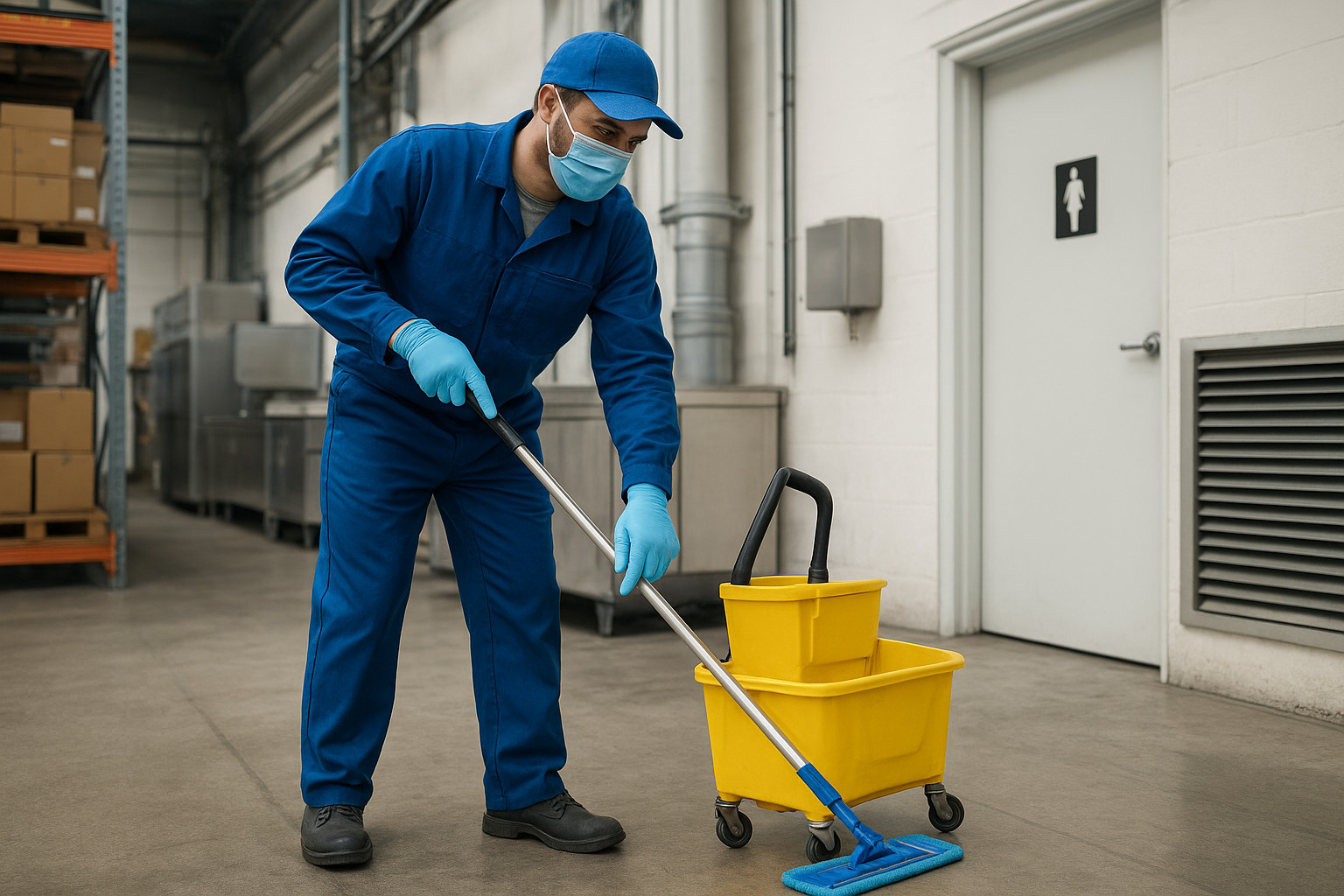
Your facility looks fine until someone points out the dust on the vents, the grime in the break room, or the buildup on the warehouse floor that regular staff never has time to touch. That gap between
Why industrial and commercial cleaning matters
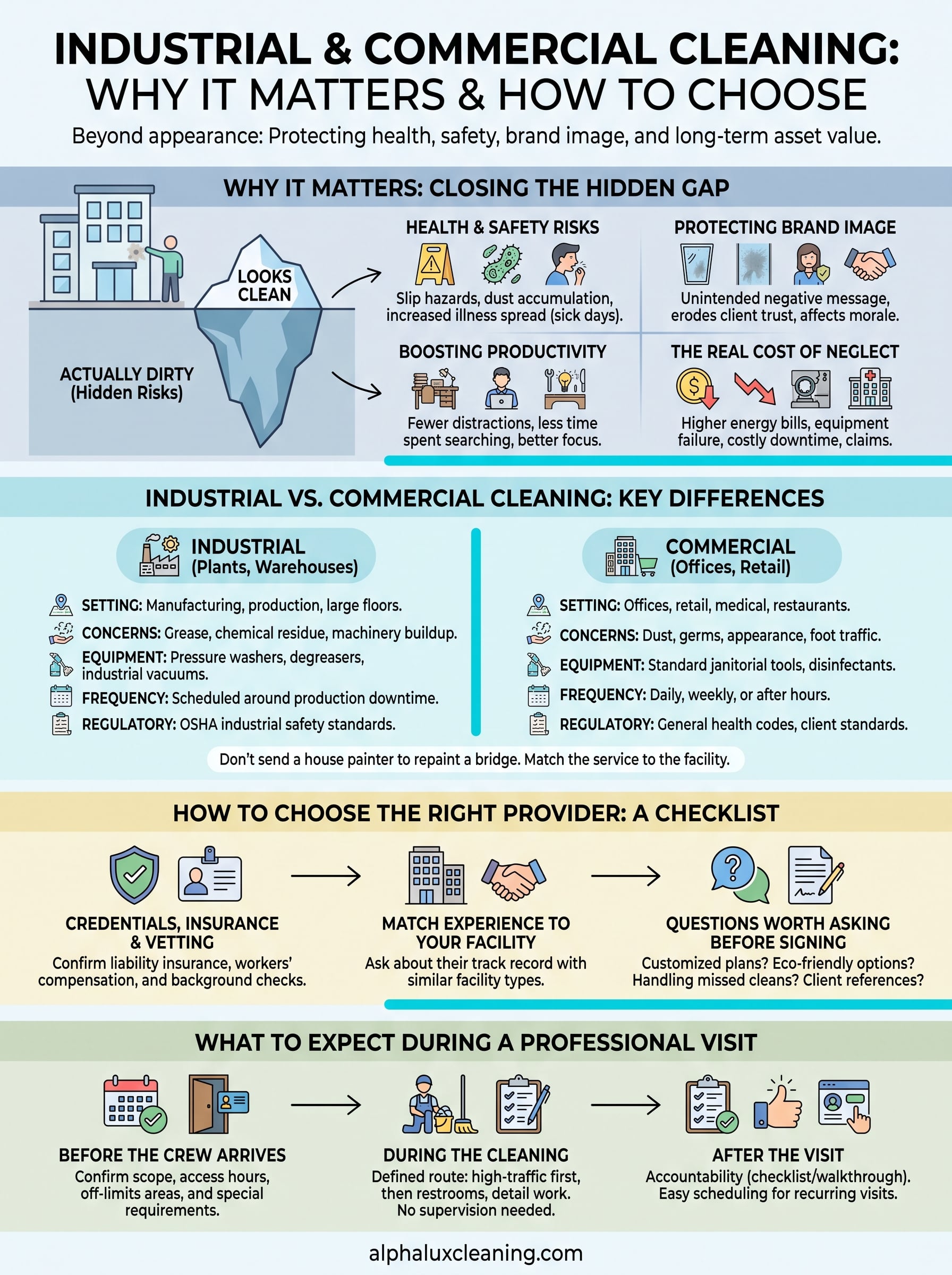
The gap between how clean a building looks and how clean it actually is can cost you real money. Commercial and industrial cleaning services exist because dust, grease, and bacteria build up in places routine tidying never reaches: HVAC intakes, loading dock floors, break room appliances, restroom grout. Left alone, that buildup turns into a liability, not just an eyesore.
Health, safety, and compliance risks
Facilities that skip deep, scheduled cleaning run into problems that go well past appearance. Grease on a warehouse floor becomes a slip hazard. Dust in an industrial space can clog machinery or, in the worst cases, feed a combustible dust incident. Offices with poor cleaning protocols see higher rates of colds and flu spreading through shared surfaces, which translates directly into sick days. OSHA holds employers responsible for maintaining safe working conditions, and a documented cleaning schedule is part of how you demonstrate that responsibility if an inspector or an insurance adjuster ever asks.
A facility that looks clean but isn’t properly sanitized is a liability wearing a nice coat of paint.
Protecting your brand image and client trust
Businesses that let cleanliness slide send an unintended message to everyone who walks through the door. Clients touring a facility notice smudged glass and overflowing trash before they hear a single word of your pitch. Employees notice too, and a neglected workspace tells them the company doesn’t invest in the details, which quietly erodes morale and retention. Consistent, professional cleaning is one of the cheapest ways to reinforce that your business takes standards seriously, whether you run a medical office, a retail storefront, or a manufacturing plant.
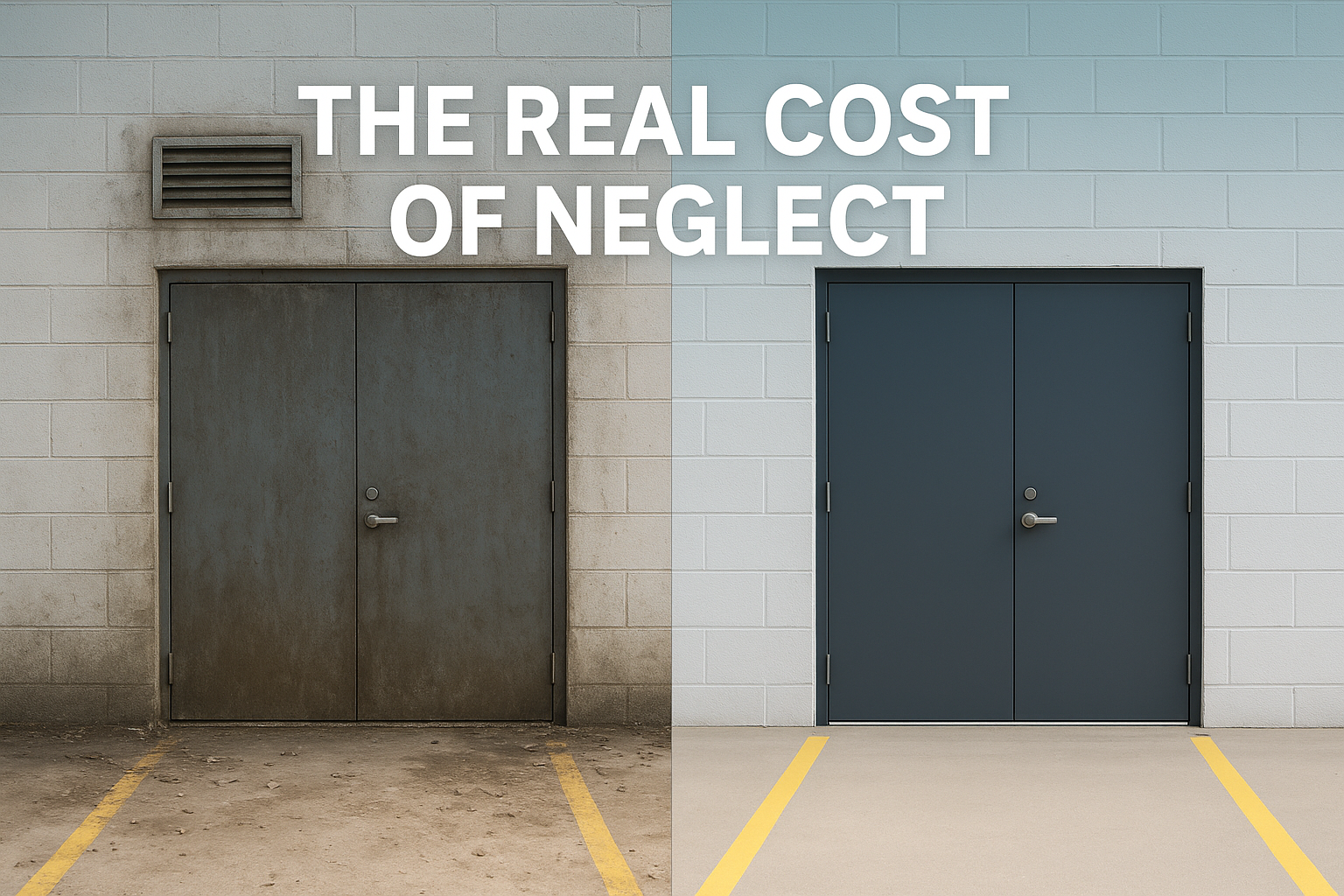
The real cost of neglect
Putting off cleaning doesn’t save money, it just moves the cost somewhere less visible. Here’s how that plays out over time:
| Neglected area | Short-term appearance | Long-term consequence |
|---|---|---|
| HVAC vents and filters | Slightly dusty | Higher energy bills, poor air quality, employee complaints |
| Warehouse floors | Minor grime | Slip-and-fall claims, equipment wear |
| Restrooms and break rooms | Mildly unpleasant | Illness spread, staff dissatisfaction |
| Windows and entryways | Cosmetic issue only | Lower client confidence, weaker first impressions |
| Industrial equipment surfaces | Cosmetic buildup | Mechanical failure, costly downtime |
Each row starts small and ends up costing more than a regular cleaning contract ever would.
Productivity and peace of mind
Finally, clean spaces change how people work in them. Employees in a well-maintained office report fewer distractions and less time lost to searching for supplies in cluttered storage rooms, which is the hidden cost of a dirty workspace most managers never measure. Managers who outsource this responsibility to a trained crew free up internal staff to focus on their actual jobs instead of pulling double duty as janitors between tasks. Whether the goal is passing a health inspection, impressing a client, or simply keeping a factory floor safe, the importance of regular cleaning shows up in savings many times over.
How to choose the right cleaning provider
Finding a provider you can trust takes more than a quick online search and a low quote. The cheapest bid often skips insurance, background checks, or proper training, and you find that out the hard way after something breaks or someone gets hurt on your property. Choosing a cleaning company should feel less like picking a vendor and more like hiring a long-term partner for your facility.
Credentials, insurance, and vetting
Start by confirming the basics that protect you if something goes wrong. When you vet a cleaning company, ask for proof of liability insurance, workers’ compensation coverage, and evidence that staff go through background checks before they’re allowed near your building. A provider that hesitates to share this documentation is telling you something important before you sign anything.
If a cleaning company can’t produce proof of insurance on request, that’s your answer.
Matching experience to your facility type
Cleaning a dental office is nothing like cleaning a warehouse floor covered in machine grease, so ask potential providers about their track record with facilities like yours. Companies that specialize in industrial and commercial cleaning contracts should be able to describe the equipment they use, how they handle hazardous materials if relevant, and what their crew training actually covers.
Questions worth asking before you sign
Before committing to any commercial cleaning service agreement, run through a short list of questions that reveal how the company actually operates:
- Do you offer customized cleaning plans, or only fixed packages?
- What cleaning products do you use, and are eco-friendly options available?
- How do you handle a missed cleaning or a quality complaint?
- Can you provide references from clients in a similar industry?
- Is a walkthrough or free estimate included before the contract starts?
Gathering answers to these upfront saves you from surprises three months into a contract. A provider willing to walk your space, listen to your priorities, and build a plan around them, rather than pushing a one-size-fits-all package, is usually the one that sticks around. AlphaLux Cleaning, for example, builds every plan around a free on-site estimate so you know exactly what you’re paying for before you commit.
Industrial vs commercial cleaning: key differences
People often use "industrial" and "commercial" interchangeably, but the two jobs look nothing alike once you’re on site. Industrial cleaning deals with manufacturing plants, production facilities, and warehouses that need specialized cleaning, where heavy machinery, hazardous residue, and large open floors define the work. Commercial cleaning covers offices, retail stores, medical suites, and other spaces built for people to work in and visit every day. Knowing which category your facility falls into shapes everything from the equipment a crew brings to the certifications you should require.
Hiring a commercial cleaning crew for an industrial floor is like sending a house painter to repaint a bridge.
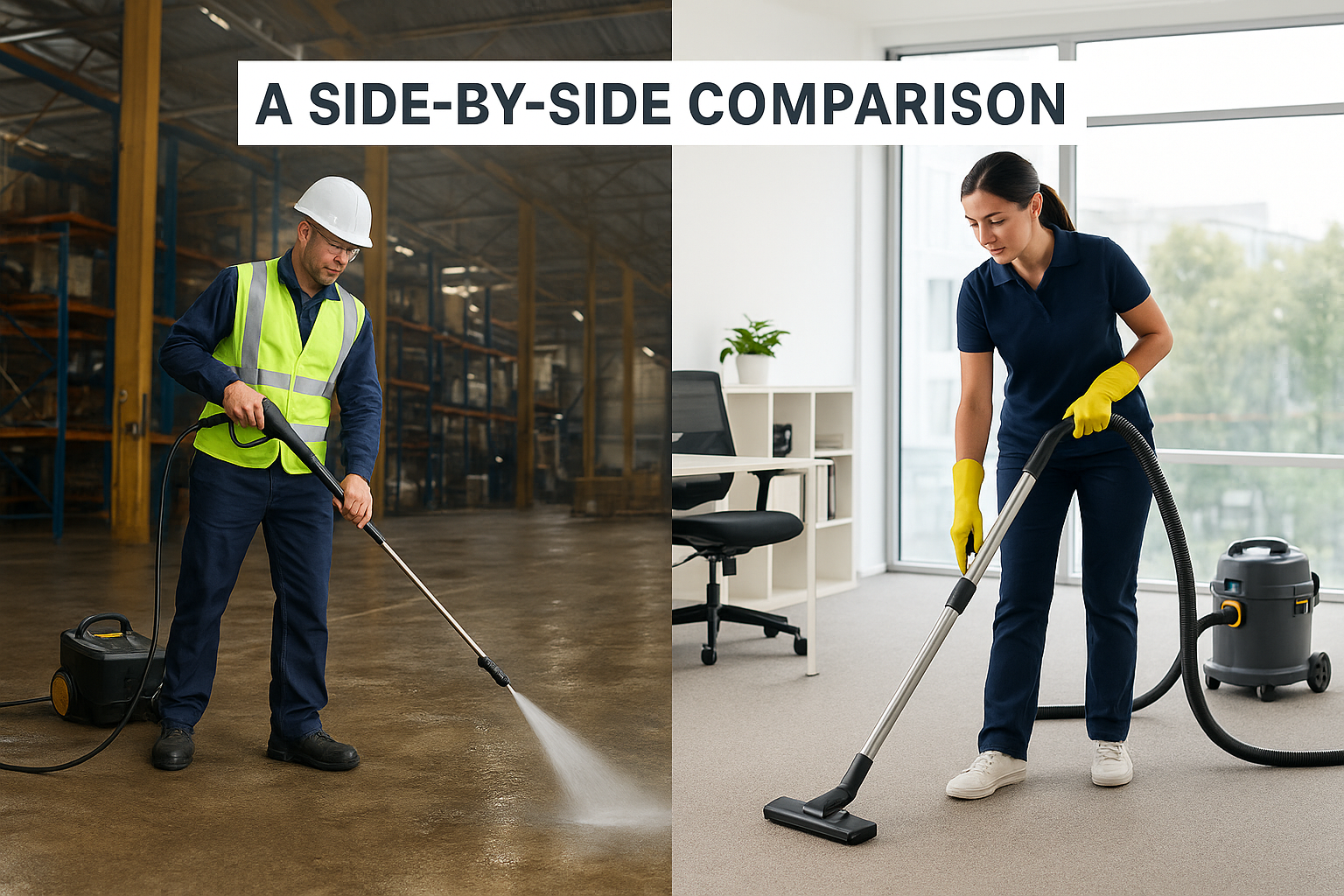
A side-by-side comparison
Looking at the two side by side makes the distinction obvious fast:
| Factor | Industrial cleaning | Commercial cleaning |
|---|---|---|
| Typical setting | Warehouses, plants, factories | Offices, retail, medical, restaurants |
| Main concerns | Grease, chemical residue, machinery buildup | Dust, germs, appearance, foot traffic |
| Equipment used | Pressure washers, degreasers, industrial vacuums | Standard janitorial tools, disinfectants |
| Frequency | Scheduled around production downtime | Daily, weekly, or after hours |
| Regulatory focus | OSHA industrial safety standards | General health codes, client-facing standards |
Each column reflects a different set of risks and priorities, which is why the two services rarely get bundled under one crew or one price sheet.
Why the distinction affects your contract
Getting this wrong on paper causes real problems later. A cleaning company that only handles offices may not own the equipment for commercial floor cleaning heavy enough to safely degrease a factory floor or dispose of industrial waste properly. Similarly, a crew trained for heavy industrial work might overuse harsh chemicals in a space meant for clients and employees. Reputable commercial and industrial cleaning services ask upfront which category your building falls into, sometimes both if you run a mixed-use facility, and staff the job accordingly rather than sending a generic crew and hoping it works out.
What to expect during a professional cleaning visit
Walking into your first professional cleaning appointment shouldn’t feel like a mystery. Knowing what to expect from a cleaning service’s first visit helps here: a reputable crew starts with a plan built around your space, not a generic checklist pulled from a template. Knowing the typical flow ahead of time helps you evaluate whether the crew showing up at your door is actually doing the job right.
Before the crew arrives
Good providers confirm scope before anyone shows up with a mop. Most reputable companies handle this with a short pre-visit checklist:
- Confirm access hours and any security or badge requirements
- Flag off-limits areas, sensitive equipment, or fragile inventory
- Note any allergies or chemical sensitivities among staff
- Verify whether eco-friendly cleaning products are required or preferred
- Set expectations on which rooms get deep cleaning versus a standard pass
Skipping this step is how misunderstandings happen, like a crew tossing paperwork they thought was trash.
During the cleaning
Once the crew starts, they should work a defined route: high-traffic areas first, then restrooms, break rooms, and finally detail work like baseboards, vents, and glass. Industrial jobs add steps like degreasing floors or wiping down machinery housings, while office visits focus more on disinfecting shared surfaces and emptying trash. You should never feel like you’re supervising the work; a trained team knows the sequence and moves through it without direction.
The best sign of a good cleaning crew is that you barely notice they were there, except for the results.
After the visit
Finally, a professional visit ends with some form of accountability, not just a locked door on the way out. Many companies leave a checklist noting what was completed, and some offer a quick walkthrough if you’re on-site. If something gets missed, a reliable provider fixes it without an argument. Scheduling this kind of service should be simple too. AlphaLux Cleaning, for instance, lets clients set up recurring visits through online booking, so you’re not chasing down a phone call every time you need a slot filled.
Keeping your facility clean for the long run
A clean facility isn’t a one-time project, it’s a habit you build into how the business runs. Industrial and commercial cleaning services work best when they’re scheduled consistently rather than called in only after something looks bad. Knowing the difference between industrial and commercial needs, vetting a provider’s credentials, and understanding what a real cleaning visit looks like all give you the tools to hold any company accountable, including the one you hire next.
Getting this right protects your staff, your equipment, and the impression you leave on every client who walks through the door. Long-term facility care costs less than the slip-and-fall claim, the sick day surge, or the client who quietly stops calling back. If you’re ready to put a reliable plan in place, request a free estimate for commercial cleaning from AlphaLux Cleaning and see what a properly maintained space actually feels like.