What if the cleanest-looking room still carries the strongest reminder of its past? Smoke odor can linger on walls, floors, and soft furnishings, so opening the windows or wiping visible dust may not be enough. A thoughtful plan for deep cleaning for new homeowners helps you reset the space in the right order while keeping expectations realistic about what cleaning can address.
Moving into a new home brings plenty to manage, and it’s understandable to wonder which rooms and surfaces deserve attention first. A deep clean goes beyond routine tidying, but persistent smoke odor may have sources that require more than a standard cleaning. Knowing the difference can help you focus your effort and avoid expecting one service to solve every odor concern.
This guide will help you prioritize a move-in clean, identify where smoke smells may be lingering, and decide when professional help makes sense. You’ll also learn what to clarify with a cleaning provider, including which rooms and smoke-affected surfaces you want included. The goal is a cleaner, more comfortable start, with a plan tailored to the home rather than a one-size-fits-all checklist.
Key Takeaways
- Plan deep cleaning for new homeowners from top to bottom, leaving floors until last to avoid rework.
- Use an empty or lightly furnished home to reach accessible surfaces that may be harder to clean after unpacking.
- Compare surface cleaning, ventilation, and specialist assessment, since smoke odor can linger in porous materials or hidden areas.
- Before booking, note priority rooms, access needs, visible concerns, and smoke-affected areas, then confirm the service scope and exclusions.
- A customized deep-cleaning plan can align the work with your priorities; clarify which requested surfaces can be included and what odor concerns may need separate assessment.
Move-In Deep Cleaning: What a Reset Can and Cannot Do
A move-in deep clean is a detailed cleaning of accessible surfaces to remove accumulated dust, grime, and everyday residue before you settle in. It’s more thorough than routine upkeep, but it isn’t a repair, renovation, or restoration service. For deep cleaning for new homeowners, that distinction sets a useful starting point: the goal is a cleaner, more comfortable home, not a promise to correct every inherited condition.
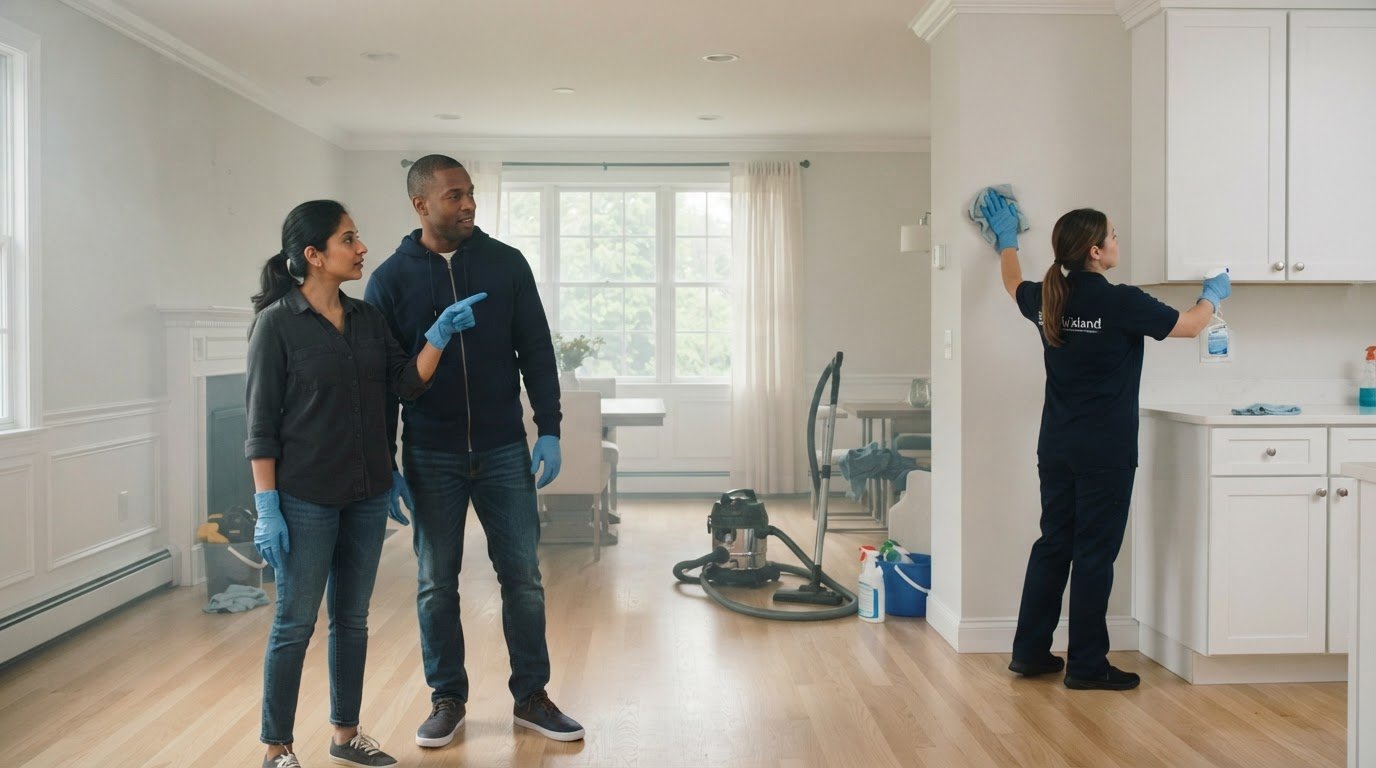
An empty or lightly furnished home can make the reset more practical. With fewer belongings in the way, cleaners may be able to reach more floor area, ledges, and other accessible surfaces. That doesn’t mean every surface or hidden area is automatically included, so confirm the work scope before booking.
Why a new home may need more than a quick surface clean
A home can look tidy and still have dust on ledges, residue on kitchen surfaces, or grime around bathroom fixtures. Start by considering kitchens, bathrooms, floors, frequently touched surfaces, and accessible ledges. The right priorities depend on what you find, not just on the fact that you’ve moved in.
Previous occupancy may leave different cleaning needs than a long vacancy. Pets can mean extra hair or residue, while renovation work may leave dust that calls for a different plan. Walk through each room and note visible concerns. If smoke odor lingers, surface dust and ordinary grime may not be the whole story. Third-hand smoke describes smoke residue that can remain on surfaces and in dust after smoking has stopped. Persistent odor or signs of substantial smoke contamination may warrant specialist assessment rather than assumptions about what routine cleaning can achieve.
What deep cleaning does not automatically include
“Deep clean” can mean different tasks from one provider to another. Ask which rooms and surfaces are included, whether any requested areas are excluded, and whether smoke-affected surfaces can be considered as part of the customized scope. Clear expectations help you decide whether the service matches the condition of the home.
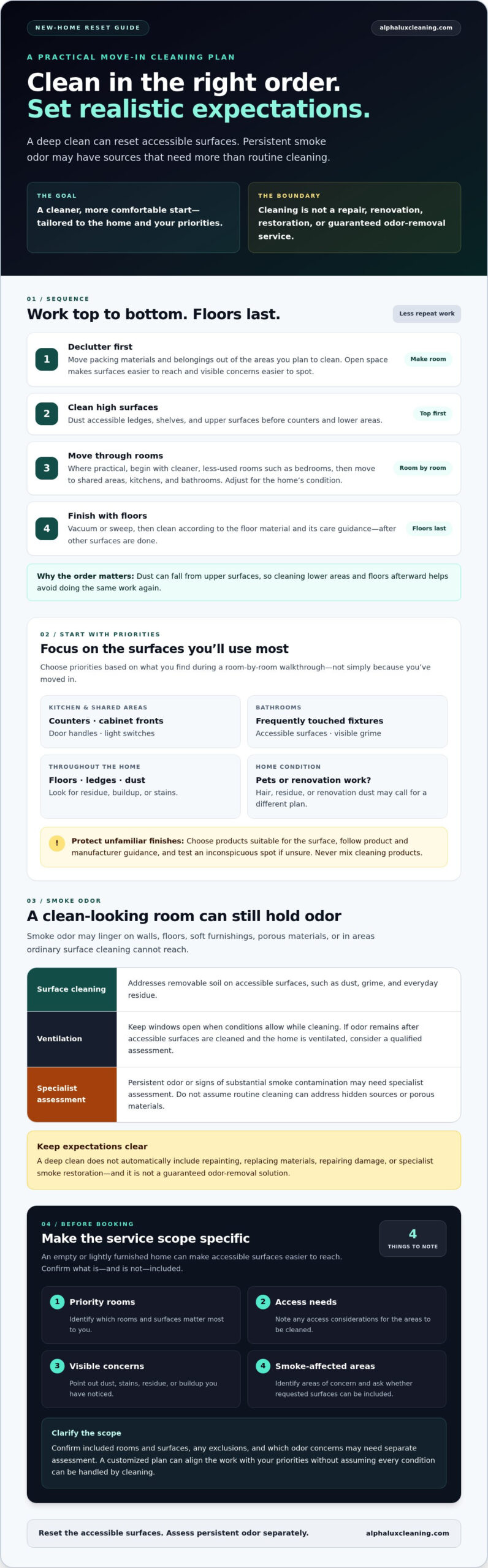
Cleaning addresses removable soil on surfaces. It doesn’t automatically include repainting, replacing materials, repairing damage, or specialist smoke restoration. Odor can persist in porous materials or areas ordinary surface cleaning can’t reach, so a deep clean shouldn’t be treated as a guaranteed odor-removal solution. If the smell remains after accessible surfaces are cleaned and the home is ventilated, seek an assessment from a qualified specialist to understand what further steps may be appropriate.
How to Deep Clean a New Home: A Room-by-Room Order That Saves Rework
A clear sequence keeps dust and debris from settling on surfaces you’ve already cleaned. For deep cleaning for new homeowners, work from top to bottom and, where practical, from cleaner rooms toward dirtier ones. Keep windows open when conditions allow, follow each product label, and never mix cleaning products.
- Declutter first. Remove packing materials and belongings from the areas you plan to clean. This opens up work surfaces and helps you spot dust, stains, or buildup.
- Clean high surfaces. Dust accessible ledges, shelves, and other upper surfaces before moving down to counters and furniture-height areas. A top-to-bottom sequence reduces repeat work because falling dust is handled before you clean lower surfaces or floors.
- Work through rooms. Start with cleaner, less-used spaces such as bedrooms, then move through shared living areas and toward kitchens and bathrooms. Adjust the order to match the home’s condition.
- Finish with floors. Vacuum or sweep first, then clean floors according to their material and care guidance. Save this step until surface cleaning is complete so settled debris gets picked up last.
Start with shared surfaces, kitchens, and bathrooms
In living areas and kitchens, pay attention to door handles, light switches, counters, and cabinet fronts. In bathrooms, include frequently touched fixtures and accessible surfaces. Choose products suitable for each surface’s intended use, especially where food is prepared. Check manufacturer guidance before cleaning unfamiliar finishes, and test an inconspicuous spot if you’re unsure how a surface will respond.
Ventilation can help refresh indoor air while you clean. The U.S. Environmental Protection Agency offers guidance on improving indoor air quality, including the role of ventilation. Follow product directions for application and ventilation, and avoid combining cleaners, even if each product seems suitable on its own.
Finish bedrooms, floors, and overlooked details
In bedrooms and closets, dust accessible ledges and shelves, then check baseboards, window ledges, and floor edges for visible buildup. Work through one room at a time, carrying your supplies with you and keeping used cloths separate from clean ones. For more practical cleaning guidance, see this professional guide to cleaning your home.
If you’d rather have help with a detailed reset, consider a customized residential deep cleaning plan. Confirm the rooms and priorities you want addressed before booking so the scope is clear.
Smoke Smell After Moving In: Compare Surface Cleaning, Ventilation, and Specialist Help
Smoke odor can make an otherwise clean home feel unsettled. The right next step depends on whether you’re dealing with visible surface soil, stale air, or an odor that persists after cleaning. A useful distinction is simple: cleaning removes accessible residue from surfaces; remediating persistent smoke odor may require identifying and addressing sources that ordinary cleaning can’t reach.
Visible film or grime on a hard surface may be a cleaning concern, but appearance alone doesn’t establish what caused it or how far residue extends. Smoke odor can linger in porous materials and less accessible areas, not just on washable counters or floors. For background on tobacco residue and its persistence, see the dangers of thirdhand smoke.
When cleaning may help, and when odor may persist
Cleaning accessible surfaces can address visible soil and residue within the agreed scope. Ventilation can help refresh indoor air, but it doesn’t remove residue embedded in materials. If smoke odor remains strong or returns after cleaning and airing out the home, consider a professional assessment to understand whether the source may be beyond routine surface care.
Choose the right level of help for the home
Use this comparison to decide what to ask for. The appropriate option depends on the home’s condition and the source of the odor.
| Option | Purpose and likely scope | Limitations |
|---|---|---|
| DIY cleaning | Clean visible residue from accessible surfaces using products suited to those materials. | May not reach residue in porous materials or hidden areas. Ventilation may refresh air without addressing the source. |
| Deep-cleaning service | Arrange detailed cleaning of agreed rooms and accessible surfaces. Confirm smoke-affected areas and priorities before booking. | Scope varies. A deep clean is not automatically smoke remediation and can’t be assumed to eliminate persistent odor. |
| Specialist restoration assessment | Ask a qualified specialist to assess persistent odor and advise on appropriate next steps. | Assessment is distinct from routine cleaning, and the required work depends on the specific property. |
For a move-in reset, AlphaLux Cleaning offers customizable deep cleaning, but its service shouldn’t be treated as specialist smoke restoration. Confirm whether the home’s condition and requested smoke-affected surfaces can be accommodated. For help understanding the differences among common service types, see the complete guide to house cleaning services. This distinction helps deep cleaning for new homeowners stay focused on accessible cleaning while persistent odor receives the right assessment.
Plan Your New-Home Deep Clean: Priorities, Supplies, and a Booking Checklist
A short plan makes a move-in clean easier to manage, whether you’re handling it yourself or asking for professional help. Before choosing supplies or arranging a service, walk through the home and record what needs attention. For deep cleaning for new homeowners, clear priorities help keep the work focused and make it easier to confirm what’s included.
Prepare the home and communicate your priorities
Where practical, move personal items out of the way and identify fragile belongings, restricted rooms, or surfaces that need special care. Note visible concerns such as dusty ledges, marked cabinet fronts, or buildup in a bathroom. If there’s a smoke odor, identify the affected rooms and share what you’ve observed. Ask whether those requested surfaces fit the provider’s confirmed cleaning scope, rather than assuming a deep clean includes smoke remediation.
Before booking, clarify the details that can change the work:
- Rooms and priorities: List the areas you want cleaned and any surfaces that need extra attention.
- Scope and exclusions: Confirm which tasks are included and which are not, including any areas that may be inaccessible.
- Products: Share preferences for eco-friendly, non-toxic products and ask how the provider can accommodate them.
- Arrival logistics: Confirm access instructions, parking or entry details, and whether the home needs to be vacant or prepared in a particular way.
Decide whether DIY or a professional deep clean fits
Choose the approach that matches your time, the home’s condition, and the level of detail you want. A quick check can help:
- DIY may suit you if the home is in manageable condition, you have time to work room by room, and you can access appropriate supplies for its surfaces.
- Professional cleaning may suit you if the home needs a more detailed reset, the workload feels difficult to fit around moving, or you want a customized plan for specific rooms and priorities.
- Ask for a separate assessment if persistent smoke odor or another concern appears to go beyond accessible surface cleaning.
A professional service can take on detailed cleaning within an agreed scope, but the provider should confirm what’s possible for the home and requested surfaces. AlphaLux Cleaning offers customizable residential deep cleaning, with vetted and insured professionals and eco-friendly, non-toxic products. New York homeowners should verify current coverage for their specific location and discuss requested tasks before booking.
Once you’ve listed your rooms, priorities, and questions, inquire about a customized deep cleaning plan that fits your move-in needs.
Make the First Clean Easier with a Customized AlphaLux Deep Cleaning Plan
A move brings enough decisions. A customized deep-cleaning plan can help you hand off agreed cleaning priorities while you focus on settling in. AlphaLux Cleaning offers residential deep cleaning with plans tailored to a home’s needs. Its professionals are vetted and insured, and the company describes its products as eco-friendly and non-toxic.
A clear request helps determine whether the service fits your home. Before arranging a clean, gather the details you want to discuss:
- Priority rooms: Name the rooms you want included and identify any areas that need extra attention.
- Access details: Explain how the team can enter and flag rooms or belongings that are off-limits or need careful handling.
- Surfaces of concern: Point out visible buildup or specific surfaces you’d like considered, and ask whether they fit the customized plan.
- Smoke odor: Share what you’ve noticed, where the smell is strongest, and whether it persists after ventilation. Ask whether the home and requested surfaces are suitable for a deep clean.
Confirm the scope before booking
Ask which tasks can be included, what the plan excludes, and whether any concerns require expertise beyond residential deep cleaning. A deep clean should not be assumed to include specialist smoke remediation or to eliminate persistent odor. Confirm that AlphaLux serves your specific location within New York State, including Long Island where applicable, and discuss your product preferences in advance.
These questions help set expectations without turning the booking process into guesswork. You’ll have a clearer picture of what the cleaning can address and which concerns may need a separate assessment.
A calmer start in your new home
Professional help can be a practical choice if moving has left little time for a detailed clean or you’d rather not take on the full workload yourself. Once the move-in reset is complete, recurring cleaning is an option if ongoing support would suit your routine. It isn’t a requirement; choose what works for your home and schedule.
If AlphaLux’s residential deep cleaning appears to fit your priorities, share the rooms, access needs, product preferences, and any smoke concerns you’ve noted. Discuss your home’s cleaning needs and ask about current availability before deciding on the next step.
Start Settling In with a Clear Cleaning Plan
A smoother move-in reset starts with a sensible order: clean from top to bottom, leave floors until last, and confirm which rooms and surfaces are within the agreed scope. If smoke odor persists, share where you notice it and ask whether the home and affected areas are suitable for the requested cleaning. Surface cleaning may help with accessible residue, but it shouldn’t be mistaken for specialist odor remediation.
The best plan reflects the home’s condition and your priorities, rather than relying on a one-size-fits-all checklist. AlphaLux Cleaning offers customizable residential cleaning plans, with vetted and insured professionals and eco-friendly, non-toxic products. Before booking, confirm availability for your location, the tasks you want included, and any smoke-related concerns.
Ready to discuss the rooms and surfaces that matter most? Discuss a customized deep clean for your new home with AlphaLux. A thoughtful first clean can help you settle into a fresher, more comfortable space and focus on making it your own.
Frequently Asked Questions
What should new homeowners deep clean first?
Start with kitchens and bathrooms, then move through shared living areas and bedrooms before finishing the floors. In each room, clean high, accessible surfaces first, followed by counters, cabinet fronts, handles, and switches. This order helps you avoid cleaning the same area twice if dust falls onto lower surfaces. For deep cleaning for new homeowners, prioritize visible buildup and frequently touched areas, then adjust the plan to the home’s condition.
Can deep cleaning remove smoke smell from a new home?
A deep clean may address accessible surface residue, but it can’t be assumed to remove smoke smell throughout a home. Odor may linger in porous materials or places ordinary surface cleaning can’t reach. Share where and when you notice the smell with your cleaning provider, and ask which affected surfaces are within the agreed scope. If the odor remains strong or returns after cleaning and ventilation, consider a specialist assessment.
How do you deep clean a house before moving in?
Remove belongings or packing materials where practical, then work from high surfaces down and from cleaner rooms toward dirtier ones. Clean accessible ledges and surfaces before counters, fixtures, and floors. Give kitchens and bathrooms attention, choosing products suitable for each surface and following label directions. Ventilate as directed, and don’t mix cleaning products. Finish by cleaning floors so dust and debris settled during the rest of the work are picked up last.
Should I hire a professional for a move-in deep clean?
Consider professional help if the home needs detailed attention, you have limited time, or you prefer to agree on a customized scope rather than handle the full workload yourself. DIY cleaning may suit a home in manageable condition when you have time and appropriate supplies. Before booking, confirm priority rooms, requested tasks, access arrangements, and any exclusions. Persistent smoke odor may call for a separate specialist assessment.
What is usually included in a deep cleaning service?
There isn’t one universal checklist, so ask the provider what its deep cleaning service covers. Depending on the agreed plan, a detailed clean may address accessible surfaces in kitchens, bathrooms, living areas, and bedrooms. Tasks, rooms, and exclusions vary. Confirm whether the surfaces you care about are included, especially if the home has smoke odor or unfamiliar finishes. Deep cleaning is not automatically repair work or specialist restoration.
How long does a move-in deep clean take?
There’s no reliable single duration for every move-in deep clean. The time depends on factors such as the home’s size and condition, how much of it is accessible, and the tasks included in the agreed scope. To get a useful estimate, describe the rooms, visible concerns, and any special requests when you contact a provider. Ask what assumptions the estimate is based on and whether the scope can be adjusted.
Is professional cleaning enough to remove smoke odor?
Not necessarily. A professional deep clean can address agreed, accessible surfaces, but persistent odor may come from porous materials or areas beyond ordinary surface cleaning. Tell the provider about the odor and ask whether the home and requested surfaces are suitable for its service. If the smell remains strong or returns after cleaning and ventilation, seek an assessment from a qualified specialist. Don’t assume a routine cleaning service includes smoke remediation.