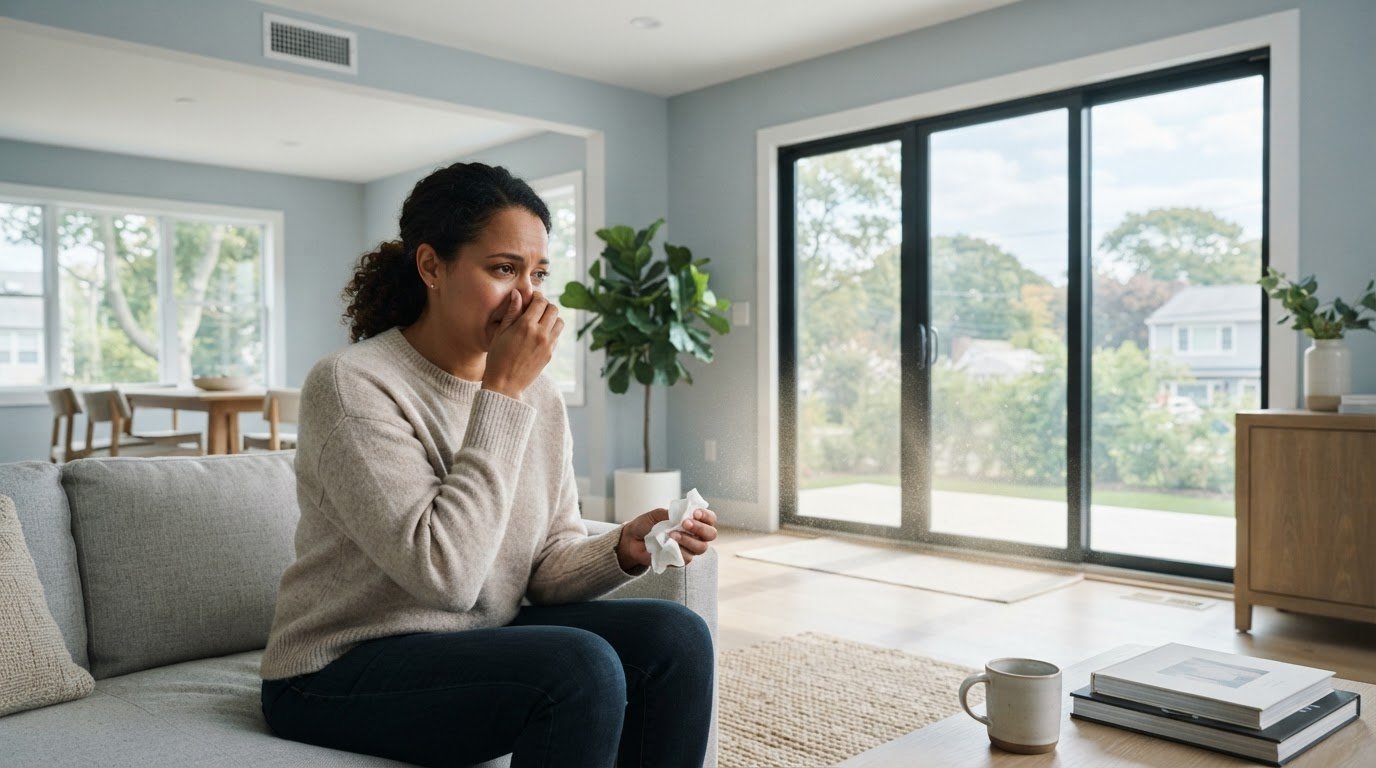
Symptoms after renovation don’t automatically mean you’ve developed a dust allergy. If you’re noticing post-renovation dust allergy symptoms such as sneezing, itchy eyes, coughing, or a scratchy throat, it’s understandable to wonder what’s causing them, especially when fine dust seems to remain after visible cleanup.
Renovation can stir up particles that irritate the eyes and airways. Allergens such as mold spores or dust mites may also be disturbed. Similar symptoms can have different causes, so when symptoms occur and what you were doing may offer useful clues, but they can’t confirm an allergy on their own.
This guide covers common symptoms, how irritation may differ from an allergic response, and what patterns to notice after exposure. You’ll also find practical steps for limiting further disturbance, guidance on when to contact a healthcare professional, and warning signs that call for urgent care. Professional post-construction cleaning may help address leftover residue, but it isn’t a substitute for medical advice or allergy treatment.
Key Takeaways
- Post-renovation dust allergy symptoms can affect your nose, eyes, throat, skin, or breathing, but symptoms alone can’t confirm an allergy.
- Note when symptoms appear, whether they recur, and how they relate to time spent near renovation residue. Treat these patterns as clues, not a diagnosis.
- If symptoms begin, limit disturbance in the affected area and step away if needed. Ask a healthcare professional for advice, especially if symptoms persist or worsen.
- Follow product labels during cleanup and never mix cleaning chemicals. Seek urgent care for severe breathing difficulty.
- Professional post-construction cleaning can address renovation residue, with the scope tailored to the property and project. It can’t diagnose or treat allergy symptoms.
Post-renovation dust allergy symptoms: what might you notice?
New or worsening symptoms after renovation can feel unsettling, especially if a room looks clean but you still feel unwell. Sneezing or itchy eyes may make you suspect an allergy, but those signs alone can’t identify the cause. Renovation can stir up particles that irritate the airways, and other triggers may also be present.
Post-renovation dust exposure means breathing in or coming into contact with particles stirred up or left behind during renovation work. It describes contact, not a diagnosis. The phrase doesn’t mean exposure definitely occurred or that symptoms are caused by an allergy. Timing can be a useful clue, but symptoms that start after work ends don’t identify the trigger on their own.
Which symptoms can appear after renovation work?
Possible symptoms vary and can affect several parts of the body:
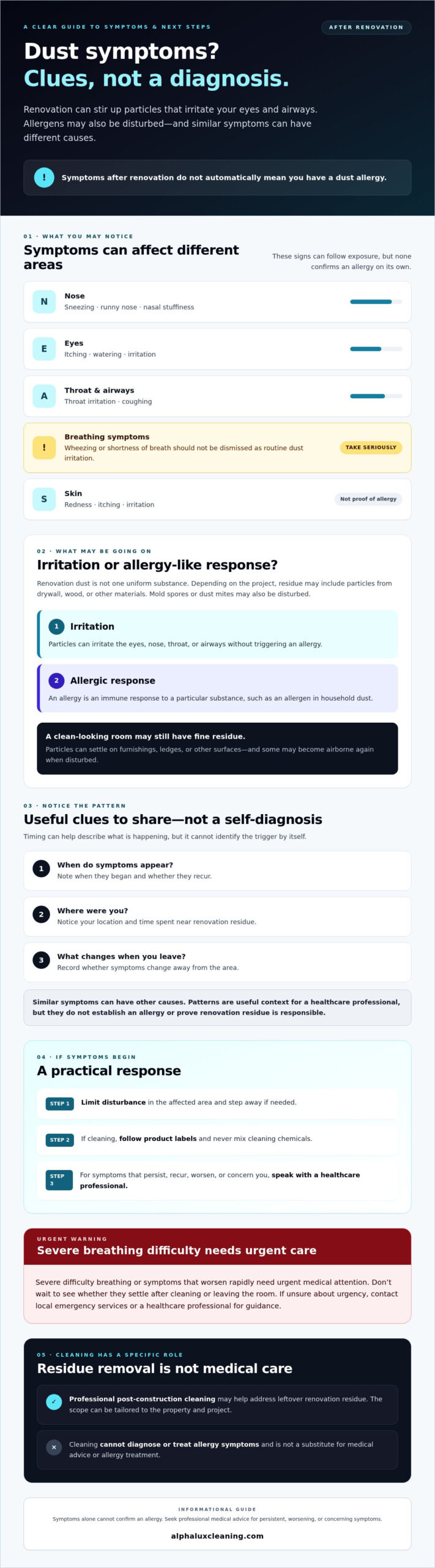
- Nose: sneezing, a runny nose, or nasal stuffiness.
- Eyes: itching, watering, or irritation.
- Throat and airways: throat irritation or coughing. Wheezing or shortness of breath can also occur, but shouldn’t be dismissed as a routine dust reaction.
- Skin: redness, itching, or irritation may develop, though skin symptoms don’t automatically indicate a dust allergy.
Dust mites are one possible allergy trigger in indoor dust. For context, see this overview of common dust allergy symptoms. Renovation particles or other airborne substances may cause irritation without an immune-mediated allergy, and symptoms can also have causes unrelated to the work.
When should breathing symptoms be treated as urgent?
Severe difficulty breathing or symptoms that worsen rapidly need urgent medical attention. Don’t wait to see whether they settle after cleaning or leaving the room. If you’re unsure how urgent the situation is, contact local emergency services or a healthcare professional for guidance.
For persistent, recurring, or otherwise concerning symptoms, speak with a healthcare professional. They can consider your symptoms and circumstances and advise whether further assessment is appropriate. Before speaking with them, note when symptoms began, where you were, and whether they change when you leave the area. These details may help with a medical conversation, but they can’t establish a diagnosis by themselves.
How renovation dust can trigger irritation or allergy-like reactions
Renovation can create particles that settle on surfaces or become airborne during work, cleanup, or later disturbance. That doesn’t mean every project leaves the same residue or that you were necessarily exposed. The materials used, the work performed, and how the space is handled all affect what may be present.
A room can look clean while fine residue remains in places you don’t readily see, such as on furnishings, ledges, or other surfaces. Some particles may become airborne again when disturbed. Visible cleanliness alone doesn’t show what has settled or remains suspended in the air.
What may be in renovation dust?
Depending on the project, residue may include particles from drywall, wood, or other materials. Renovation dust isn’t one uniform substance, and these examples don’t apply to every job. If you’re concerned about a particular material used in your home, check project records or ask the renovation professional what was disturbed. Don’t try to identify a material from symptoms or appearance alone.
It helps to distinguish irritation from allergy. Dust or other particles may irritate the eyes, nose, throat, or airways without triggering an allergy. An allergy is an immune response to a particular substance, such as an allergen in household dust. The Dust mite allergy management information from the American College of Allergy, Asthma & Immunology explains dust allergy and how everyday activities, including cleaning, may stir up particles. The post-renovation dust allergy symptoms you notice can’t, by themselves, tell you which process is involved.
Why symptoms may continue after work ends
Some particles can remain on surfaces after renovation and become airborne again when people move through a room, handle belongings, or clean. This is one possible explanation for symptoms that seem to return after work is finished, but it doesn’t prove residue is present or causing them.
Other exposures or health conditions can produce similar symptoms. Pay attention to where and when symptoms occur, but treat those patterns as context, not proof of a cause. If symptoms persist or concern you, seek advice from a healthcare professional instead of relying on self-diagnosis or unverified home tests.
If renovation residue is the concern, a property- and project-specific post-construction cleaning service may help address it. Cleaning can support a more carefully maintained space, but it doesn’t diagnose or treat an allergy.
Dust allergy or irritation? How to assess symptoms without self-diagnosing
There’s no reliable way to identify the cause of post-renovation dust allergy symptoms from timing alone. Irritation, an allergy, outdoor allergens, cleaning products, or another health issue may produce overlapping symptoms. Patterns can help you describe what’s happening, but they’re clues for a conversation with a healthcare professional, not diagnostic criteria.
| Pattern to notice | What it might suggest | Why it isn’t proof |
|---|---|---|
| Symptoms begin during renovation work or cleanup | Particles or products in the work area could be irritating you. | Other exposures may be present at the same time. |
| Symptoms return during later cleaning or when a room is disturbed | An exposure in that area or activity may be relevant. | Movement, outdoor allergens, or cleaning products could also be factors. |
| Symptoms occur in different places or at unrelated times | A trigger beyond renovation residue may be worth considering. | Symptoms can have several causes, and patterns may overlap. |
What clues may help you describe the symptoms?
Consider whether symptoms started during the work, after you moved back into the space, or after a later cleaning. Notice whether they vary by room or activity, but don’t deliberately re-enter an area or repeat an activity to test a suspected trigger. A pattern can offer useful context without confirming the cause.
Keep a brief log of when symptoms begin, which room you’re in, what you’re doing, and any noticeable change in exposure. Include when symptoms ease or return, if you observe that naturally. This record can help you explain the sequence clearly at a medical appointment.
How can a clinician assess a suspected allergy?
A healthcare professional can consider your symptom history, when and where symptoms occur, and what exposures may be relevant. They’ll decide whether further evaluation is appropriate based on your individual situation. Avoid treating a home observation or an unverified test as a diagnosis, and ask a clinician about persistent or concerning symptoms.
Cleaning choices can be one part of the broader picture, but they can’t determine whether symptoms are allergic. For general context on cleaning approaches, see this professional cleaning services guide. Keep the health question separate: a clinician is the right person to help assess what may be behind your symptoms.
What to do when symptoms begin after a renovation
If symptoms start after renovation work, take a measured approach. You don’t need to identify the cause before taking sensible steps to reduce further exposure. First, leave the area if you feel unwell, especially if breathing is affected. If symptoms are severe or worsening quickly, seek emergency medical help before doing any cleaning.
Immediate safety: step away from the area and get medical help for urgent symptoms. Once it’s safe, arrange careful cleanup and follow product labels.
How can you limit further dust disturbance?
Limit access to visibly dusty rooms while you decide on appropriate cleanup. Avoid dry sweeping or other actions that could stir settled particles into the air. No single step, including ventilation or wearing a mask, can guarantee that symptoms will be prevented. Don’t rely on one measure as a substitute for limiting exposure or seeking advice.
If you clean, read and follow each product’s label, use products only as directed, and never mix cleaning chemicals. If you’re unsure what a product contains or whether it’s suitable for a surface, check its instructions rather than improvising. For unusual materials or suspected hazardous contamination, keep away from the affected area and contact a qualified environmental or construction professional. Don’t attempt to remove or disturb the material yourself.
When should you ask for medical or specialist help?
Contact a healthcare professional for persistent, worsening, or concerning post-renovation dust allergy symptoms. Describe when they began and what was happening nearby, but avoid assuming renovation dust is the cause. Severe breathing difficulty or rapidly worsening symptoms require urgent medical attention. Contact emergency services rather than delaying care to clean, ventilate, or investigate the room.
When the concern is renovation residue rather than a suspected hazardous material, professional post-construction cleaning may help address leftover dust and debris. The appropriate scope depends on the property and project, and cleaning doesn’t diagnose or treat an allergy. Before arranging work, explain what was renovated and ask what the proposed cleaning includes.
If the space needs a post-construction clean, ask AlphaLux Cleaning about post-construction cleaning. A cleaning plan can address property needs, while medical questions should be discussed with a healthcare professional.
When professional post-construction cleaning may help, and what it cannot do
Professional post-construction cleaning may be useful when renovation work has left dust or other residue that needs attention across a home or commercial space. The right scope depends on the property, the work completed, and the areas that need cleaning. Cleaning can address renovation residue, but it can’t confirm what caused post-renovation dust allergy symptoms or diagnose, prevent, or treat an allergy.
AlphaLux Cleaning offers post-construction cleaning for residential and commercial properties across New York State, including Long Island. Cleaning plans can be tailored to the property and its needs. Since methods and equipment can vary, ask what the proposed service includes instead of assuming a particular technique or result.
What should you ask before booking post-construction cleaning?
A clear conversation helps you decide whether the proposed scope fits the project. Consider asking:
- Which rooms, surfaces, and areas are included, and how does the scope reflect the renovation work?
- Who supplies the cleaning products? AlphaLux describes its products as eco-friendly and non-toxic, so you can ask whether those options suit your preferences and needs.
- What methods or equipment are planned, and are there any areas or materials that require separate professional assessment?
- What scheduling and access arrangements should you plan for?
These questions help set expectations without assuming that a cleaning service can remove every possible trigger or guarantee symptom relief. If a material or contamination is uncertain, ask a qualified environmental or construction professional about it before arranging routine cleaning.
How does cleaning fit alongside health advice?
Cleaning and medical care address different concerns. A cleaner can work on renovation residue within an agreed scope, while a healthcare professional can assess ongoing or concerning symptoms and advise on appropriate care. Don’t delay medical advice to arrange cleaning, particularly if symptoms are severe or getting worse.
For broader guidance on home cleaning, see how to clean your home professionally. If post-construction cleaning fits your needs, you can explore AlphaLux Cleaning and ask about a scope suited to your property and renovation. Cleaning may be one practical step for addressing residue, but it shouldn’t be assumed to resolve symptoms. Leave health questions with a clinician.
Take a Clear Next Step Toward a Cleaner Space
Post-renovation dust allergy symptoms can be unsettling, but they don’t prove you have an allergy. Irritation, allergens, and other exposures can feel similar, so note when symptoms occur and seek medical advice for persistent or concerning issues. Severe breathing difficulty needs urgent attention.
Cleaning may help address renovation residue, but it can’t diagnose or treat the cause of symptoms. If a post-construction clean fits your needs, AlphaLux Cleaning offers the service for residential and commercial properties across New York State, including Long Island. Its vetted, insured professionals use eco-friendly, non-toxic products as part of the company’s approach.
Ask AlphaLux Cleaning about post-construction cleaning for your property. Share what was renovated and which areas need attention so you can discuss a suitable scope.
Frequently Asked Questions
What are common post-renovation dust allergy symptoms?
Common post-renovation dust allergy symptoms may include sneezing, a runny or stuffy nose, itchy or watery eyes, and throat irritation. Some people may also experience coughing, skin irritation, or breathing symptoms. These signs can have several causes, including irritation from particles or an allergy to a substance stirred up during the work. Symptoms alone can’t confirm an allergy, so seek medical advice if they persist or concern you.
How long can symptoms from renovation dust last?
There’s no set duration, because symptoms depend on the cause, the exposure, and individual health. Irritation may ease after leaving the area or reducing contact, while symptoms related to another trigger may continue for a different reason. Renovation residue can remain on surfaces and may be disturbed later, but ongoing symptoms don’t prove dust is still present. Contact a healthcare professional if symptoms persist, worsen, or concern you.
Can renovation dust cause an allergic reaction?
Renovation can disturb allergens already in a space, which may trigger an allergic reaction in someone who is sensitive to them. Dust and other particles can also irritate the eyes, nose, throat, or airways without involving an allergy. The materials and exposures vary by project, and symptoms don’t reveal which cause is involved. A healthcare professional can consider your history and symptoms and advise whether further assessment is appropriate.
How can I tell if symptoms are from dust or another allergy?
You usually can’t identify the cause by symptoms or timing alone. Note whether symptoms began during renovation, after moving back in, or during later cleaning, and whether they vary by room or activity. Outdoor allergens, cleaning products, and other health issues may also contribute. Keep a brief record of symptoms, locations, activities, and exposure changes to share with a healthcare professional. Treat patterns as useful clues, not proof.
Can post-renovation dust cause coughing or wheezing?
Particles stirred up during renovation may irritate the airways and could be associated with coughing. Wheezing or shortness of breath can have different causes and should be taken seriously rather than assumed to be a routine dust reaction. Leave the area if you feel unwell and contact a healthcare professional for persistent or concerning breathing symptoms. Severe breathing difficulty or rapidly worsening symptoms require urgent medical attention.
Should I clean the renovation dust myself if I have symptoms?
If you’re symptomatic, avoid unnecessary time in visibly dusty areas and don’t dry sweep or take other actions that may spread settled dust. If you choose to clean, follow each product label and never mix cleaning chemicals. If you suspect unusual or hazardous materials, don’t disturb or remove them yourself; seek qualified professional guidance. Post-construction cleaning can address renovation residue, but it can’t diagnose or treat allergy symptoms.
When should I see a doctor for symptoms after renovation?
Contact a healthcare professional if symptoms persist, worsen, recur, or otherwise concern you. Share when they began, where they occur, and what activities or exposures seem related, without assuming you know the cause. Seek urgent medical attention for severe breathing difficulty or symptoms that worsen rapidly. Don’t delay urgent care to clean or investigate the renovation area. A clinician can assess your situation and advise on appropriate next steps.