Quick Summary
To prepare your home for a cleaning service, clear the floors and surfaces the day before, starting with the kitchen and bathrooms. Put away valuables, pick up clothes, and leave clear access and alarm instructions so the team can work without delays.
- Clear kitchen counters and empty the sink before the visit.
- Work in the order kitchen, bathrooms, then the rest of the home.
- Put away valuables, medication and personal papers before the cleaner arrives.
- Leave a written note covering priority rooms, off-limits areas and fragile items.
- Confirm the arrival window and access method in writing the day before.
Table of Contents
- Why Preparation Makes Your Cleaning Visit Count
- Start With a Clear Picture: Standard, Recurring, or Deep Clean
- Room-by-Room Checklist to Prepare Your Home for a Cleaning Service
- How to Prepare Your House for a Deep Clean
- House Cleaning Responsibilities: What Cleaners Will and Won’t Do
- What to Do When Cleaners Are at Your House
- House Cleaning Etiquette, Safety, and Product Preferences
- Booking Your Next Cleaning With AlphaLux
- Frequently Asked Questions
Why Preparation Makes Your Cleaning Visit Count
Most people book a cleaner and then spend the morning of the visit tidying up. That work is useful, but a little planning to prepare your home the day before makes the visit go far better. Cleaners can spend their time on the floors, bathrooms and kitchen instead of stepping around piles of laundry.
The steps below are a practical guide to preparing your home for a cleaning service. Work through them in order, and you will know exactly what to do before, during and after the visit. For a deeper look at the service itself, see Deep Cleaning Services: What’s Included and What They Cost.
Preparation pays off most when:
- It is your first time with a new cleaner
- You have pets, young children or allergies
- The home has not been cleaned in a while
- You need a deep clean before a move or a guest visit
Start With a Clear Picture: Standard, Recurring, or Deep Clean
Before you prepare, know which service you booked. Each type needs a different level of preparation.
A standard clean covers the regular upkeep: dusting, vacuuming, mopping, bathrooms and kitchens. It needs the least preparation. A recurring clean follows the same scope on a set schedule, so the first visit is often the one that sets the pattern. A deep clean goes into more detail than a standard visit, so it needs the most clearing.
If you are not sure which fits your home, Standard vs. Deep Cleaning: Which Service Does Your Home Actually Need? compares the two side by side.
Quick guide to preparation by service type:
- Standard clean: Clear surfaces and floors, put away valuables
- Recurring clean: Same as standard, plus set a shared routine with your cleaner
- Deep clean: Clear everything from floors and walls, move light furniture if you can
Room-by-Room Checklist to Prepare Your Home for a Cleaning Service
A room-by-room pass is the fastest way to prepare because it stops you from tidying the same surface twice. The goal is not a spotless house, it is an unobstructed house. Cleaners need clear floors, empty surfaces, and a path to every fixture. Work through the rooms in the order below.
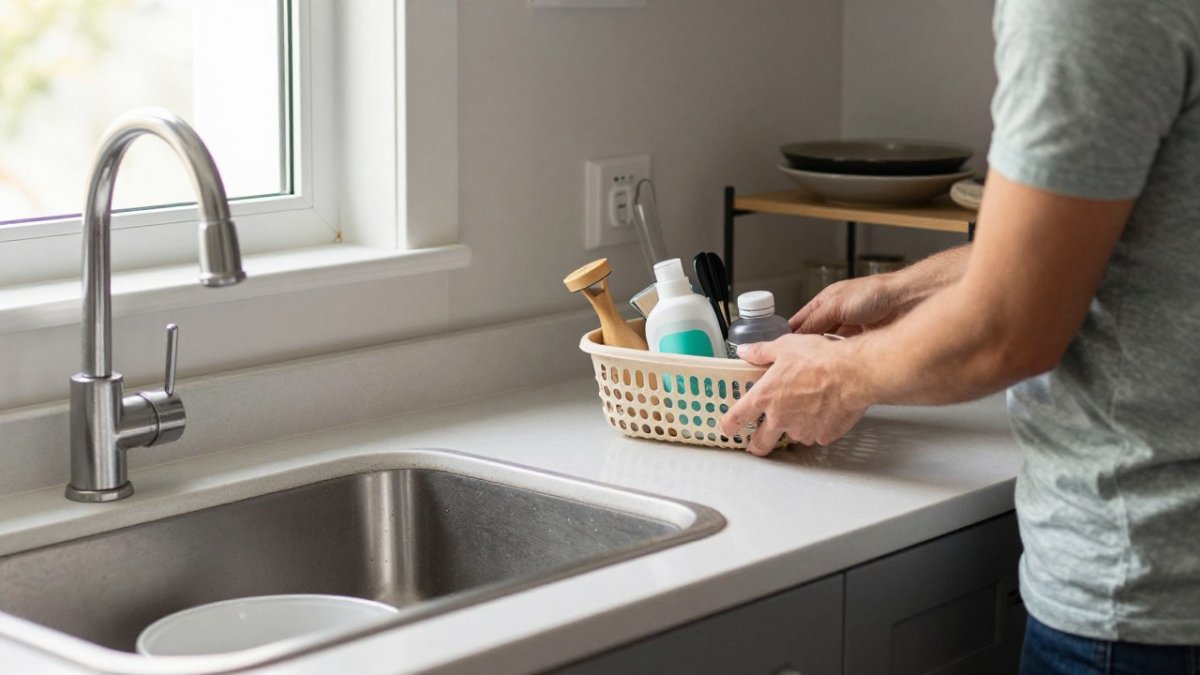
Kitchen (do this first)
- Clear the counters completely, including the coffee maker, knife block, and dish rack, so the cleaner can wipe the full surface and the backsplash
- Empty the sink and load or stack dishes; a sink full of dishes is the single most common reason a kitchen clean runs short
- Take out the trash and recycling, and replace the liners so the cleaner is not handling your waste
- Wipe up any standing grease or food spills on the stove
- Move floor mats and clear the floor around the trash can and under the sink
Bathrooms (do this second)
- Put toothbrushes, razors, medications, and personal care items in a drawer or cabinet
- Remove bath mats, hang towels, and clear the shower ledge of bottles so the cleaner can reach the tile and grout
- Clear the vanity counter of jewelry, contacts, and small electronics
- Note any surface that needs a specific product
Bedrooms
- Pick up clothes from the floor and put them in a hamper or closet; floors cannot be vacuumed around piles
- Clear nightstands of jewelry, medication, glasses, and papers
- Make the bed or strip the linens if you have asked for a linen change
- Close closet doors unless you have requested closet cleaning
Living room and common areas
- Clear the coffee table, side tables, and TV stand of remotes, mail, and small decor
- Pick up toys, charging cables, and floor cushions so the vacuum can pass
- Move fragile decor and small valuables to a high shelf or a closed drawer
- Fold throw blankets and clear the floor around the sofa so the cleaner can reach under it
Entryway and hallways
- Clear shoes, bags, and coats off the floor
- Leave the access method, key, lockbox code, or smart-lock instructions, in a place you have already communicated
- Note where to park if parking is limited
Watch out: leaving the kitchen and bathrooms for last is the most common preparation mistake. Those two rooms consume the majority of a standard visit, so if you run out of time, you want them cleared first, not last.
The checklist below sums up what to clear in each room, in the order the article recommends.
| Room | Priority action | Why it matters |
|---|---|---|
| Kitchen | Clear counters and empty the sink | Sink full of dishes is the most common reason a kitchen clean runs short |
| Bathrooms | Clear toiletries and the shower ledge | Lets the cleaner reach tile and grout |
| Bedrooms | Pick up clothes from the floor | Floors cannot be vacuumed around piles |
| Living room | Clear coffee and side tables | Gives the cleaner open surfaces to wipe |
| Entryway | Clear shoes, bags and coats from the floor | Keeps the floor open for cleaning |
| Whole home | Work in the order kitchen, bathrooms, then the rest | Those two rooms take most of a standard visit |
How to Prepare Your House for a Deep Clean
A deep clean needs more room to work. Plan a little more time than you think you need.
Start by clearing out the floor space in every room. Move small rugs, storage bins and laundry baskets to another room. If you can, move light furniture away from the walls so the cleaner can reach the baseboards and corners.
Then deal with the things that are easy to forget:
- Clear the top of the fridge and the tops of cabinets where dust builds up
- Take down curtains or sheers if you want them washed
- Empty and remove items from under the sink
- Set aside any items you want kept clean and need special handling
Deep cleaning also works best when the home has been tidied recently. If you have a large backlog of clutter, a short tidy-up session the day before saves time. For pricing and how deep cleans are typically scoped, see Price Of Deep Cleaning A House: What You’ll Pay In 2026.
House Cleaning Responsibilities: What Cleaners Will and Won’t Do
Knowing what a cleaner handles and what you handle keeps the visit from going sideways. Every company sets its own scope, so ask before the first visit. Common expectations are below.
Usually the cleaner’s job:
- Dusting, vacuuming and mopping floors
- Cleaning bathrooms and kitchens
- Wiping surfaces and taking out trash
- Making beds, if you ask for it
Usually your job:
- Clearing the floor and surfaces of clutter
- Putting away valuables, medication and personal papers
- Doing your own laundry or dishes before the visit
- Pointing out any areas you want left alone
For a detailed list of what a standard visit includes, see What is Included in a Standard House Cleaning? The AlphaLux Guide to a Professional Reset.
What to Do When Cleaners Are at Your House
Day-of logistics decide whether a visit runs smoothly more than any other factor. Handle the following before the arrival window opens.
Scheduling and arrival windows
- Confirm the arrival window in writing the day before
- Block the full window on your calendar, not just the start time, so you are not caught mid-errand
- Ask whether the team arrives together or in stages
Access
- Decide the access method in advance: someone home, a key left with the office, a lockbox, a smart-lock code, or a building concierge
- If you use a code, change it after the visit
- Leave written instructions for alarms, including the code and the disarm sequence, and confirm the company has them before the visit
- Tell the office about parking rules, garage height limits, or permit zones so the team is not circling the block during your window
Whether to be home
- Being home is fine and often helpful for a first visit, but stay out of the rooms being cleaned so the team can work without stepping around you
- If you leave, make sure the cleaner can reach you by phone and that pets are secured before you go
A short briefing note
A one-page note left on the counter can help communicate scope. A workable template:
- Priority rooms: the two or three areas that matter most today
- Off-limits: rooms, closets, or drawers to skip
- Delicate surfaces: stone, hardwood, or specialty finishes and the product they need
- Fragile items: anything that should not be moved or dusted
- Pets: where they are secured and whether they should be let out
- Access and alarms: codes and disarm steps, if not already shared
Watch out: giving verbal instructions to the cleaner at the door is the least reliable way to communicate scope. Teams rotate, and a written note or app message is the only version that reaches whoever actually does the work.
House Cleaning Etiquette, Safety, and Product Preferences
Good communication makes the whole arrangement easier. Here is what most homeowners find helpful.
Etiquette
- Tip if you are pleased with the service, following your company’s policy
- Be on time for arrival and access instructions
- Share feedback quickly so small issues do not become bigger ones
Safety and allergies
- Tell the cleaner about any allergies or sensitivities before the first visit
- Mention pets that may be unpredictable or fearful (Fast Facts: Home Healthcare Workers: How to Prevent Exposure in Unsafe Conditions)
- Point out any hazards, such as loose cords or a wet floor
Product preferences
- Say whether you want eco-friendly or non-toxic products
- Let them know if a surface needs a specific product, such as stone or hardwood
- Ask what products they bring and whether you can supply your own
Booking Your Next Cleaning With AlphaLux
With the preparation done, booking is the last step. AlphaLux Cleaning provides residential cleaning across New York, New Jersey, and Long Island, using eco-friendly products and a team that is licensed, insured and fully bonded. If a visit does not meet your expectations, the team offers a 100% satisfaction guarantee.
To find the right service level for your home and get a quote, visit AlphaLux Cleaning’s website and request a free estimate. For tips on comparing nearby services before you book, see How to Find House Cleaning Services Near Me.
Book your next cleaning with AlphaLux Cleaning and spend less time preparing and more time enjoying a spotless home.
Frequently Asked Questions
What should I do before a professional cleaning service arrives?
Start by putting away clutter, personal belongings, and valuables, and clearing floors and counters so cleaners can reach every surface. Wash or load dishes in the kitchen sink, secure fragile or sensitive items, and make sure pets are safely separated. Leave clear instructions about entry, parking, alarm codes, and any rooms that are off-limits. A short checklist written the night before keeps the visit efficient and reduces the chance of missed areas.
Should I clean before the cleaning service comes?
You do not need to deep clean before a professional arrives, and most cleaners prefer that you do not. Light tidying is helpful, since it lets the team focus on cleaning instead of picking up. Focus on clearing surfaces, floors, and the kitchen sink rather than scrubbing. If you are unsure what to tidy, ask your cleaning provider for their preparation guidance before the first visit.
What should I put away before house cleaners arrive?
Put away valuables, jewelry, medications, important documents, and anything fragile or sensitive. Clear items off floors and countertops so cleaners can work freely, and move laundry out of the way. Bathroom counters and nightstands are common trouble spots. Keeping these items in a secure room or drawer protects them and saves time during the visit.
How do I prepare my house for a deep clean?
A deep clean requires more clearing than a standard visit. Move smaller furniture where possible, clear baseboards and tops of cabinets, and empty closets or drawers you want addressed. Clean off excessive grime yourself if it is heavy, and confirm with your provider whether inside appliances, windows, or baseboards are included. Scheduling a deep clean for a day when the home can be left undisturbed gives the team the time it needs.