A cluttered, dusty warehouse doesn’t just look bad, it creates safety hazards, slows down operations, and can put you on the wrong side of OSHA regulations. Having a solid warehouse cleaning checklist keeps your facility organized, your team safe, and your inspections stress-free.
The challenge? Knowing exactly what needs cleaning and how often. Some tasks require daily attention, while others can wait for weekly or monthly deep cleans. Without a structured routine, critical areas get overlooked, and small messes turn into major problems.
At AlphaLux Cleaning, we’ve helped New York businesses maintain spotless commercial spaces, including warehouses that demand consistent, thorough care. This guide breaks down the essential cleaning tasks you need to tackle daily, weekly, and monthly to keep your warehouse running smoothly. We’ve also included downloadable templates so you can start implementing these routines right away.
1. Use a professional warehouse cleaning service
Hiring a professional cleaning team often delivers the best results for warehouses that operate at full capacity. Your in-house staff focuses on core operations while trained cleaners handle specialized equipment, high surfaces, and deep sanitation tasks that require expertise. This approach reduces downtime, ensures compliance with safety standards, and keeps your facility inspection-ready year-round.
Daily tasks to keep in-house vs outsource
You can manage basic sweeping of high-traffic aisles and quick spill cleanup with your own team to address immediate hazards. A professional service handles floor scrubbing, restroom sanitation, and trash removal after hours so your operations never slow down. This split keeps your workspace safe throughout the day while maintaining thorough cleanliness overnight.
Weekly tasks a pro team handles best
Professional crews excel at power washing loading docks, scrubbing restroom tiles, and vacuuming break room carpets with industrial equipment your warehouse likely doesn’t own. They bring specialized tools like floor buffers and high-reach dusters that tackle areas your team can’t easily access. Weekly visits from a trained crew prevent grime from building up into larger, more expensive problems.
Monthly tasks that prevent costly buildup
Deep cleaning tasks like pressure washing exterior walls, stripping and waxing floors, and sanitizing HVAC vents require hours of labor and professional-grade products. Your warehouse cleaning checklist should schedule these monthly to maintain a healthy environment and extend the life of your flooring and equipment. Pros complete these jobs faster and more thoroughly than piecing together internal resources.
Scope checklist to confirm in a walk-through
Before signing a contract, walk the facility with potential vendors to confirm they understand your square footage, the number of restrooms, dock doors, and office spaces. Point out areas with heavy grease, dust accumulation, or specific safety requirements. This ensures accurate quotes and realistic timelines.
A thorough walk-through prevents misunderstandings about what your cleaning contract actually covers.
Quality, safety, and insurance requirements to verify
Always confirm your cleaning service carries general liability insurance and workers’ compensation coverage to protect your business from accidents. Ask for proof of training certifications, background checks on staff, and references from other warehouse clients. These verifications ensure you work with a reliable, insured team that meets professional standards.
2. Keep floors and aisles safe
Your warehouse floors take constant punishment from forklifts, pallet jacks, and foot traffic, making them the most critical area on your warehouse cleaning checklist. Spills, debris, and worn surfaces create slip hazards that can shut down operations and trigger OSHA violations. A structured cleaning routine keeps aisles clear, surfaces grippy, and your liability low.
Daily tasks
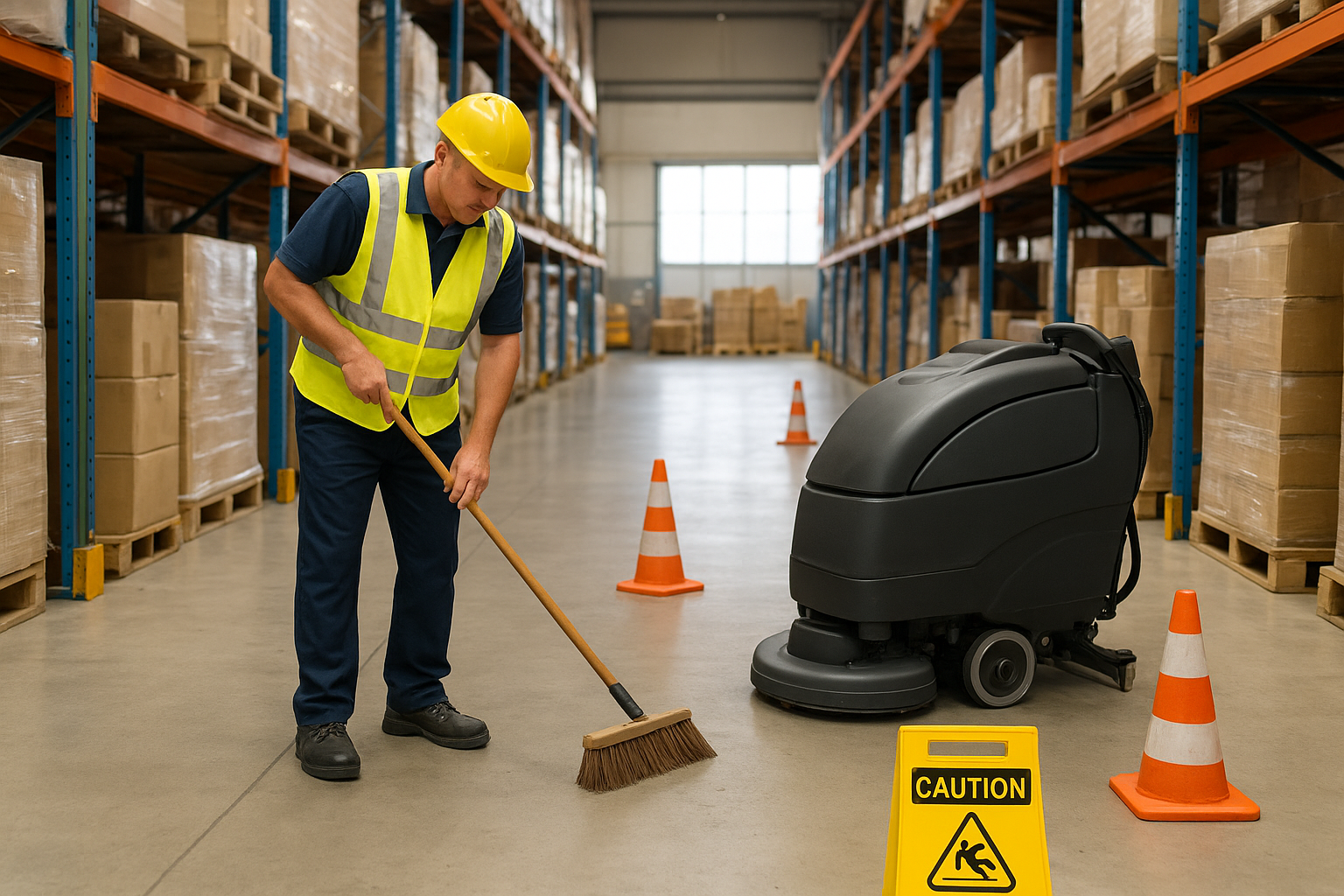
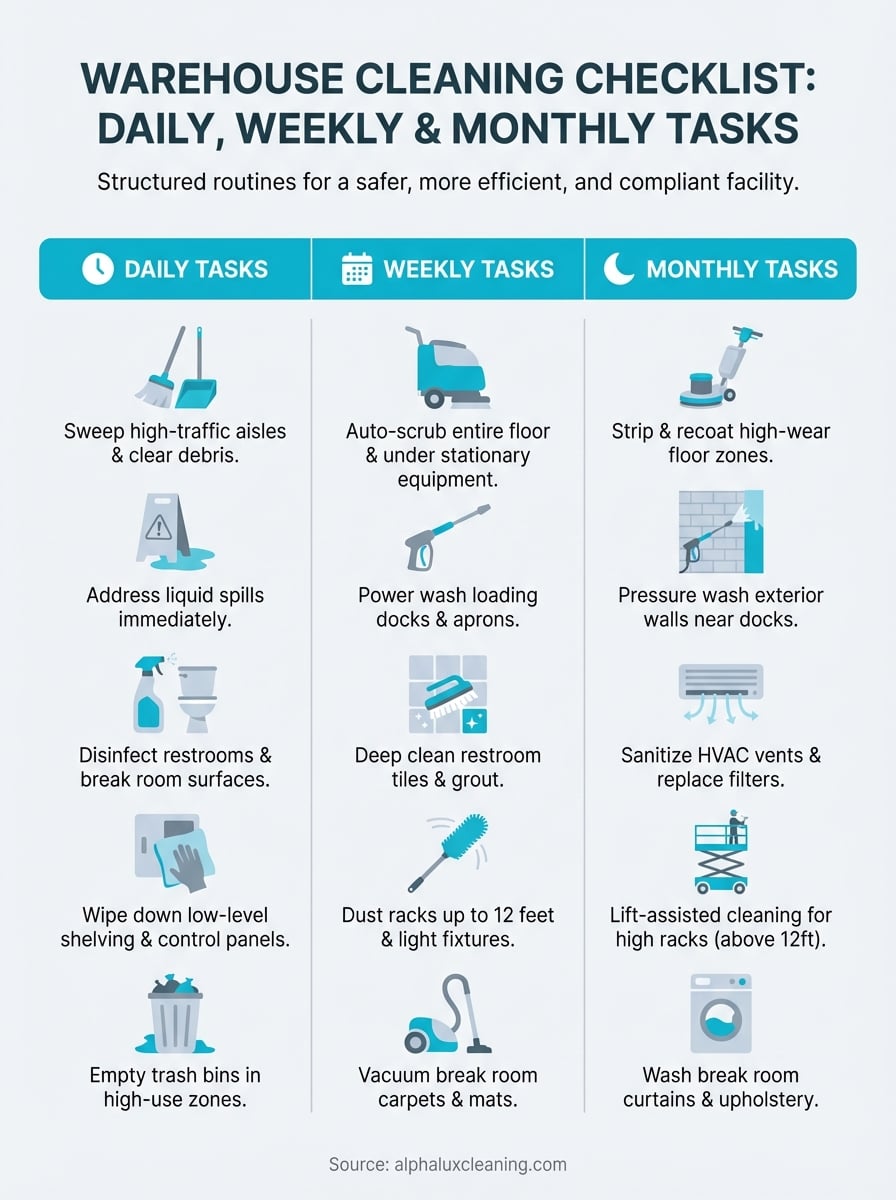
Sweep all high-traffic aisles at shift changes to remove cardboard scraps, plastic wrap, and dust that accumulate throughout the day. Address any liquid spills immediately with absorbent materials and mark the area with warning cones until fully dry. Inspect main pathways for trip hazards like loose pallets or uneven flooring that need repair.
Weekly tasks
Run an auto scrubber across the entire floor to remove ground-in dirt, oil residue, and stains that sweeping misses. Clean under stationary equipment and along wall edges where debris collects and creates pest attraction. Check floor markings and replace any faded safety lines that guide forklift traffic.
Monthly tasks
Strip and recoat high-wear zones near loading docks and main entrances to restore traction and protect the concrete underneath. Pressure wash oil stains and tire marks that build up over time.
Consistent floor maintenance prevents expensive resurfacing projects and reduces workplace injury claims.
Tools and chemicals to use
You’ll need industrial sweepers, auto scrubbers, and degreasing solutions rated for warehouse floors. Use non-slip floor finishes and EPA-approved cleaners that dry quickly without leaving residue.
Safety and quality checks
Test floor traction monthly in areas prone to moisture and verify all cleaning products meet OSHA safety data sheet requirements for your workspace.
3. Control dust on racks and high surfaces
Dust buildup on high racks and overhead beams creates respiratory hazards, damages inventory, and makes your facility look neglected during inspections. These elevated surfaces collect airborne particles from forklifts, packaging materials, and ventilation systems faster than you realize. Your warehouse cleaning checklist must include vertical surfaces to maintain air quality and protect stored goods from contamination.
Daily tasks
Wipe down any low-level shelving in picking zones where workers handle products throughout shifts. Use microfiber cloths on control panels and equipment surfaces to prevent dust from interfering with machinery operation.
Weekly tasks
Dust all racks up to 12 feet using extension poles with microfiber heads that trap particles instead of spreading them. Clean ventilation grills and ceiling fans that circulate dust back onto cleaned areas. Vacuum horizontal beams and light fixtures where accumulation becomes visible.
Monthly tasks
Schedule lift-assisted cleaning for racks above 12 feet and structural beams near the ceiling. Deep clean HVAC vents and replace filters to reduce the dust source itself.
Controlling dust at the source prevents constant re-cleaning of lower surfaces and improves air quality for your entire team.
Tools and chemicals to use
Invest in telescoping dusters, microfiber mop heads, and anti-static spray for high-reach cleaning. Use HEPA-filter vacuums that capture fine particles without releasing them back into the air.
Safety and quality checks
Verify all lift equipment meets OSHA standards before sending staff to elevated areas and confirm cleaning products won’t damage inventory or packaging materials.
4. Clean docks, receiving, and shipping zones
Your loading docks see constant exposure to weather, exhaust fumes, and tracked-in debris from trucks and delivery personnel. These zones connect your warehouse to the outside world, making them magnets for dirt, moisture, and pests that can migrate into your clean storage areas. Regular cleaning in these high-traffic spaces protects your inventory, maintains professional appearances for vendors, and prevents slips on wet or oily surfaces.
Daily tasks
Sweep all dock plates and the immediate loading area to remove cardboard fragments, shrink wrap, and packaging debris that falls during unloading. Wipe down door frames and handles that delivery drivers touch repeatedly throughout the day. Empty trash receptacles near shipping stations before they overflow and attract pests.
Weekly tasks
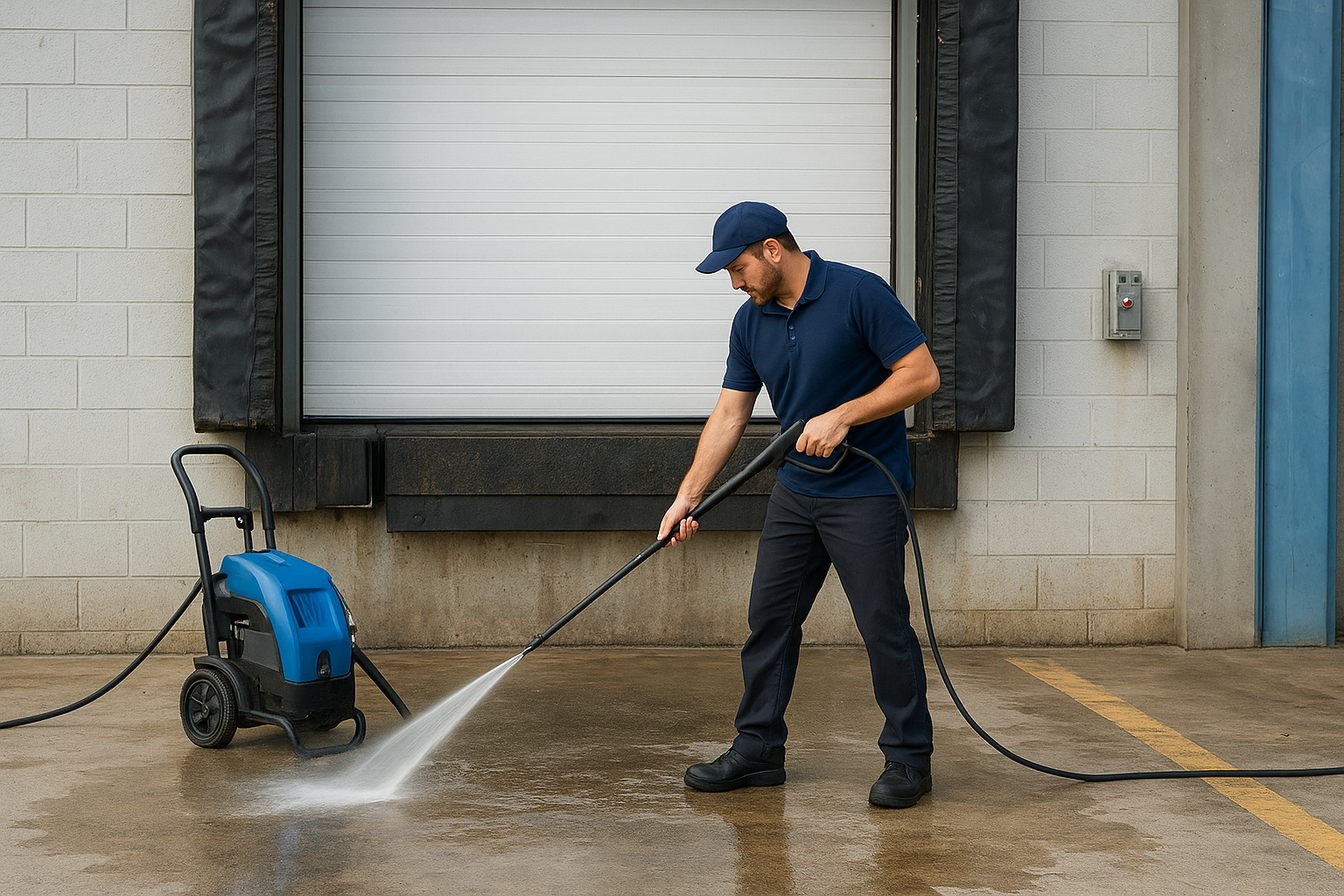
Pressure wash the dock apron and trailer parking area to eliminate diesel stains, mud, and salt residue from the loading zone. Scrub overhead dock doors and tracks where grime accumulates and interferes with smooth operation. Clean receiving counters, scales, and inspection tables where incoming shipments get processed.
Monthly tasks
Deep clean weather seals around dock doors to maintain temperature control and keep insects out of your facility. Power wash exterior walls near docks where truck exhaust leaves dark residue.
Keeping dock zones clean prevents contamination from spreading into your main warehouse space.
Tools and chemicals to use
You need commercial pressure washers, heavy-duty degreasers rated for concrete, and push brooms with stiff bristles for outdoor surfaces. Use all-weather cleaning solutions that work in cold temperatures since dock areas often lack climate control.
Safety and quality checks
Verify all electrical outlets near wash zones have proper ground-fault protection and confirm cleaning staff wear slip-resistant footwear in wet dock areas.
5. Sanitize break rooms, restrooms, and offices
Your warehouse staff spends breaks, meetings, and administrative time in these shared spaces where bacteria and germs spread quickly between workers. Proper sanitation in break rooms, restrooms, and offices prevents illness outbreaks that drain productivity and create absenteeism across your entire operation. These areas require more frequent attention on your warehouse cleaning checklist than storage zones since they involve food preparation, personal hygiene, and close human contact.
Daily tasks
Disinfect all restroom surfaces including toilets, sinks, door handles, and faucets with EPA-registered sanitizers that kill viruses and bacteria. Wipe down break room tables, countertops, and appliance handles where employees touch surfaces before and after eating. Empty trash bins in offices and restock paper products in restrooms before supplies run out.
Weekly tasks
Deep clean coffee makers, microwaves, and refrigerators to remove food residue and prevent odor buildup. Scrub restroom tile grout and floor drains where moisture creates mold growth. Vacuum office carpets and sanitize shared equipment like copiers and phones.
Monthly tasks
Wash break room curtains and upholstery that absorb odors over time. Power wash restroom floors with disinfectant and descale fixtures affected by hard water.
Consistent sanitization in employee spaces reduces sick days and maintains morale through a clean, healthy work environment.
Tools and chemicals to use
Stock hospital-grade disinfectants, microfiber cleaning cloths, and separate color-coded supplies for restrooms versus food areas to prevent cross-contamination.
Safety and quality checks
Verify all cleaning products meet EPA safety standards and post material safety data sheets where staff can access them easily.
Keep the checklist consistent
Your warehouse cleaning checklist only works when you follow it without gaps or shortcuts. Skipping scheduled tasks creates buildup that requires more time and money to fix later, while consistent execution keeps your facility inspection-ready and your team safe every single day.
Assign specific staff members to daily, weekly, and monthly tasks so accountability stays clear across shifts. Track completion with digital forms or printed logs that managers can review to spot missed areas before they become problems. Regular audits of your cleaning routine help you adjust schedules based on seasonal changes, increased production volumes, or new equipment that alters your facility’s needs.
Professional support makes consistency easier to maintain year-round. At AlphaLux Cleaning, we handle the specialized tasks your team doesn’t have time or equipment to complete, ensuring nothing falls through the cracks while your staff focuses on core operations.