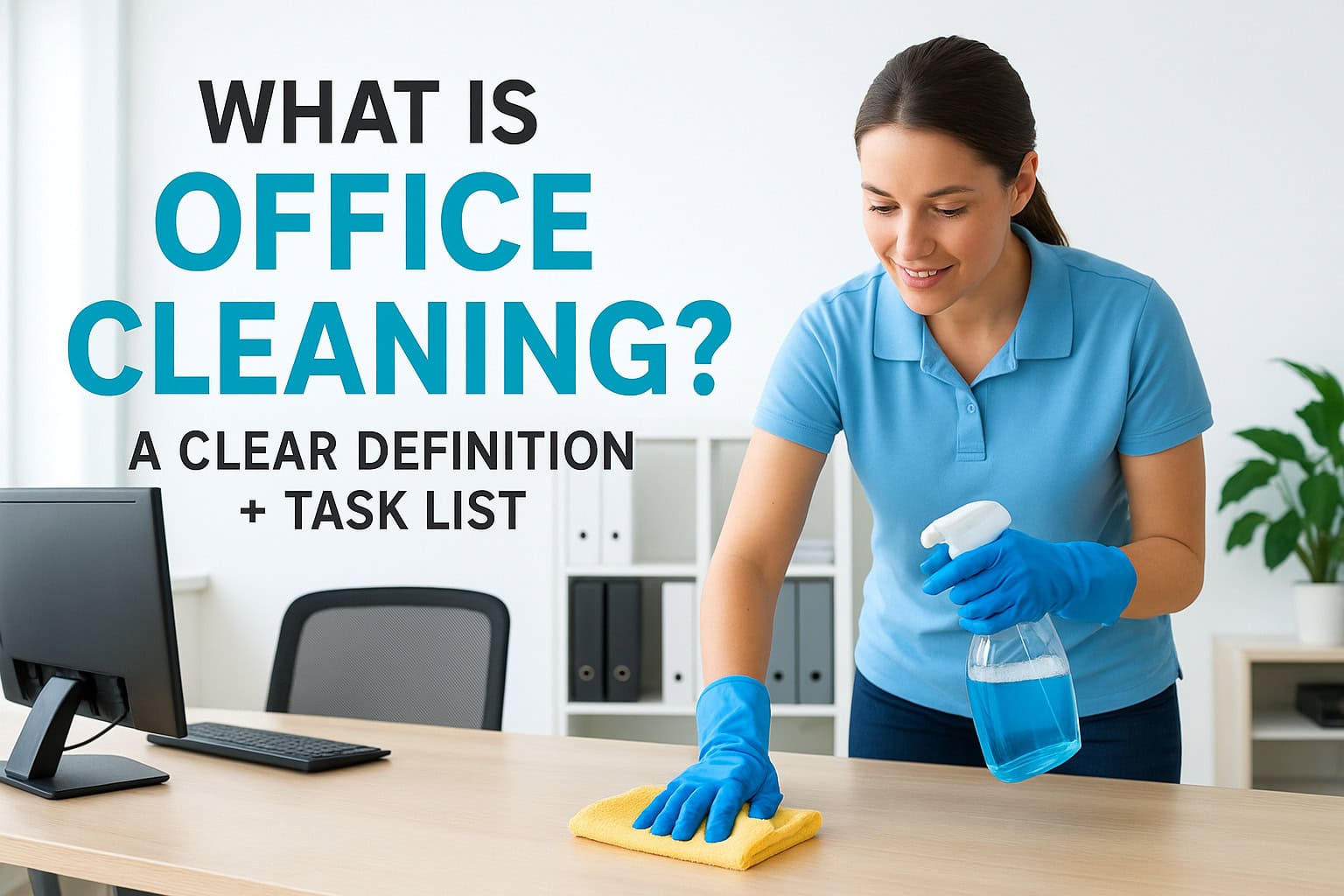
You’ve probably heard the term "office cleaning" tossed around by building managers, landlords, and service providers, but what does it actually include? The answer isn’t as straightforward as it sounds. Office cleaning covers a specific set of tasks designed to keep a workplace functional, hygienic, and presentable on a regular basis. It’s not the same as janitorial work, and it’s not interchangeable with commercial cleaning, even though people use these terms like they mean the same thing.
Understanding the difference matters, especially if you’re the one responsible for hiring a cleaning service or managing a facility budget. Knowing exactly what falls under office cleaning helps you set expectations, compare quotes accurately, and make sure nothing gets overlooked. At AlphaLux Cleaning, we handle office cleaning across New York state for businesses that want a consistent, detail-oriented approach, so we’ve seen firsthand how much confusion exists around this topic.
This article breaks it all down. We’ll define office cleaning in plain terms, walk through a detailed task list of what’s typically involved, explain how it differs from commercial and janitorial cleaning, and help you figure out what level of service your workspace actually needs. Whether you manage a small office or an entire floor, you’ll leave with a clear picture of what office cleaning is and what to expect when you book it.
What office cleaning means in plain English
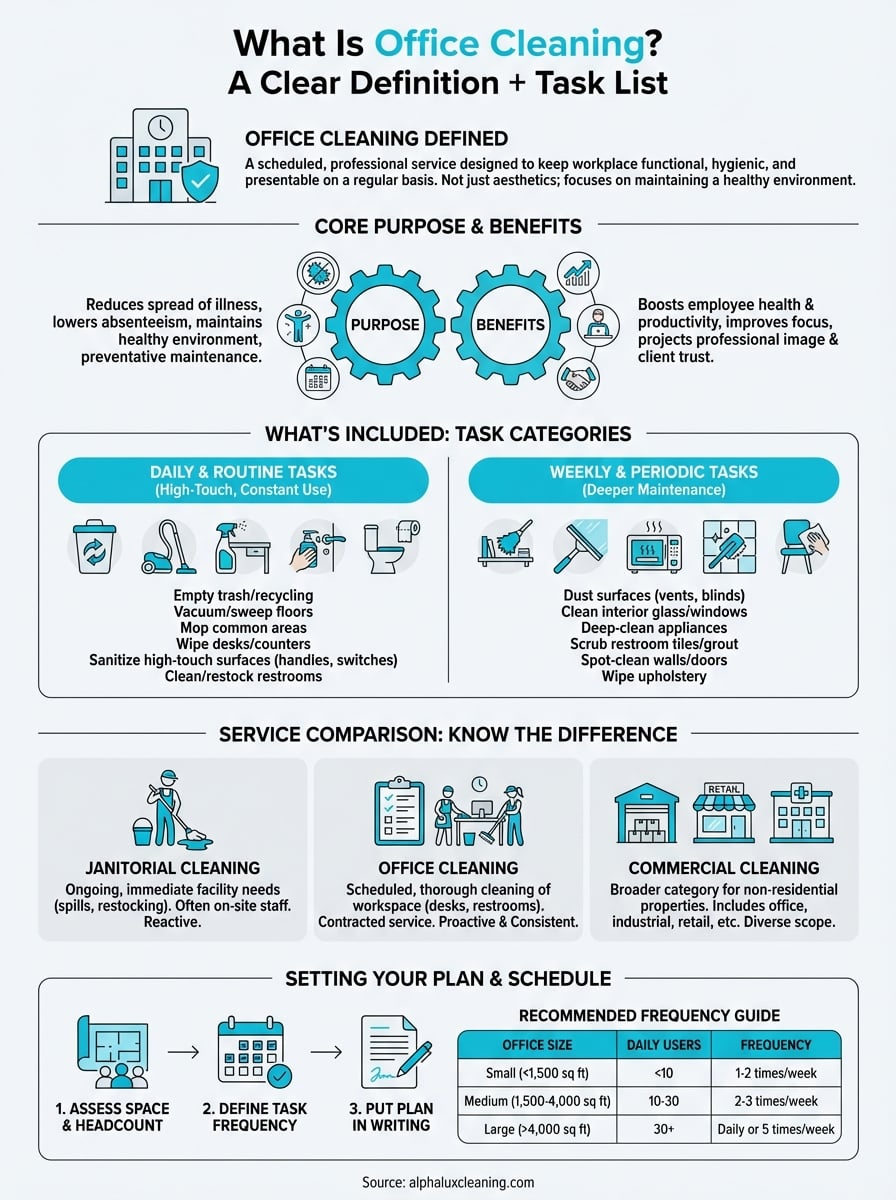
Office cleaning, at its most basic level, is a scheduled service that keeps a workplace clean, safe, and functional for the people who use it daily. When you ask what is office cleaning, the answer isn’t just "someone vacuums and empties the trash." It’s a defined scope of work performed at regular intervals, usually by a professional cleaning team, covering everything from wiping down desks to sanitizing shared surfaces like keyboards, door handles, and break room counters. The scope is agreed upon upfront, and the service repeats on a set schedule that matches the demands of your specific workspace.

The core purpose of office cleaning
The primary goal of office cleaning isn’t aesthetics, even though a clean office looks better. The real purpose is maintaining a healthy environment where employees can work without exposure to bacteria, dust, and allergens that build up in any enclosed space over time. A standard office with 20 or more people sharing the same air, touching the same surfaces, and using the same restrooms becomes a high-traffic environment that accumulates germs quickly, especially during cold and flu season.
A consistently cleaned office reduces the spread of illness among staff, which directly lowers absenteeism and keeps your team productive.
Research from organizations like the CDC shows that shared surfaces in workplaces can harbor pathogens that spread from person to person within hours. Regular office cleaning disrupts that cycle by removing contaminants before they spread. Think of it as preventative maintenance for your workforce, not just a cosmetic service that makes the space look presentable for clients.
What separates office cleaning from general cleaning
General cleaning is what you do at home: wiping counters, mopping floors, scrubbing bathrooms. Office cleaning follows the same logic but applies it to a professional environment with defined standards and expectations. The spaces are larger, used by more people, and often subject to health and safety guidelines that residential spaces aren’t required to follow.
Your office also has surfaces and areas that a home simply doesn’t. Reception desks, conference room tables, shared printers, cubicle partitions, and employee lounge appliances all require targeted attention. A cleaning professional handling an office knows to treat high-touch points differently from low-traffic storage areas, and they work around your business hours so the space is ready when your team arrives each morning.
Office cleaning also follows a documented scope of work, meaning you agree on exactly what gets done during each visit. That level of accountability is something informal or casual cleaning arrangements rarely provide, and it makes it far easier to hold a service provider to a consistent standard over time.
The role of regularity in office cleaning
One thing that defines office cleaning as a service category is frequency. Unlike a one-time deep clean, office cleaning is built around a repeating schedule, whether that’s daily, three times a week, or weekly. That cadence matters because the buildup of dust, debris, and germs in an active workplace doesn’t pause between visits.
Consider what happens in your office on any given day: dozens of people touch door handles, sit at shared workstations, use the restroom, and eat at their desks. Without consistent cleaning at regular intervals, contamination accumulates fast. What could be wiped away on Monday becomes a harder problem by Friday, and harder still by the following week if nothing is done.
Matching the right cleaning frequency to your office size and daily foot traffic is one of the most important decisions you’ll make when setting up a cleaning plan. The cleaning service handles the execution, but you set the standard by choosing a schedule that actually keeps pace with how your workspace gets used.
What office cleaning includes
When people ask what is office cleaning in terms of actual work performed, the answer breaks down into specific tasks grouped by how often they need to be done. Standard office cleaning covers a defined set of responsibilities that repeat on a schedule, and understanding exactly what those tasks are helps you verify that a service provider is delivering what you’re paying for. The scope will vary depending on your office size, layout, and how many people work there daily, but the core task categories stay consistent across most professional environments.
Daily and routine tasks
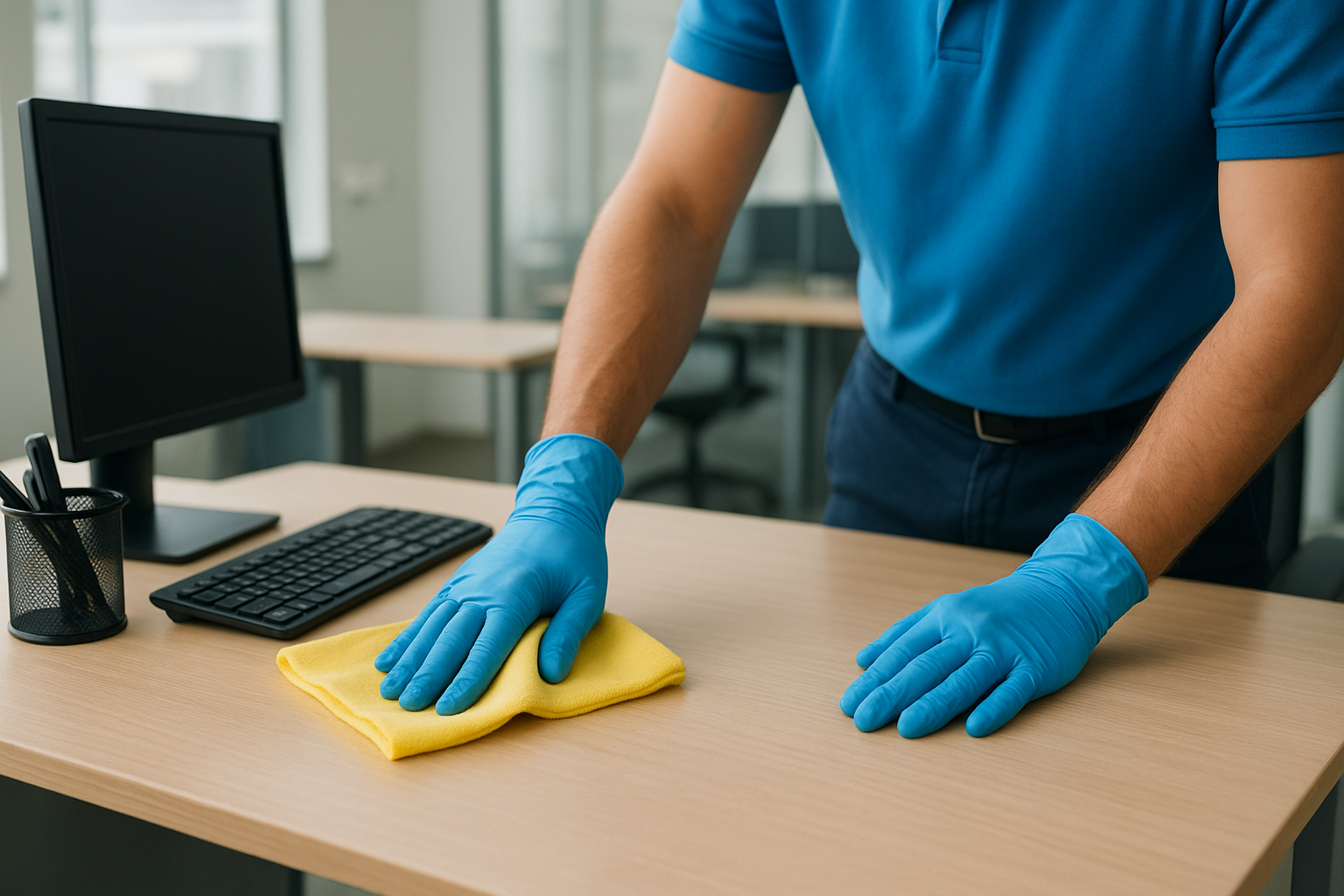
Daily tasks focus on the high-traffic areas and surfaces that accumulate the most contact throughout a workday. These are the cleaning activities that need to happen consistently to prevent buildup and maintain basic hygiene standards across your workspace. Skipping even a few days on these items allows contamination and clutter to compound quickly.
- Emptying trash and recycling bins throughout the office
- Vacuuming or sweeping all floor surfaces
- Mopping hard floors in common areas, kitchens, and restrooms
- Wiping down desks, counters, and shared workstations
- Sanitizing high-touch surfaces including door handles, light switches, elevator buttons, and shared equipment like printers and copiers
- Cleaning and restocking restrooms with paper products and hand soap
- Wiping down sink fixtures and mirrors in bathrooms and break rooms
Sanitizing high-touch surfaces daily is one of the most effective steps a cleaning service can take to reduce the spread of illness across your team.
Weekly and periodic tasks
Periodic tasks go deeper than the daily routine and address areas that don’t need attention every single day but still require regular maintenance to stay in good condition. Most professional office cleaning plans fold these into a weekly or bi-weekly cycle depending on how heavily the space gets used throughout the month.
- Dusting surfaces including shelves, blinds, vents, baseboards, and ceiling corners
- Cleaning glass partitions, windows, and interior glass surfaces
- Deep-cleaning break room appliances like microwaves and coffee machines
- Scrubbing restroom tiles and grout to prevent mold and mineral buildup
- Spot-cleaning walls and interior doors for smudges and marks
- Wiping down chair upholstery and desk chairs in conference rooms
Your cleaning plan needs to account for both routine and periodic task categories, not just the basics that are easy to check off during a short visit. A service that only handles daily surface-level work while neglecting deeper periodic tasks will leave your office looking passable but never genuinely clean over the long term.
Why office cleaning matters for workplaces
Understanding what is office cleaning helps you define the service, but the real reason businesses invest in it comes down to outcomes: healthier employees, fewer sick days, and a workspace that projects credibility to anyone who walks in. A clean office doesn’t just feel better to work in. It actively supports the way your business operates day to day.
Employee health and reduced sick days
The average office worker touches hundreds of shared surfaces each day, from keyboards and phones to coffee machine buttons and restroom fixtures. Each of those touchpoints carries the potential to transfer bacteria and viruses from one person to the next. Without a reliable cleaning schedule, those surfaces accumulate contamination faster than most people realize.
The CDC estimates that employees in the United States miss approximately 1 billion workdays annually due to the flu alone, and shared workplace surfaces are a significant transmission route.
Regular office cleaning breaks the cycle of surface-to-person contamination before it spreads across your team. For a business with ten or more employees, reducing illness by even one or two sick days per person per year translates into a measurable gain in output and a direct reduction in unplanned coverage costs.
Productivity and focus in a clean environment
Cluttered, dirty spaces create mental friction that affects how people think and work. Research consistently shows that a clean, organized workspace supports better concentration and reduces low-level stress that employees may not even consciously notice. When your team isn’t distracted by overflowing trash, grimy surfaces, or unpleasant odors, they stay more focused on the actual work.
A well-maintained office also signals to your employees that the business takes their environment seriously, which contributes to morale and job satisfaction. That connection between environment and engagement is easy to overlook until cleaning becomes inconsistent and people start to notice.
Professional image and client trust
First impressions happen fast, and your office environment is part of the message you send to every client, vendor, or candidate who visits. A clean, well-kept office communicates that your business operates with attention to detail and takes its professional obligations seriously. A dirty or neglected space sends the opposite signal, regardless of how strong your product or service actually is.
Your reception area and conference rooms are often the first physical touchpoints a visitor experiences with your brand. Keeping those spaces consistently clean is one of the most direct ways to protect how your business is perceived in person.
Office cleaning vs janitorial vs commercial cleaning
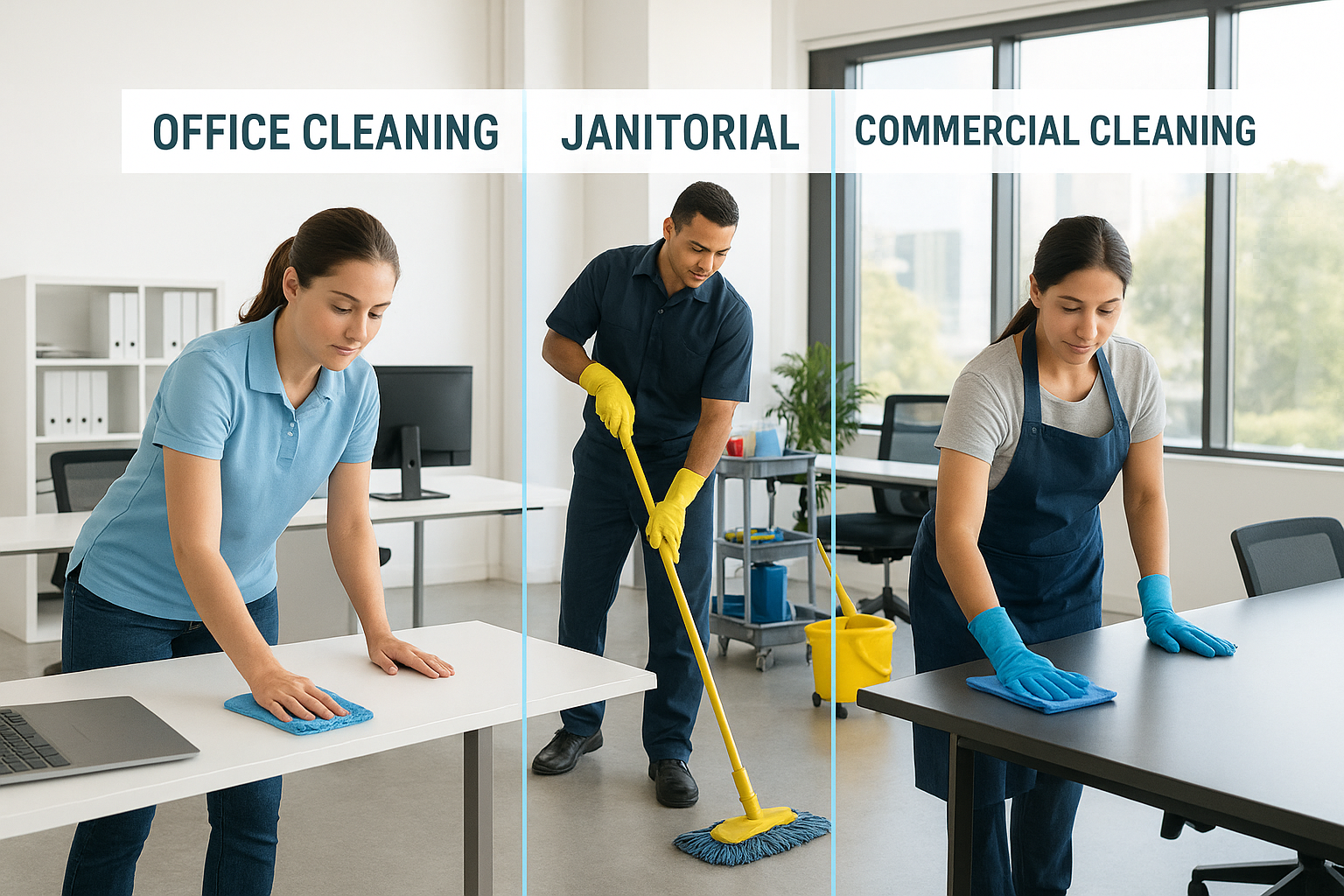
Once you dig into what is office cleaning, you’ll quickly run into two other terms that get used interchangeably: janitorial cleaning and commercial cleaning. They’re not the same thing, and mixing them up can lead to miscommunication with vendors, gaps in your cleaning coverage, or paying for a scope that doesn’t actually fit your needs. Each term describes a different type of service with a different focus, frequency, and skill set.
What janitorial cleaning covers
Janitorial cleaning refers to ongoing, day-to-day maintenance tasks performed inside a building, usually by staff who are on-site throughout the workday or evening. Think of a janitor as someone who handles immediate facility needs as they arise: restocking bathroom supplies, wiping up spills, replacing burned-out bulbs, and keeping common areas tidy between scheduled cleanings.
Janitorial staff are typically employed directly by the facility or building management, while office cleaning services are hired on contract and operate on a scheduled visit model.
The distinction matters when you’re hiring. If your building already has a janitorial staff member on rotation, that person likely covers reactive tasks and basic upkeep. A professional office cleaning service fills a different role, delivering thorough, top-to-bottom cleaning on a fixed schedule rather than responding to moment-to-moment needs throughout the day.
What commercial cleaning covers
Commercial cleaning is a broader category that includes office cleaning, but it also extends to warehouses, retail stores, medical facilities, industrial spaces, and any other property used for business purposes. When a cleaning company says they offer commercial cleaning, they’re signaling that they work with non-residential properties as a category, not that they specialize in one type of workspace.
Office cleaning is a subset of commercial cleaning focused specifically on office environments: workstations, conference rooms, reception areas, break rooms, and shared professional spaces. A commercial cleaning contract for a medical clinic looks very different from one for a law office, even though both fall under the commercial umbrella. The tasks, standards, disinfection protocols, and compliance requirements shift significantly depending on the type of facility.
When you’re comparing service providers, ask whether they have specific experience cleaning office environments rather than just commercial properties broadly. A company that primarily cleans warehouses or retail floors may not approach an office setting with the same attention to workstations, shared equipment, and the kind of detail-oriented consistency that a professional office environment requires.
How to set an office cleaning plan
Building a cleaning plan starts with knowing exactly what your space requires, not what a generic template suggests. Once you understand what is office cleaning and what tasks fall under it, you can match those tasks to your actual workspace, your daily foot traffic, and the schedule that keeps your office consistently clean without overpaying for services you don’t need.
Start with your space and headcount
The size of your office and the number of people using it daily are the two most important inputs for any cleaning plan. A 1,500 square foot office with eight employees has very different needs than a 6,000 square foot floor with sixty people cycling through multiple meeting rooms, break areas, and shared workstations every day.
The more people sharing a space, the faster surfaces accumulate contamination, which means your cleaning frequency needs to reflect your actual headcount, not just your square footage.
Walk your office and take inventory of every distinct area: restrooms, reception, individual workstations, conference rooms, break rooms, storage spaces, and any shared equipment areas. Each zone has its own contamination rate and its own cleaning requirements. Documenting these areas before you contact a cleaning service gives you a clear starting point for building an accurate scope of work.
Define which tasks happen on which schedule
Not every task needs to happen every visit. Splitting your task list into daily, weekly, and monthly categories keeps your plan realistic and cost-effective while ensuring nothing important gets skipped. Daily tasks cover high-touch surfaces, restrooms, floors, and trash. Weekly tasks address deeper cleaning like dusting vents, wiping down partitions, and scrubbing break room appliances. Monthly tasks handle items like deep-cleaning upholstery, washing interior windows, and addressing grout or tile buildup in restrooms.
Use a simple table or checklist format to map each task to its frequency. This gives both your team and your cleaning provider a clear reference point for what gets done on each visit, and it makes it easier to identify gaps when you review the plan over time.
Put your plan in writing
A verbal agreement with a cleaning service is not a cleaning plan. A written scope of work that lists every task, its frequency, and the areas it covers is what holds a provider accountable and protects you if the service quality slips. Before you sign any contract, confirm that the written scope matches what was discussed during your initial walkthrough. If something isn’t in the document, assume it won’t get done.
How often you should schedule office cleaning
Knowing what is office cleaning helps you define the service, but knowing how often to schedule it is what makes your investment actually work. Cleaning frequency is not a one-size decision, it depends on how many people use your space daily, how many shared surfaces and restrooms you have, and what kind of work happens inside your office. Getting the cadence wrong in either direction costs you money: too little leaves your team in an unhealthy environment, too much means you’re paying for visits that don’t add meaningful value.
Daily cleaning: when it makes sense
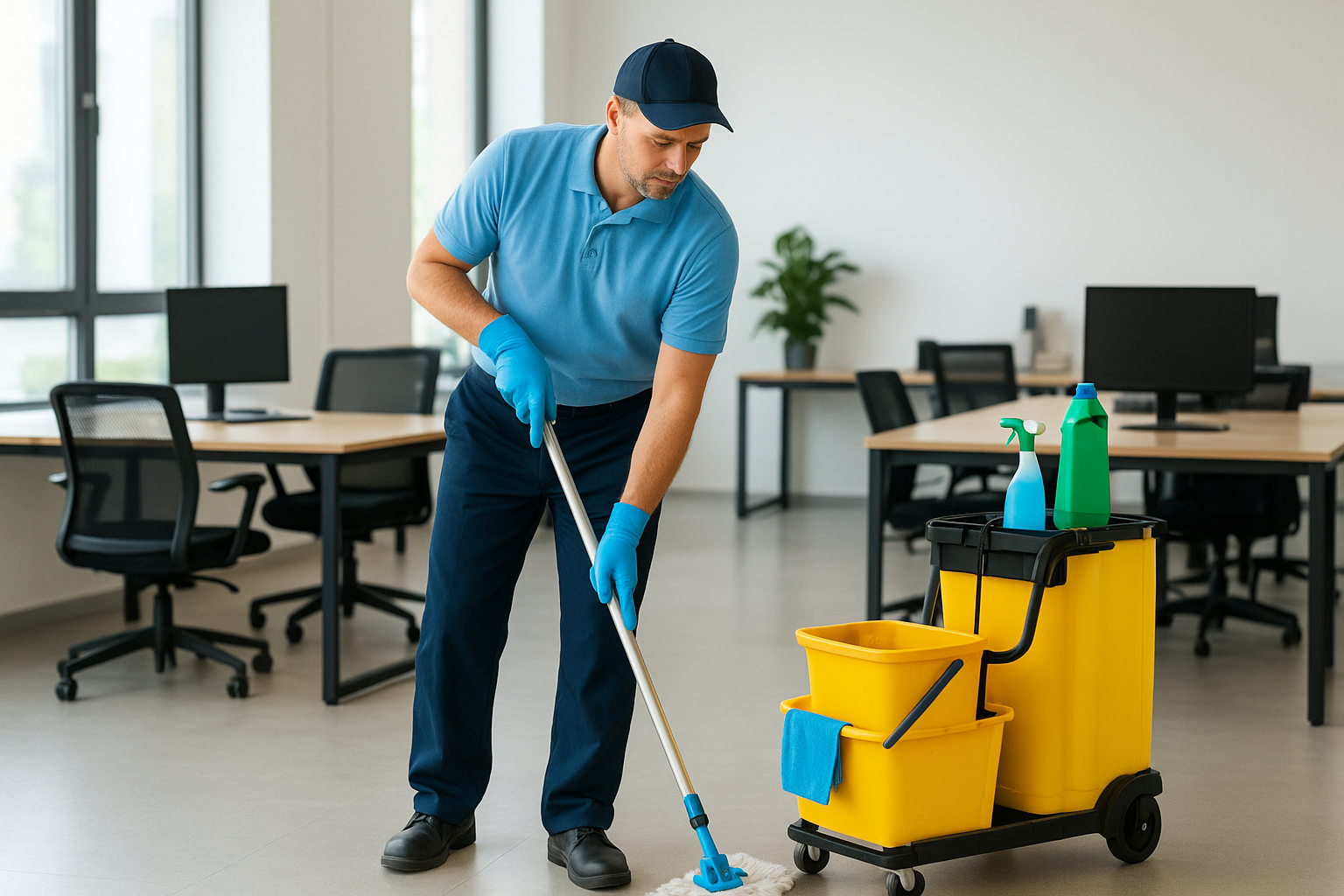
Daily office cleaning is the right choice for high-traffic workplaces where shared surfaces, restrooms, and break rooms get heavy use every single day. If your office has 20 or more employees, multiple conference rooms that rotate through meetings, or a break room that sees constant use, daily cleaning keeps contamination from building into a visible and unhealthy problem. At this level, the focus is on sanitizing high-touch points, restocking restrooms, and clearing out trash and debris before the next workday begins.
Skipping even two or three days of cleaning in a high-traffic office creates a buildup that a single visit cannot fully reverse, which is why consistency matters more than intensity.
Smaller offices with fewer than 15 employees can often handle restroom restocking and basic surface wipe-downs in-house on the days between professional visits, as long as a scheduled service handles the thorough work at regular intervals throughout the week.
Weekly and less frequent options
For smaller offices with low to moderate daily foot traffic, a two-to-three-times-per-week schedule covers most daily cleaning needs without the cost of daily service. This works well for offices of 10 to 20 people where restrooms are used moderately and most workstations are assigned to a single employee rather than shared across shifts.
Weekly cleaning is typically the minimum effective frequency for any active workplace. Stretching visits to every two weeks allows too much accumulation on floors, restroom fixtures, and shared surfaces and tends to leave the space looking neglected by the end of each cycle. If budget is the concern, a bi-weekly deep clean combined with basic in-house maintenance on alternating weeks is a more effective approach than simply reducing professional visits without a plan to fill the gap.
Use the table below as a starting reference when deciding which schedule fits your office:
| Office Size | Daily Users | Recommended Frequency |
|---|---|---|
| Small (under 1,500 sq ft) | Fewer than 10 | 1-2 times per week |
| Medium (1,500-4,000 sq ft) | 10-30 | 2-3 times per week |
| Large (4,000+ sq ft) | 30+ | Daily or 5 times per week |
What affects office cleaning cost and pricing
Once you understand what is office cleaning and what tasks fall under it, the next practical question is what you’ll pay for that service. Office cleaning costs vary significantly depending on several factors, and knowing which variables drive the price up or down helps you evaluate quotes accurately and negotiate a scope that fits your budget without cutting corners that matter.
Size and scope of the space
Square footage is the most direct driver of cleaning cost because it determines how long each visit takes and how many staff members a provider needs to send. A 1,000 square foot office with two restrooms takes far less time to clean than a 5,000 square foot floor with multiple conference rooms, a full break room, and four restrooms. Most cleaning companies price office jobs by the square foot or by a flat rate per visit based on their walkthrough assessment, so the larger your footprint, the higher your base cost.
The number of distinct zones in your office also affects pricing. High-touch, detail-intensive spaces like restrooms and break rooms take more time per square foot than open workstation areas, so a layout with more of those zones will push your quote higher even if the total square footage looks similar to a simpler floor plan on paper.
Frequency and task complexity
Scheduling more frequent visits typically lowers the cost per visit because the cleaning team spends less time removing buildup that a previous visit already cleared away.
Daily cleaning contracts are almost always more cost-effective per visit than weekly ones because total labor per session stays lower when the space hasn’t had a full week to accumulate dust and surface contamination. If you’re comparing quotes, ask each provider for the per-visit cost across different frequency options so you can make a direct comparison before committing to a schedule.
Task complexity also matters. Adding specialized services like carpet extraction, hard floor treatment, or post-event cleanup to your recurring scope increases the total cost. Providers typically quote these separately from the base contract rather than bundling them in, so clarify upfront which tasks are included in the standard rate and which are billed as add-ons.
Location and staffing factors
Your office location within New York directly affects labor costs because wages, transit time, and local market rates all vary across the state. Offices in Manhattan or downtown areas typically see higher rates than those in suburban or rural parts of Long Island or upstate New York. A provider serving your specific area will factor local operating costs into their pricing, which is one reason quotes from different companies can differ by a noticeable margin even for identical scopes of work.
How to choose an office cleaning company in New York
Hiring a cleaning company without vetting them properly is one of the most common mistakes business owners make. Once you understand what is office cleaning and what the service should include, your next step is finding a provider who can actually deliver on that scope consistently. New York has no shortage of cleaning companies, but not all of them operate with the same standards, so knowing what to look for before you sign anything protects your business and your employees.
Verify credentials and insurance before anything else
The first thing to confirm is whether the company holds proper insurance coverage, specifically general liability insurance and workers’ compensation. If a cleaning staff member is injured in your office or damages property during a visit, an uninsured provider leaves your business exposed to liability. Any reputable cleaning company in New York will provide proof of insurance without hesitation when you ask, so treat a vague or delayed response as a clear warning.
Hiring a cleaning company that skips background checks on its staff puts your employees, equipment, and sensitive business materials at risk every single visit.
Background-checked staff is equally non-negotiable. Your cleaning team will have access to your office outside of business hours, which means you’re trusting them with your space, your equipment, and in many cases confidential documents. Confirm that the company runs thorough background checks on every employee before placing them on a job.
Evaluate their communication and consistency track record
How a company communicates during the sales process tells you a lot about how they’ll handle issues once you’re under contract. A provider who takes days to return calls, sends vague quotes, or can’t explain their scope of work clearly during the initial conversation is unlikely to become more responsive once they have your business locked in. Look for a company that gives you a written scope of work, a clear point of contact, and a process for flagging issues between scheduled visits.
Ask for references from current clients with similar office sizes and ask those references specifically about consistency over time, not just the quality of the first few visits. Many cleaning companies deliver a strong initial performance and let quality slide once the relationship becomes routine. Checking for long-term consistency rather than first impressions gives you a much more accurate picture of what working with them will actually look like six months in.
Wrap it up and choose your next step
You now have a complete picture of what is office cleaning, what tasks it covers, how it differs from janitorial and commercial services, and what drives the cost of a recurring plan. The core takeaway is straightforward: a well-structured office cleaning plan protects your employees, supports productivity, and keeps your workspace credible to anyone who walks through the door.
Pulling all of this together into action means finding a provider who brings verified credentials, clear communication, and a written scope that matches your actual space. If your office is in New York state and you want a cleaning partner who handles the details without cutting corners, AlphaLux Cleaning offers personalized plans, background-checked staff, and eco-friendly products built around what your workspace actually needs. Get a free estimate and see what a consistent, professional cleaning plan looks like for your office.