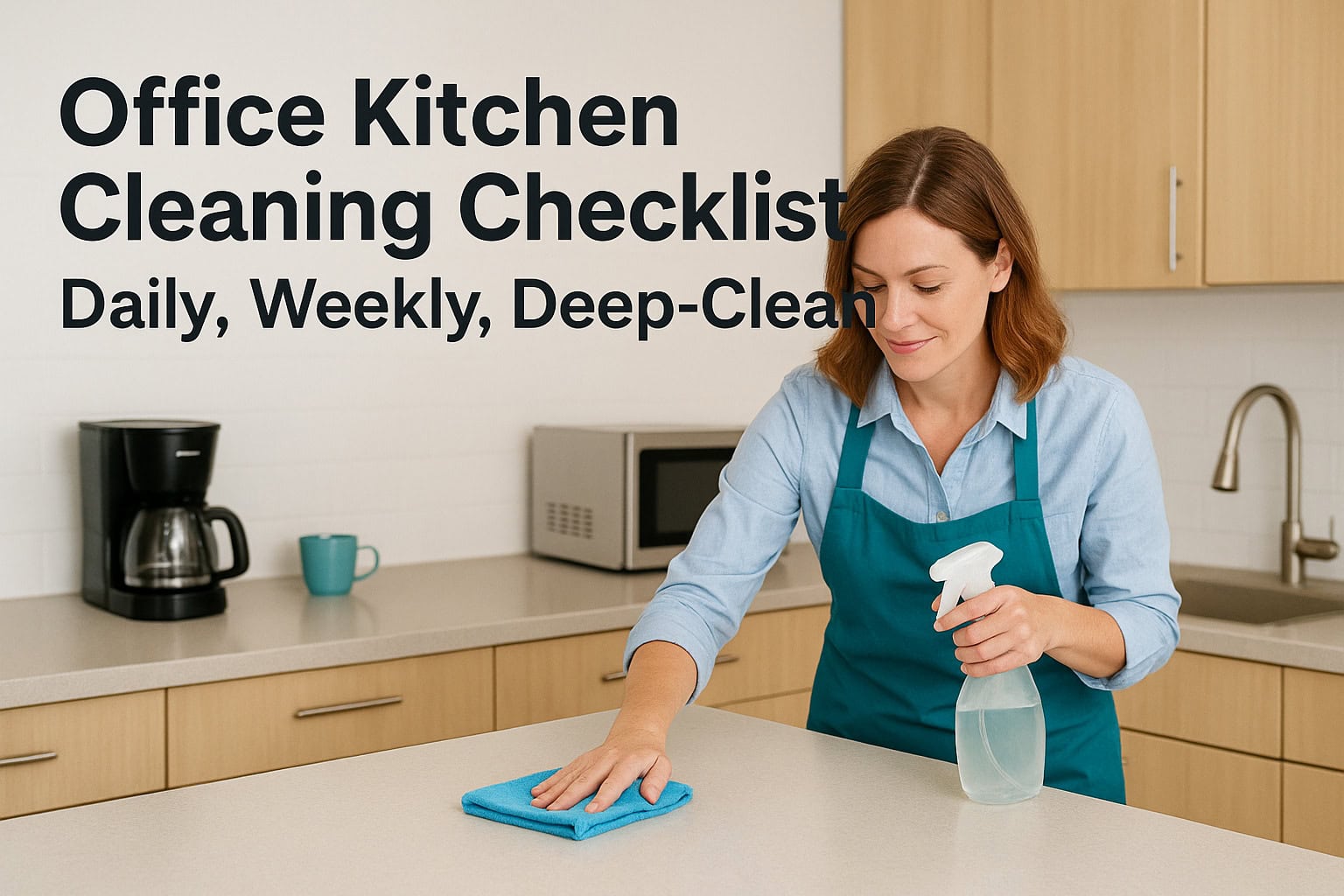
A shared office kitchen can go from clean to chaotic in a single lunch rush. Crumbs on the counter, coffee rings on the table, mystery containers in the fridge, without a clear system, nobody takes ownership and the mess compounds. That’s exactly why every workplace needs an office kitchen cleaning checklist that spells out what gets done and when.
Whether you manage a small team or an entire floor, a structured checklist keeps your breakroom sanitary, organized, and free from the kind of buildup that breeds bacteria and bad morale. At AlphaLux Cleaning, we maintain office kitchens across New York State and know firsthand what tasks matter most, and which ones tend to get skipped.
Below, you’ll find a practical breakdown of daily, weekly, and deep-cleaning tasks you can assign to staff or hand off to a professional crew. Print it, share it, and put it to work starting today.
1. Use AlphaLux Cleaning for office kitchens
Hiring a professional cleaning service doesn’t mean handing over every task and hoping for the best. It means splitting responsibilities clearly so nothing falls through the cracks between your staff’s daily habits and a crew’s scheduled visits.
What AlphaLux Cleaning takes off your plate
AlphaLux Cleaning handles the labor-intensive and time-consuming work that staff members realistically won’t do consistently. That includes deep-cleaning appliance interiors, scrubbing grout, sanitizing high-contact surfaces, and degreasing stovetops or vent hoods. These tasks require the right products, training, and time blocks that most employees simply don’t have during a workday.
Handing recurring deep-clean tasks to a vetted professional crew removes the friction that causes shared spaces to deteriorate over weeks.
What your staff still needs to do daily
Even with a professional service on rotation, your team owns the daily basics. Wiping up spills immediately, rinsing dishes, and clearing food from the counter at day’s end are habits that no cleaning crew can substitute for. A simple posted reminder keeps daily expectations visible and prevents buildup between professional visits.
How to set scope, frequency, and priorities
Before booking service, decide which tasks belong on your office kitchen cleaning checklist and how often each one needs attention. Weekly visits work well for most small to mid-sized offices, while larger kitchens with heavy daily use often need two visits per week. AlphaLux Cleaning builds a custom plan around your kitchen size, team count, and usage patterns so you pay for exactly what your space needs.
When a professional plan makes the most sense
A professional cleaning plan pays off most when your kitchen serves more than 10 people, when complaints about hygiene have already surfaced, or when a move-in or post-renovation reset is overdue. These are moments when a trained crew saves you time, prevents health issues, and sets a clean baseline your team can actually maintain.
2. Follow a daily office kitchen cleaning checklist
A daily routine is what keeps the kitchen functional between deeper cleans. Without it, small messes compound fast and shared surfaces become breeding grounds for bacteria that spread through your office.
What "daily clean" should achieve
Daily cleaning is not about perfection. It is about resetting the kitchen to a usable state so the next person walks into a clean space. Your goal is to eliminate food residue, odors, and visible dirt before they require real effort to remove.
A consistent daily routine prevents the need for emergency deep-cleans and keeps hygiene complaints off your desk.
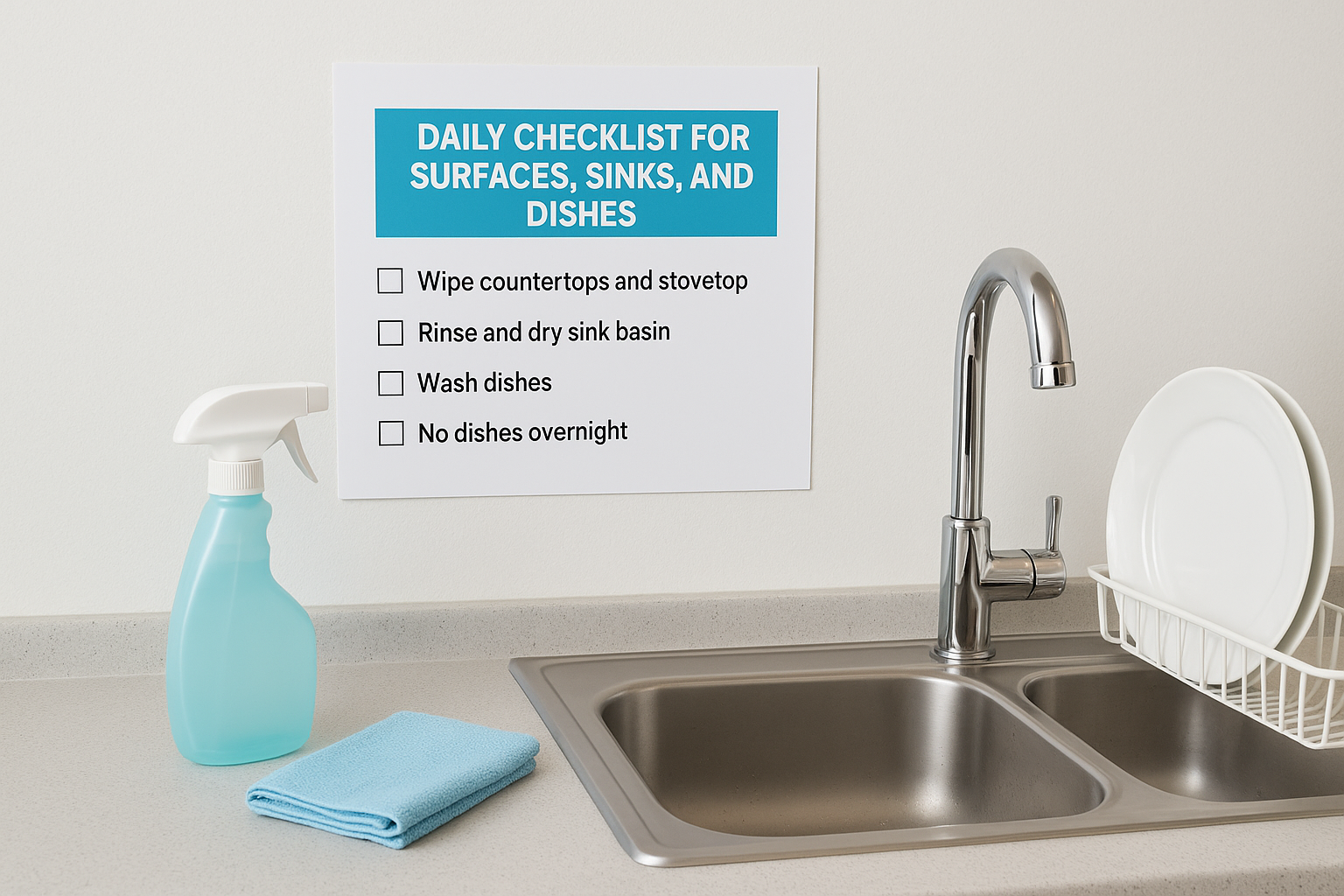
Daily checklist for surfaces, sinks, and dishes
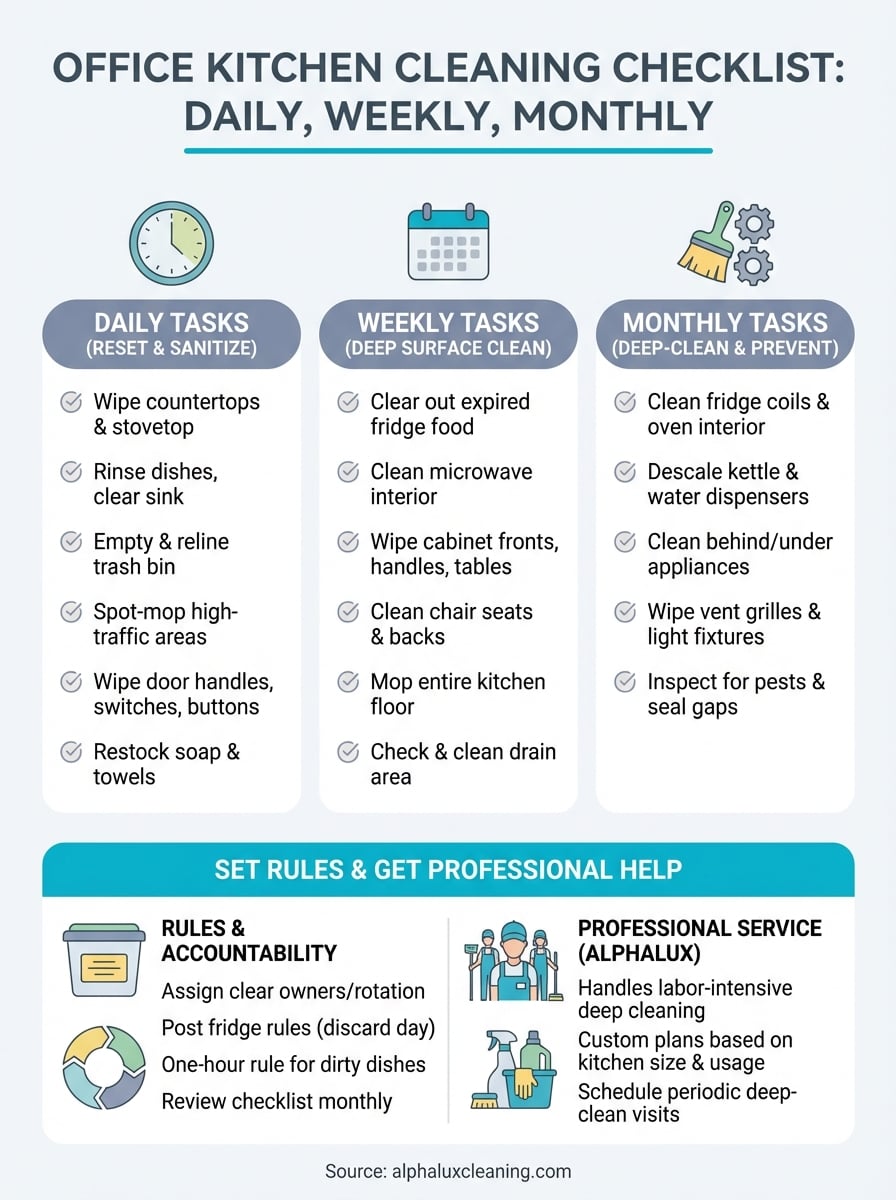
Keep this section of your office kitchen cleaning checklist posted near the sink so staff see it during use. Wipe all countertops and the stovetop with a food-safe cleaner after the lunch rush and again before close. Rinse and dry the sink basin, and make sure no dishes sit unwashed overnight.
Daily checklist for trash, floors, and spills
Empty and reline the trash bin daily, especially when food waste is involved. Spot-mop high-traffic floor areas around the sink and tables, and clean up spills before end of day rather than leaving them for the next shift.
Daily checklist for high-touch points and restocking
Wipe door handles, light switches, and appliance buttons with a disinfectant wipe at the end of each day. Confirm that soap, paper towels, and hand sanitizer are stocked and ready before the next workday starts.
3. Follow a weekly office kitchen cleaning checklist
Weekly tasks tackle the buildup that daily routines miss and keep your kitchen from needing emergency intervention. Adding a structured weekly block to your office kitchen cleaning checklist gives your team a clear target every seven days.
What "weekly clean" should reset
A weekly clean targets surfaces, appliances, and storage areas that accumulate grease, grime, and odor over multiple days. Your goal is to clear anything that daily wiping cannot address and prevent long-term deterioration.
A consistent weekly reset is what separates a kitchen that stays clean from one that only looks clean after someone complains.
Weekly checklist for fridge and microwave
Remove all expired or unlabeled food from the fridge and wipe down the interior shelves with a food-safe cleaner. Clean the microwave interior, including the ceiling and turntable, to remove splatter before it hardens.
Weekly checklist for cabinets, tables, and chairs
Wipe cabinet fronts, drawer handles, and table surfaces with a disinfectant solution to remove fingerprints and food residue. Clean chair seats and backs, since these collect crumbs and grease that go unnoticed during daily routines.
Weekly checklist for floors, corners, and odors
Mop the entire kitchen floor, including corners and the area under tables where debris collects. Check trash bin and drain areas for odor sources and treat them with a neutralizing cleaner before the smell carries into the rest of the office.
4. Do a monthly deep-clean checklist
Monthly deep-cleaning is where accumulated grease, hidden grime, and overlooked buildup finally get addressed. Your daily and weekly habits keep the kitchen functional, but a monthly reset is what prevents long-term damage to appliances, surfaces, and air quality.
What "deep-clean" should fix and prevent
A deep-clean targets the problems that routine cleaning never reaches. Your goal is to remove buildup that shortens appliance life, eliminate odor sources, and create conditions that make daily maintenance easier going forward.
Skipping monthly deep-cleans leads to grease fires, pest activity, and appliance failures that cost far more than a cleaning visit.
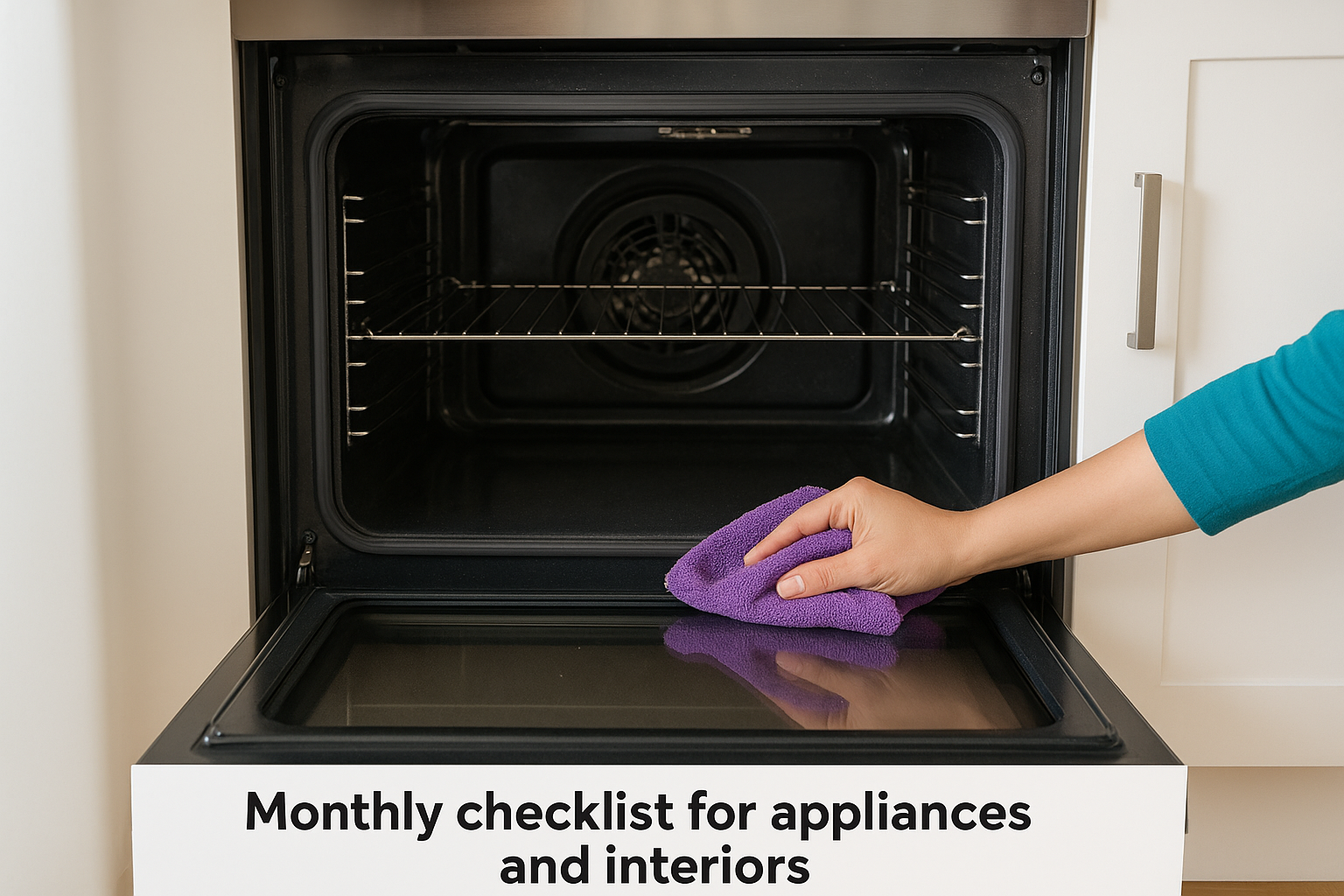
Monthly checklist for appliances and interiors
Pull your fridge coils, oven interior, and coffee machine components and clean each one thoroughly. Descale the kettle and any water dispensers to prevent mineral buildup that affects taste and equipment lifespan.
Monthly checklist for hard-to-reach areas
Clean behind and underneath appliances, including the fridge, microwave stand, and any rolling carts. Wipe ventilation grilles and light fixture covers where grease and dust collect unnoticed during regular weekly rounds.
Monthly checklist for pest prevention and inspection
Check cabinet interiors and under-sink areas for moisture, crumbs, or gaps where pests can enter. Seal any open food containers and inspect floor corners for evidence of activity before adding this step to your office kitchen cleaning checklist.
5. Set office kitchen rules that stick
A checklist without accountability is just a list. You need clear ownership and posted expectations to turn your office kitchen cleaning checklist into something that actually runs on its own.
Assign owners and a simple rotation
Give each task a named owner or a rotating schedule so nobody assumes someone else will handle it. A weekly rotation posted on the fridge wall keeps responsibility visible and prevents the same people from carrying the load every time.
Post expectations for food storage and leftovers
Label the fridge clearly with a discard day (Friday works well for most offices) and require that all food containers carry a name and date. Unlabeled food gets tossed without debate.
Clear food storage rules eliminate the single biggest source of fridge odors and staff complaints.
Build a no-drama system for dishes and spills
Set a one-hour rule for dirty dishes left in the sink and mark a designated drop spot for items waiting to be claimed. Spills get wiped immediately, not at the end of the day.
Track problems and adjust the checklist
Review your office kitchen cleaning checklist monthly to catch tasks that keep getting skipped. When a problem repeats, adjust the schedule or the assigned owner rather than simply adding another reminder that nobody reads.
Keep the breakroom clean long-term
A clean office kitchen does not happen by accident. It happens because you built a system, assigned clear ownership, and committed to following a structured office kitchen cleaning checklist that covers daily, weekly, and monthly tasks without gaps. The sections above give you every task you need to keep your breakroom sanitary, organized, and running smoothly regardless of how many people use it each day.
Your staff can handle the daily habits. A professional crew handles what they cannot. That split is what makes the system sustainable long-term without burning anyone out or letting standards slip. When your kitchen stays consistently clean, hygiene complaints drop, morale improves, and your workspace projects the professionalism your clients and employees deserve.
Ready to hand off the heavy lifting? Book a professional office kitchen cleaning with AlphaLux Cleaning and get a custom plan built around your space.