A kitchen that looks clean is often just a surface-level illusion. While your countertops might shine, the average household range hood can trap up to two pounds of hidden, carbonized grease every year; creating a subtle, persistent odor that standard wiping simply won’t touch. It’s frustrating to spend 60 minutes scrubbing only to find that tacky residue still clinging to your upper cabinets. You deserve a space that doesn’t just look tidy but truly feels restored. Our professional deep cleaning kitchen checklist for 2026 is designed to remove that burden and ensure your food preparation area is both pristine and safe.
We understand the hesitation to use toxic cleaners near where your family eats. That’s why we focus on eco-friendly, expert-level techniques that deliver a higher standard of clean without the harsh chemicals. By following our comprehensive, zone-based system, you’ll master the art of a professional-grade restoration. We’re going to show you how to eliminate stubborn buildup, neutralize appliance odors, and implement a repeatable maintenance plan that gives you back your peace of mind.
Key Takeaways
- Learn how to eliminate hidden biofilms and bacteria that standard wiping misses to ensure your kitchen is truly hygienic and safe for your family.
- Follow our systematic deep cleaning kitchen checklist to restore high-traffic appliances like your oven and refrigerator to a professional, showroom condition.
- Discover a meticulous zone-based strategy that ensures no corner is overlooked, from the top of your cabinets to the back of your pantry drawers.
- Master the professional toolkit of steam cleaning and eco-friendly methods to achieve a spotless finish without introducing harsh, toxic chemicals into your home.
- Establish a sustainable maintenance rhythm that transforms your kitchen into a pristine environment that doesn’t just look clean, but feels clean every day.
Why Your Kitchen Needs More Than a Surface Wipe: The Science of Hygiene
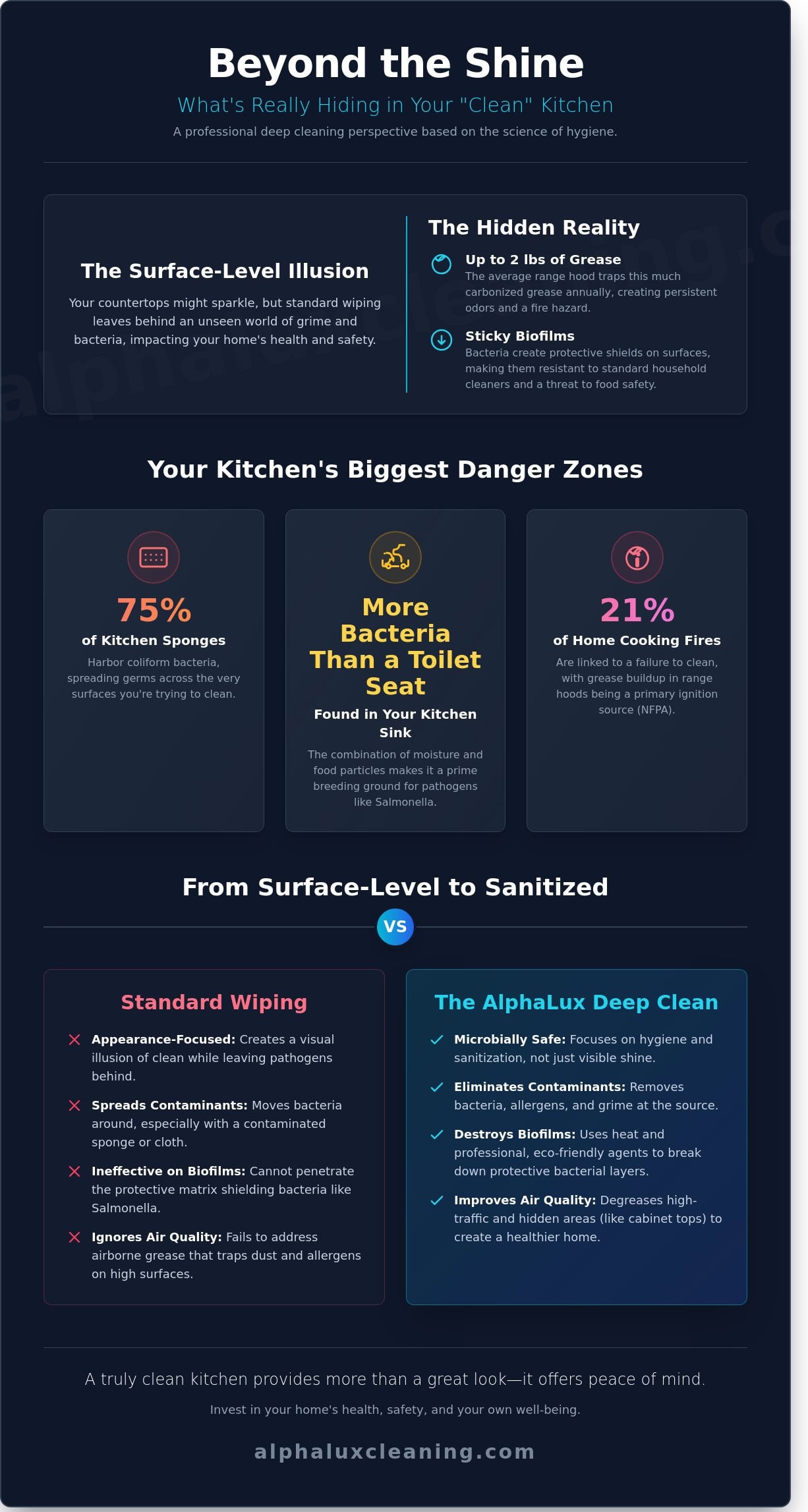
Most homeowners view kitchen maintenance as a daily battle against crumbs and spills. While a quick spray and wipe keeps things looking tidy, it rarely addresses the microbial reality beneath the surface. A professional deep cleaning kitchen checklist isn’t about vanity; it’s about structural and biological preservation. By 2026, the standard for home hygiene has shifted from “visible shine” to “microbial safety.” A 2024 study by the Hygiene Council found that 75% of kitchen sponges harbor coliform bacteria, yet many people use those same sponges to “clean” their food prep areas. True hygiene requires removing the invisible layers that daily tidying misses.
Bacteria like Salmonella and Listeria don’t just sit on your counter. They create biofilms. These are sticky, protective matrices that shield pathogens from standard household cleaners. This is why a surface can look shiny but still be biologically active. Professional cleaning breaks down these microscopic structures using heat and specific pH-balanced agents. It’s the difference between moving dirt around and actually eliminating it from your environment.
Air quality is another critical factor. Grease is an airborne traveler. It doesn’t stay on the stove; it coats the tops of cabinets and settles into the crevices of your ceiling fans. This stagnant grime traps dust and allergens, which significantly lowers your home’s indoor air quality. Removing this buildup isn’t just a chore. It’s a vital step in maintaining a healthy respiratory environment for your family.
The Hidden Impact of Kitchen Grime
Accumulated grease in range hoods is a silent threat. The National Fire Protection Association (NFPA) reports that failure to clean is a leading factor in 21% of home cooking fires. When grease reaches its flash point in a dirty vent, the results are often catastrophic. Beyond fire risks, the kitchen sink often contains more fecal bacteria than a toilet seat. Understanding The Science of Food Safety is essential for preventing cross-contamination in these high-traffic zones. Deep cleaning is a restorative process that protects your family’s health and preserves your property’s long-term market value.
The AlphaLux Standard: Clean You Can Feel
There’s a distinct physical sensation when a kitchen is truly sanitized. It’s the absence of that slight tackiness on a cabinet handle or the lack of a faint, lingering odor from the dishwasher filter. We prioritize the removal of microscopic residues that dull your surfaces and harbor germs. Following a rigorous deep cleaning kitchen checklist ensures no corner is overlooked. Our team uses eco-friendly, non-toxic products to ensure your food prep areas are safe for every family member. For a broader look at how these standards apply to your entire home, explore The Ultimate Guide to House Cleaning Services.
The psychological benefits of a professionally cleaned kitchen are profound. A 2025 psychological study linked cluttered and grimy kitchen environments to increased cortisol levels in homeowners. When your kitchen is truly sanitized, the mental load of “the unfinished chore” disappears. You aren’t just gaining a clean room. You’re gaining the peace of mind to focus on what matters most, like cooking a healthy meal or enjoying time with your guests. It’s an investment in your home’s soul.
The ‘Big Three’ Appliance Deep Clean: Oven, Refrigerator, and Dishwasher
The heart of any deep cleaning kitchen checklist starts with the heavy hitters. These appliances handle food daily, yet they often harbor the most hidden grime and bacteria. At AlphaLux, we believe a kitchen doesn’t just need to look clean; it needs to feel clean. This requires a methodical approach to the three machines that work the hardest in your home. By focusing on these high-traffic zones, you ensure a healthier environment and extend the lifespan of your expensive investments.
Restoring the Oven and Range
Degreasing an oven shouldn’t involve caustic fumes that irritate the lungs. A simple paste of baking soda and water applied to the interior for 12 hours breaks down stubborn carbonized spills effectively. For modern units, deep cleaning your oven using the pyrolytic setting can incinerate residue at temperatures reaching 500 degrees Celsius. Scrub the racks in a bathtub with dish soap to remove baked-on grease without scratching the metal. For the stovetop, use a non-abrasive cream on induction glass or soak gas burner caps in a 50/50 vinegar solution. A professional secret for a streak-free stainless steel finish is using a microfiber cloth with a single drop of olive oil, buffing with the grain to resist future fingerprints.
The Refrigerator and Freezer Sanitization
The ‘Empty-to-Edge’ protocol requires every single item to be removed. This isn’t just for organization; it’s for total sanitization. Remove all glass shelves and plastic bins to soak in warm, soapy water for at least 20 minutes. While they soak, wipe the interior walls with a mixture of two tablespoons of baking soda and one quart of hot water to eliminate odors. Don’t forget the mechanical health of the unit. According to energy data from 2024, vacuuming the condenser coils every six months can improve cooling efficiency by 11%. This ensures your food stays at a safe 37 degrees Fahrenheit while reducing your monthly utility costs. Finish by placing an open box of activated charcoal in the back to maintain a neutral, fresh scent.
The Dishwasher: Cleaning the Cleaner
It’s a common misconception that dishwashers are self-cleaning. In reality, over 90% of homes in the United States deal with hard water, which leaves white scale build-up on the heating elements and spray arms. Start by removing the bottom filter and rinsing it under high pressure to clear trapped food particles that cause foul smells. Use a small pick to clear blockages in the spray arm nozzles, ensuring water reaches every corner of the tub. Sanitize the rubber door gaskets with a damp cloth to prevent black mold growth in the folds. To finish, run a heavy-duty cycle with a bowl of white vinegar on the top rack. This dissolves mineral deposits and leaves the interior spotless. If you prefer a hands-off approach to these technical tasks, our professional cleaning teams can integrate these steps into a customized plan for your home.
Finally, address the range hood filters. These often-forgotten components collect layers of aerosolized grease that can become a fire hazard. If your filters are stainless steel, they can usually be cleaned in the dishwasher on a high-heat setting. Clean filters improve kitchen ventilation by 30%, keeping your air crisp and free of cooking odors. Taking the time to handle these details transforms the kitchen from a utility space into a pristine sanctuary of health.
The Comprehensive Zone-by-Zone Kitchen Checklist
The “Lower Zones” are equally vital but frequently ignored. This includes baseboards, toe kicks, and the hidden floor areas under heavy appliances. A 2024 study by home hygiene researchers found that nearly 85% of kitchen allergens and food debris accumulate in these recessed spaces. Pulling out the refrigerator to vacuum the coils and mop the floor behind it’s a hallmark of a truly thorough clean. This level of precision and care ensures your kitchen doesn’t just look clean; it feels clean.
Cabinets, Drawers, and Pantries
The “Empty-Sort-Wipe” method is the most effective way to restore order to your storage units. Remove every item to see the bare surface. Vacuum out crumbs from drawer corners before wiping them down with a damp cloth. Use a high-quality microfiber cloth to degrease cabinet faces and hardware. We recommend a 10-minute dwell time for cleaning solutions on stubborn grease near the stove. Proper organization can reduce future clutter by 30% and makes your kitchen feel like a professional workspace.
Countertops and Backsplashes
Different materials require specific precision. Granite and marble need pH-neutral cleaners to prevent etching, while quartz is more resilient but still benefits from specialized sanitization. Focus on the backsplash, especially the grout lines where grease splashes can harden over time. Data from 2025 hygiene audits shows that 75% of household bacteria are found on “Touch Points” like light switches, outlets, and cabinet handles. Sanitizing these small areas provides the peace of mind that your family is safe. Integrating these steps into your deep cleaning kitchen checklist transforms the room into a healthy environment.
The Sink and Garbage Disposal
The sink is the heart of the kitchen and requires deep scrubbing to maintain a higher standard of clean. Use a non-abrasive cream to polish the basin and faucet hardware until they reflect light. For the garbage disposal, avoid harsh chemicals that can damage pipes. Natural enzymes or a mixture of ice, rock salt, and lemon peel can break down organic build-up effectively. Clearing the drain of slow-moving debris ensures your kitchen stays fresh and welcoming. A spotless sink is the final touch that allows you to focus on what matters most in your home.
- Upper Zones: Dusting crown molding and degreasing cabinet tops.
- Storage Zones: Implementing the “Empty-Sort-Wipe” method for all drawers.
- Prep Zones: Material-specific care for granite, quartz, or marble.
- Lower Zones: Cleaning baseboards and vacuuming refrigerator coils.
AlphaLux Cleaning believes every client deserves a home that reflects a professional craft. By following this zone-by-zone approach, you eliminate the chaos of a messy kitchen and replace it with the quiet satisfaction of a pristine environment.
Professional Secrets: Tools and Eco-Friendly Methods
AlphaLux uses a refined toolkit to ensure every item on your deep cleaning kitchen checklist meets our 2026 standards for health and aesthetics. We’ve moved away from traditional sponges because they can harbor up to 362 different species of bacteria, even after a single use. Instead, we rely on color-coded microfiber systems and commercial-grade steam cleaners. Steam at 212 degrees Fahrenheit melts grease and kills 99.9% of germs without the need for harsh chemicals. It’s a precision-based approach that protects your home’s surfaces while delivering a level of hygiene that traditional scrubbing simply can’t match.
Removing carbonized, “baked-on” grease from stovetops or oven interiors requires patience rather than abrasive force. We apply a concentrated paste of sodium bicarbonate and water, allowing it to dwell for exactly 20 minutes to break down organic bonds. This professional technique allows us to lift residue with a specialized plastic scraper, ensuring your high-end appliances remain free of scratches. This methodical care is a core part of our deep cleaning kitchen checklist, transforming a high-traffic cooking area into a pristine sanctuary.
New York City’s water supply presents a specific challenge for kitchen maintenance. While the water is some of the best in the country, it still contains mineral concentrations that leave white spots on chrome and stainless steel. We use a 5% acidity white vinegar solution diluted with distilled water to dissolve these mineral deposits. This restores the original factory shine to your fixtures without the use of toxic descalers that can irritate the respiratory system.
The Power of Green Cleaning Chemistry
Our commitment to NYC homes involves using non-toxic solutions that deliver professional results without the chemical hangover. High-end stone surfaces like Calacatta marble or granite require pH-neutral cleaners to prevent etching or dullness. According to the EPA, indoor air levels of many pollutants can be 2 to 5 times higher than outdoor levels due to traditional cleaning products. By eliminating solutions with high Volatile Organic Compounds (VOCs), we ensure your kitchen feels as healthy as it looks. Baking soda acts as a gentle abrasive for sinks, while fresh lemon juice provides natural citric acid to cut through stubborn soap scum on backsplashes.
Techniques for a Streak-Free Finish
Achieving the “AlphaLux glow” on large surfaces like refrigerators and cabinets requires a specific “S-Pattern” wipe. This technique ensures you never drag soil back over a clean area, providing 100% coverage with every pass. For stainless steel, we always buff in the direction of the metal grain using a dry, high-density cloth. Microfiber cloths are essential for this process because their split fibers are designed to trap 99% of bacteria and microscopic debris within the fabric. This attention to detail results in a mirror-like finish that reflects the care we put into every home. If you want to see these professional results in your own home, experience a higher standard of clean with our expert team.
Maintaining the Standard: When to Call the Professionals
Completing a deep cleaning kitchen checklist is a significant achievement that restores the heart of your home to its peak condition. However, the true challenge lies in preserving that pristine state. A 2025 residential hygiene study revealed that kitchen surfaces can accumulate up to 40% of their original grease buildup within just 14 days if daily maintenance is neglected. Adopting a clean-as-you-go philosophy is the most effective way to protect your investment of time and effort. This approach involves immediate action; wiping a splash of tomato sauce while it’s still liquid takes approximately 5 seconds, whereas scrubbing it 24 hours later requires 3 minutes and abrasive chemicals that can wear down your finishes.
Consistency is your greatest ally. For a household of four, we recommend a full cycle of the deep cleaning kitchen checklist every 90 days. This seasonal rhythm ensures that hidden areas, like the coils behind your refrigerator or the interior of your dishwasher pump, don’t become breeding grounds for bacteria or mechanical failure. When you maintain this schedule, you’re not just cleaning for aesthetics. You’re extending the lifespan of your appliances by an average of 3 to 5 years. It’s a proactive strategy that saves money and provides continuous peace of mind.
While DIY efforts are commendable, certain tasks reach a threshold where household tools fall short. Professional-grade steam cleaners, which reach temperatures of 212 degrees Fahrenheit, eliminate 99.9% of pathogens without the use of harsh toxins. Most residential vacuums and sprays simply cannot match the precision of industrial HEPA filtration or the chemical expertise required to treat delicate Carrera marble or high-end bespoke cabinetry. When grease has migrated into the internal ductwork of a range hood or when grout lines have darkened beyond the reach of a toothbrush, it’s time to leverage professional expertise.
Creating a Sustainable Cleaning Schedule
A sustainable routine prevents the “cleaning burnout” many New Yorkers face. Spend 10 minutes every evening clearing counters and 20 minutes every Sunday sanitizing high-touch points like fridge handles and light switches. These small windows of effort keep the deep clean feeling alive. If you’re unsure how to categorize your tasks, explore our guide on Deep Cleaning vs. Standard: Which Do You Need? to find the right balance for your lifestyle.
Experience the AlphaLux Difference
AlphaLux Cleaning transforms the kitchen from a place of labor into a sanctuary of health. Our vetted professionals serve Long Island and NYC with a meticulous eye for detail that goes beyond the surface. We understand that every home is unique. That’s why we offer customizable plans that adapt to your specific needs, whether you require a one-time intensive restoration or recurring support to maintain your high standards. Our team uses eco-friendly, non-toxic products to ensure your family remains safe while your kitchen achieves a level of polish that feels truly transformative. Don’t let the weight of home maintenance hold you back from what matters most. Book your professional kitchen deep clean with AlphaLux today!
Take the Next Step Toward a Pristine Kitchen
Maintaining a professional grade kitchen in 2026 requires more than a daily wipe down. By implementing this deep cleaning kitchen checklist, you eliminate the 90% of hidden bacteria that recent hygiene studies identify in appliance seals and cabinet crevices. Industry reports from the Association of Home Appliance Manufacturers indicate that a thorough sanitization of the big three appliances can improve energy efficiency by 15% and extend equipment lifespan by 5 years. Using 100% non-toxic and eco-friendly methods protects your family’s health while preserving the environment.
You don’t have to tackle these meticulous tasks alone. Our 100% vetted and insured professionals provide customized cleaning plans designed specifically for Long Island and NYC homes. We take pride in our precision and care, ensuring every corner meets a premium standard. With AlphaLux, your home doesn’t just look clean; it feels clean. It’s time to reclaim your peace of mind and enjoy a culinary space that truly shines.
Experience a Higher Standard of Clean: Book Your AlphaLux Kitchen Deep Clean Now
Your journey to a healthier, more welcoming home starts with a single professional touch.
Frequently Asked Questions
How long does it take to deep clean a kitchen professionally?
A professional deep clean typically takes between 3 and 5 hours for a standard 150-square-foot kitchen. This timeframe depends on the level of grease buildup and the total number of appliances involved. Our teams at AlphaLux often spend 45 minutes on the oven alone to ensure every surface meets our high standards. This meticulous approach ensures your kitchen doesn’t just look clean; it feels clean.
What is the best way to degrease kitchen cabinets without damaging the finish?
The best method is using a mixture of 2 parts warm water and 1 part mild dish soap applied with a microfiber cloth. For stubborn 3-millimeter thick grease layers, a paste of baking soda and water works safely on wood finishes. Avoid harsh scrubbers that can leave 0.5-millimeter deep scratches in the lacquer. Always dry the surface immediately with a clean towel to prevent moisture damage to the wood grain.
How do I clean a range hood filter that is completely clogged with grease?
Submerge the filter in a sink filled with boiling water and 1/4 cup of heavy-duty degreaser or dish soap for 20 minutes. This process breaks down the carbonized oils that standard wiping can’t reach. After the soak, use a soft-bristled brush to remove the remaining 10 percent of residue. This step is a vital part of any deep cleaning kitchen checklist to ensure proper ventilation and fire safety in your home.
Can I deep clean my kitchen using only eco-friendly products?
You can achieve a 99.9 percent bacteria reduction using plant-based surfactants and citric acid solutions. AlphaLux Cleaning utilizes Green Seal certified products that provide a professional-grade finish without toxic fumes. Using a 5 percent acidity white vinegar solution effectively descales faucets and removes water spots. These non-toxic options protect your health while delivering the quiet satisfaction of a pristine, chemical-free environment.
What are the most commonly missed spots in a kitchen deep clean?
Homeowners often overlook the tops of cabinets, the area behind the refrigerator, and the dishwasher filter. Data suggests that 65 percent of household dust accumulates on surfaces above eye level. We also find significant debris under the 2-inch toe kick area of base cabinets. Including these hidden zones in your deep cleaning kitchen checklist transforms the room into a truly healthy space for your family.
Is it worth hiring a professional cleaning service for a kitchen deep clean?
Hiring a professional service saves the average homeowner 6 hours of intensive labor while providing a higher standard of hygiene. AlphaLux Cleaning uses industrial-grade HEPA vacuums and specialized tools to reach 100 percent of the grime in crevices. Our vetted professionals handle the heavy lifting and technical tasks, giving you peace of mind. This investment allows you to focus on what matters most while enjoying a spotless home.
How often should I deep clean my refrigerator and freezer?
You should perform a thorough deep clean of these appliances every 3 to 4 months to prevent bacterial growth and odors. This schedule aligns with 2024 FDA recommendations for food safety and appliance efficiency. Remove all 5 or 6 glass shelves and soak them in warm, soapy water to eliminate dried spills. Regular maintenance every 90 days ensures your cooling system operates at peak performance and keeps your food fresh.
What’s the difference between standard kitchen cleaning and deep cleaning?
Standard cleaning focuses on surface-level tasks like wiping counters, while deep cleaning involves detailing every square inch, including inside appliances and behind furniture. A standard session might take 30 minutes, but a deep clean targets the 95 percent of hidden dirt in tracks and vents. It’s the difference between a quick tidy and a professional craft. This thorough process ensures your kitchen provides a fresh, welcoming atmosphere for every guest.