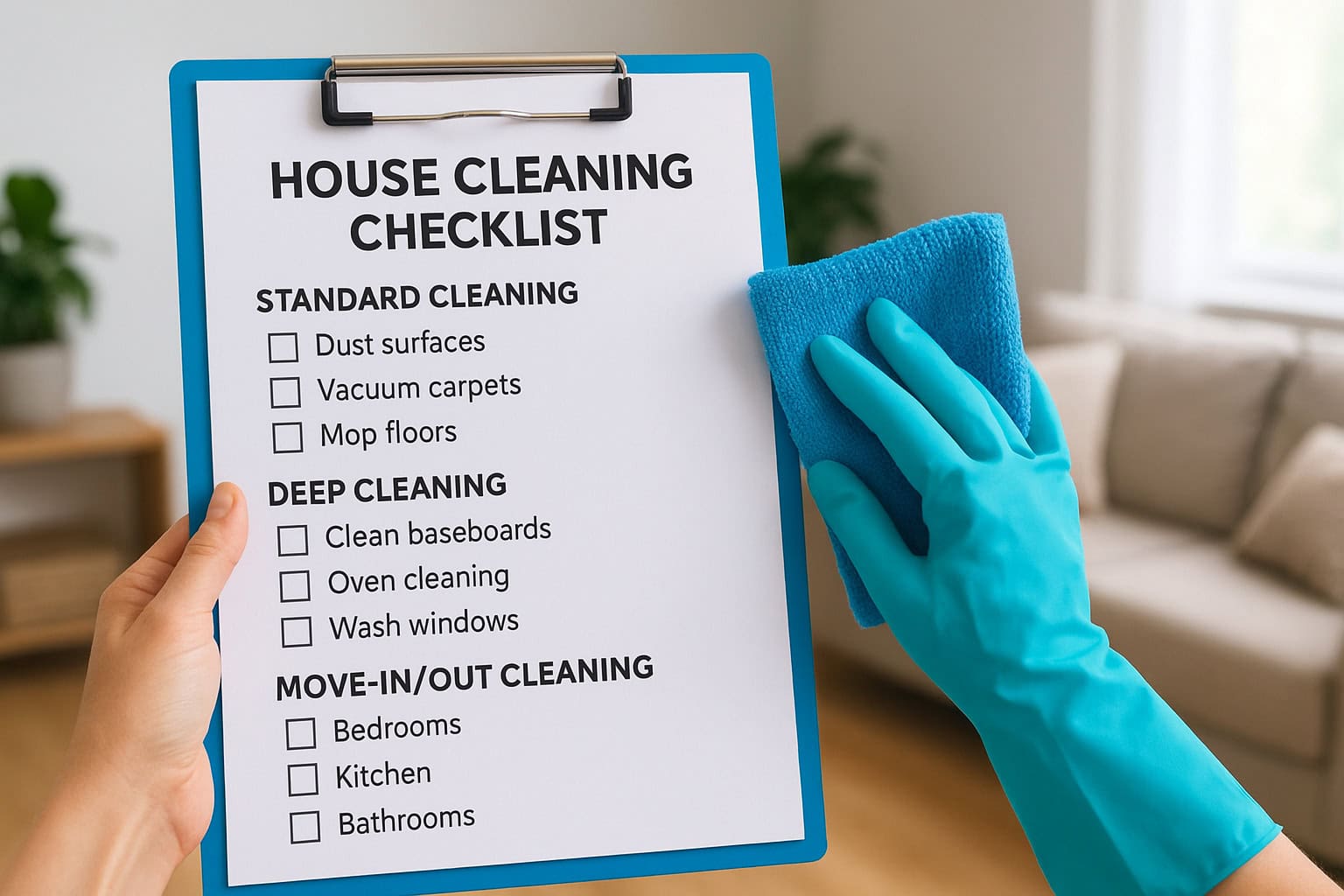
You’re ready to hire a professional cleaner, but you’re not sure what does a house cleaning service include, or what you’re actually paying for. That’s a fair concern. Cleaning companies don’t all offer the same scope of work, and without a clear breakdown, it’s easy to end up with mismatched expectations and a half-cleaned home.
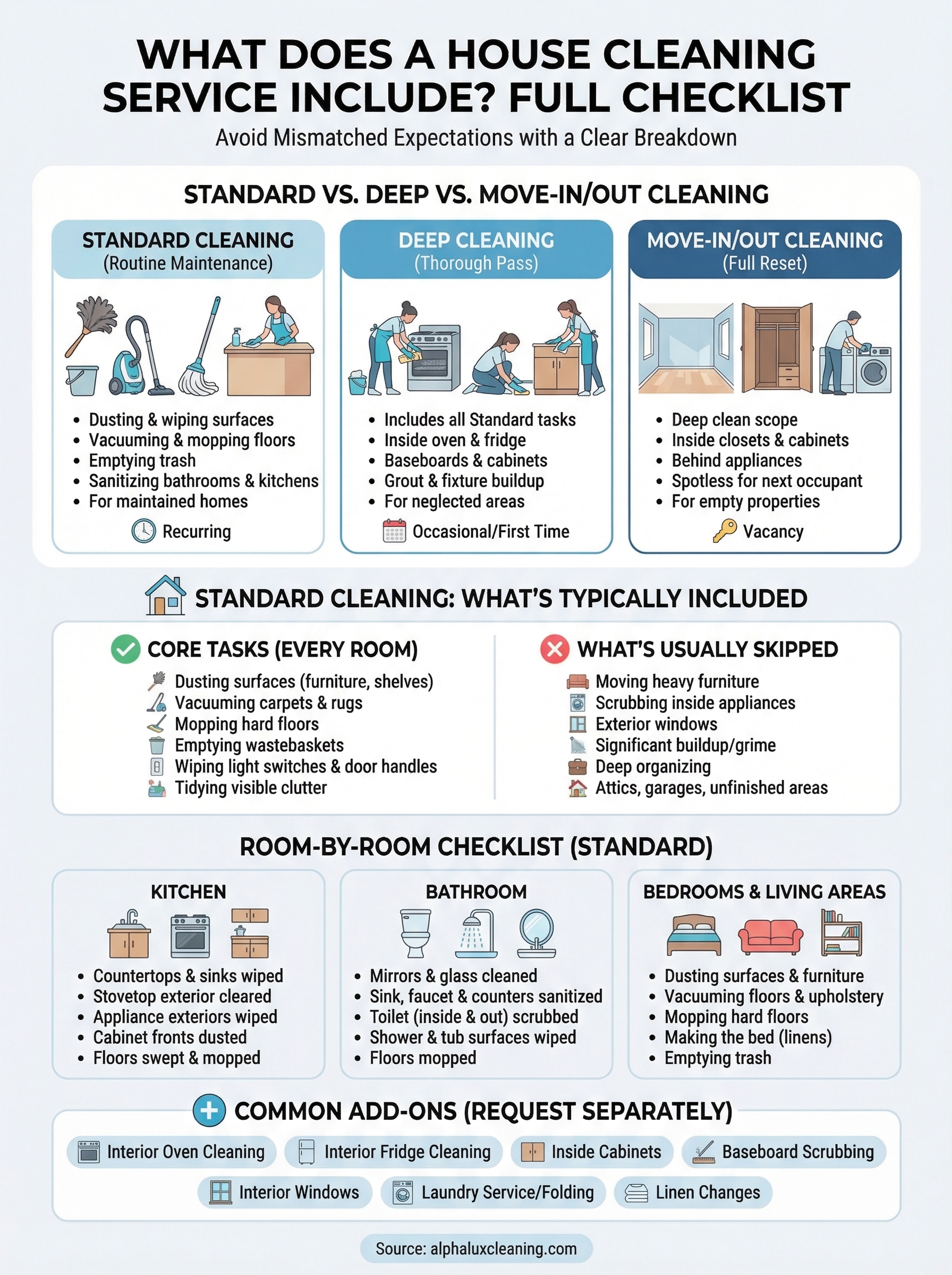
Here’s the short answer: a standard cleaning covers routine maintenance tasks like wiping surfaces, vacuuming, mopping, and sanitizing bathrooms and kitchens. A deep cleaning goes further, think baseboards, inside the oven, behind appliances, and built-up grime you’ve been ignoring for months. But the specifics vary from company to company, and knowing exactly what’s on the checklist before you book makes all the difference. It’s something we take seriously at AlphaLux Cleaning, where every client across New York state receives a clear, customized cleaning plan so there are zero surprises on service day.
This guide breaks down everything a professional house cleaning service typically includes, room by room. You’ll see what falls under a standard clean, what qualifies as a deep clean, and which tasks usually cost extra. By the end, you’ll know exactly what to ask for when booking, and you’ll have a full checklist to hold any cleaning service accountable, including ours.
Why a cleaning checklist matters before you hire
Most people hire a cleaning service based on price and reviews, then assume the cleaner knows exactly what they need. That assumption causes more frustration than almost anything else in the industry. Without a written checklist, neither party has a shared standard to work from, which means your cleaner might skip the baseboards you care about while spending extra time on tasks you wouldn’t have prioritized. A checklist turns a vague promise of "a clean home" into a concrete, measurable service.
A checklist sets expectations on both sides
When you understand what does a house cleaning service include before the cleaner arrives, you avoid the awkward conversation after the fact. Unspoken expectations are the main reason clients leave unhappy reviews, even when the cleaner did their job as they understood it. Giving your cleaner a detailed checklist means both of you are working from the same page from the moment they walk through the door.
A written checklist is the simplest tool you have to make sure the service you booked matches the service you actually receive.
The same logic applies to the cleaning company. A checklist protects the cleaner just as much as it protects you. When the scope of work is documented upfront, there’s no dispute about whether a particular task was included. Your cleaner can work efficiently because they’re not guessing what you consider "done," and you’re not left wondering why the inside of the microwave wasn’t touched.
It helps you compare quotes accurately
Collecting quotes from different cleaning services can be confusing because the numbers often vary with no obvious reason. A $100 clean and a $175 clean might look like a pricing inconsistency until you read what each one actually covers. One company might include oven cleaning in their standard rate; another might charge it as an add-on. Without a detailed checklist from each provider, you’re comparing prices for services that are not the same.
Reviewing each company’s cleaning checklist before you book lets you make a clear, accurate comparison. Ask each provider for their full scope of work in writing. If a company hesitates or gives you vague language like "we clean everything," that’s a sign the service isn’t clearly defined on their end. A professional operation should hand you a detailed list without hesitation.
It gives you a record if something gets missed
Even reliable cleaning services occasionally miss a task. Having a checklist on file means you can point to exactly what was and wasn’t completed if you need to follow up. That’s not about being difficult; it’s about holding the service accountable to what you both agreed on. Without documentation, feedback becomes a matter of opinion rather than a factual comparison against an agreed scope of work.
Professional cleaning companies that back their work with a satisfaction guarantee rely on checklists to make that guarantee real. Knowing exactly what tasks are on the list means a cleaner knows precisely what to come back and fix if something gets missed. That’s how accountability works in practice, and it’s what separates a professional operation from someone who just shows up with a mop and good intentions.
Standard vs deep vs move-in and move-out cleaning
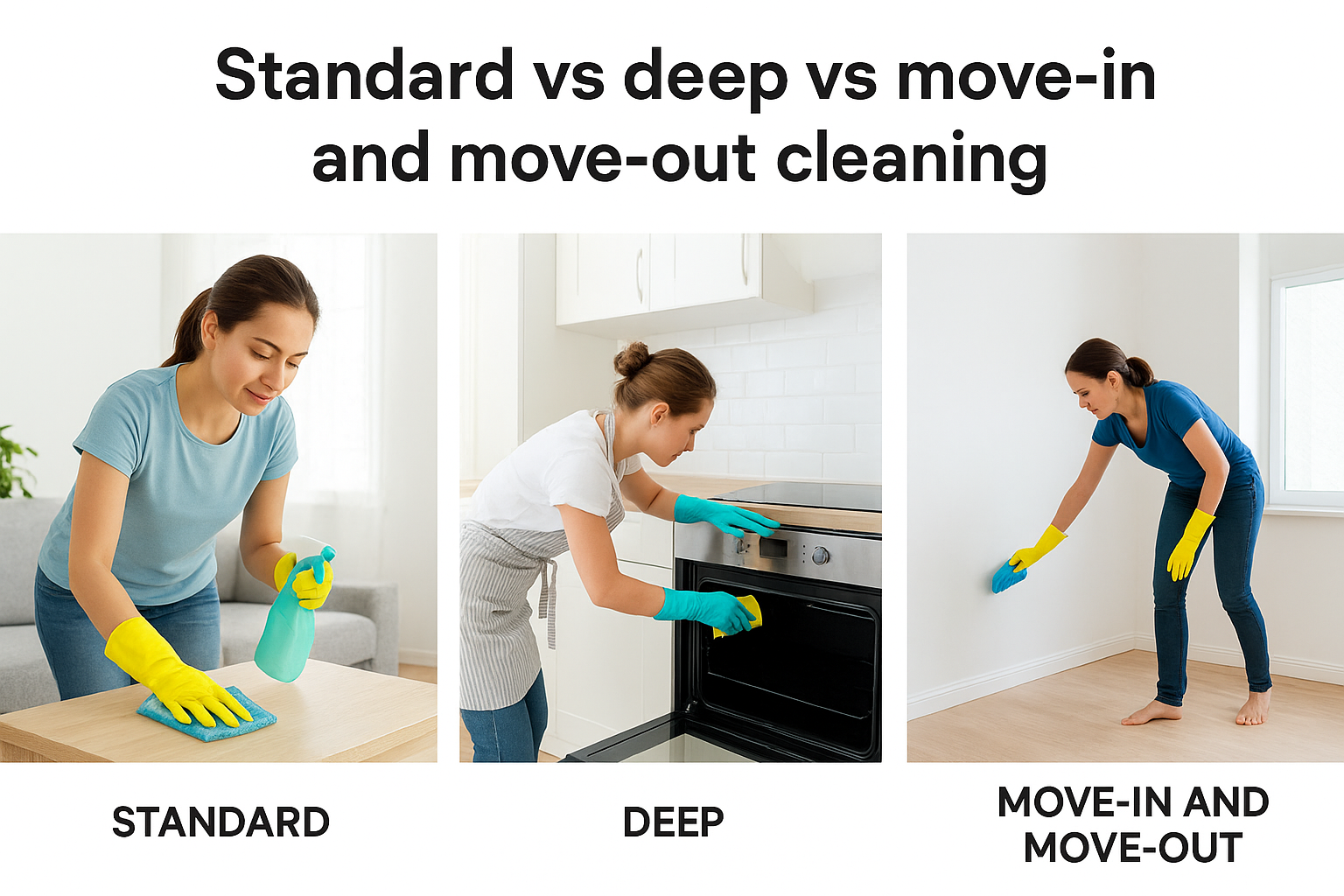
Not every cleaning appointment covers the same tasks, and the type of service you book determines what your cleaner will and won’t do. Before you think about what does a house cleaning service include in detail, you need to know which service category applies to your situation. Standard, deep, and move-in/move-out cleanings are three distinct offerings with different scopes, different time requirements, and different price points.
Standard cleaning: routine maintenance
A standard cleaning is the service most people book on a recurring basis, whether weekly, biweekly, or monthly. It covers the visible, everyday messes in your home: dusting surfaces, wiping counters, cleaning bathrooms, vacuuming floors, and mopping hard surfaces. The goal is to keep a home that’s already reasonably tidy in good condition, without spending time on neglected areas or stubborn buildup.
Standard cleanings work best when you’re already on a regular schedule. If your home hasn’t been professionally cleaned in several months, a standard service won’t have enough scope to handle the grime that’s had time to accumulate.
Deep cleaning: a more thorough pass
A deep cleaning covers everything in a standard clean, plus the areas that rarely get attention during routine maintenance. This includes scrubbing inside the oven, cleaning behind and underneath appliances, washing baseboards, wiping down cabinet fronts, and removing buildup from grout lines and fixtures. Deep cleanings take significantly longer and cost more because the scope of work is much wider.
Book a deep cleaning before switching to a recurring standard schedule. It sets a clean baseline that makes every future maintenance visit faster and more effective.
Most cleaning companies recommend starting with a deep clean if you haven’t had professional service before, then maintaining with standard visits from that point forward.
Move-in and move-out cleaning: a full reset
Move-in and move-out cleanings are designed for empty or nearly empty properties. Because furniture is out of the way, cleaners can reach every surface, including inside closets, behind appliances, and along baseboards that are normally blocked. The goal is to leave the space in spotless condition for the next occupant, or to satisfy the cleaning requirements many landlords include in lease agreements.
These services are the most time-intensive of the three types and are priced accordingly. Expect the scope to mirror a deep clean, with additional attention to areas that only become accessible once a property is fully vacated.
What a standard cleaning includes in every room
A standard cleaning follows a consistent set of tasks that apply across your entire home, regardless of the room type. Before breaking it down space by space, it helps to understand the baseline tasks your cleaner will perform everywhere. Knowing this prevents confusion about what’s covered and what isn’t when you’re working through what does a house cleaning service include for the first time. It also gives you a reliable starting point to compare services before you commit.
The tasks listed here apply to every room unless your written checklist specifies otherwise, so review them carefully before your first appointment.
Tasks that apply to every room in your home
Your cleaner will work through the same core routine in each room during a standard visit. These tasks target the visible, everyday buildup that accumulates between appointments and keep a maintained home looking clean and presentable on a consistent basis.
- Dusting surfaces: Furniture tops, shelves, and accessible ledges get wiped down to remove dust and light debris.
- Vacuuming: Carpets and rugs are vacuumed thoroughly, including along edges and baseboards where dust tends to settle.
- Mopping hard floors: Tile, hardwood, and laminate surfaces get mopped after vacuuming to pick up what the vacuum leaves behind.
- Emptying trash: Wastebaskets in each room are emptied and liners are replaced if you supply them.
- Wiping light switches and door handles: These high-touch surfaces collect bacteria quickly and are included in every standard visit.
- Straightening the room: Your cleaner will tidy visible clutter, such as folding throws or repositioning cushions, though deep organizing falls outside the standard scope.
What cleaners skip during a standard visit
A standard cleaning is designed for homes that are already in decent condition, which means certain tasks fall clearly outside its scope. Your cleaner won’t move heavy furniture to clean underneath it, and they won’t scrub inside appliances, address exterior windows, or tackle areas with significant built-up grime that demands extra time and specialized products.
Understanding this boundary matters before you book. If parts of your home haven’t received regular attention in months, a standard clean won’t restore them on its own. That reflects the defined scope of the service, not a shortcut. You’d need a deep clean in those areas first, then maintain the results with a recurring standard schedule going forward.
Kitchen checklist for a standard house cleaning
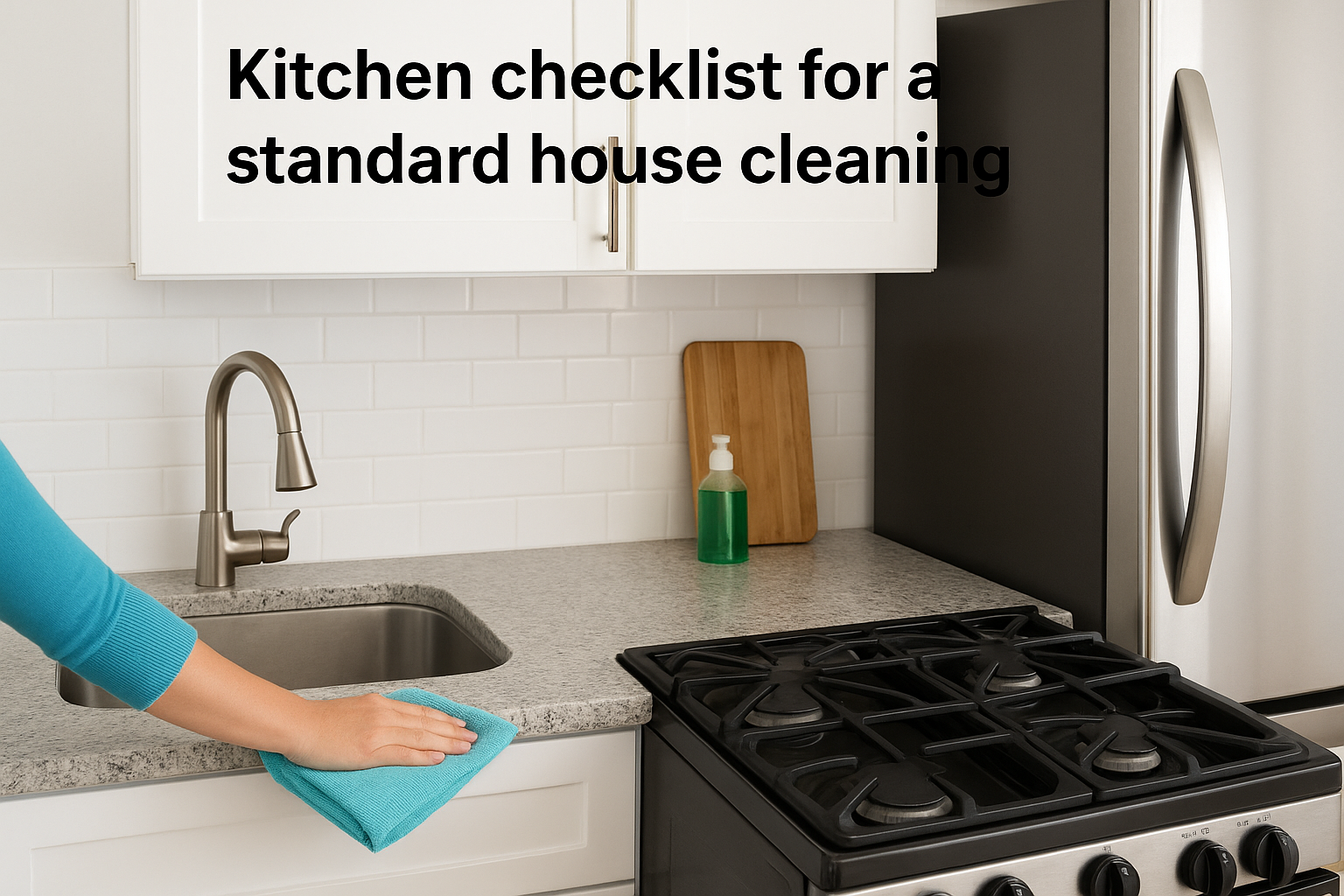
The kitchen is one of the two rooms most clients focus on when trying to understand what does a house cleaning service include. It’s the room that collects the most bacteria, grease, and food residue, so the scope of work here matters more than almost anywhere else in your home. A standard cleaning covers the visible surfaces and high-contact areas but stays away from deep interior work like scrubbing inside the oven or refrigerator. Knowing that boundary ahead of time saves you from expecting a deep clean when you’ve booked a standard visit.
Surfaces your cleaner will wipe down
Your cleaner works through the kitchen methodically, targeting every exterior surface that collects grease, dust, and everyday buildup during normal use. The goal is to leave the kitchen looking clean and smelling fresh without pulling out appliances or going inside cabinets.
A clean kitchen surface is not the same as a deep-cleaned kitchen. Standard visits maintain what’s already in decent shape; they don’t restore areas that have been neglected for months.
Here’s what falls within the scope of a standard kitchen clean:
- Countertops: Cleared and wiped down with an appropriate surface cleaner, including the areas around the sink and stove.
- Stovetop exterior: Wiped to remove surface grease and food splatter. Burner grates are cleaned on the outside but not soaked or scrubbed for heavy buildup.
- Appliance exteriors: The outside of the microwave, refrigerator, and dishwasher get wiped down. The inside of these appliances is not included in a standard visit.
- Cabinet fronts: Wiped to remove fingerprints and light grease, particularly around handles and frequently touched areas.
- Sink and faucet: Scrubbed and sanitized to remove residue, water spots, and surface-level grime.
- Floor: Swept or vacuumed, then mopped to pick up debris and leave hard surfaces clean.
What stays off the list during a standard visit
Tasks that require extra time, specialized products, or moving equipment fall outside a standard kitchen clean. Your cleaner will not clean inside the oven, refrigerator, or cabinets during a routine appointment. Cleaning underneath the refrigerator or stove is also excluded from the standard scope since it requires repositioning heavy appliances.
If your oven has significant grease buildup or your refrigerator needs a full interior wipe-down, request those as add-ons when you book. Addressing them separately keeps your standard visit efficient and focused on the surfaces that matter most during routine maintenance.
Bathroom checklist for a standard house cleaning
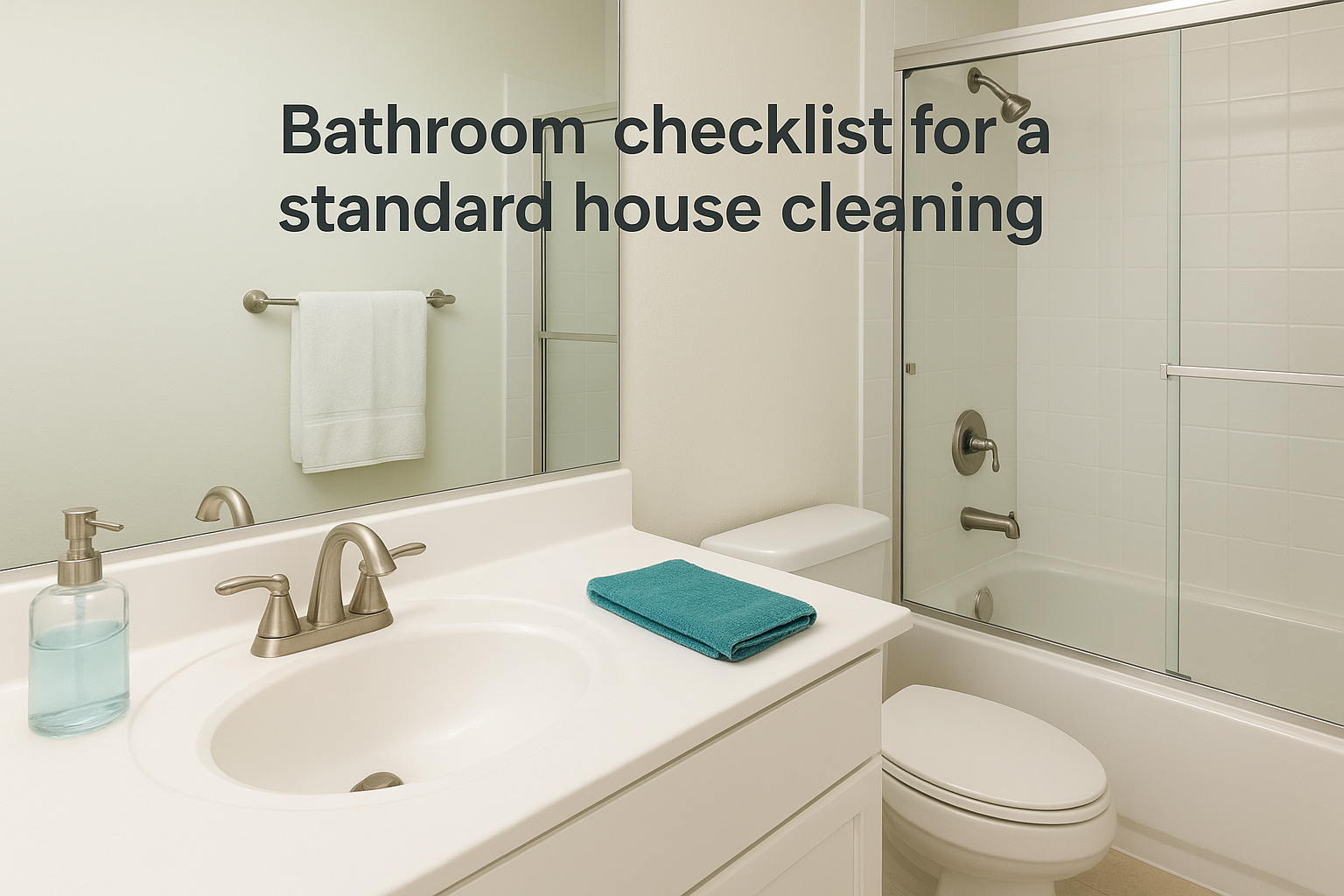
The bathroom is the other room clients focus on most when trying to understand what does a house cleaning service include in a recurring appointment. It’s the highest-priority space for sanitation, and a standard clean covers every surface your family contacts daily. Your cleaner focuses on visible grime, bacteria-prone surfaces, and the fixtures you touch most, leaving the space sanitized and smelling clean after every visit.
What gets cleaned in your bathroom during a standard visit
Your cleaner works through the bathroom in a deliberate order, starting with the highest surfaces and moving down to prevent dirt from resettling on areas that have already been cleaned. Every contact surface gets wiped, scrubbed, or sanitized depending on what it needs, and the floor is the last item on the list.
A properly sequenced bathroom clean works top to bottom, which means your cleaner tackles mirrors and surfaces before scrubbing the toilet and finishing with the floor.
Here’s what a standard bathroom clean covers:
- Mirror and glass surfaces: Wiped with a streak-free cleaner to remove toothpaste splatter, water spots, and fingerprints.
- Sink and faucet: Scrubbed and sanitized, including around the drain and base of the faucet where buildup tends to collect.
- Countertop: Cleared of items where possible and wiped down to remove product residue and surface grime.
- Toilet: The exterior bowl, tank, lid, seat, and base are all cleaned and sanitized. Interior bowl scrubbing is included in every standard visit.
- Shower and tub exterior: Walls, fixtures, and the tub surface get wiped down and rinsed. Your cleaner addresses soap scum and light buildup but won’t spend extended time on grout that’s been neglected for months.
- Floor: Swept or vacuumed, then mopped or wiped to leave the surface clean and dry.
What your cleaner won’t tackle in a standard bathroom clean
A standard bathroom clean is designed to maintain a space that’s already in reasonable condition, not to restore one that’s been neglected. Your cleaner won’t deep-scrub grout lines, remove heavy mineral deposits from fixtures, or address mold that’s worked into tile or caulk. Those jobs require specialized products and extra labor that fall outside a routine appointment’s scope.
If your bathroom has significant buildup in any of those areas, book a deep clean first. Once the problem surfaces are restored, a standard recurring visit keeps them that way without requiring extra time or cost.
Bedrooms and living areas checklist for a standard clean
Bedrooms and living areas make up the largest portion of most homes, and they’re also where dust builds up fastest on furniture, floors, and flat surfaces. When you’re working through what does a house cleaning service include for these spaces, the scope centers on consistent surface maintenance: dusting, vacuuming, and tidying the rooms you spend the most time in. A standard clean keeps these rooms comfortable and presentable without reorganizing your belongings or moving heavy furniture.
What your cleaner covers in bedrooms
Your cleaner works through each bedroom with the same systematic approach used in every other room. The focus is on dust removal and floor care, since those are the two factors that affect air quality and overall comfort the most in a sleeping space.
Clean bedroom surfaces reduce the dust and allergens that build up between visits, which directly affects how comfortable the room feels on a daily basis.
Here’s what falls within the scope of a standard bedroom clean:
- Dusting surfaces: Nightstands, dressers, shelves, and other flat surfaces get wiped to remove dust and light debris.
- Vacuuming: Carpets, rugs, and hard floors are vacuumed, including along edges and under bed frames where dust settles.
- Mopping hard floors: Hard surface floors get mopped after vacuuming to lift residue the vacuum leaves behind.
- Making the bed: Your cleaner will straighten and remake the bed using the linens already on it. Changing sheets is a separate add-on most companies offer.
- Emptying trash: Wastebaskets are emptied and liners are replaced if you supply them.
- Wiping high-touch surfaces: Light switches, door handles, and lamp bases get wiped down on every visit.
What your cleaner covers in living areas
Living rooms and common spaces follow the same core checklist as bedrooms, with a few additional surface types to account for. Upholstered furniture, entertainment units, and decorative items all collect dust quickly, and your cleaner addresses each one during a standard appointment.
Shelves, picture frames, and decorative items get dusted, upholstered furniture like sofas and chairs gets vacuumed, and hard floors go through the same vacuum-then-mop sequence used elsewhere. Surfaces on coffee tables, side tables, and media consoles are wiped down. Heavy furniture won’t be moved, and your cleaner won’t reorganize items on shelves, but every accessible surface gets covered within the standard scope.
Common add-ons you can request
A standard cleaning covers the tasks that keep a maintained home in good shape, but your specific needs won’t always fit neatly into that scope. Most professional cleaning companies offer a menu of add-on services you can attach to any appointment, which lets you customize the visit without booking an entirely different service type. Understanding what those add-ons look like is part of knowing what does a house cleaning service include beyond the baseline.
Add-ons that go deeper on specific areas
Some add-ons target the tasks that fall just outside a standard visit but don’t require a full deep clean. These are useful when one area of your home needs extra attention while the rest only needs routine maintenance.
Requesting a targeted add-on is often more cost-effective than upgrading your entire appointment to a deep clean when only one or two areas need the extra work.
Common add-ons in this category include:
- Interior oven cleaning: Removes baked-on grease and residue from inside the oven cavity, which takes additional time and specialized products.
- Interior refrigerator cleaning: Wipes down shelves, drawers, and interior walls after you’ve cleared out the contents.
- Inside cabinet cleaning: Clears out and wipes down cabinet interiors, typically in the kitchen or bathroom.
- Baseboard scrubbing: Goes beyond a quick wipe to address buildup along baseboards throughout the home.
- Interior window cleaning: Cleans the inside surface of windows, which your cleaner normally skips during a standard visit.
Add-ons for bedding, laundry, and organization
Beyond surface cleaning, some clients need help with tasks that overlap with household management rather than traditional cleaning. Many companies offer these as optional services you can add to any appointment.
Linen changes are one of the most commonly requested add-ons. Your cleaner will strip the beds and replace them with fresh sheets you’ve left out, saving you time on laundry day. Laundry service is another option some companies provide, covering a load of washing and folding during the cleaning appointment. Light organization, where your cleaner tidies cluttered areas such as folding clothes on a chair or grouping items on a countertop, is also available through many providers. These add-ons won’t reorganize entire rooms or systems, but they help you get more out of a single visit when your schedule is tight.
What a standard cleaning usually does not include
Understanding what does a house cleaning service include is just as much about knowing the limits as it is about knowing the full scope. A standard cleaning is designed for maintained homes, not homes that need restoration work. If you go into an appointment expecting tasks that fall outside that scope, you’ll end up disappointed regardless of how well the cleaner performed within their defined role.
Knowing what’s excluded from a standard visit protects you from booking the wrong service and helps you decide when to request an add-on or upgrade to a deep clean.
Tasks that require extra time or equipment
Some tasks get excluded from standard visits not because they’re unimportant, but because they demand significantly more time or specialized products than a routine appointment allows. These jobs require their own slot on the schedule, which is why professional companies treat them as separate add-ons or service upgrades.
Common examples include:
- Interior appliance cleaning: The inside of the oven, refrigerator, and microwave stays off the list during a standard visit.
- Window cleaning: Interior and exterior window washing requires different tools and adds substantial time to the appointment.
- Wall washing: Scuff marks and grime on painted walls aren’t addressed unless you specifically request it.
- Carpet shampooing or steam cleaning: Standard vacuuming is included, but deep carpet treatment uses equipment that falls outside routine scope.
Areas that get skipped unless you ask
Beyond time-intensive tasks, certain physical areas of your home are consistently skipped during a standard clean. Most of these locations are inaccessible during routine maintenance or require moving heavy objects that aren’t part of a normal visit.
Your cleaner won’t move heavy furniture to vacuum or mop underneath it. Attics, garages, and unfinished basement spaces are also outside the standard scope since those areas don’t fall under the definition of livable, maintained space. Exterior surfaces, including outdoor furniture, patios, and siding, stay off the list entirely. Your cleaner also won’t address pest-related issues, biohazardous material, or anything that falls under construction cleanup rather than household maintenance.
Raising these needs when you book gives the company time to plan accordingly. Most cleaning providers can accommodate specific requests as paid add-ons, but they need to know before the cleaner arrives and has already planned their time around a standard scope.
How to book the right service and set expectations
Booking the right cleaning service starts well before you enter a payment method. Once you understand what does a house cleaning service include in general terms, you need to apply that knowledge to the specific company you’re considering. Every provider structures their services differently, so the goal is to collect enough information upfront to make a confident decision rather than a hopeful one.
Ask for the checklist before you commit
Request the company’s written cleaning checklist before you book. A professional cleaning service should have this document ready without hesitation. If they don’t, or if they respond with vague language about cleaning "everything thoroughly," that’s a clear signal their scope isn’t defined well enough to hold them accountable later.
A written checklist is your single best tool for comparing two cleaning companies accurately, since price alone tells you nothing about what each quote actually covers.
When you receive the checklist, compare it line by line against your priorities. If a task you care about isn’t listed, ask directly whether it’s included, available as an add-on, or outside their scope entirely. Get that answer confirmed in writing before your first appointment.
Communicate your priorities before the cleaner arrives
Once you’ve booked, send your cleaner or the scheduling team a short note outlining your specific priorities. If the master bathroom needs extra attention, say so. If you have a pet and want the upholstered furniture vacuumed thoroughly, include that. Most cleaners work on a set time budget per appointment, and knowing your priorities in advance helps them allocate their time where it matters most to you.
You should also flag any areas or items you want the cleaner to avoid. Certain antique surfaces, fragile decorative items, or spaces you’ve already handled yourself are worth mentioning before the appointment rather than after. This prevents the cleaner from spending time on something you didn’t need and missing something you did.
Walk through your home briefly with the cleaner at the start of the first appointment if that option is available. Pointing out specific problem areas in person takes two minutes and eliminates most of the guesswork. After that first visit, leave written feedback on what worked well and what you’d adjust, so every future appointment gets closer to exactly what you need.
Next steps
Now you know what does a house cleaning service include across every room, every service type, and every common exception. Use this checklist as your reference point whenever you evaluate a new provider, book a one-time visit, or upgrade from standard maintenance to a deep clean. The cleaner outcome always starts with clear communication before the appointment, not hope that the cleaner guesses right.
Your next move is simple: decide which service fits your current situation, write down your top priorities, and get a written checklist from the company before you commit. If you’re in New York and want a team that comes with a clear scope of work, eco-friendly products, and background-checked professionals, AlphaLux Cleaning is ready to walk you through the options. Book a free estimate with AlphaLux Cleaning and get a cleaning plan built around what your home actually needs.