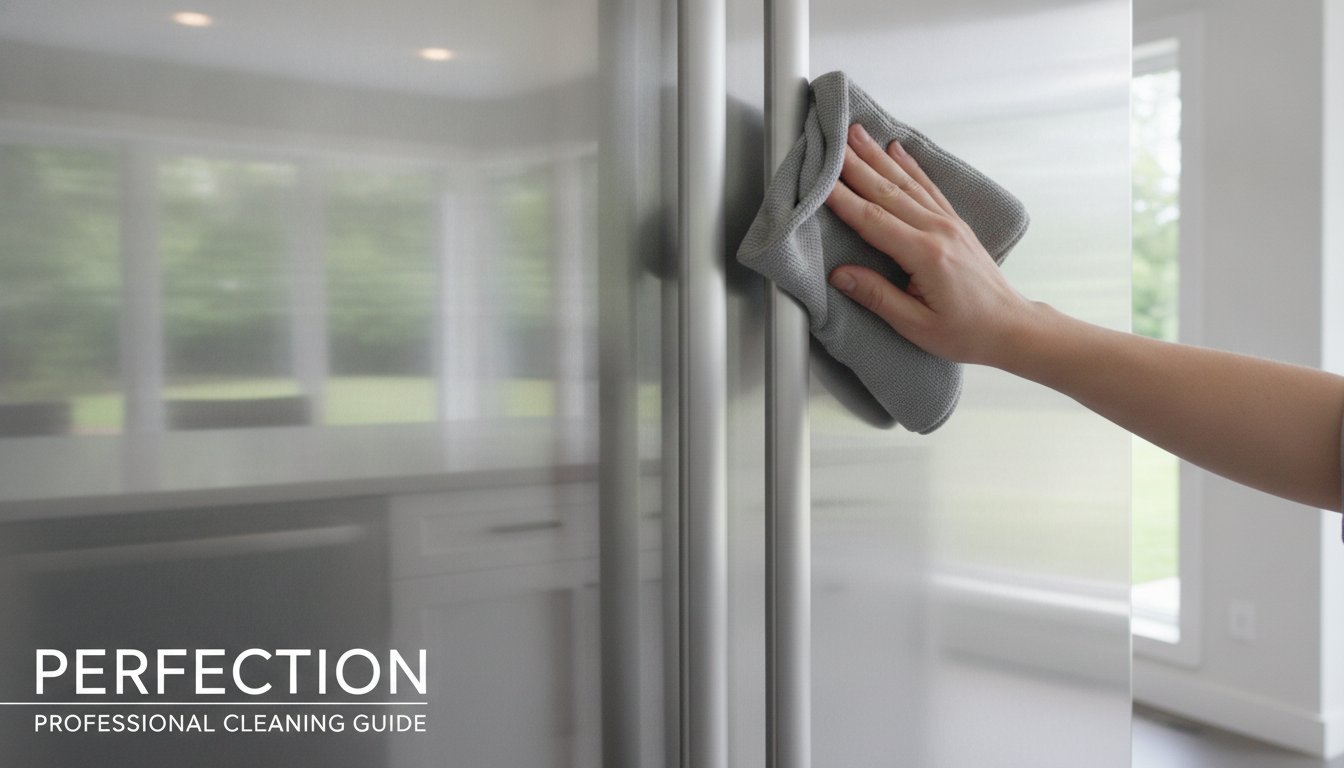
Why does your premium refrigerator often look more clouded after a cleaning than it did before you started? It’s a common frustration for homeowners who find that the more they scrub, the more persistent those oily fingerprints and cloudy streaks become. If you’ve been struggling with hard water spots from local New York water or live in fear of accidentally scratching your expensive finishes, you aren’t alone. Learning how to clean stainless steel appliances isn’t just about removing dirt; it’s a professional craft that involves protecting the delicate chromium oxide layer that gives the metal its signature luster.
At AlphaLux Cleaning, we believe a truly clean kitchen provides a sense of mental clarity and home pride that goes beyond simple aesthetics. We’re sharing the meticulous techniques our professionals use to achieve a flawless, showroom shine without the use of harsh chemicals or abrasive tools. You’ll discover how to identify the grain of your metal, the importance of pH balance in your cleaning solutions, and the exact sequence of steps required to eliminate stubborn residue for good. This guide will transform a frustrating chore into a rewarding ritual; it ensures your kitchen remains the polished heart of your home.
Key Takeaways
- Understand the science of the passive chromium oxide layer to prevent permanent damage and maintain the integrity of your luxury finishes.
- Master the professional 3-step method on how to clean stainless steel appliances to ensure a streak-free, mirror-like shine every time.
- Identify why common household myths, such as using olive oil, lead to sticky buildup and how to properly neutralize mineral deposits from hard water.
- Learn safe, non-abrasive techniques for troubleshooting tough messes like surface rust and burnt-on food without risking scratches.
- Reclaim your sense of mental clarity and home pride by transforming a routine chore into a meticulous professional craft.
The Science of Stainless Steel: Understanding the Protective Layer
Stainless steel is often misunderstood as a simple coating or a solid, indestructible block of metal. In reality, it’s a sophisticated alloy. Its remarkable resistance to corrosion comes from a “passive” layer of chromium oxide that forms naturally on the surface. When you are Understanding the Protective Layer, you’ll find that this microscopic shield is what prevents oxygen from reaching the underlying iron. It’s self-healing under normal conditions, but it’s also incredibly delicate. Mastering how to clean stainless steel appliances requires a shift in perspective; you aren’t just washing a surface, you are maintaining a chemical balance.
Fingerprints, kitchen grease, and cooking oils don’t just look unsightly; they physically disrupt the way light interacts with this layer. This creates that frustrating “cloudy” or “oily” appearance that many homeowners struggle to remove. If these organic bonds aren’t broken correctly, they trap more dust and debris, leading to a cycle of dullness. More importantly, certain substances like salt or harsh chlorides found in some bleaches can cause “pitting.” These are tiny, permanent holes in the metal that can never be buffed out. Professional care focuses on preserving this layer to ensure your appliances remain hygienic and visually stunning for decades.
Identifying Your Steel Type
The ‘Grain’ Explained
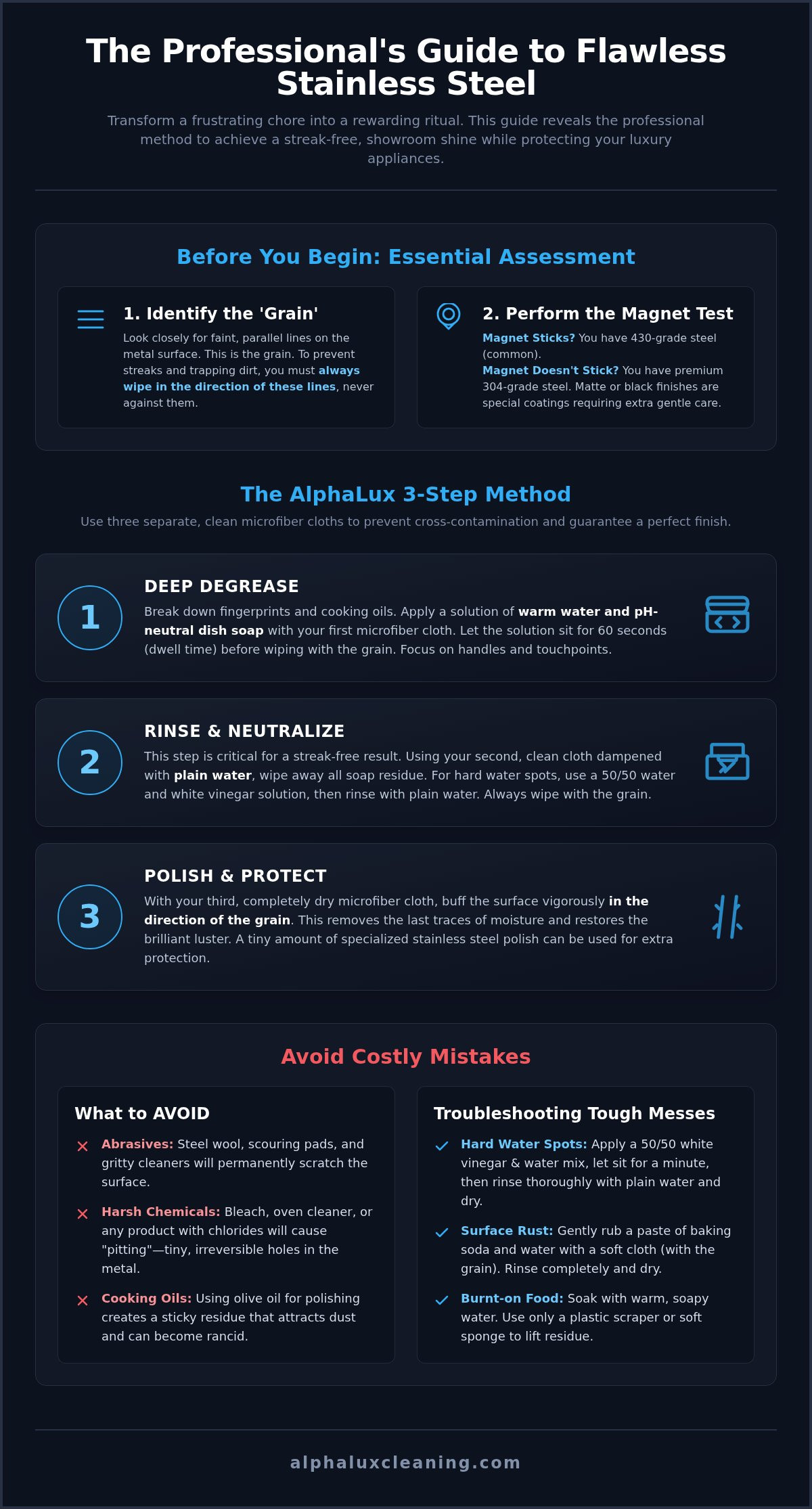
The grain is the directional pattern of tiny grooves etched into the metal surface during the manufacturing process. You can usually identify the grain on fridges and dishwashers by looking closely at the surface for faint horizontal or vertical lines. On ovens and range hoods, the grain often runs vertically to help shed grease. You must always wipe in the direction of these lines. Cleaning against the grain acts like a microscopic shovel, pushing dirt and cleaning agents deep into the grooves where they become trapped and cause permanent streaks.
The AlphaLux 3-Step Method for a Flawless Finish
Achieving a showroom shine isn’t about the strength of your scrubbing; it’s about the precision of your process. Many homeowners struggle with how to clean stainless steel appliances because they attempt to degrease and polish in a single motion. This often results in simply spreading oils across the surface. At AlphaLux, we employ a rigorous three-step sequence that respects the metal’s chemistry while ensuring a streak-free result. By separating the cleaning, rinsing, and polishing phases, you eliminate the residue that typically causes those frustrating “rainbow” patterns under kitchen lights.
To execute this properly, you’ll need three distinct microfiber cloths. Using the same cloth for every step leads to cross-contamination, where grease removed in the first phase is redeposited during the final buff. This methodical approach is a cornerstone of professional cleaning and maintenance advice, as it preserves the integrity of the protective chromium oxide layer we discussed previously. If your appliances have years of built-on residue, a professional deep clean can provide the necessary reset to make daily maintenance effortless.
Step 1: Deep Degreasing
The first priority is breaking the organic bonds of fingerprints and cooking grease. We recommend using a mild, pH-neutral dish soap diluted in warm water. Apply this solution to your first microfiber cloth and wipe the appliance thoroughly, paying extra attention to handles and touchpoints where skin oils are heaviest. The secret here is “dwell time.” Instead of scrubbing immediately, let the damp solution sit on the surface for sixty seconds. This allows the surfactants to lift the oils safely without the need for abrasive force that could scratch the finish.
Step 2 & 3: Rinsing and Buffing
Once the grease is lifted, you must remove the soap residue. For residents in NYC and Long Island, the mineral content in tap water often leaves cloudy spots. Using distilled water for this neutralizing rinse is a professional secret that guarantees a clear finish. Use your second cloth, dampened with distilled water, and employ an “S-pattern” wiping technique. This motion ensures you cover every inch of the surface without dragging previously lifted dust back over the clean areas.
The final step is the directional polish. Take your third cloth, which should be a dry, high-gsm (grams per square meter) microfiber, and buff the surface following the grain. This final touch removes any remaining moisture and restores the metal’s natural luster. This meticulous attention to detail is how to clean stainless steel appliances effectively, resulting in a mirror-like finish that brings a sense of calm and order back to your kitchen environment.
DIY Solutions vs. Professional Detailing: What Actually Works?
The internet is filled with conflicting advice on the best household items for kitchen maintenance. Finding the right balance is key when deciding how to clean stainless steel appliances without causing long-term damage. While some online forums suggest using olive oil or baby oil to achieve a quick shine, we advise against this practice. These food-based oils eventually go rancid and create a sticky residue that attracts dust and pet hair. This makes your next cleaning session much harder and can even lead to a tacky buildup that’s difficult to strip away without professional-grade degreasers.
White vinegar, or acetic acid, is a pro-approved descaler specifically for removing mineral deposits left by New York’s hard water. For daily smudges, an ammonia-free glass cleaner is safe for most modern finishes. Ammonia can be too aggressive for certain protective coatings, so checking the label is essential. If you’re in a rush before guests arrive, club soda is an excellent emergency hack. The carbonation helps lift light smudges without leaving behind any chemical odor or residue. It’s a simple trick that provides immediate relief without the need for a full detailing session.
The Vinegar Power-Mix
For routine maintenance, a 1:1 solution of distilled water and white vinegar works wonders. It cuts through hard water spots easily and leaves a crisp finish. You should never use vinegar on “fingerprint-resistant” coated steel, though. The acid can slowly eat away at the specialized polymer coating, leading to permanent discoloration or a blotchy appearance. For more comprehensive advice on maintaining a healthy, well-ordered living space, explore our guide on how to clean your home.
When to Use Specialized Polishes
Troubleshooting Tough Messes: Rust, Scratches, and NYC Hard Water
Even the most meticulous homeowners encounter stubborn issues that standard wiping cannot solve. When you see orange spots on your fridge, it’s often “surface rust” caused by iron particles from cast iron pans or steel wool rather than the appliance itself. To address this, or to lift burnt-on food from a range hood, a thick paste of baking soda and water is highly effective. Apply it gently, let it sit for fifteen minutes, and wipe away with the grain. This non-abrasive approach is a vital part of learning how to clean stainless steel appliances without compromising the finish.
Heat tint, that iridescent rainbow discoloration found on oven doors or stovetops, occurs when the metal is exposed to high temperatures. While it looks permanent, a mild acid like citric acid or white vinegar can often restore the original color by removing the oxidized layer. This is particularly relevant for residents in New York who also deal with calcium and magnesium deposits. Understanding these specific challenges is essential for anyone mastering how to clean stainless steel appliances in a luxury home.
Restoring Surface Scratches
Minor hairline scratches are an inevitable part of a busy kitchen, but how you handle them determines if they disappear or become permanent eyesores. DIY scratch kits often include high-grit sandpaper that can strip the factory finish and leave a dull, mismatched patch. For light marks, try using a non-whitening, non-gel toothpaste. The mild abrasives in the paste can gently buff out shallow scratches when applied with a soft cloth in the direction of the grain. If a scratch is deep enough to catch your fingernail, it likely requires professional resurfacing to avoid creating further damage.
Descaling for New York Residents
Long Island and NYC water often leaves a stubborn “white haze” on surfaces due to its high mineral content. This is most visible as crusty rings around refrigerator water dispensers or cloudy patches on dishwasher doors. The “Soak and Wipe” method involves saturating a paper towel with white vinegar and pressing it against the mineral buildup for ten minutes. This allows the acid to dissolve the calcium bonds safely. Integrating these descaling steps into your regular house cleaning services routine prevents long-term etching of the metal.
If your appliances have reached a point where DIY methods aren’t enough, we are here to help. You can book a professional deep clean to restore your kitchen to its original showroom glory.
Maintaining the AlphaLux Standard: A Lifestyle Solution
A sparkling kitchen is more than a visual achievement; it represents a transition from domestic chaos to mental clarity. When your appliances reflect a mirror-like shine, the entire room feels lighter and more inviting. This sense of quiet satisfaction is the ultimate goal of knowing how to clean stainless steel appliances. Maintaining this standard amidst a busy professional life in NYC or a demanding family schedule in Long Island can become a burden. Recurring maintenance is the key to preventing the cloudy buildup that prematurely ages even the most expensive kitchen finishes.
Transitioning from a DIY approach to professional care allows you to maintain these high-end surfaces without the stress of trial and error. As a premier cleaning company in New York City, AlphaLux is dedicated to providing a service that elevates your home environment. We treat appliance detailing not as a separate task, but as a fundamental hallmark of a well-managed household that prioritizes health and personal respect.
The Deep Cleaning Difference
While standard wiping addresses surface smudges, our vetted professionals focus on the meticulous details that are often overlooked. We clean the vents of your range hood, the kickplates under your dishwasher, and the rubber seals of your refrigerator doors. These specific areas often trap grease and odors that compromise the hygiene and performance of your kitchen. This thoroughness is integrated into our professional cleaning services near me, ensuring every luxury finish receives the specialized care it requires. We offer customizable plans that adapt to your specific needs, providing consistent relief to our clients.
Reclaim Your Weekend
The true value of professional home management is the freedom it provides. Instead of spending your Saturday researching how to clean stainless steel appliances or scrubbing away at mineral spots, you can focus on what truly matters. Our team manages the complex details, allowing you to enjoy the sensory experience of a perfectly maintained space. We invite you to request a free estimate to see how our residential or commercial cleaning options can support your lifestyle. Experience the AlphaLux standard and book your clean today.
Elevate Your Kitchen Experience
Mastering how to clean stainless steel appliances is about more than just aesthetics; it’s about protecting a significant investment and fostering a serene home environment. By respecting the grain of the metal and using the professional three-step method, you can eliminate frustrating streaks and restore a showroom shine. Remember that local challenges, like mineral-heavy water in New York, require specialized solutions like distilled water rinses to maintain a truly flawless finish. Consistency is the secret to preventing cloudy buildup and preserving the integrity of your high-end surfaces over the long term.
If you prefer to reclaim your time and leave the meticulous detailing to the experts, AlphaLux Cleaning is here to support you. Our vetted and insured professionals serve Long Island and NYC with a commitment to excellence and the use of eco-friendly, non-toxic products. We believe that a pristine kitchen provides the mental clarity you deserve. Request Your Free Deep Cleaning Estimate today and experience the quiet satisfaction of a professionally maintained home. Your kitchen is the heart of your house; let us help it shine.
Frequently Asked Questions
Can I use Windex or glass cleaner on my stainless steel appliances?
You can use glass cleaner on your appliances provided it is ammonia-free. Ammonia is a harsh chemical that can gradually degrade the protective coatings found on many modern stainless steel finishes. For the best results, spray the cleaner onto a microfiber cloth rather than directly onto the appliance to prevent drips and uneven application. This ensures a uniform shine and protects the internal components of your electronics.
How do I remove rust spots from my stainless steel dishwasher?
To remove surface rust spots from your dishwasher, apply a thick paste made from baking soda and water. These orange spots are typically caused by iron particles from other kitchen tools rather than the appliance itself. Spread the paste over the affected area, let it sit for fifteen minutes, and then wipe it away following the grain. This gentle, non-abrasive method restores the finish without the risk of permanent scratching.
Is it safe to use steel wool to scrub off burnt-on food?
You should never use steel wool or abrasive scouring pads on your stainless steel surfaces. These materials create deep, permanent scratches and leave behind tiny iron fibers that will eventually rust and discolor the metal. If you are struggling with burnt-on food, use a plastic scraper or a damp microfiber cloth with a pH-neutral degreaser. Protecting the delicate chromium oxide layer is essential for maintaining the appliance’s long-term beauty and hygiene.
What is the best natural way to polish stainless steel without chemicals?
The most effective natural method for polishing involves a simple mixture of white vinegar and distilled water. This solution naturally dissolves mineral deposits and cuts through light grease without leaving behind toxic residues. When learning how to clean stainless steel appliances using eco-friendly ingredients, always finish with a dry microfiber buff. This final step ensures that no moisture remains on the surface, preventing the formation of new water spots or streaks.
Why does my stainless steel look cloudy even after I clean it?
Cloudiness after cleaning is usually the result of leftover soap residue or mineral deposits from tap water. If the cleaning agent isn’t fully neutralized or rinsed away, it dries into a thin, hazy film that traps dust. To resolve this, perform a final rinse with distilled water and buff the surface immediately with a high-gsm microfiber cloth. This meticulous approach eliminates the “rainbow” effect and restores the deep, mirror-like luster of the metal.
How can I tell which direction the grain is going on my fridge?
You can identify the grain direction by looking closely for faint, parallel lines etched into the metal surface. On most refrigerators, the grain runs horizontally; however, on smaller components it may run vertically. If the lines aren’t visible, perform a “touch test” by gently running a microfiber cloth across the surface in both directions. You will feel a slight resistance when moving against the grain; the direction with the least friction is the one you should follow.
Can I use olive oil to make my appliances shine?
While olive oil provides an immediate shine, it is not a professional recommendation for long-term care. Food-based oils eventually go rancid, creating a sticky environment that attracts airborne dust and pet hair. This leads to a tacky buildup that is difficult to remove and can dull the appliance’s appearance over time. Instead, use a specialized, water-based professional polish that provides a protective barrier without the unpleasant side effects of kitchen pantry items.
How often should I deep clean my stainless steel appliances?
We recommend a thorough deep clean every two to four weeks to prevent the accumulation of oils and minerals. Daily maintenance should focus on high-touch areas like handles to remove skin oils before they can bond to the surface. Establishing a consistent schedule for how to clean stainless steel appliances ensures that your kitchen remains a sanctuary of order and clarity. For busy households, a professional recurring service can manage these complex details to alleviate your burden.