Summary:
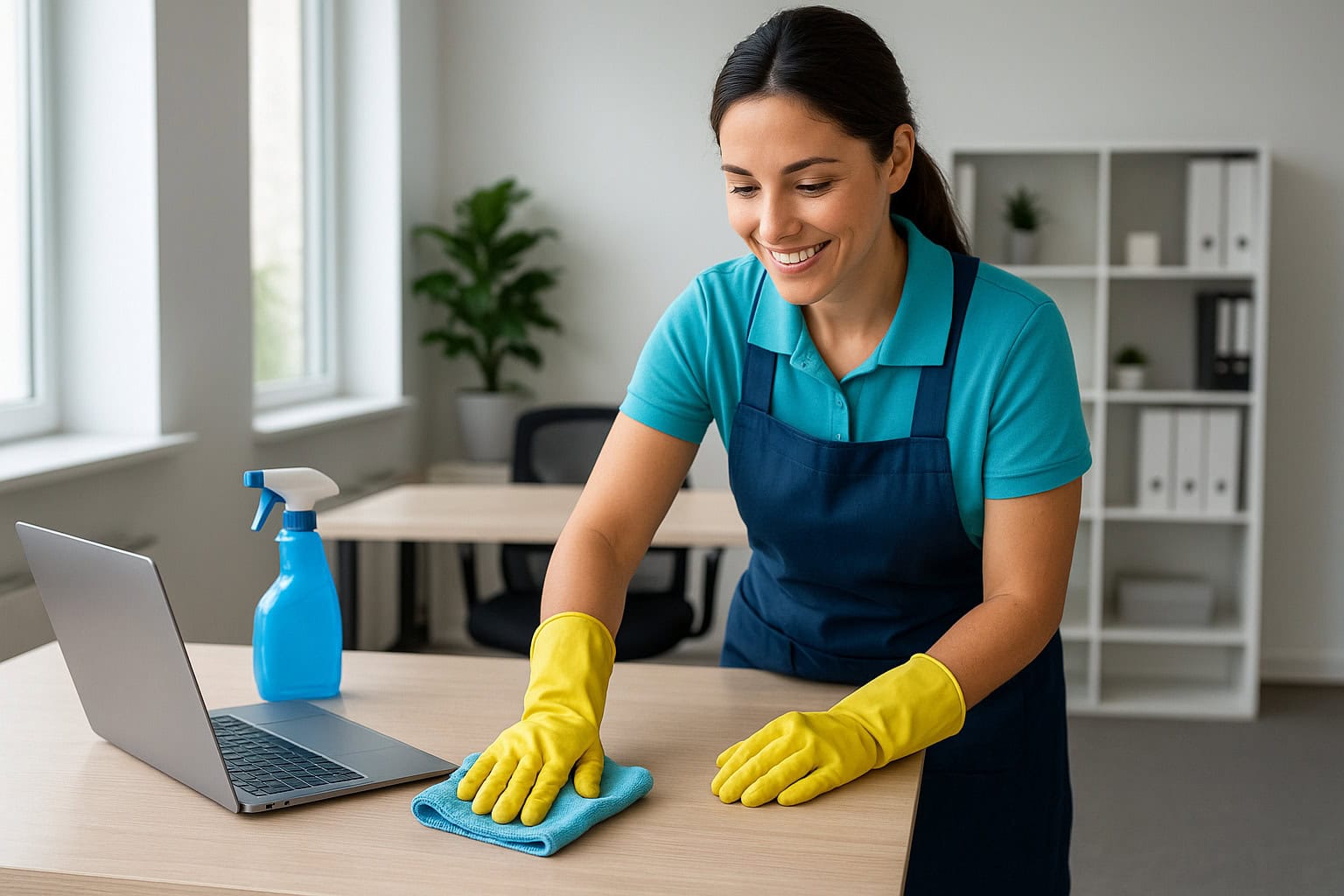
Most business owners on Long Island aren’t thinking about their cleaning service when they’re trying to figure out why productivity is down or why the same three people seem to call in sick every other week. It’s not the first place your mind goes. But the data is hard to ignore — and once you see it, it’s difficult to unsee. A dirty or poorly maintained workspace doesn’t just look bad. It actively works against your team. This page walks you through what the research actually shows, what good commercial cleaning looks like in practice, and what questions are worth asking before you hire anyone.
What a Dirty Office Is Actually Costing Your Business
The CDC estimates that workplace illness and absenteeism cost U.S. employers over $225 billion every year — roughly $1,685 per employee. That number includes sick days, reduced output, and the ripple effect of one person’s illness spreading through a shared office. It adds up faster than most people realize.
What makes it worse is that a lot of this loss is invisible. Employees who come in while fighting allergies or a mild respiratory issue — what researchers call presenteeism — can see their productivity drop by 20 to 30 percent without ever taking a single sick day. They’re there, but they’re not really there. And in a shared workspace on Long Island, the environment itself is often the cause.
How Much Bacteria Is Actually on Your Office Desk?
Research from the University of Arizona found that the average office desk harbors more than 400 times the bacteria of a typical toilet seat. Most people find that hard to believe, but it makes sense when you think about it — toilets get cleaned daily because everyone knows they’re dirty. Desks get a quick wipe when someone notices a spill. The keyboard, the phone, the conference room table, the door handle to the break room — these surfaces accumulate bacteria constantly, and most standard cleaning routines barely touch them.
Germs can survive on hard surfaces for up to 48 hours. That means a single sick employee on Monday can leave behind enough contamination to affect colleagues through Wednesday, even after they’ve gone home. In a small office of 10 or 15 people, that kind of chain reaction plays out repeatedly throughout the fall and winter — which, on Long Island, means roughly October through March when cold and flu season peaks and everyone is spending more time indoors with the windows closed.
The fix isn’t complicated, but it does require consistency. High-touch surfaces need to be disinfected on a reliable schedule — not just when something looks dirty. That’s the difference between cleaning that makes a space look presentable and cleaning that actually reduces the bacterial load your team is exposed to every day. We address both, because they’re not the same thing.
There’s also an air quality dimension that often gets overlooked. A study from Harvard University found that workers in environments with better indoor air quality performed significantly better on cognitive tasks. Dust, allergens, and chemical residue from harsh cleaning products all degrade air quality in ways that affect focus and mental performance — sometimes without anyone in the office connecting the dots.
Does Clutter and Mess Actually Affect How Your Team Thinks?
Yes — and the research on this is more compelling than most people expect. Researchers at Princeton University found that a cluttered environment actively competes for your brain’s attention, reducing its ability to process information and stay focused on the task at hand. It’s not a personality quirk or a matter of preference. It’s a cognitive load issue. When your visual field is full of noise — stacked papers, dusty shelves, overflowing trash — your brain is doing extra work just to filter it out.
A study published in the Journal of Environmental Psychology backed this up from a different angle, finding that employees working in clean, tidy environments reported lower stress levels and higher job satisfaction than those working in cluttered or dirty spaces. That’s not a small thing. Stress and job satisfaction have a direct relationship with turnover, absenteeism, and the quality of work people produce.
There’s also a practical time cost. Research shows that employees spend an average of 4.3 hours per week searching for misplaced items or documents. Over the course of a year, that’s nearly three full weeks of lost productivity per employee — and while cleaning alone won’t solve organizational habits, a consistently clean and orderly environment tends to support better habits across the board.
For Long Island businesses operating out of office parks along the Route 110 Corridor in Melville, medical practices in Garden City, or professional services firms in Mineola, this matters because your team is spending 40-plus hours a week in that space. The environment they work in shapes how they feel, how they perform, and whether they stay. A clean workspace isn’t a perk. It’s part of how you run the business.

What Our Professional Commercial Cleaning Service Actually Involves
There’s a real difference between a space that looks clean and one that actually is. Our commercial cleaning service means understanding which products work on which surfaces, how to disinfect without damaging finishes, and which areas need daily attention versus a weekly deep clean. It’s not just about aesthetics — it’s about removing the bacteria, allergens, and contaminants that affect your team’s health in ways you can’t always see.
We build a plan around your space and your schedule, not a generic checklist. The needs of a warehouse in Hauppauge are different from those of a medical office in Garden City or a retail space in Mineola. What matters is that we understand that difference and actually account for it.
How to Choose a Commercial Cleaning Company on Long Island
This is where most businesses get burned. The cleaning industry has a well-documented retention problem — companies lose more than half their commercial clients every year, largely due to inconsistent service. Quality is great the first few visits, then it quietly degrades. A different person shows up each week. Things get missed. You end up spending time you don’t have managing a vendor you’re paying to take something off your plate.
When you’re evaluating a janitorial service on Long Island, the first thing to ask is who is actually coming into your building. Not the company name — the people. Are they background-checked? Are they employees of the company, or subcontractors? Does the same team come back each visit, or does it change? These questions matter because you’re granting access to your facility, often after hours, sometimes around sensitive equipment, client files, or proprietary information. You deserve a straight answer.
The second thing to look at is how we handle chemicals. This is especially relevant if you have employees with allergies, asthma, or sensitivities — which is more common than most employers realize. Traditional industrial cleaning products can leave chemical residue and odors that linger for hours, degrading the very air quality you’re trying to improve. Eco-friendly, non-toxic cleaning products have come a long way. They clean effectively without the fumes, and they don’t create a new problem while solving the old one.
Pricing transparency is the third thing worth scrutinizing. Hidden fees and variable invoices are a persistent frustration in this industry. Before you sign anything, you should know exactly what you’re paying for and what the total cost will be on a recurring basis. A cleaning company that can’t give you a clear, upfront number is telling you something.
Finally, local ownership matters more than most people give it credit for. A locally owned and operated cleaning company on Long Island has real accountability to the community it serves. When something goes wrong — and occasionally, something will — you’re talking to the person who runs the business, not a national call center routing your complaint through a ticketing system.
Frequently Asked Questions About Office Cleaning on Long Island
**How often should a commercial office be cleaned?** It depends on how many people use the space and how intensively. A small professional office with eight employees has different needs than a busy medical practice or a customer-facing retail space. At minimum, most commercial spaces benefit from weekly cleaning with daily attention to high-traffic areas like restrooms, break rooms, and reception. We assess your space and build a schedule that reflects actual usage — not a one-size-fits-all package.
**Is professional cleaning actually worth the cost for a small business?** Run the math. If a team of 20 employees each takes even one fewer sick day per year because the workspace is properly sanitized, and each of those days costs the business around $500 in lost productivity, that’s $10,000 recovered annually. Most commercial cleaning programs for a space that size cost a fraction of that figure. The question isn’t really whether it’s worth it — it’s whether you’ve been accounting for the cost of not doing it.
**Do I need to be there when the cleaning happens?** No — and for most Long Island businesses, cleaning happens before the workday starts or after hours. We work around your schedule so your team arrives to a clean space without any disruption to operations. This is especially common in office parks along the Route 110 Corridor in Melville or in the Hauppauge area, where businesses often prefer early morning service before the day begins.
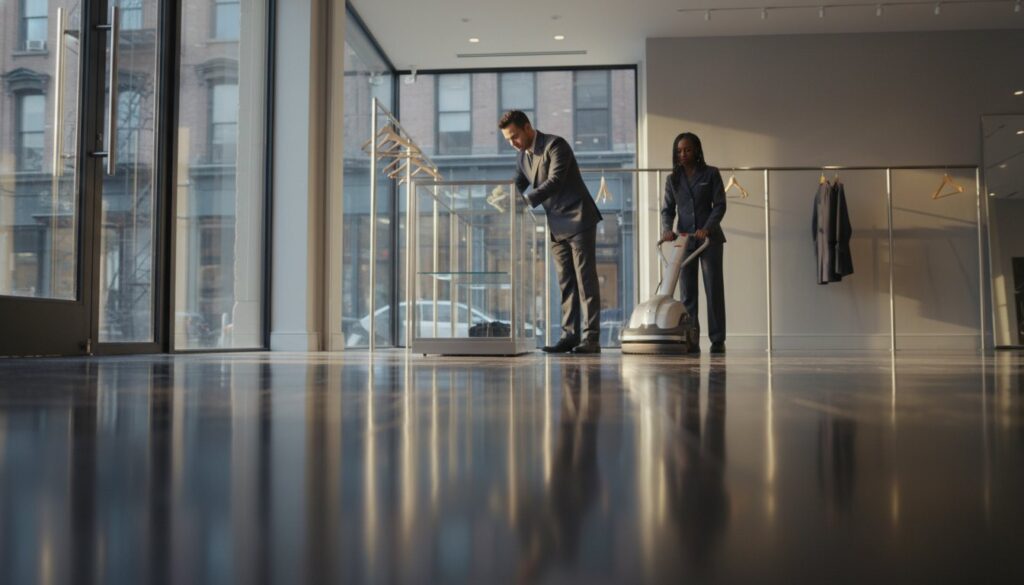
**What’s the difference between commercial cleaning and janitorial service?** Janitorial service typically refers to recurring, scheduled maintenance — emptying trash, cleaning restrooms, wiping down surfaces, mopping floors. Commercial cleaning can refer to the same thing, but it often also encompasses deeper, periodic cleaning: floors stripped and refinished, carpets cleaned, windows washed, high-touch areas disinfected on a more intensive schedule. Many Long Island businesses need both, and we offer a plan that covers recurring maintenance and periodic deep cleaning under one consistent service.
**Are eco-friendly cleaning products as effective as standard ones?** Yes. The EPA’s Safer Choice program now includes more than 1,800 certified products, and the industry has shifted significantly toward non-toxic formulations that clean effectively without the health trade-offs. For businesses on Long Island with employees who have sensitivities or for spaces like medical offices and schools where chemical exposure is a real concern, non-toxic cleaning isn’t just a preference — it’s the smarter operational choice.
The Right Commercial Cleaning Service Makes a Measurable Difference
A clean workspace isn’t just about appearances. It directly affects how often your team gets sick, how well they focus, how clients perceive your business, and — when you add it all up — your bottom line. The research on this is consistent and clear, and the cost of ignoring it tends to show up in ways that are easy to misattribute.
If you’re running a business on Long Island, NY — whether that’s a professional office, a medical practice, a retail space, or a commercial facility — the standard for cleanliness should match the standard you hold for everything else in your operation. That means consistent service, vetted staff, transparent pricing, and products that are actually safe for the people in the space.
If you’re ready to stop managing this problem and start solving it, we’re here to help. AlphaLux Cleaning is a locally owned and operated cleaning company serving businesses across Long Island. Reach out for a free estimate and find out what a genuinely reliable office cleaning service looks like.