You know your house needs more than a quick wipe-down, but you have no idea what a fair price actually looks like until you start getting quotes that swing from $150 to $800 for what sounds like the same job. The price of deep cleaning house work depends on more variables than most homeowners expect, and that gap between quotes usually comes down to square footage, condition, and what’s actually included in the scope.
Most homeowners in New York pay somewhere between $200 and $450 for a standard deep clean, though larger homes, heavy buildup, or add-ons like inside-oven or baseboard detailing push that number higher. The real answer depends on your specific space, so we’ll walk through exact pricing factors rather than throwing out one generic figure.
Below, we break down average costs by home size, what drives prices up or down, and how to spot a quote that’s either overpriced or too good to be true. We’ll also cover how AlphaLux Cleaning structures pricing for New York homes, so you can compare your estimates against real numbers before you book anyone.
Why deep cleaning prices vary so much
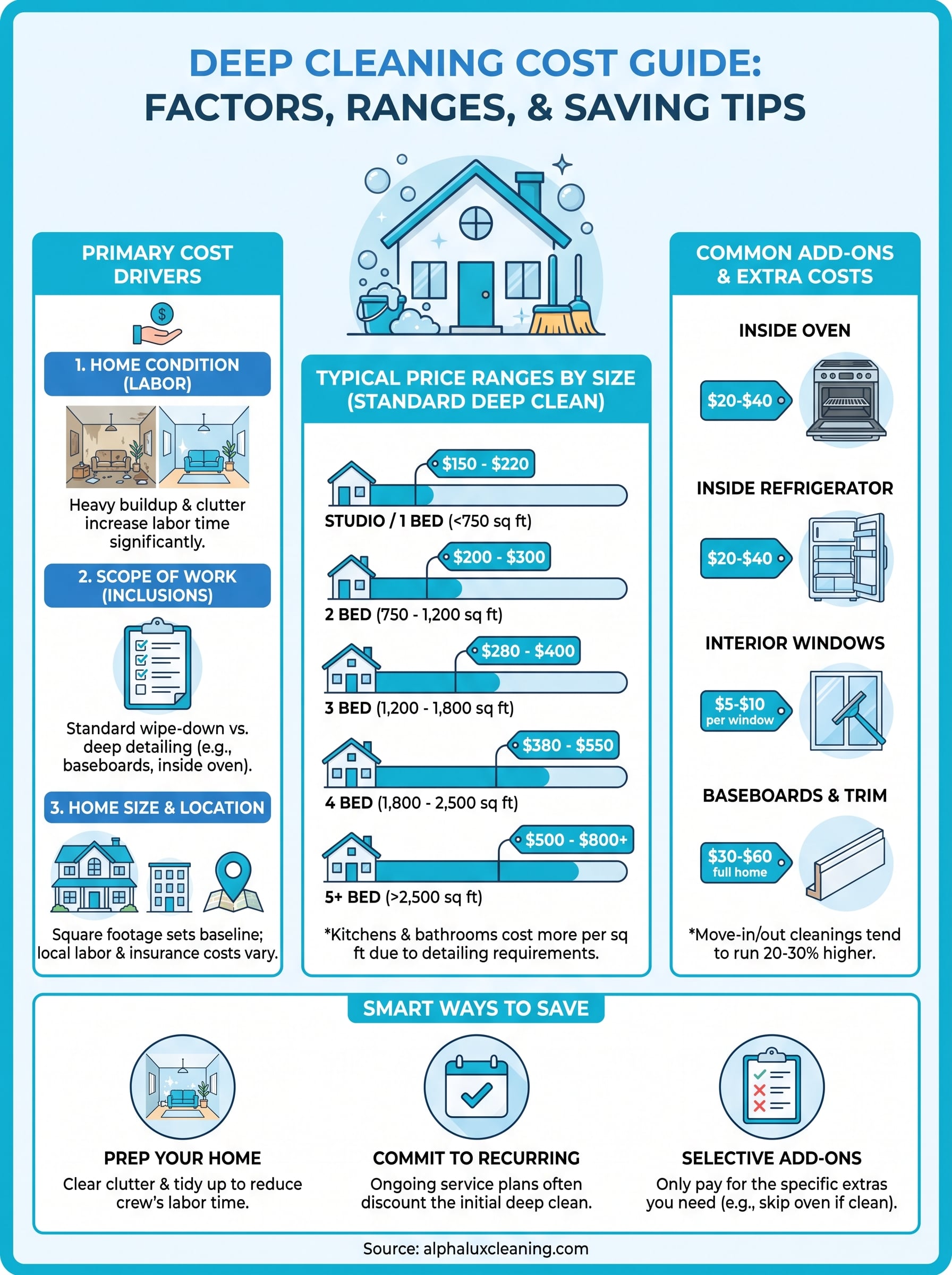
Square footage sets the floor for any quote, but it’s rarely the reason two houses of the same size land $200 apart. Home condition does most of the heavy lifting here. A 1,500-square-foot house that’s been cleaned weekly for years takes a fraction of the labor that the same house needs after six months of neglect, pet hair buildup, or a renovation that left dust in every vent. Cleaners price for time and effort, not just size, so a cluttered, grime-heavy space almost always costs more than a tidy one of identical dimensions.
Scope of work changes the math
What counts as "deep cleaning" isn’t standardized across the industry, and that’s where a lot of sticker shock comes from. Some companies quote a base price that covers wiping surfaces, vacuuming, and bathroom scrubbing, then charge extra for anything beyond that. Others bundle everything into one number. Ask specifically what’s included before you compare two quotes side by side, because a $250 estimate with baseboards and window tracks included beats a $200 estimate that excludes them.
The biggest driver of price swings isn’t the size of your house, it’s how much labor your home’s current condition demands.
| Factor | Low-cost scenario | High-cost scenario |
|---|---|---|
| Home condition | Regularly maintained | Months of buildup, heavy grime |
| Add-ons | Standard rooms only | Inside oven, fridge, baseboards, blinds |
| Pets | None | Multiple pets, heavy shedding |
| Clutter | Minimal, easy access | Dense clutter slowing access to surfaces |
| Team size | 1-2 cleaners, longer visit | 3+ cleaners for faster turnaround |
Location and labor costs matter too
Geographic pricing plays a bigger role than most homeowners realize. Cleaning rates in Manhattan or Nassau County run higher than in more rural parts of upstate New York, largely because of labor costs, insurance requirements, and local demand. Insured, background-checked crews cost more to employ than informal, uninsured help, and that difference shows up in your quote. It’s worth paying it, though. An insured company covers you if something breaks or someone gets hurt on your property, which an unlicensed cleaner typically won’t.
Products and equipment shift the number
Quality of materials also factors into the price. Companies using eco-friendly, non-toxic products sometimes charge slightly more than those using generic bulk chemicals, mainly because those products cost more per unit and often require more elbow grease to get the same shine. If you have kids, pets, allergies, or just prefer not to breathe in harsh fumes, that markup buys you a healthier home environment, not just a clean one.
Frequency changes your rate
Finally, how often you book service affects your per-visit price. A one-time deep clean almost always costs more than the same scope performed as part of a recurring weekly or biweekly plan, because recurring clients let companies schedule more efficiently and skip re-establishing baseline cleanliness every visit. If you’re deep cleaning because you’re catching up after a busy season, ask about switching to a maintenance schedule afterward. Many companies, including AlphaLux, offer discounted rates for clients who commit to ongoing service rather than booking single visits, since the second deep clean is almost never as intense as the first.
How to estimate your deep cleaning cost
Getting a realistic number before you call anyone saves you from sticker shock later. Start by measuring your square footage, then walk through each room and note anything that looks like it needs extra attention: greasy stovetops, grimy grout, or windows that haven’t been touched in a year. This quick self-audit gives you a starting point that matches how most cleaning companies actually price jobs, since they’re estimating labor hours, not just floor space.
Use a simple checklist before you call
Running through your home with a checklist keeps you from underestimating the scope, which is the most common reason quotes come back higher than expected.
- Count bedrooms and bathrooms separately, since bathrooms take longer per square foot
- Note any pet hair, mold, or heavy dust buildup
- Check if you want inside-oven or inside-fridge cleaning included
- Flag areas with clutter that might slow down access
- Decide if baseboards, blinds, and window tracks matter to you
A five-minute walkthrough before you call gets you a far more accurate quote than guessing based on square footage alone.
Compare at least three quotes
Getting multiple estimates matters more for deep cleaning than for standard cleaning, because the price range is wider and the scope definitions vary company to company. Call three local providers, describe your home the same way each time, and ask them to itemize what’s included. If one quote is dramatically lower, ask directly whether it covers the same tasks as the others. A vague answer is a red flag.
Ask for a free estimate based on your actual home
Numbers on a website are only a starting point. AlphaLux Cleaning offers free estimates because photos or a quick phone description of your space almost always beats a flat online calculator. Send a few pictures of your kitchen, bathrooms, and any problem areas, and you’ll get a number that reflects your actual home rather than a generic average. That extra step usually takes less than ten minutes and prevents the awkward conversation of a price changing once the crew shows up and sees what they’re actually working with.
Deep cleaning prices by home size and scope
Square footage still gives you the most reliable starting point once you know your home’s condition. A studio or one-bedroom apartment typically runs on the low end, while a five-bedroom house with multiple bathrooms sits at the top of the range regardless of who you call. Home size drives the base labor hours, and scope add-ons layer on top of that number.
Typical price ranges by square footage
The table below reflects what most New York homeowners can expect for a standard deep clean, before add-ons like inside-oven detailing or heavy pet-hair removal.
| Home size | Typical square footage | Estimated price range |
|---|---|---|
| Studio / 1 bedroom | Up to 750 sq ft | $150 – $220 |
| 2 bedroom | 750 – 1,200 sq ft | $200 – $300 |
| 3 bedroom | 1,200 – 1,800 sq ft | $280 – $400 |
| 4 bedroom | 1,800 – 2,500 sq ft | $380 – $550 |
| 5+ bedroom | 2,500+ sq ft | $500 – $800+ |
Square footage sets your baseline, but the number of bathrooms and kitchens usually pushes the final price more than a few extra hundred square feet ever will.
Why bathrooms and kitchens cost more per square foot
Don’t assume a 2,000-square-foot house with two bathrooms costs the same as one with four. Bathroom count matters because grout, tile, and fixtures take far longer to detail than an equivalent stretch of hallway or bedroom floor. Kitchens work the same way: a kitchen with a large island, double oven, and heavy counter clutter can add 30 to 60 minutes of labor compared to a simple galley kitchen, even at the same square footage.
Scope add-ons that shift the total
Base deep-clean pricing usually covers standard surfaces, floors, and bathroom fixtures, but several common add-ons push the price higher:
- Inside-oven cleaning: $20-$40
- Inside-refrigerator cleaning: $20-$40
- Interior window cleaning: $5-$10 per window
- Baseboard and trim detailing: $30-$60 for a full home
- Wall spot-cleaning or heavy grease removal: priced by hour
Move-in and move-out cleanings tend to run 20 to 30 percent higher than a standard deep clean of the same size, since empty homes often reveal years of buildup behind appliances and inside cabinets that regular cleaning never touches. If you’re budgeting for a move, ask your provider whether their move-in/move-out rate already includes these details, since some companies quote it separately.
How to save money on your deep clean
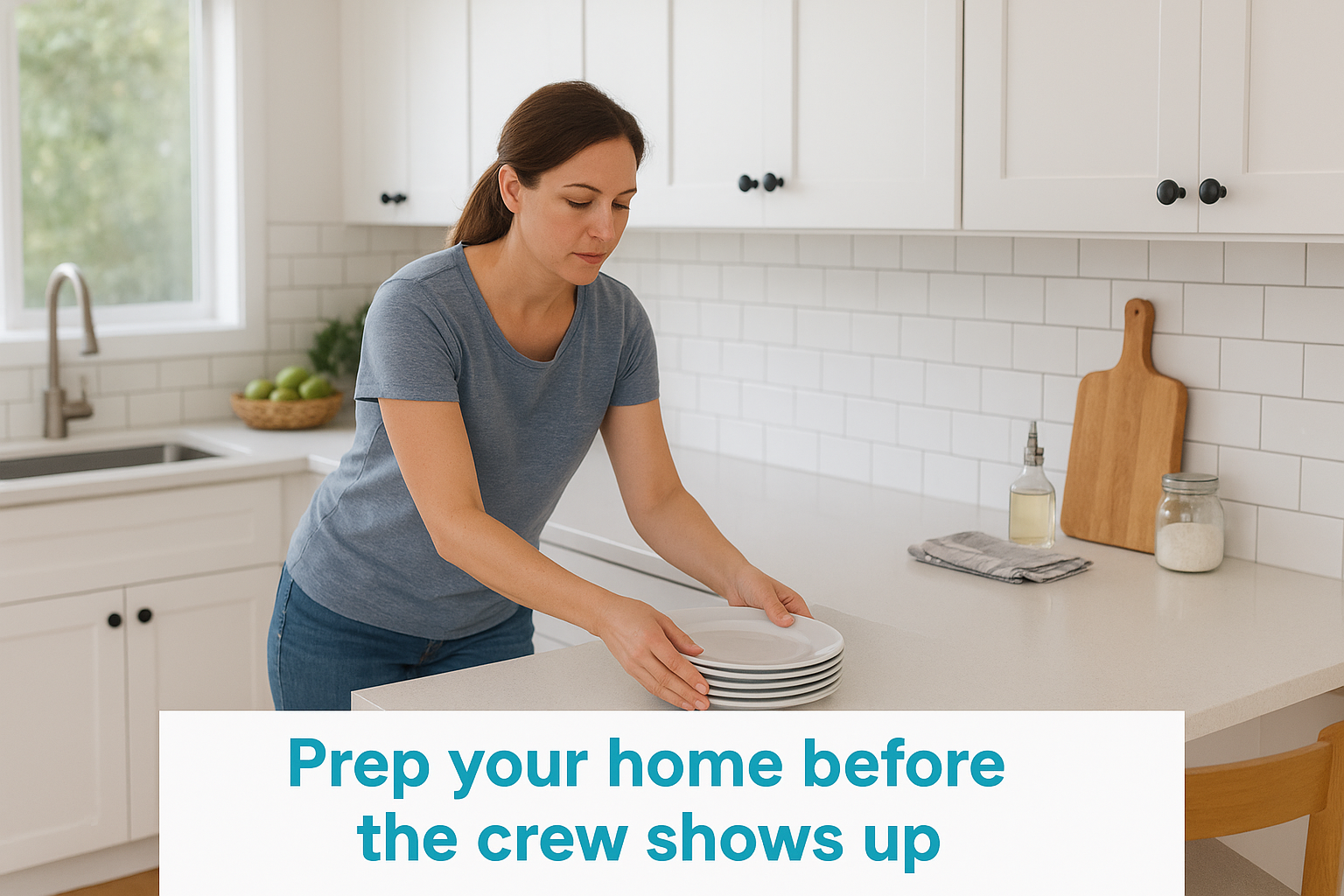
Cutting corners on cleaning quality isn’t the answer, but plenty of legitimate ways exist to bring your price down without sacrificing results. Timing your booking around your own prep work is the easiest lever most homeowners overlook. If you tidy up clutter, put away dishes, and clear countertops before the crew arrives, you free up their time for actual cleaning instead of organizing, which can shave 15 to 20 minutes off the visit and lower your bill.
Prep your home before the crew shows up
Spending ten minutes before your appointment often pays for itself. Run through this short list the night before:
- Clear countertops and tables of loose items
- Pick up toys, laundry, and clutter from floors
- Load or unload the dishwasher so it’s empty and ready
- Put pets in a separate room if they get anxious around strangers
- Point out any problem areas so the crew doesn’t waste time searching
The less time a crew spends clearing clutter, the more time they spend actually cleaning, and that difference shows up in your final invoice.
Commit to recurring service instead of a one-time visit
Booking a recurring plan almost always beats paying for a single deep clean, even if you only need the deep clean once right now. Companies price one-time jobs higher because they can’t predict the condition of the home or plan around it the way they can with a regular client. Ask your provider whether switching to biweekly or monthly maintenance after your first deep clean qualifies you for a lower rate on that initial visit. Many, including AlphaLux, apply the discount immediately once you commit.
Skip add-ons you don’t actually need
Not every home needs the full menu of extras. Selective add-ons save real money without cutting into the parts of the job that matter most. If your oven gets cleaned twice a year already, skip that line item this time. If you don’t have blinds, don’t pay for blind cleaning. Reviewing the itemized quote line by line, rather than accepting a flat bundled price, gives you the chance to trim anything that doesn’t apply to your specific home.
Putting the price into perspective
A fair quote for deep cleaning your house isn’t a mystery once you know what drives it. Square footage, condition, and scope explain almost every dollar of the spread between a $200 quote and an $800 one, and now you know exactly which questions to ask before you sign off on either. Don’t judge a price in isolation. Judge it against what’s actually included, how your home compares to the ranges above, and whether the company behind it is insured and transparent about its process.
The next step is simple: get a number based on your actual home instead of guessing from averages. Request a free estimate from AlphaLux Cleaning and you’ll know within minutes what your space actually costs, with no pressure and no vague bundled pricing to decode.