Professional Cleaning Services in Long Island, NY: What to Look For
You’re busy. Between work, family, and everything else on your plate, deep house cleaning services probably aren’t at the top of your priority list—but a clean home still matters. The problem? Hiring someone to clean your house isn’t as simple as picking the cheapest option online. You’re handing over keys. Trusting strangers with your space. Hoping they’ll show up, do quality work, and not leave you wondering what you’re actually paying for. Not every cleaning company near you operates the same way. Some are insured and vet their staff thoroughly. Others don’t. Some are transparent about costs and what’s included. Others aren’t. If you’re looking for residential cleaning services in Long Island—whether you’re in Babylon, Huntington, or anywhere across Nassau or Suffolk County, NY—here’s what actually separates the professionals from everyone else. Are They Licensed, Bonded, and Insured? This phrase gets tossed around a lot, but do you know what it actually means for you? Here’s the reality: if a cleaning company isn’t properly insured and something breaks or someone gets hurt in your home, you could be the one stuck with the bill. That’s not a scare tactic—it’s just how liability works. Being bonded and insured protects the company. What protects you is liability insurance that covers your home and belongings if something goes wrong during a cleaning. A vase gets knocked over. A floor gets scratched. It happens. The question is whether the company you hire will make it right, or whether you’ll be filing a claim on your own homeowner’s policy. Before you book any residential cleaning services, ask to see proof of insurance. A legitimate cleaning service won’t hesitate to provide it. What Happens If Your Cleaner Doesn’t Show Up or Gets Injured Let’s say you hire an independent cleaner who works alone. They’re affordable, they do good work, and you like them. Then one day, they call in sick. Or they move. Or they stop responding altogether. Now what? You’re back to square one, scrambling to find someone new before your in-laws visit next weekend. Professional cleaning services with multiple trained employees have backup. If your usual cleaner can’t make it, we send someone else who’s equally qualified and vetted. That’s the trade-off for paying a bit more—you’re not just paying for the clean itself, you’re paying for reliability and consistency. And if that cleaner gets injured while working in your home? If they’re an independent contractor without worker’s compensation insurance, guess who might be held liable? You. Companies that hire employees as W-2 staff (not contractors) carry worker’s comp insurance, which protects both you and them. It’s one of those details that doesn’t matter until it really, really does. Ask how the company classifies its workers. If they dodge the question or get defensive, that tells you everything you need to know. How Do They Vet and Train Their Cleaning Staff You’re giving someone access to your home. Your bedroom. Your kids’ rooms. Your personal belongings. So yeah, you should absolutely know whether they’ve been background-checked. Not every cleaning service bothers with this step. Some hire quickly just to fill shifts. Others allow workers to bring a friend or relative along without telling you. That’s not okay, but it happens more often than you’d think. Ask directly: do you run background checks on every employee? Do you verify identity, check criminal history, and confirm past employment? If the answer is vague, defensive, or dismissive, move on. A professional cleaning company will tell you exactly what our screening process includes, and we’ll be proud of it. Training matters just as much. Cleaning isn’t just about spraying and wiping—different surfaces need different products and techniques. Some finishes can be permanently damaged by the wrong chemical. Grout, hardwood, marble, stainless steel—they all require specific care. A well-trained team knows these differences. An untrained one might leave your countertops streaky, your floors dull, or worse, damaged. Ask what kind of training new hires receive. If the answer is just “we show them the ropes on day day,” that’s not enough. Look for residential cleaning services that invest in ongoing training, safety protocols, and quality control standards. It shows we take the work—and your home—seriously. Understanding Pricing and What’s Actually Included Pricing for cleaning services in Long Island can feel like a guessing game. Some companies charge by the hour. Others charge by the job or square footage. Some give you a flat rate after the first visit. Others don’t. If you don’t know what you’re paying for upfront, you’re setting yourself up for frustration and surprise charges. Here’s what you need to pin down before you book: what’s included in a standard clean versus deep house cleaning services? Does the price cover supplies, or do you need to provide them? Are there extra fees for things like cleaning inside the oven, inside the fridge, or interior windows? A good cleaning company will walk you through our pricing structure clearly and give you an accurate estimate based on your home’s size, condition, and your specific needs. If we can’t or won’t do that, keep looking. Standard Cleaning vs Deep House Cleaning Services A lot of people book a “standard clean” and then feel disappointed when the baseboards are still dusty or the light fixtures weren’t touched. That’s because standard cleaning and deep house cleaning services are two very different things, and most companies don’t explain the distinction well enough. Standard cleaning is maintenance. It’s what keeps your home tidy between deeper cleans. Think vacuuming, mopping, wiping down counters and sinks, cleaning toilets and showers, and tidying visible surfaces. It’s designed to maintain cleanliness when your home is already in pretty good shape. Most professional cleaning services recommend standard cleaning on a weekly or bi-weekly schedule once you’ve had that first thorough deep clean. Deep house cleaning services are the reset button. This is top-to-bottom, detail-focused work that tackles all the stuff you don’t get to every week—or every month. Baseboards. Ceiling fans. Behind and underneath appliances. Inside cabinets
Vacation Rental Cleaning in Long Island, NY: The 5-Star Turnover Guide

Imagine it’s a sunny Friday afternoon in Montauk. Your guests just arrived after a three-hour drive, expecting the luxury retreat they saw in your…
Without Removing It: How To Clean A Shower Head (Vinegar)
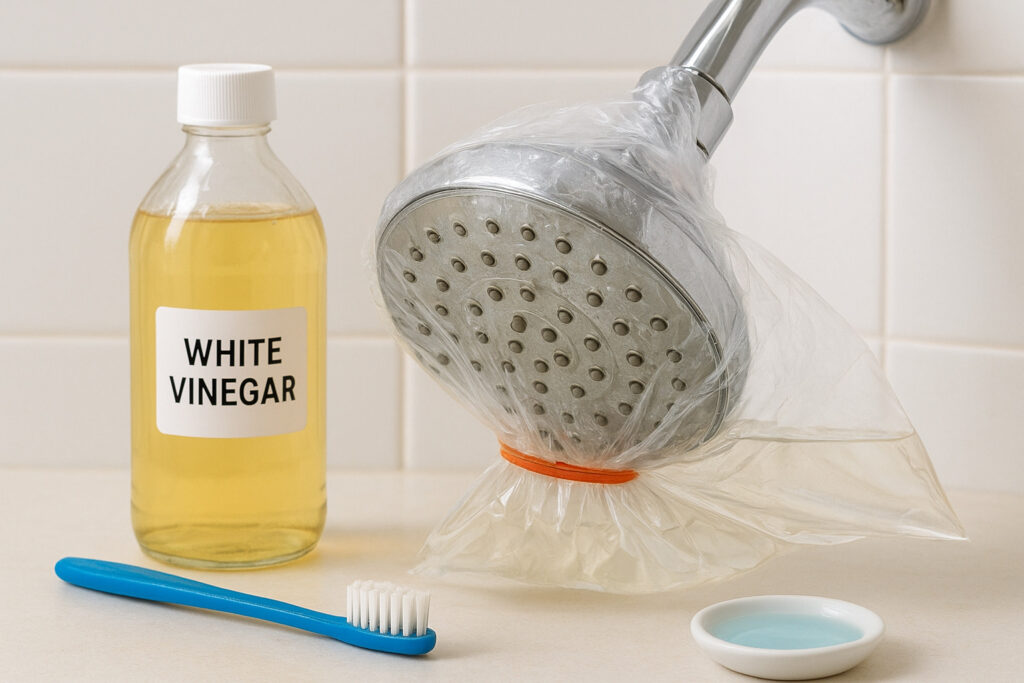
That weak, uneven water pressure you’re dealing with? It’s probably not your plumbing, it’s your shower head. Mineral deposits and calcium buildup clog the tiny nozzles over time, and most people don’t realize how simple the fix is. Knowing how to clean a shower head can restore full water flow in under an hour, and you don’t even need to unscrew it. At AlphaLux Cleaning, we handle deep cleaning details like this for homes and businesses across New York every day. Our teams see firsthand how small maintenance tasks get overlooked, and how much of a difference they make. That hands-on experience is exactly why we put this guide together: to give you a practical method you can use right now, between professional cleanings or on your own. Below, you’ll find a straightforward, step-by-step process using white vinegar and a few household items to break down buildup and get your shower head working like new. No tools required, no removal necessary, just results. What you need and what to avoid Before you start figuring out how to clean a shower head, pull everything together first. Having your supplies ready means you won’t need to stop midway through the vinegar soak, and the whole process will move faster. You likely already have most of what you need sitting in your kitchen or bathroom cabinet. What to gather before you start You only need a handful of common household items to get this done right. Chances are, you already have most of them at home: White distilled vinegar (at least 1 to 2 cups) A sturdy plastic bag (a gallon-size zip-lock bag works best) Rubber bands or zip ties to hold the bag in place An old toothbrush or small scrub brush Dish soap (just a few drops) A clean microfiber cloth or old towel A safety pin or toothpick for clearing individual nozzles White distilled vinegar is your best option here because its mild acidity breaks down mineral deposits without harming most shower head finishes. What to avoid Using the wrong product will damage your shower head’s finish or internal components, so knowing what to skip matters just as much as knowing what to use. Bleach and harsh abrasive cleaners strip protective coatings, particularly on brushed nickel and oil-rubbed bronze finishes, leaving them dull or discolored. Steel wool and rough scrubbing pads scratch the surface and create tiny grooves where future mineral deposits settle even faster. CLR and other strong acid-based descalers can corrode the rubber gaskets inside the shower head and may void your manufacturer’s warranty. Vinegar and mild dish soap give you strong results without those risks. Step 1. Identify the shower head type and finish Before you soak anything, look at what type of shower head you have. Knowing the finish is the first step in figuring out how to clean a shower head without causing damage to the surface or internal components. Common finishes and how to treat them Your shower head’s finish determines how long you can safely leave vinegar on it. Chrome and plastic finishes handle vinegar well and can soak for up to 30 minutes without risk. Brushed nickel, oil-rubbed bronze, and matte black finishes are more sensitive; limit their exposure to 15 minutes and dilute the vinegar 50/50 with water. If your shower head has a coated or specialty finish, check the manufacturer’s label before soaking, since prolonged acid exposure can strip the coating. Check the nozzle type Rubber flex nozzles (the soft, silicone-like dots on the face plate) respond well to manual scrubbing alongside vinegar. Fixed hard nozzles rely more on soaking time to dissolve internal mineral deposits. Rubber/silicone nozzles: squeeze or rub them directly to break off loose buildup Fixed plastic or metal nozzles: rely on soaking time to clear internal clogs Step 2. Soak it in vinegar without removing it This is the core step that makes how to clean a shower head so convenient: you don’t need to remove anything. Fill your plastic bag with enough white vinegar to fully submerge the entire nozzle face, then slide the bag up over the shower head so every nozzle sits in the liquid. Set up the bag correctly Position the bag so the vinegar fully covers all the nozzles, not just the bottom half. Loop a rubber band or zip tie around the shower arm (the pipe the shower head screws into) to hold the bag firmly in place. Check for leaks by gently pressing the sides before walking away. Make sure every nozzle sits fully submerged in vinegar, because partial coverage leaves untreated mineral deposits behind and extends the job. Let it soak long enough Chrome and plastic shower heads handle a full 15 to 30-minute soak without any risk. For brushed nickel, bronze, or matte black finishes, keep it to 15 minutes using vinegar diluted 50/50 with water to protect the surface coating from acid damage. Step 3. Clear clogged nozzles and loosen buildup Once you remove the bag, the vinegar-soaked deposits are soft and ready to scrub off. This is where you physically clear the blocked nozzles that cut your water pressure, and it’s a critical part of how to clean a shower head properly. Scrub the nozzle face Grab your old toothbrush and scrub the nozzle face using small circular motions. Add a few drops of dish soap to the brush first to help lift the loosened mineral layer and prevent residue from drying back onto the surface. Scrubbing while the surface is still wet from the soak gives you better control and removes more buildup in fewer passes. Clear blocked nozzles one by one Some nozzles need more than scrubbing. Push a safety pin or toothpick into each blocked hole and work out the mineral plug. Go through every nozzle systematically to avoid missing any that still restrict water flow. For rubber silicone nozzles, pinch and roll each one between your fingers to break off the crust. For fixed hard nozzles, stick to the pin
Flexible Office Cleaning Schedules: A Guide for Modern NY Workspaces

What if your monthly cleaning bill reflected the actual foot traffic in your Manhattan suite instead of a rigid contract signed back in 2019? It’s frustrating to pay for a full crew to scrub empty desks on a Friday when only 15 percent of your staff is in the building. You likely feel that flexible office cleaning schedules are the only logical solution for a modern, hybrid team that values both health and efficiency. At AlphaLux Cleaning, we believe your workspace shouldn’t just look tidy; it should feel like a sanctuary of productivity that respects your bottom line. For New York commercial properties, being vetted and insured isn’t just a preference; it’s a non-negotiable requirement for risk management. Established regional providers such as NY/NJ Cleaning Services demonstrate the importance of these credentials when serving high-traffic public and professional spaces. Ask potential partners how they handle flexible office cleaning schedules during unexpected events or sudden office expansions. You need a partner who views cleaning as a professional craft rather than a commodity. For more guidance, read our insights on Choosing a Cleaning Partner for Your Corporation to find a team that matches your brand’s standards. By transitioning to a dynamic plan, you can redirect resources to high-impact areas and reduce your maintenance overhead by 22 percent. This guide will show you how to design a custom plan that adapts to your team’s rhythm while maintaining a spotless environment. We’ll explore how to audit your office usage, eliminate disruptive cleaning hours, and ensure your space always meets a higher standard of clean. Key Takeaways Learn why traditional static routines are obsolete and how to implement flexible office cleaning schedules that adapt to your team’s hybrid work patterns. Discover how to identify your office’s unique “Pulse” to strategically time daily maintenance and deep cleans for maximum impact. Master a professional framework for auditing your facility and occupancy data to build a truly customized cleaning plan. Optimize your maintenance budget by focusing resources on peak usage days rather than wasting money on empty workspaces. Explore how non-toxic, eco-friendly products create a professional environment that doesn’t just look clean, but truly feels clean. Table of Contents What is a Flexible Office Cleaning Schedule? Developing Your Custom Commercial Cleaning Frequency Matching Cleaning to Foot Traffic and Hybrid Work How to Build Your Office Cleaning Framework The AlphaLux Difference: Beyond the Checklist What is a Flexible Office Cleaning Schedule? A flexible office cleaning schedule is a responsive service model that adjusts cleaning intensity and frequency based on real-time office usage and specific business needs. It moves away from the “set it and forget it” mentality of the past. Instead, it prioritizes scalability and variable frequency. This approach ensures that your workspace receives a higher standard of care while optimizing your operational budget. By focusing labor where it is actually needed, you avoid paying for the maintenance of empty hallways or unused conference rooms. For modern Long Island and NYC businesses, the traditional static schedule is no longer effective. According to 2024 Manhattan office occupancy data, mid-week attendance often peaks at 52% while Fridays drop significantly lower. A rigid contract doesn’t account for these fluctuations. A commercial cleaning overview reveals that while basic techniques remain constant, the delivery of these services must be agile to be cost-effective. Flexible office cleaning schedules allow you to add specialized service “add-ons,” such as deep carpet steaming or window detailing, exactly when your calendar permits rather than on a forced, arbitrary timeline. The Shift from Static to Dynamic Cleaning Relying on a “Tuesday and Thursday” routine often leads to wasted resources. If your team holds a major client event on a Wednesday, a Thursday cleaning is essential, but a Tuesday visit might have been redundant if the office was quiet. We use office occupancy trends to dictate cleaning priorities. This data-driven approach ensures high-traffic days are met with intensive sanitation. Flexible cleaning is a strategic asset for facility management in 2026 that synchronizes professional hygiene standards with fluctuating office occupancy. Custom Office Cleaning Plans vs. One-Size-Fits-All Standard commercial cleaning packages often fail high-end boutique offices that require meticulous attention to detail. A one-size-fits-all model doesn’t recognize “High-Impact Zones.” These are areas like executive boardrooms or marble-floored lobbies that require daily precision regardless of how many employees are in the building. We identify these zones to ensure they stay spotless, even when we scale back services in low-traffic storage areas. To achieve this level of detail, many firms are moving toward Custom Office Cleaning Plans in New York. This ensures the environment doesn’t just look tidy; it feels healthy and welcoming for every guest. Your cleaning plan should be as unique as your business operations, providing peace of mind through a tailored, professional craft. Developing Your Custom Commercial Cleaning Frequency Identifying your office Pulse is the first step toward a truly pristine workspace. It’s the unique rhythm of your business, the specific hours when foot traffic peaks and the periods when deep focus is required. AlphaLux doesn’t believe in a one size fits all approach. Instead, we craft flexible office cleaning schedules that align with your operational flow. Our goal is to ensure the office doesn’t just look clean; it feels clean the moment your team walks through the door at 8:00 AM. We balance visible aesthetics with the invisible science of health. While a polished desk matters, the removal of microscopic allergens is what keeps your staff productive. Research from the Harvard T.H. Chan School of Public Health regarding the 9 Foundations of a Healthy Building highlights that air quality and dust control are foundational to employee performance. By integrating these scientific standards, we transform cleaning from a chore into a strategic business advantage. You can explore how we implement these standards through our customized cleaning plans tailored for NYC firms. Daily Essentials for High-Traffic NYC Offices Daily attention is the best defense against the grime of Manhattan streets. We focus heavily on “First Impression Zones” like lobbies and elevators. A
What Does A Professional House Cleaning Include? 45 Tasks
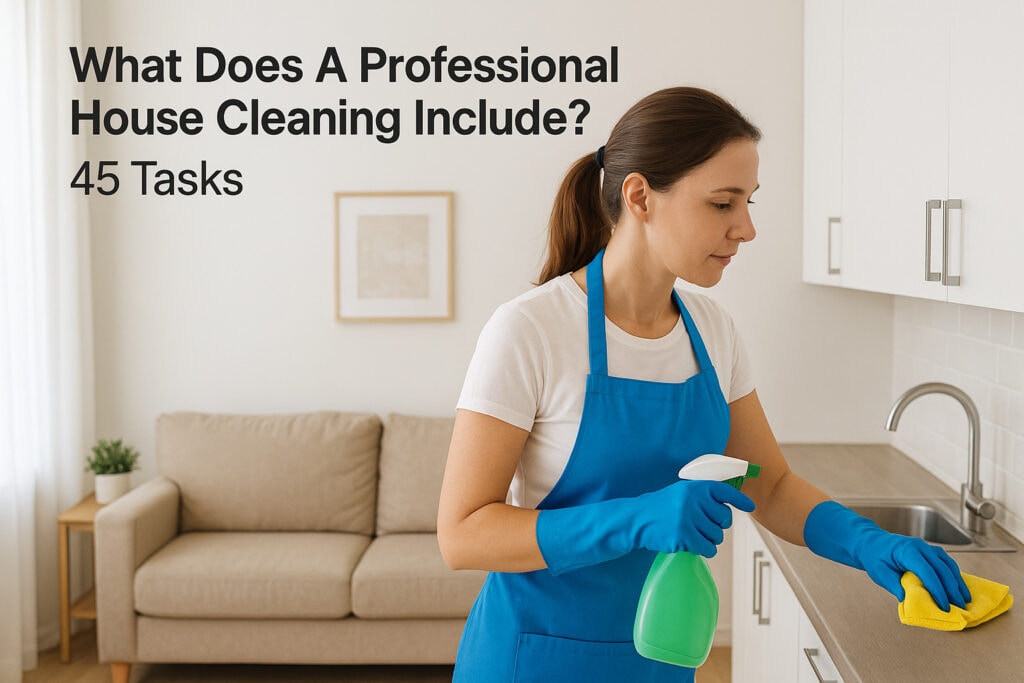
You’ve decided to hire a cleaning service, but you’re not entirely sure what does a professional house cleaning include. Maybe you’ve gotten a quote and wondered whether baseboards, inside the oven, or window tracks are part of the deal. That uncertainty is more common than you’d think, and it’s exactly why so many people feel caught off guard after their first booking. Here’s the thing: not every cleaning company covers the same tasks, and there’s a real difference between a standard clean and a deep clean. At AlphaLux Cleaning, we get these questions daily from homeowners and business owners across New York. Our clients want to know what they’re actually paying for, and they deserve a straight answer. That hands-on experience is what pushed us to break it all down clearly. Below, you’ll find 45 specific tasks that professional house cleanings typically cover, organized room by room. We’ve split them into standard and deep cleaning categories so you can see exactly what to expect from each service level, and make a confident decision before you book. 1. AlphaLux Cleaning standard house cleaning A standard house cleaning covers the core tasks that keep your home consistently maintained between deeper sessions. This is the service most homeowners book on a recurring basis, whether weekly, bi-weekly, or monthly. Knowing exactly what’s included helps you set realistic expectations and spot any gaps before the team arrives at your door. Remove cobwebs from corners and ceiling lines Cobwebs collect fast, especially in corners near ceilings, around light fixtures, and along stairwells. Your cleaner uses an extension duster or microfiber tool to sweep them down before any other surface work begins. Starting from the top makes sense, since dislodged dust and debris fall downward onto surfaces that get cleaned next. Dust reachable surfaces throughout the home This step covers all accessible horizontal and vertical surfaces, including shelves, furniture tops, entertainment centers, and décor items. Your cleaner works room by room rather than spot-cleaning at random. The goal is to remove the daily buildup of fine particles that settles on every surface and quietly degrades indoor air quality over time. Consistent dusting reduces the concentration of airborne allergens in your home more than almost any other routine cleaning task. Wipe and disinfect high-touch points High-touch points are the surfaces your household contacts most often: light switches, door handles, cabinet pulls, and countertop edges. These spots carry the highest concentration of bacteria and germs because hands transfer contaminants every time someone touches them. Your cleaner wipes and disinfects each one using products formulated to kill pathogens without damaging the underlying surface finish. Vacuum carpets and area rugs Vacuuming pulls out embedded dirt, pet hair, and debris that foot traffic pushes deep into carpet fibers. Your cleaner runs the vacuum across the full surface of each carpeted room and rug, paying close attention to edges and high-traffic zones where buildup concentrates the most. Regular vacuuming also extends carpet life by preventing the fiber breakdown that trapped grit causes with every step. Mop hard floors After sweeping to collect loose particles first, your cleaner follows up with a wet mop using a diluted, floor-safe solution. This step removes sticky residue, grime, and surface stains that a dry pass always leaves behind. Different flooring types, such as hardwood, tile, or vinyl, each require a different technique and product, and a trained cleaner knows exactly which approach suits your floors. 2. Whole-home surfaces and details Beyond the foundation tasks, surfaces and details throughout your home require consistent attention. These steps address the visible layer of dust and grime that accumulates on furniture, fixtures, and architectural features between visits. Dust furniture tops and fronts Your cleaner wipes down all accessible furniture surfaces, including tabletops, dresser fronts, and entertainment units. Microfiber cloths trap particles rather than pushing them back into the air. Dust shelves, ledges, and décor Shelves and decorative items collect fine dust faster than most surfaces. Your cleaner dusts each piece and wipes ledges and mantels to clear buildup without disturbing your arrangement. Wipe mirrors and interior glass Your cleaner applies a streak-free glass solution to every mirror and interior glass panel in the home. Smudges and fingerprints disappear without leaving any residue behind. Clean mirrors make a room feel noticeably larger and brighter without moving a single piece of furniture. Wipe window sills and ledges Window sills trap dust, pollen, and debris that drift in whenever windows open. Your cleaner wipes each sill and ledge with a damp cloth to remove that grime layer thoroughly. Spot-clean doors and door frames Your cleaner targets scuff marks, fingerprints, and smudges along door panels and frames. High-traffic doors, especially near the kitchen or entryway, typically need the most attention each visit. Dust baseboards and trim Baseboards sit low and collect settled dust and pet hair continuously. Your cleaner runs a dry or lightly damp cloth along each baseboard and trim line throughout every room. Dust ceiling fans and light fixtures when reachable Ceiling fan blades hold a thick layer of dust that spreads through the room each time the fan runs. Your cleaner dusts all reachable fixtures using an extension tool. Straighten visible clutter and reset the room Your cleaner tidies loose items on surfaces and resets the room to a clean, orderly state. This step is part of what does a professional house cleaning include at the standard level, covering surface clutter rather than full organizational work. 3. Floors and fabric Floors and fabric surfaces accumulate dirt, pet hair, and allergens at every level of your home. Knowing what does a professional house cleaning include for these areas shows you how much deliberate, systematic work goes into keeping them clean and safe. Vacuum carpets wall to wall Your cleaner runs the vacuum across the full width of every carpeted room, working in overlapping passes to avoid missed strips. This approach removes embedded debris and fine particles that foot traffic pushes deep into the fibers on a daily basis. Vacuum edges and corners
New Construction Cleaning Prices: 2026 Budgeting Guide for NY Homeowners & Developers
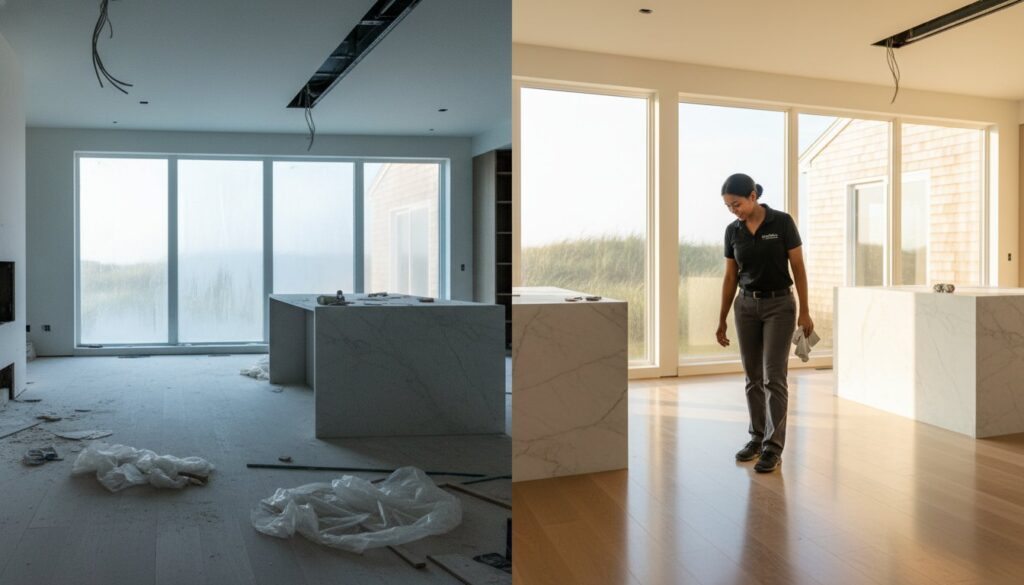
Imagine walking into your newly renovated Manhattan loft or Hamptons estate on moving day, only to find a fine layer of white drywall dust settled on…
How Long Does A House Cleaning Take? Standard Vs Deep Clean
You blocked out two hours on a Saturday to clean the house, and somehow it’s dinner time before you’ve touched the bathrooms. Sound familiar? The question of how long does a house cleaning take isn’t just idle curiosity, it’s the difference between a realistic plan and a frustrating afternoon. The answer depends on more than just your home’s size, though square footage is a major factor. A quick tidy-up and a full deep clean are two very different jobs with very different time commitments. Room count, clutter levels, number of occupants, even whether you have pets, all of these shift the clock. Understanding those variables helps you set accurate expectations, whether you’re doing the work yourself or hiring a professional team to handle it. At AlphaLux Cleaning, we clean homes and businesses across New York State, so we’ve timed just about every scenario you can think of. Below, we’re breaking down realistic time estimates by cleaning type, home size, and room count, plus sharing what we’ve learned from thousands of jobs about where the time actually goes. What changes how long house cleaning takes No single formula answers the question of how long does a house cleaning take, because several independent variables all stack on top of each other. A 1,000-square-foot apartment cleaned weekly by one person takes far less time than a 2,500-square-foot home that hasn’t been touched in two months. Knowing which factors push the clock forward helps you plan more accurately, whether you’re doing the work yourself or scheduling a professional visit. Home size and room count Square footage is the starting point for any estimate, but it doesn’t tell the full story on its own. More rooms mean more surfaces, more corners, more transitions between spaces, and more time moving supplies from one area to the next. A 1,500-square-foot home with four bedrooms takes longer to clean than a 1,500-square-foot open-plan loft, simply because each bedroom needs its own full set of tasks completed before you can move on. A rough industry benchmark is that a solo cleaner can cover roughly 200 to 300 square feet per hour during a standard maintenance clean. Bathrooms and kitchens break that pace fast because they require more scrubbing, sanitizing, and detail work than open living spaces. If your home has three full bathrooms, expect to add at least 30 to 45 minutes compared to a home with just one. How often you clean Cleaning frequency has a bigger impact on total time than most people realize. A home you maintain every week stays at a manageable baseline, so each visit is mostly about refreshing surfaces rather than removing buildup. Extend that gap to once a month, and the same rooms will take noticeably longer because grease, soap scum, and dust have had more time to settle, harden, and bond to surfaces. A home cleaned every two weeks typically takes 25 to 50 percent longer to clean than one maintained on a weekly schedule, even if nothing else about the home has changed. This is why professional cleaning services often charge more for first-time visits or homes that haven’t been cleaned in a while. The initial clean brings the home to a workable baseline, and recurring visits stay shorter and more efficient once that foundation is established. Your schedule directly controls how hard each session has to work. Clutter, pets, and number of occupants Clutter is the factor most people underestimate before they start. Before any actual cleaning can happen, surfaces need to be clear, and if countertops, floors, and tables are covered, you’re adding a decluttering step to every single room. Some professional cleaners will skip cluttered surfaces entirely rather than move personal items, which can leave spots uncleaned and require a follow-up pass. Pets add time in two specific ways. Pet hair accumulates in corners, under furniture, and on upholstery, and pet dander works deep into carpets in a way that requires extra vacuuming passes to lift. Homes with multiple shedding animals can realistically add 30 minutes or more to a standard clean, especially if rugs and soft furniture are involved. The number of people living in the home compounds everything else on this list. More occupants means more kitchen mess, more bathroom use, and more general buildup between cleans. A single-person studio stays at a lower baseline compared to a family home where four or five people are cooking, showering, and moving through every room each day, which resets the clock faster than any other factor. Standard cleaning time estimates A standard clean covers the routine maintenance tasks most people think of when they picture a regular house cleaning: dusting surfaces, wiping countertops, vacuuming floors, mopping, and cleaning bathrooms and kitchens at a surface level. It keeps a home at a consistent baseline without addressing deep grime or neglected areas. So how long does a house cleaning take when it’s a straightforward maintenance visit? For most homes, a solo cleaner working at a steady pace finishes in 1.5 to 4 hours, depending on size, room count, and condition. Time ranges by home size The table below gives you realistic benchmarks for a standard clean based on square footage. These estimates assume a regularly maintained home with no significant clutter, pet hair buildup, or unusual messes. A two-person team cuts time roughly in half, since tasks get divided across rooms rather than handled sequentially. Home Size Bedrooms / Baths Solo Cleaner 2-Person Team Up to 1,000 sq ft 1 bed / 1 bath 1 to 1.5 hours Under 1 hour 1,000 to 1,500 sq ft 2 bed / 1-2 bath 1.5 to 2.5 hours 1 to 1.5 hours 1,500 to 2,500 sq ft 3 bed / 2 bath 2.5 to 3.5 hours 1.5 to 2 hours 2,500+ sq ft 4+ bed / 3+ bath 3.5 to 5 hours 2 to 3 hours Homes with multiple full bathrooms will land near the top of their size range, while open-plan spaces with minimal furniture stay closer to the lower
Move-In Deep Cleaning Services in Queens: Start Fresh in Your New Home

Imagine walking into your new Sunnyside apartment, keys in hand, only to find a thick layer of grey dust on the crown molding and a lingering scent…
What Does A House Cleaning Service Include? Full Checklist
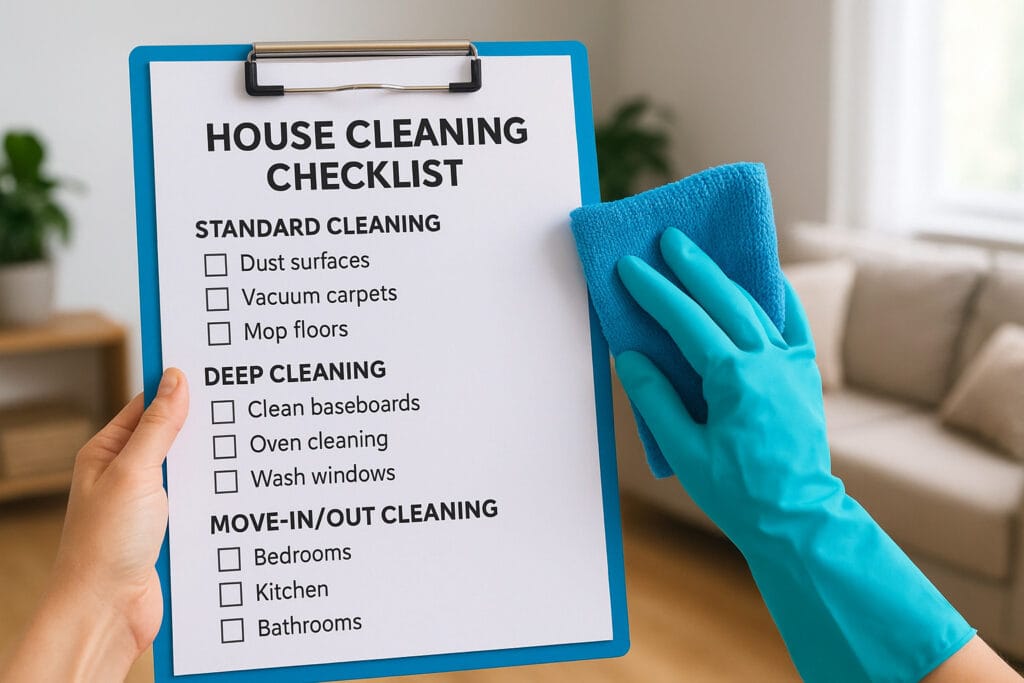
You’re ready to hire a professional cleaner, but you’re not sure what does a house cleaning service include, or what you’re actually paying for. That’s a fair concern. Cleaning companies don’t all offer the same scope of work, and without a clear breakdown, it’s easy to end up with mismatched expectations and a half-cleaned home. Here’s the short answer: a standard cleaning covers routine maintenance tasks like wiping surfaces, vacuuming, mopping, and sanitizing bathrooms and kitchens. A deep cleaning goes further, think baseboards, inside the oven, behind appliances, and built-up grime you’ve been ignoring for months. But the specifics vary from company to company, and knowing exactly what’s on the checklist before you book makes all the difference. It’s something we take seriously at AlphaLux Cleaning, where every client across New York state receives a clear, customized cleaning plan so there are zero surprises on service day. This guide breaks down everything a professional house cleaning service typically includes, room by room. You’ll see what falls under a standard clean, what qualifies as a deep clean, and which tasks usually cost extra. By the end, you’ll know exactly what to ask for when booking, and you’ll have a full checklist to hold any cleaning service accountable, including ours. Why a cleaning checklist matters before you hire Most people hire a cleaning service based on price and reviews, then assume the cleaner knows exactly what they need. That assumption causes more frustration than almost anything else in the industry. Without a written checklist, neither party has a shared standard to work from, which means your cleaner might skip the baseboards you care about while spending extra time on tasks you wouldn’t have prioritized. A checklist turns a vague promise of "a clean home" into a concrete, measurable service. A checklist sets expectations on both sides When you understand what does a house cleaning service include before the cleaner arrives, you avoid the awkward conversation after the fact. Unspoken expectations are the main reason clients leave unhappy reviews, even when the cleaner did their job as they understood it. Giving your cleaner a detailed checklist means both of you are working from the same page from the moment they walk through the door. A written checklist is the simplest tool you have to make sure the service you booked matches the service you actually receive. The same logic applies to the cleaning company. A checklist protects the cleaner just as much as it protects you. When the scope of work is documented upfront, there’s no dispute about whether a particular task was included. Your cleaner can work efficiently because they’re not guessing what you consider "done," and you’re not left wondering why the inside of the microwave wasn’t touched. It helps you compare quotes accurately Collecting quotes from different cleaning services can be confusing because the numbers often vary with no obvious reason. A $100 clean and a $175 clean might look like a pricing inconsistency until you read what each one actually covers. One company might include oven cleaning in their standard rate; another might charge it as an add-on. Without a detailed checklist from each provider, you’re comparing prices for services that are not the same. Reviewing each company’s cleaning checklist before you book lets you make a clear, accurate comparison. Ask each provider for their full scope of work in writing. If a company hesitates or gives you vague language like "we clean everything," that’s a sign the service isn’t clearly defined on their end. A professional operation should hand you a detailed list without hesitation. It gives you a record if something gets missed Even reliable cleaning services occasionally miss a task. Having a checklist on file means you can point to exactly what was and wasn’t completed if you need to follow up. That’s not about being difficult; it’s about holding the service accountable to what you both agreed on. Without documentation, feedback becomes a matter of opinion rather than a factual comparison against an agreed scope of work. Professional cleaning companies that back their work with a satisfaction guarantee rely on checklists to make that guarantee real. Knowing exactly what tasks are on the list means a cleaner knows precisely what to come back and fix if something gets missed. That’s how accountability works in practice, and it’s what separates a professional operation from someone who just shows up with a mop and good intentions. Standard vs deep vs move-in and move-out cleaning Not every cleaning appointment covers the same tasks, and the type of service you book determines what your cleaner will and won’t do. Before you think about what does a house cleaning service include in detail, you need to know which service category applies to your situation. Standard, deep, and move-in/move-out cleanings are three distinct offerings with different scopes, different time requirements, and different price points. Standard cleaning: routine maintenance A standard cleaning is the service most people book on a recurring basis, whether weekly, biweekly, or monthly. It covers the visible, everyday messes in your home: dusting surfaces, wiping counters, cleaning bathrooms, vacuuming floors, and mopping hard surfaces. The goal is to keep a home that’s already reasonably tidy in good condition, without spending time on neglected areas or stubborn buildup. Standard cleanings work best when you’re already on a regular schedule. If your home hasn’t been professionally cleaned in several months, a standard service won’t have enough scope to handle the grime that’s had time to accumulate. Deep cleaning: a more thorough pass A deep cleaning covers everything in a standard clean, plus the areas that rarely get attention during routine maintenance. This includes scrubbing inside the oven, cleaning behind and underneath appliances, washing baseboards, wiping down cabinet fronts, and removing buildup from grout lines and fixtures. Deep cleanings take significantly longer and cost more because the scope of work is much wider. Book a deep cleaning before switching to a recurring standard schedule. It sets a clean baseline that
Deep Cleaning Bathroom Grout: The Pro Guide to a Pristine Finish
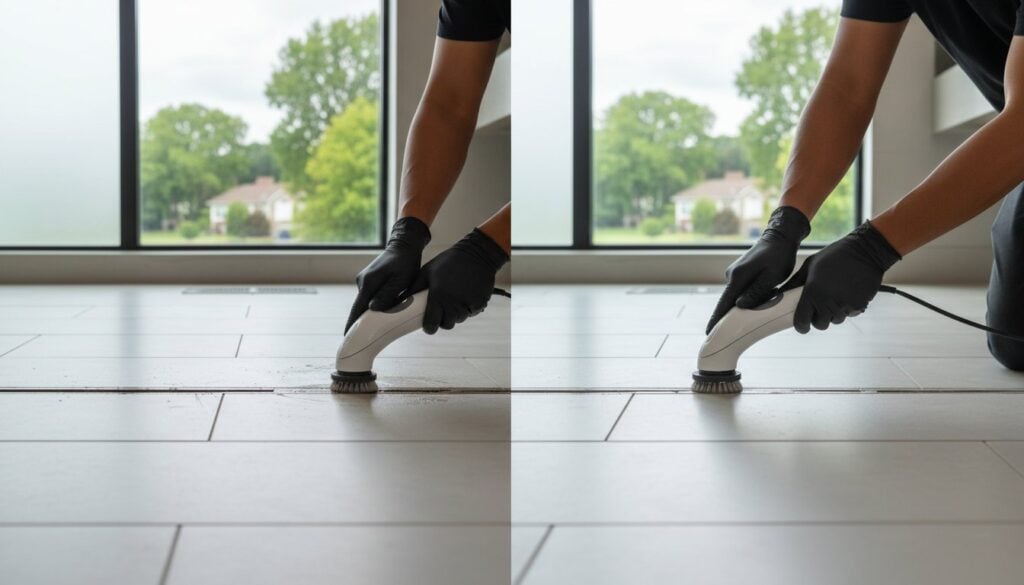
Last Tuesday, Sarah spent 120 minutes on her hands and knees deep cleaning bathroom grout, yet the haunting feeling of a space that never looks truly…