Last February, a Brooklyn homeowner watched as the salt and sand from a single New York snowstorm left their once-vibrant cherry wood floors looking like a chalky, scratched mess. You’ve likely felt that same frustration when a stubborn, hazy film remains even after your third pass with a mop. It’s stressful to realize that the very tools you use to maintain your home might be dulling the expensive investment you worked so hard to protect. We understand that deep cleaning hardwood floors requires more than just water and effort; it requires precision and the right professional touch to avoid permanent damage.
This guide provides the expert techniques and eco-friendly solutions needed to restore that original luster while ensuring your wood remains protected. We’ll walk you through the precise steps to eliminate winter residues and chemical buildup so your home doesn’t just look clean, it feels clean. You’re about to discover how a higher standard of care provides the peace of mind you deserve and allows you to focus on what matters most. We will cover everything from pH-balanced formulas to the specialized equipment that reaches deep into the wood grain for a spotless finish.
Key Takeaways
- Understand why standard mopping often redistributes dirt and how to truly extract microscopic contaminants from deep within the wood grain.
- Learn the essential “water drop test” to assess your floor’s seal and ensure your cleaning methods protect its long-term integrity.
- Discover the precise techniques for deep cleaning hardwood floors using a micro-mist approach that restores luster without risking moisture damage.
- Compare traditional methods with professional-grade extraction to see how high-end equipment achieves a level of cleanliness that feels as good as it looks.
- Establish a professional maintenance routine to safeguard your floors against grit and debris, preserving a spotless environment for your home.
Beyond the Surface: Why Deep Cleaning Hardwood Floors is Essential
Deep cleaning hardwood floors is a specialized process that goes far beyond the capabilities of a household broom or a standard spray mop. It involves the mechanical extraction of microscopic contaminants that settle deep into the wood grain and structural crevices. While a surface might appear tidy after a quick wipe, true cleanliness requires removing the invisible layers of organic buildup that accumulate over months of foot traffic. At AlphaLux, we operate on a simple principle: your home shouldn’t just look clean; it should feel clean and healthy. This professional standard ensures that your living environment supports your well-being rather than harboring hidden pollutants that compromise your indoor air quality.
The Problem with Standard Mopping
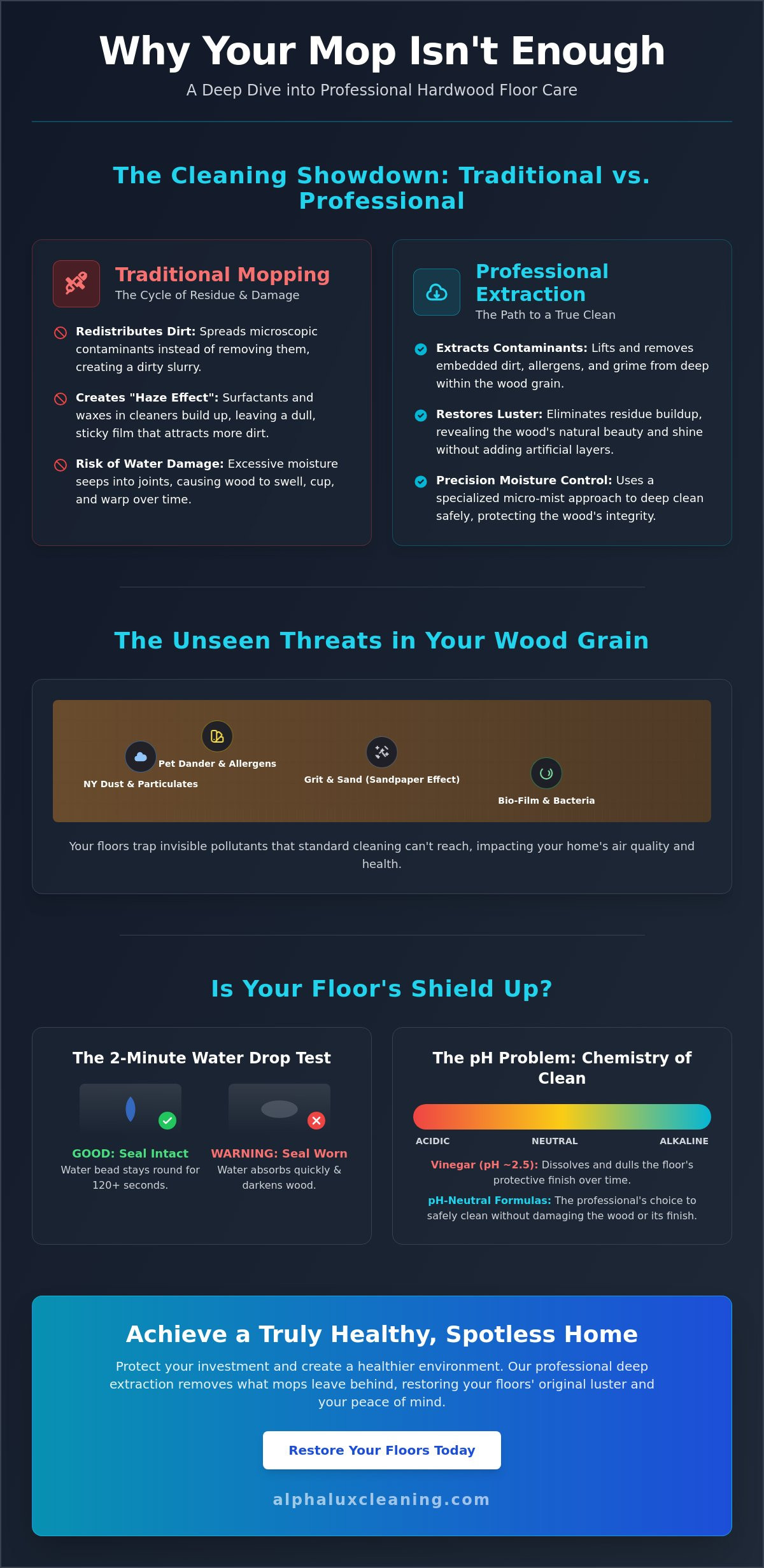
Standard mopping often results in a cycle of dirt redistribution rather than actual removal. Most supermarket cleaning products contain heavy surfactants and synthetic waxes that create a “haze effect” over time. This dulling residue acts like a magnet for new debris, making the floor look dingy despite frequent efforts. The #1 mistake in home floor care is the use of excessive moisture. When water seeps into the joints between planks, it can cause cupping or crowning, where the wood fibers swell and warp. Understanding the specific requirements for different wood flooring types and finishes is essential, as porous surfaces are highly susceptible to liquid damage. Our trusted approach uses precision moisture control to protect your investment while achieving a spotless result.
Hidden Contaminants in Your Floor Grain
Your floors serve as a landing site for a variety of microscopic irritants that impact the health of your family. In high-density urban environments, fine New York dust and particulate matter settle into the texture of the wood where standard vacuums cannot reach. Pet dander and seasonal allergens also find sanctuary in the small gaps between planks, often remaining trapped for years. Tracked-in sand is particularly destructive; these tiny granules act like sandpaper on your finish, slowly eroding the protective seal with every footstep. Bio-film is a resilient layer of bacteria and organic matter that bonds to the floor surface and resists traditional cleaning methods. By removing these hidden threats, we transform your home into a fresh sanctuary that offers genuine relief, comfort, and peace of mind.
Understanding Your Floors: Finishes, Porosity, and the Science of Wood Care
Effective deep cleaning hardwood floors starts with identifying the material beneath your feet. Wood is a living, breathing organic substance. It reacts to its environment and the chemicals you apply to it. Most Long Island homes built after 1970 feature surface-sealed floors, while historic estates often retain original penetrating finishes that require a different level of care.
Surface-Sealed vs. Penetrating Finishes
Modern finishes like Polyurethane or Aluminum Oxide create a hard, protective barrier on top of the wood. These are standard in 21st-century New York renovations because they resist moisture well. In contrast, many historic properties in areas like Garden City or Southampton still feature floors treated with oils or waxes. These finishes soak into the grain rather than sitting on top, making the wood more susceptible to liquid damage.
You can verify your floor seal’s integrity with a simple water drop test. Place a single drop of water on a high-traffic area. If the bead stays round for more than 120 seconds, your seal is intact. If it absorbs quickly and darkens the wood, the finish is worn. This porosity determines the professional approach for deep cleaning hardwood floors to avoid warping or grain raising.
The Chemistry of pH-Neutral Cleaning
Wood finishes rely on a delicate chemical bond. Using acidic solutions like white vinegar, which has a pH of approximately 2.5, can dissolve this bond over time. This leads to a cloudy, dull appearance that no amount of buffing can fix. Conversely, highly alkaline cleaners cause wood fibers to swell and may lead to permanent graying or “burning” of the tannin in the wood.
Professional maintenance requires following a National Wood Flooring Association cleaning schedule to ensure the longevity of the finish. AlphaLux utilizes proprietary, pH-balanced solutions that are non-toxic and eco-friendly. These formulas lift embedded dirt without compromising the protective layer or leaving sticky residues behind.
Long Island’s climate presents unique challenges for wood owners. Local relative humidity can swing from 25% in heated winter homes to over 75% in coastal summers. This causes wood boards to expand and contract significantly. When we provide a tailored floor assessment, we account for these environmental factors. We ensure your home doesn’t just look clean, it feels clean and remains structurally sound for years to come.
The AlphaLux Guide to Safe DIY Deep Cleaning
Deep cleaning hardwood floors requires a level of precision that preserves the wood’s integrity while removing deep-seated contaminants. At AlphaLux, we believe a home shouldn’t just look clean; it should feel clean. This feeling comes from the peace of mind that your surfaces are treated with professional care. Follow this five-step process to maintain your investment between our scheduled visits.
- Step 1: Dry Soil Removal. Start with a high-efficiency vacuum. Research from the National Wood Flooring Association indicates that 80% of floor wear is caused by abrasive dirt. Use a soft floor attachment or a felt-lined head to lift particles without dragging them across the finish.
- Step 2: Targeted Stain Treatment. Address high-traffic areas using a micro-mist approach. Use a fine spray bottle to deliver a minimal amount of cleaner to specific spots. This prevents liquid from pooling in the seams where it can cause swelling.
- Step 3: Damp-Mopping. Utilize a flat-head microfiber system. These systems allow for exact moisture control. The pad should be damp to the touch, never dripping, to ensure the wood’s cellular structure remains stable.
- Step 4: Immediate Buffing. Buff the floor dry immediately using a fresh, dry microfiber cloth. This step is vital to prevent water spots and streaks that dull the natural luster of the wood.
- Step 5: Final Inspection. Walk the floor to check for “trouble spots.” Look for areas where the seal may be failing, often indicated by a gray or dull appearance that doesn’t improve with cleaning.
Essential Tools for the Homeowner
Microfiber is the gold standard for hardwood care. Unlike traditional cotton string mops, microfiber split-fibers trap microscopic dust and hold seven times their weight in water without releasing excess liquid onto the planks. You must avoid steam mops entirely. These machines reach temperatures over 212 degrees Fahrenheit, which can delaminate wood finishes and force moisture deep into the grain, leading to permanent warping. For the best results, perform a deep cleaning hardwood floors routine every 4 to 6 months, while maintaining standard weekly dust mopping.
Eco-Friendly Solutions You Can Trust
We prioritize your health and the environment by recommending pH-neutral, non-toxic cleaners. These formulas are safe for pets and children and don’t release harsh VOCs into your home’s air. It’s essential to use residue-free products. Soapy cleaners often leave a film that acts like a magnet for future dirt, making your floors look dingy faster. If you prefer natural alternatives, a mixture of 10 parts water to 1 part white vinegar is a common choice, but use it sparingly. The acidity in vinegar can slowly etch certain modern finishes over time, so a dedicated, professional-grade eco-cleaner is always the safer path for long-term preservation.
Professional Extraction vs. Traditional Mopping: Why Your Floors Need More
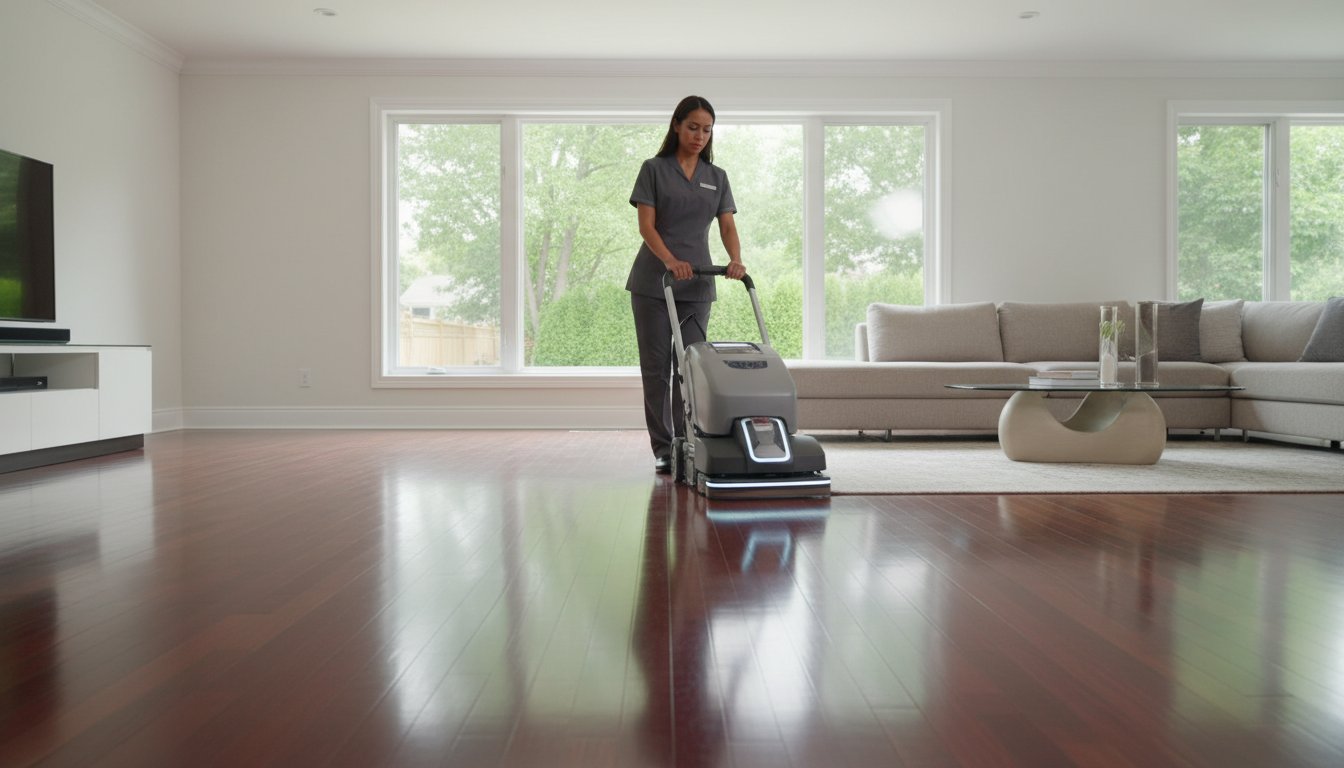
Traditional mopping often does little more than redistribute microscopic debris. When you use a bucket and a string mop, the water becomes contaminated after the first few passes, meaning you’re essentially spreading diluted dirt across your home. Professional-grade auto-scrubbers change this dynamic entirely. These machines utilize a dual-tank system that keeps the cleaning solution and the recovered “black water” completely separate. This ensures that only fresh, pH-balanced solution ever touches your wood grain.
The core of this process is a specialized hot water extraction method tailored specifically for wood. Unlike the high-moisture steam used on carpets, this technique uses a controlled temperature of approximately 140 degrees Fahrenheit. This heat is high enough to emulsify stubborn oils and waxes but low enough to protect the wood’s structural integrity. Because the machine applies and immediately vacuums up the liquid, the moisture contact time is kept to a minimum. To guarantee safety, AlphaLux professionals deploy high-velocity centrifugal drying fans. These industrial air movers can dry an entire room in under 15 minutes, which prevents the wood from absorbing moisture that could lead to cupping or warping.
The New York Challenge: Sand, Salt, and Snow
New York winters present a unique threat to flooring. Road salt, often containing calcium chloride, can chemically etch and “burn” a floor’s polyurethane finish if it isn’t neutralized quickly. In coastal areas like Long Island, fine quartz sand is a constant intruder. This sand carries a hardness rating of 7 on the Mohs scale, which is significantly harder than most wood finishes. Without deep cleaning hardwood floors using industrial-grade vacuums that provide 120 CFM (cubic feet per minute) of airflow, these micro-abrasives remain trapped in the gaps between boards, slowly grinding away the finish with every step.
When to Call the Pros
It’s time to stop mopping when you notice a persistent “sticky” feel or a gray haze that remains after cleaning. These are signs that biofilm and cleaning product residue have bonded to the surface. Choosing professional care is a smart financial move. According to industry data, professional sanding and refinishing typically costs between $4 and $6 per square foot. In contrast, a deep extraction service is a fraction of that cost and extends the life of your original finish by years. You can find local experts by searching for professional cleaning services near me to ensure your home receives the care it deserves.
Experience the relief of a home that doesn’t just look clean, but truly feels clean. Schedule your AlphaLux professional floor extraction today.
Long-Term Care: Maintaining That AlphaLux Shine in New York Homes
Maintaining the integrity of your wood floors in a high-traffic New York environment requires a proactive strategy. New York City apartments and Long Island homes face unique challenges, from abrasive beach sand to corrosive winter salt. High-quality walk-off mats at every entrance are your first line of defense. These mats should be at least 4 feet long to ensure they capture debris from both feet before someone steps onto the wood. A strict “no shoes” policy is equally vital. It prevents heel marks and grit from grinding into the polyurethane.
Wood is an organic material that reacts to its environment. You must keep your indoor humidity between 30% and 50% year-round. If levels drop below 30% in winter, the wood can gap or crack; if they rise above 50% in summer, warping becomes a risk. While daily care helps, scheduling a professional deep cleaning hardwood floors session every 6 to 12 months is the only way to remove embedded contaminants that standard mopping misses. This frequency preserves the finish and prevents the need for early refinishing.
Preventative Maintenance Checklist
Small habits prevent expensive repairs. Check your felt furniture pads every 30 days. These pads wear thin or trap grit, turning your chair legs into sandpaper. If you have pets, trim their nails every 2 weeks. Long claws create deep scratches that penetrate the protective finish. Since area rugs are often used to shield these surfaces, specialists like Rug Cleaning Experts provide the meticulous care required for Persian and Oriental rugs to prevent grit from filtering through to the floor. When accidents happen, speed is everything. Use the “blot, don’t rub” technique for liquids. Rubbing pushes moisture deeper into the grain and can cause permanent staining or finish clouding.
Creating a Custom Cleaning Plan
A pristine home is the result of a consistent system. You can easily integrate specialized hardwood care into your recurring cleaning schedule. This ensures that dust and allergens are removed before they cause micro-abrasions. Choosing a partner who treats your home with precision and respect makes all the difference.
At AlphaLux, we understand that your flooring is a significant investment. Our team uses professional-grade equipment to perform deep cleaning hardwood floors without the risk of water damage or harsh chemical residue. We handle the details so you can focus on what matters most. With AlphaLux Cleaning, your home doesn’t just look clean; it feels clean. Experience a higher standard of clean—get your free estimate today.
Restore the Radiance of Your New York Home
Your hardwood floors are a significant investment that can last over 100 years when maintained correctly. The National Wood Flooring Association suggests that professional service every 1 to 3 years is vital to prevent microscopic grit from destroying your finish. While weekly maintenance is helpful, deep cleaning hardwood floors using specialized deep-dirt extraction technology is the only way to reach the debris that traditional mopping ignores. This process preserves the wood’s integrity and ensures your home remains a healthy environment for your family.
AlphaLux offers a premium service built on trust and precision. Our team uses non-toxic, eco-friendly products that are safe for children and pets. Every technician is a vetted and fully insured professional dedicated to providing a spotless result. We handle the technical details so you can focus on enjoying a pristine living space. It’s time to elevate your home’s atmosphere with a care plan tailored to your specific flooring needs.
Get a Free Estimate for Professional Hardwood Deep Cleaning
We look forward to helping you achieve a home that feels as fresh as it looks.
Frequently Asked Questions
Is it okay to use vinegar and water to deep clean hardwood floors?
You shouldn’t use vinegar and water to clean your wood because the 5% acetic acid in household vinegar gradually dulls the protective finish. While it’s a common home remedy, it often leaves a cloudy residue that traps dirt. Instead, use a pH-neutral cleaner specifically formulated for hardwood to maintain the floor’s integrity and shine.
How often should I professionally deep clean my hardwood floors in New York?
You should schedule a professional deep cleaning for your hardwood floors every 6 to 12 months in New York. The city’s high humidity levels, which often reach 70% in summer, and the salt tracked in during winter months can damage wood fibers. Regular professional care ensures your home doesn’t just look clean; it feels clean and healthy for your family.
Can I use a steam mop on my hardwood floors if they are sealed?
You should avoid using a steam mop even on sealed hardwood floors. Steam cleaners can force moisture into the wood grain at temperatures exceeding 200 degrees Fahrenheit, which leads to warping or cupping. The National Wood Flooring Association reports that excessive moisture is the primary cause of floor failure, so it’s safer to use damp microfiber pads instead.
What is the best way to remove sticky residue from wood floors without scrubbing?
The best way to remove sticky residue is by applying a small amount of a citrus-based solvent or a pH-neutral wood cleaner directly to the spot. Let the solution sit for 3 to 5 minutes to break down the adhesive bond before wiping it away with a soft microfiber cloth. This method prevents the need for aggressive scrubbing that can create permanent swirl marks in your floor’s topcoat.
Will professional deep cleaning remove scratches from my hardwood?
Professional deep cleaning hardwood floors won’t remove physical scratches that have penetrated the wood or the finish. However, this process removes the embedded dirt that makes scratches appear darker and more prominent. For deep gouges, a screen and recoat or a full sand and refinish is necessary to restore a perfectly smooth surface.
How long does it take for hardwood floors to dry after a professional deep clean?
Most hardwood floors are dry enough for light foot traffic within 1 to 2 hours after a professional deep clean. If your technician applies a fresh maintenance coat of finish, you may need to wait 4 to 24 hours depending on the specific product used. Keeping your HVAC system set to 68 degrees Fahrenheit helps expedite the drying process by controlling indoor humidity.
Is deep cleaning safe for engineered hardwood floors?
Deep cleaning is entirely safe for engineered hardwood floors when performed by trained professionals. Since engineered wood has a real wood veneer that’s often only 2 to 4 millimeters thick, it requires the precision and care that AlphaLux provides. Our specialized equipment uses 90% less water than traditional mopping, protecting the plywood layers from delamination and moisture damage.
How can I tell if my hardwood floor finish is worn out?
You can determine if your finish is worn out by placing a single tablespoon of water on a high-traffic area. If the water beads up, your finish is still intact; however, if the water soaks in and darkens the wood within 30 seconds, the protective seal has failed. A failed seal means your floors are vulnerable to permanent staining and require immediate professional attention.