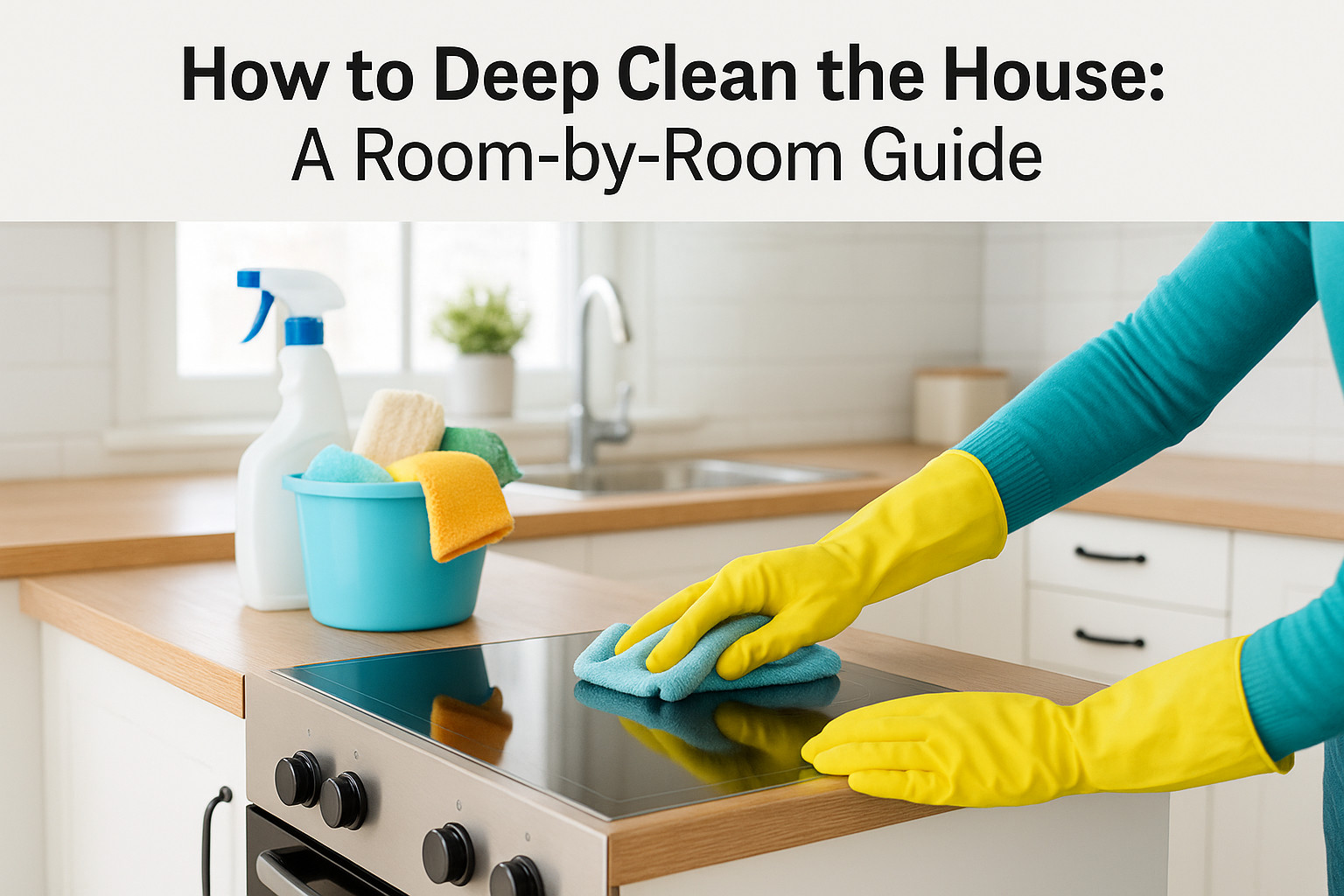
Your regular cleaning routine keeps things tidy, but it doesn’t touch the grime hiding behind appliances, the dust layered on baseboards, or the buildup in grout lines you walk past every day. That’s the gap deep cleaning the house is meant to close, and if you’re staring at a to-do list that feels bigger than your weekend, you’re in the right place.
This guide breaks down exactly how to deep clean house spaces one room at a time, so you’re not guessing what counts as "deep" versus just wiping surfaces. We cover the specific tasks, the order that saves you time, and which products actually cut through built-up grime without damaging your finishes.
We’ll walk through deep cleaning a house from the kitchen and bathrooms to bedrooms, living areas, and the spots most people forget entirely. As a cleaning company that handles this work every day across New York homes, we’ve built this checklist around what actually makes a difference, not just what looks good on paper. By the end, you’ll have a clear, room-by-room plan you can follow yourself, or a solid benchmark for what to expect if you decide to bring in a professional crew instead.
What deep cleaning really means (and how often to do it)
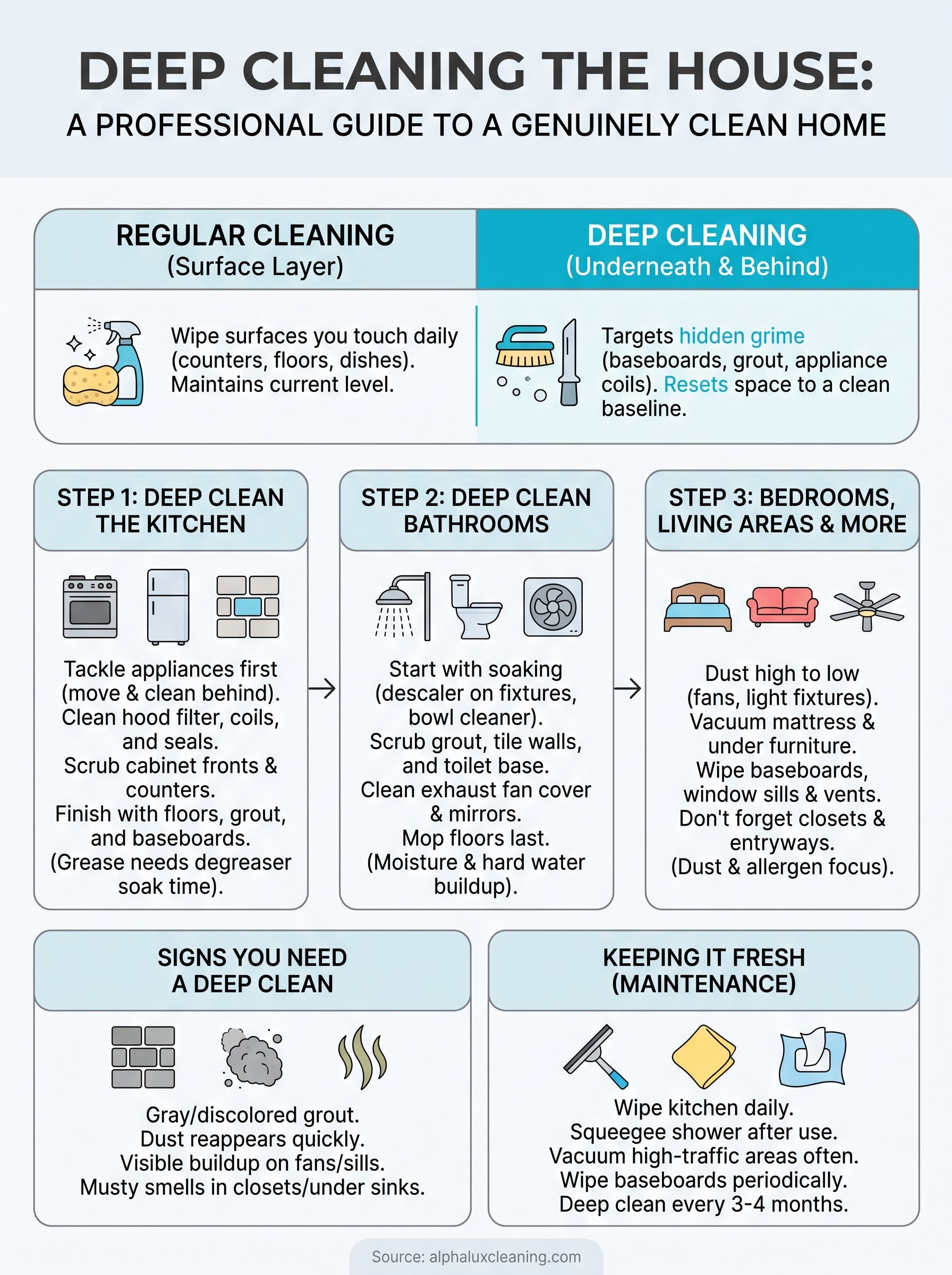
Regular cleaning handles what you can see: dishes, floors, countertops, the surfaces you touch every single day. Deep cleaning the house goes underneath and behind that surface layer, targeting the buildup that accumulates over weeks or months, things like baseboard dust, grout stains, appliance grease, and the film that settles inside light fixtures. It’s not a longer version of your weekly routine. It’s a different job entirely, one that resets a space back to a genuinely clean baseline instead of just maintaining what’s already there.
Regular cleaning vs. deep cleaning: what’s the difference
Understanding the split matters because it changes what tools, time, and products you need, and the full breakdown of deep cleaning vs regular cleaning costs and timelines goes deeper on it. Here’s how the two compare side by side:
| Task | Regular cleaning | Deep cleaning |
|---|---|---|
| Kitchen counters | Wipe down surfaces | Move small appliances, clean underneath |
| Floors | Sweep and mop | Scrub grout, edges, and under furniture |
| Bathroom | Wipe sink and toilet | Scrub grout, descale showerhead, clean exhaust fan |
| Windows | Dust sills | Wash glass inside and out, wipe tracks |
| Appliances | Wipe exterior | Clean coils, filters, and interior seals |
| Baseboards | Skipped | Wiped down and de-dusted |
Deep cleaning isn’t about cleaning more often, it’s about cleaning the parts your regular routine never reaches.
Skipping the deep clean phase doesn’t just leave dust behind. Grease buildup in kitchen exhaust fans becomes a fire hazard over time, and grout that never gets scrubbed holds bacteria and mold spores long after the visible surface looks fine.
How often should you deep clean your house
Most households do well with a deep cleaning schedule of once every three to four months, though how often to deep clean shifts with your household’s specific circumstances. A few factors push that timeline tighter:
- Pets in the home: aim for every two to three months since fur and dander accumulate faster in carpets and vents
- Allergies or asthma: every two months helps cut down on dust mites and mold buildup
- High foot traffic or a large household: every two to three months keeps grime from compounding
- Renting and moving: always before move-in and before move-out, regardless of your last deep clean
- Empty nesters or low-traffic homes: every four to six months is usually enough
Seasonal timing works well for most people because it gives you a natural trigger. Spring and fall are popular for a reason: heating and cooling systems kick on, windows get opened, and dust that’s been sitting all season finally becomes visible.
Signs your house is overdue for a deep clean
Sometimes the calendar isn’t the best guide, your house will tell you directly, and there are signs your home needs a deep cleaning service worth knowing. Watch for these signals:
- Grout lines look gray or discolored no matter how much you sweep
- Dust appears on surfaces again within a day or two of cleaning
- The bathroom exhaust fan is visibly caked with dust
- You notice a musty smell in closets, under sinks, or near appliances
- Baseboards and window sills have a visible gray film
If you’re checking off two or more of these, it’s time to move past your regular routine. The good news is that once you’ve done a proper deep clean, keeping the house at that standard gets noticeably easier, which is exactly what the next steps in this guide will walk you through.
Step 1. Gather supplies and set a game plan
Before you touch a single surface, take ten minutes to gather everything you’ll need. Running back and forth for a forgotten sponge or a bottle of descaler breaks your momentum and turns a four-hour job into a six-hour one. Deep cleaning a house goes faster when every tool is within reach before you start the first room.
A deep clean stalls the moment you have to stop and go buy supplies halfway through.
Build your supply kit
Stock a caddy or bucket with the basics so you’re not hunting room to room, and keep a deep cleaning checklist for the house nearby to track what’s done. Here’s what covers most homes:
- Microfiber cloths (at least a dozen, color-coded by room if possible)
- All-purpose cleaner and a degreaser for kitchen grease
- Bathroom-specific cleaner with descaling power for hard water
- Grout brush or old toothbrush for tile lines
- Glass cleaner for windows and mirrors
- Vacuum with a crevice attachment and a mop with washable pads
- Rubber gloves and a step stool for high shelves and light fixtures
If you’d rather skip the product shopping and the physical work entirely, our house cleaning services come stocked with everything needed, including eco-friendly options if that matters to your household.
Choose an eco-friendly option if it matters to you
Many households now prefer non-toxic products, especially with kids, pets, or allergy sufferers in the house. Look for plant-based degreasers and vinegar-based descalers instead of heavy bleach or ammonia products, particularly in enclosed spaces like bathrooms where fumes linger.
Set your room order
Work top to bottom and back to front in every room, dust falls, so ceiling fans and shelves come before floors. Across the whole house, a logical order looks like this:
- Kitchen (grease and appliances take the longest to break down)
- Bathrooms (descaling needs soak time, so start it early)
- Bedrooms and living areas
- Shared spaces last, since foot traffic picks everything up
Block out realistic time, roughly 45 to 90 minutes per room depending on size, and resist the urge to rush the kitchen just to get to easier rooms.
Step 2. Deep clean the kitchen
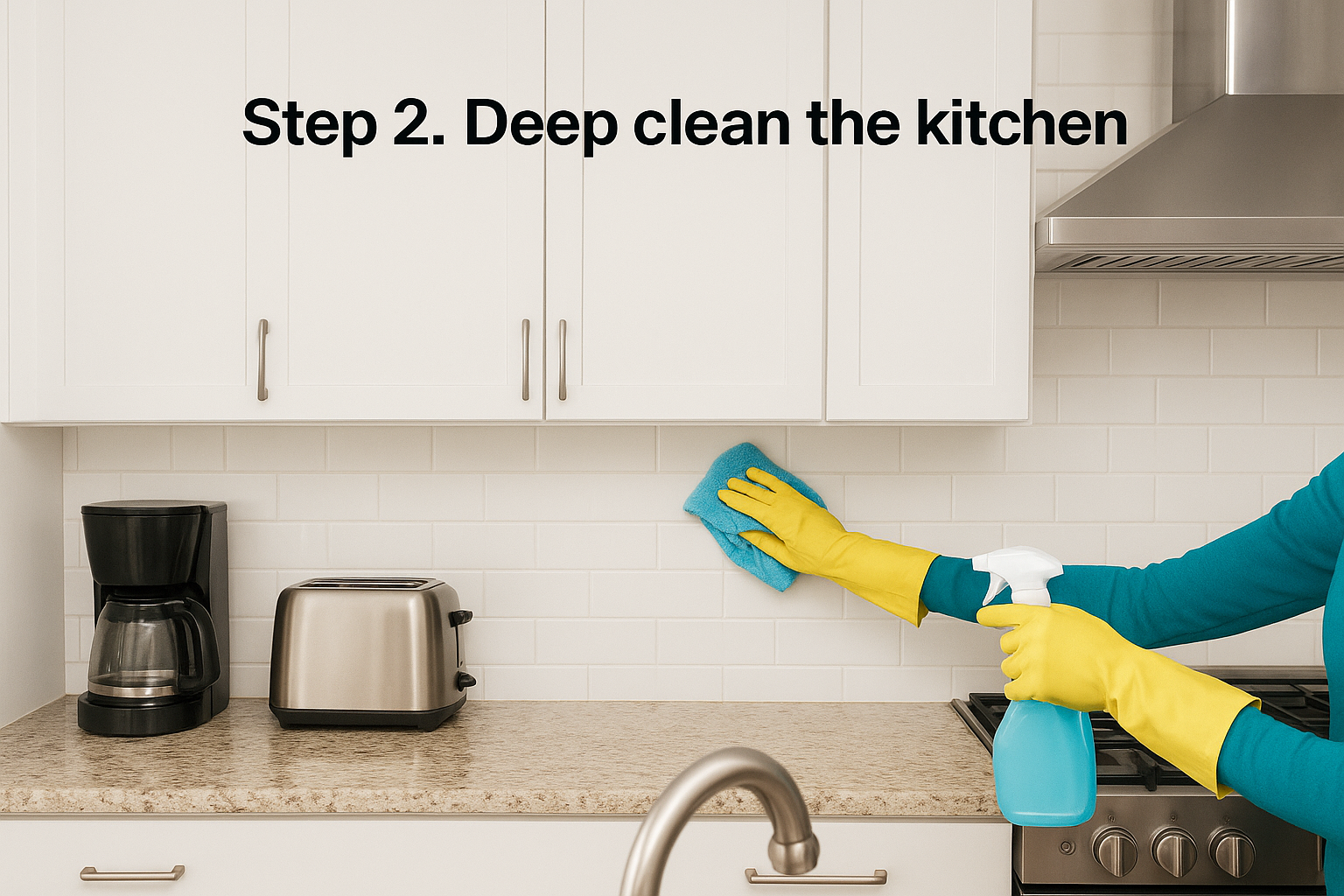
Grease is the enemy in every kitchen, and it hides in places you don’t check during a normal wipe-down. Deep cleaning the house always starts here because degreaser needs time to break down buildup on hoods, backsplashes, and appliance surfaces before you scrub. Give yourself the full 60 to 90 minutes this room usually needs, and if you want the longer version, our step-by-step guide on how to deep clean a kitchen covers every task in order.
Tackle appliances first
Before anything else, pull the small appliances off the counter and clean underneath them, crumbs and grease collect there constantly. Move on to the bigger jobs while the degreaser has time to work on tougher spots:
- Empty the fridge, wipe shelves and drawers, and clean the door seals where mold likes to grow (here’s how to deep clean a refrigerator properly)
- Run a self-clean cycle on the oven or scrub the interior with a paste of baking soda and water
- Clean the microwave interior with a bowl of water and lemon slices, heated for two minutes to loosen splatter
- Wipe down the range hood filter and vent, this is where grease buildup becomes a fire risk over time
- Pull the stove and fridge away from the wall if possible and clean the floor and coils behind them
The appliances you never move are exactly where deep cleaning makes the biggest visible difference.
Clean cabinets, counters, and the sink
Wipe down cabinet fronts and handles, where hand grease builds up fastest, then move inside if it’s been a while since you last emptied them. Counters get a full clear-off and wipe, including underneath any canisters or appliances that usually sit in place. Descale the faucet and disinfect the sink basin, paying attention to the drain area where food particles and bacteria collect.
Finish with floors and grout
Save the floor for last since everything above drops crumbs and dust as you work. Scrub grout lines with a stiff brush and grout cleaner, focusing on high-traffic areas near the sink and stove where grime darkens fastest. Mop with a solution suited to your flooring, then check baseboards along the kitchen perimeter, they collect a surprising amount of dust and splatter that regular sweeping never reaches.
Step 3. Deep clean the bathrooms
Bathrooms punish shortcuts more than any other room in the house, since hard water and moisture create buildup that regular wiping never touches. Deep cleaning the house means treating the bathroom as its own project, not an afterthought squeezed in after the kitchen. Set aside 45 to 60 minutes per bathroom, start with the tasks that need soak time so they’re working while you handle everything else, and follow our step-by-step bathroom deep clean checklist if you want the full sequence.
Start with descaling and soaking
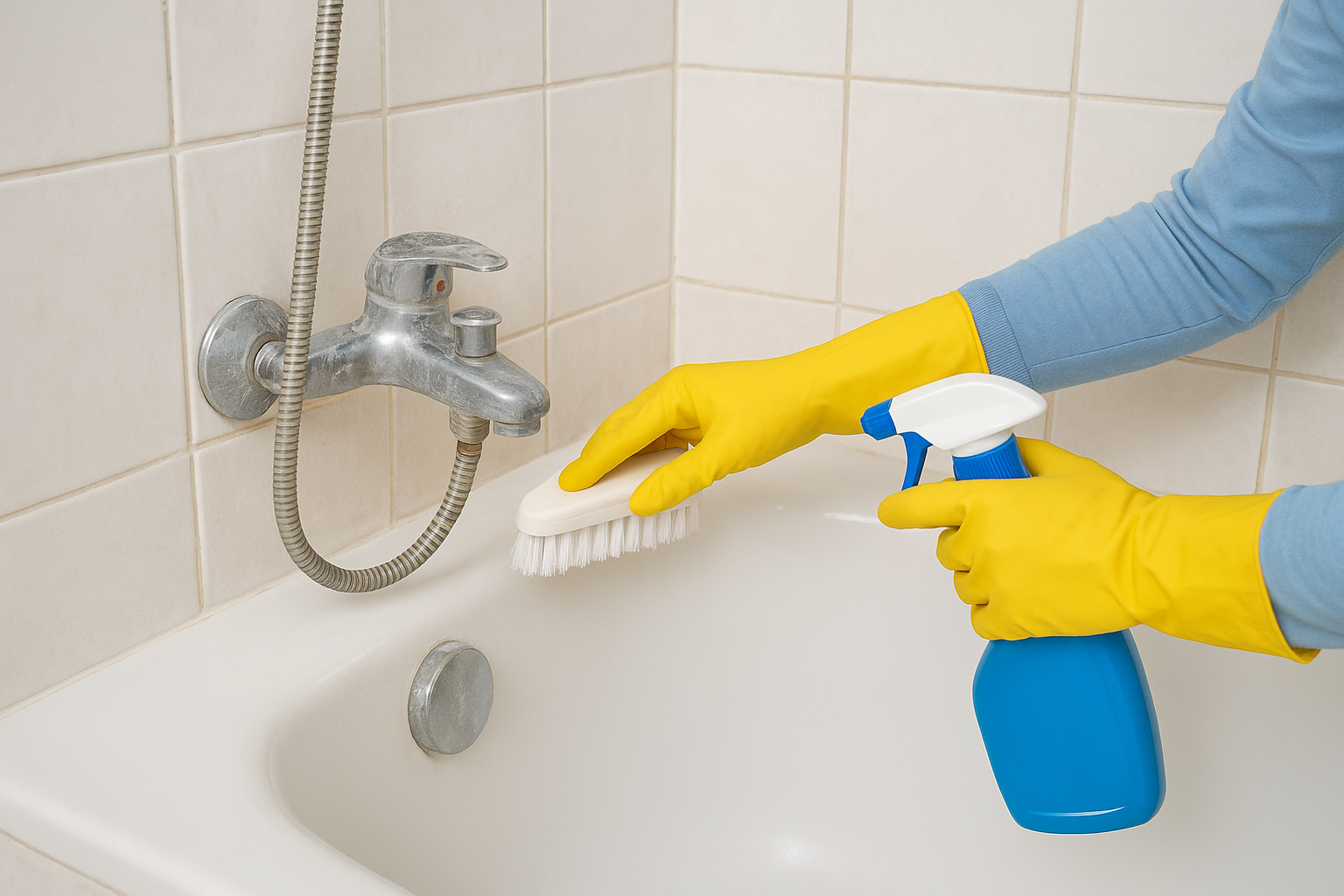
Spray the showerhead, faucet, and any hard water spots with a vinegar-based descaler first, then let it sit for at least 15 minutes while you move on to other tasks. Drop toilet bowl cleaner in and let that sit too. This staging trick is what separates a fast deep clean from one that drags on:
- Descaler on showerhead and faucet: 15+ minutes
- Toilet bowl cleaner: full soak time before scrubbing
- Degreaser on exhaust fan cover: 10 minutes to loosen dust and grime
Soak time isn’t wasted time, it’s what makes scrubbing ten times easier.
Scrub grout, tile, and fixtures
Once the soak time is up, attack the grout lines with a stiff brush, focusing on the shower floor and corners where mold loves to settle. Wipe down tile walls fully, not just the section at eye level, and scrub the toilet inside and out, including the base and hinges where grime hides. Clean the exhaust fan cover thoroughly since dust buildup there restricts airflow and lets moisture linger, which feeds mold growth over time.
Finish with mirrors, cabinets, and floors
Wipe down mirrors and any glass shower doors with a streak-free glass cleaner, then clear out medicine cabinets and vanity drawers, tossing expired products while you’re in there. Mop the floor last, working the grout lines near the toilet base and shower entrance where hair and dust collect most. If you’re tackling deep cleaning a house with multiple bathrooms, this room-by-room rhythm keeps every one consistent instead of rushing the last one you get to.
Bathrooms are also where a deep bathroom cleaning service gets requested most often, since most people would rather skip the grout scrubbing entirely.
Step 4. Deep clean bedrooms, living areas, and the rest of the house
Bedrooms and living rooms rarely feel dirty the way kitchens and bathrooms do, which is exactly why they get skipped when people rush through deep cleaning the house. There’s no grease and no mold smell forcing your hand, just dust mites in the mattress, pet hair under the couch, and a ceiling fan nobody’s looked at since spring. Budget 30 to 45 minutes per bedroom and slightly more for a busy living room, then work top to bottom like every other room in this guide.
Bedrooms and closets
Start high and work down so dust lands on floors you’ll vacuum last:
- Dust ceiling fans, light fixtures, and the tops of door frames
- Flip or rotate the mattress, then vacuum it to pull out dust mites and dead skin
- Wash all bedding, including the mattress protector and any decorative pillows
- Wipe down dressers, nightstands, and headboards, including the backs and undersides
- Vacuum under the bed and behind furniture that rarely gets moved
- Sort through the closet, wiping shelves and the closet floor while everything’s out
The mattress you sleep on every night is one of the dustiest surfaces in the whole house, and it’s the one people clean least.
Living areas and shared spaces
Upholstery holds more dust and allergens than most people realize, so pull out the vacuum attachments and work every cushion, not just the visible top layer. Move furniture away from the walls to catch the dust rings that build up underneath and behind, then wipe down electronics, remotes, and picture frames where fingerprints and dust collect fastest. Windows deserve full attention here too, glass, tracks, and sills, since living rooms usually have the biggest windows in the house.
The spots most people skip
Hallways, entryways, and stairs take the heaviest foot traffic yet almost never get a deep clean of their own. Check these areas specifically:
- Vent covers and air returns, wiped or vacuumed to remove dust buildup
- Door frames and light switch plates, which collect grime from hands
- Baseboards along every hallway, not just the main living spaces
- Entryway floors and rugs, where outdoor dirt tracks in daily
Finish with a full vacuum of every carpet and a mop of every hard floor, moving room to room in the order you cleaned them.
Keeping your home fresh between deep cleans
A few small habits keep your home from sliding back to where you started, and our pro guide to maintaining your home after a deep cleaning lays out the routine in full. Wipe kitchen surfaces and the stovetop daily, run the exhaust fan when you cook, and give bathroom tile a quick squeegee after every shower to slow water spots before they set. Vacuum high-traffic rugs twice a week instead of once, and keep a microfiber cloth handy for baseboards and switch plates whenever you notice dust building up.
Deep cleaning the house isn’t a one-time fix, it’s a reset that regular upkeep is meant to protect. Follow the schedule from earlier in this guide, stay alert to the warning signs, and you’ll spend far less time scrubbing grout and grease next time around.
If your schedule doesn’t leave room for any of this, let a professional crew handle it. Book AlphaLux deep cleaning services and get your home back to a genuinely clean baseline without lifting a sponge.