The lowest bidder often becomes a municipal facility manager’s most expensive mistake. When procuring office cleaning services for government buildings, the real measure of success isn’t just gleaming floors; it’s whether your contractor maintains rigid security clearance, complies with labor regulations, and protects public trust behind locked doors.
You already know the quiet anxiety that comes with handing facility keys to outside crews. Between updated OSHA Hazard Communication mandates, complex prevailing wage rules, and the non-negotiable need for fully vetted personnel, managing custodial operations can feel like navigating a minefield. That daily friction disrupts agency proceedings and takes your focus away from serving the community. You deserve absolute confidence that your administrative spaces remain immaculate, secure, and fully compliant without requiring constant supervision.
In this 2026 procurement guide, you’ll discover how municipal and federal facility managers evaluate, select, and contract secure custodial teams that elevate public workspaces while keeping compliance risks at zero. We’ll walk through building an airtight RFP scope, setting strict background verification protocols, and establishing a structured evaluation process that filters out unqualified low-bidders before they reach your agency’s threshold.
Key Takeaways
- Learn how to evaluate office cleaning services for government buildings by prioritizing personnel background checks, access protocols, and regulatory compliance over low-bid pricing.
- Discover the key framework elements needed to build airtight RFP scopes that filter out unqualified contractors and prevent service disruptions during official proceedings.
- Understand the distinct operational protocols required to balance high-traffic citizen service counters with confidential, secure administrative zones.
- Find out how integrating daytime porter support with scheduled recurring cleaning creates a spotless, compliant civic environment for staff and visitors alike.
- See how partnering with dedicated, insured custodial professionals using non-toxic solutions safeguards public worker health while satisfying municipal environmental standards.
Regulatory Standards and Security Protocols in Government Office Cleaning
Managing custodial operations in public administrative facilities is fundamentally different from managing standard commercial properties. While private corporate offices focus largely on aesthetic upkeep, procuring office cleaning services for government buildings requires an uncompromising approach to physical access, data privacy, and chain of custody. Cleaning crews routinely operate around sensitive constituent paperwork, court records, and restricted infrastructure. Treating a municipal hall or federal annex like a conventional office park creates vulnerabilities that facility directors cannot afford to overlook.
Security Clearances and Personnel Vetting Requirements
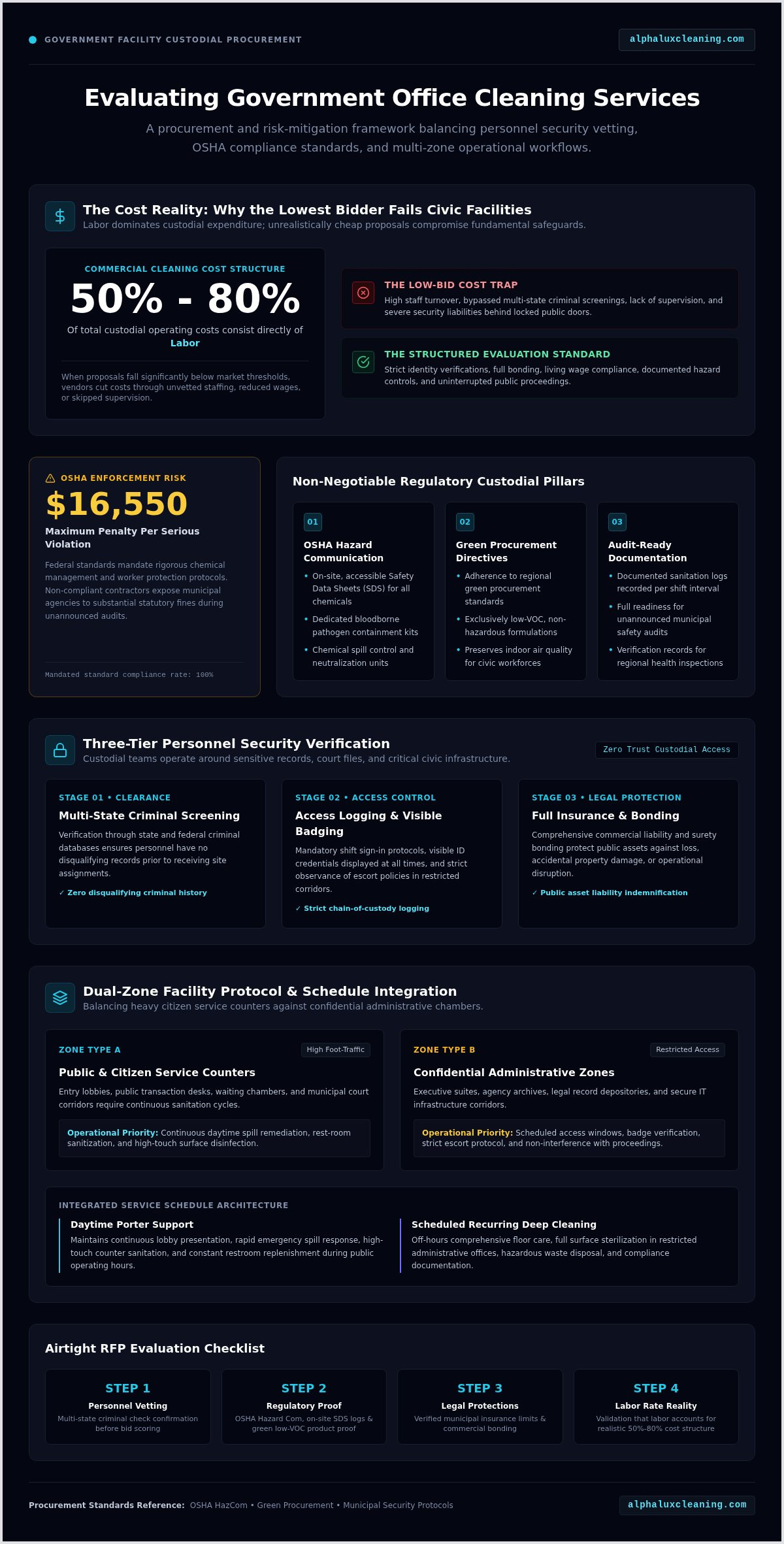
Every custodial team member entering a civic structure must be thoroughly vetted before ever receiving an access badge. A dependable vendor enforces rigorous identity verification and background checks at both the state and federal levels to eliminate security liabilities. These measures protect public trust and administrative integrity:
- Mandatory criminal history screening: Verification through multi-state criminal databases ensures personnel have no disqualifying records prior to site assignment.
- Access logging and badge protocols: Custodial crews must follow strict sign-in procedures, wear visible credentials at all times, and respect designated escort policies in secure corridors.
- Full insurance and bonding: Insured, bonded personnel safeguard public assets against loss, property damage, or operational breach.
Regulatory Compliance: OSHA, EPA, and Local Mandates
Public sector facilities operate under strict oversight where regulatory violations carry serious financial and legal liabilities. Meeting baseline commercial cleaning industry standards is only the starting point for civic workspaces. Quality service providers align their practices with shifting worker safety mandates and regional environmental initiatives.
Occupational safety centers on strict adherence to the OSHA Hazard Communication Standard. Janitorial teams must keep on-site, easily accessible Safety Data Sheets (SDS) for every chemical brought into the property, alongside dedicated bloodborne pathogen kits and spill containment protocols. As OSHA safety violation penalties reach up to $16,550 per serious violation as of 2026, proper chemical handling is essential.
In New York administrative facilities, contractors must also align with state green procurement directives that favor non-toxic, environmentally preferable products. Modern commercial cleaning partners utilize low-VOC, non-hazardous formulations that protect indoor air quality without sacrificing sanitation strength. By maintaining comprehensive, documented sanitation logs for every service interval, your facility remains fully prepared for unannounced municipal safety audits and health inspections.
Evaluating Office Cleaning Services for Government Buildings: The Procurement Framework
Public sector RFPs often fall into the trap of awarding contracts based solely on the lowest bid. However, evaluating office cleaning services for government buildings requires a structured scoring model that balances cost efficiency with rigorous technical competence. Because labor accounts for roughly 50% to 80% of commercial cleaning costs, an unrealistically cheap proposal signals dangerous shortcuts: high staff turnover, skipped security vetting, or inadequate supervision. A comprehensive procurement framework protects your agency by establishing clear operational baselines before price scoring begins.
To verify that a prospective bidder can protect civic infrastructure, incorporate a weighted scoring matrix that assesses technical capacity alongside legal protections. facility managers should review our detailed guide on how to choose a cleaning company for deeper evaluation criteria. Ensure your evaluation committee verifies active certificates of comprehensive general liability insurance, workers’ compensation coverage, and compliance with mandatory OSHA safety and health regulations to shield the municipality from third-party workplace claims.
Core Capabilities: Staffing Reliability and Supervisory Ratios
Operational continuity hinges on who oversees daily field operations. Constant staff turnover creates major security risks in public sector facilities where personnel handle sensitive administrative areas. When reviewing proposals, prioritize contractors who maintain healthy retention rates and provide dedicated on-site site managers rather than remote, off-site dispatchers.
- Direct supervisory ratios: Ensure the contractor assigns dedicated crew leaders to monitor night crews, inspect work quality, and enforce secure door locking.
- Documented retention metrics: Stable custodial teams understand the nuances of civic facilities and eliminate repeated re-badging cycles.
- Contingency response plans: The proposal must define standby staffing models for unexpected public town halls, legislative sessions, or adverse weather events.
Quality Assurance and Inspection Frameworks
Accountability must be built directly into the service agreement. Leading commercial providers use digital inspection software that records audit scores, timestamps cleaning logs, and generates transparent reporting dashboards for facility managers.
Set explicit Service-Level Agreements (SLAs) tailored to specific zones within your facility. Restrooms, public counters, and council chambers require strict cleanliness metrics compared to low-traffic storage corridors. The contract should establish mandatory deficiency response windows, such as requiring critical issues to be rectified within two to four hours. If your agency is currently reviewing custodial bids, exploring tailored commercial cleaning solutions from AlphaLux Cleaning can help you establish an accountable, high-performance maintenance standard.
Specialized Cleaning Protocols for Public Sector Workspaces
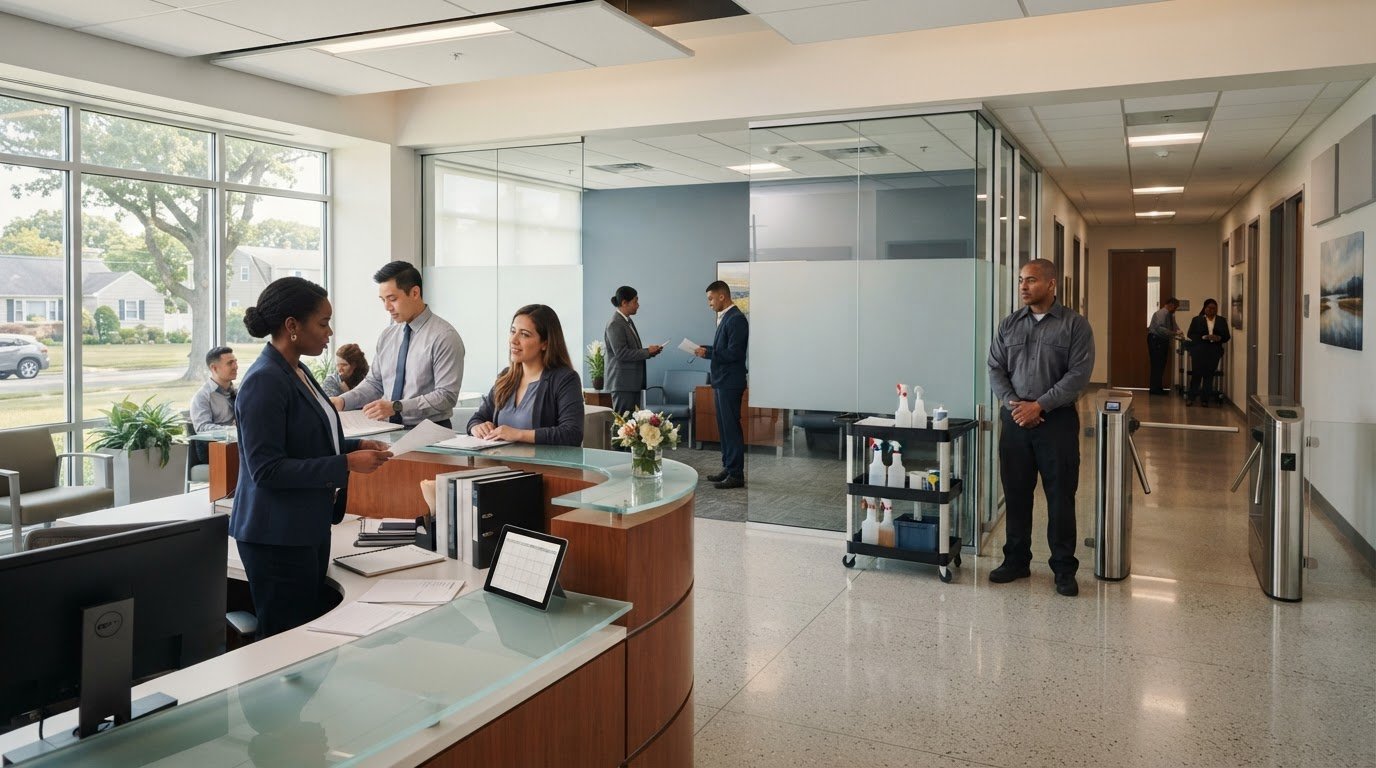
Civic buildings present an operational duality that commercial office towers rarely face. Within a single municipal property, high-density public transaction counters share walls with restricted executive suites and digital records archives. Executing office cleaning services for government buildings requires dividing the facility into distinct risk zones, applying intensive pathogen control where public foot traffic peaks while using non-intrusive methods around sensitive administrative areas. To explore broader operational tactics across regional markets, consult our commercial cleaning services NYC guide.
Older government properties often suffer from dated ventilation infrastructure. Deploying harsh chemical disinfectants in poorly ventilated spaces compromises indoor air quality, triggering respiratory discomfort for civil servants. Aligning custodial specifications with the Green Seal Standard GS-42 guarantees that contractors use non-toxic, low-VOC formulations and HEPA-filtered particulate extraction. This approach achieves clinical cleanliness without releasing toxic off-gases into public halls.
Public Service Counters and High-Traffic Area Sanitation
Lobbies, licensing bureaus, and court waiting areas experience constant turnover, making targeted disinfection critical. Research shows that workplaces implementing CDC-approved cleaning protocols can achieve a 30% to 40% reduction in sick days. Janitorial protocols must focus heavily on community contact zones:
- Targeted touchpoint sanitation: Systematic wiping of service transaction windows, intake kiosks, biometric scanners, stair handrails, and elevator call buttons prevents viral transmission.
- Restorative floor maintenance: High foot traffic drags grit and moisture across terrazzo, vinyl composite tile, and commercial carpets. Eco-friendly extraction and low-moisture cleaning restore high-traffic corridors without requiring aggressive chemical strippers.
- Continuous daytime policing: Strategic day-porter services maintain spotless public restrooms and restock essential hygiene supplies continuously between peak morning and afternoon citizen rushes.
Confidential Records and Sensitive Executive Offices
Behind public partitions lie administrative suites housing vital civic records, ongoing casework, and local legislative materials. Janitorial technicians working in these zones require specialized behavioral training to maintain strict confidentiality alongside physical cleanliness.
Crews must operate under strict “clean desk” constraints. Custodial workers should sanitize exposed desk perimeters without moving open case files, touching legal dockets, or disturbing digital peripherals. Trash and secure shredding receptacles must be emptied using clear, no-touch handling protocols that prevent cross-contamination or accidental disposal of agency paperwork. In municipal server closets, telecommunications hubs, and electronic voting storage areas, staff use anti-static, HEPA-sealed vacuums to eliminate airborne dust without generating electrostatic discharge that could damage delicate civic hardware.
Structuring Government Cleaning Contracts: Scope, Frequency, and Day Porter Integration
A well-crafted custodial contract aligns operational rhythms with civic business hours. Vacuuming during active court proceedings or buffering lobby floors during peak tax collection windows causes immediate public frustration. Procuring effective office cleaning services for government buildings requires dividing labor cleanly between high-visibility daytime upkeep and intensive evening maintenance. To understand how balanced scheduling models elevate institutional facilities, review our professional cleaning services overview.
Municipal schedules fluctuate predictably around board meetings, public hearings, and civic elections. Structuring your contract to handle these operational peaks prevents unexpected change orders and maintains uninterrupted agency operations throughout the fiscal year.
Day Porter Services vs. Evening Custodial Operations
Balancing day porters with night shifts maximizes custodial coverage without inflating payroll. Porters provide immediate, visible maintenance that directly impacts public perception during operating hours, while night crews handle heavier restoration tasks:
- Daytime porter responsibilities: Porters continuously replenish restroom supplies, clear entry vestibule track-in during rainy mornings, clean public touchpoints, and manage unexpected spill response in high-traffic halls.
- Evening custodial scope: Night crews execute comprehensive vacuuming, thorough trash and recycling removal, sanitizing administrative desks, and detailed floor scrubbing when offices are entirely vacant.
- Secured closing routines: Evening supervisors oversee critical property procedures, systematically checking window latches, verifying restricted suite locks, switching off interior lights, and arming intrusion alarms.
Scheduling Periodic Intensive Maintenance
Routine daily cleaning maintains surface hygiene, but municipal buildings also demand periodic heavy restoration. Integrating recurring deep cleaning intervals into your base RFP scope preserves capital assets such as historic terrazzo, heavy-traffic carpets, and custom woodwork.
Schedule quarterly carpet hot-water extraction and vinyl floor recoating during planned holiday closures when foot traffic drops to zero. Bi-annual high dusting targeting HVAC supply grilles, pendant lighting fixtures, and historic decorative mouldings safeguards indoor air quality across older administrative architecture. For departments completing facility renovations or office reconfigurations, establishing dedicated post-construction cleaning specifications ensures administrative spaces return to full operational readiness without lingering drywall dust. To establish a structured custodial contract tailored to your agency’s operating calendar, partner with AlphaLux Cleaning for dependable municipal care.
Why AlphaLux Cleaning Delivers Trusted Maintenance for Government Offices
Civic administration requires a custodial partner that values accountability over transactional convenience. National cleaning franchises often suffer from uneven quality control across decentralized branches, while distant multi-state providers rarely offer hands-on local oversight. AlphaLux Cleaning bridges this gap by delivering meticulous office cleaning services for government buildings throughout New York and Long Island. We treat public property care as a specialized discipline, giving facility directors the steady confidence that their administrative spaces reflect the dignity of civil service. Discover how regional agencies benefit by reviewing why civic teams choose AlphaLux Cleaning in New York.
Vetted Personnel and Reliable Quality Assurance
Uncompromised safety begins with the individuals walking your agency corridors. AlphaLux deploys fully vetted, background-checked, and insured cleaning professionals trained specifically to respect institutional protocols and municipal privacy. Our teams understand that maintaining public trust means strictly observing access boundaries and exercising absolute discretion around agency desks.
Field supervisors conduct structured, hands-on quality audits rather than relying on automated assumptions. These regular inspections verify that every courtroom, civic registry, and employee breakroom consistently satisfies contracted standards. By pairing insured staff with direct management oversight, we remove operational friction and protect facility leaders from avoidable administrative liabilities.
Customized Cleaning Plans for Municipalities
Public agencies don’t operate on standard corporate templates. That is why AlphaLux creates customizable recurring cleaning schedules built around municipal budgets, town hall calendars, and daily departmental foot traffic. Whether your facility needs daily office cleaning, targeted high-touch sanitation, or restorative deep cleaning ahead of public hearings, our services adapt to your operational workflow.
Our commitment to non-toxic, eco-friendly formulations meets strict New York environmental standards, preserving indoor air quality without pungent chemical fumes. Employees work in a healthier environment, and visiting citizens experience a fresh, welcoming space. If you are preparing an upcoming custodial solicitation or looking to upgrade your building care, connect with our team today by requesting an AlphaLux commercial cleaning consultation.
Securing Long-Term Excellence in Municipal Facility Care
Selecting the right custodial contractor protects far more than public surfaces; it safeguards agency integrity, employee wellness, and citizen trust. By prioritizing strict background vetting over rock-bottom bids and establishing clear boundaries between public counters and confidential records, facility managers eliminate unnecessary operational risk. Procuring dependable office cleaning services for government buildings ensures your civic halls remain spotless, secure, and fully compliant with evolving safety mandates.
You don’t have to navigate complex custodial procurement alone. AlphaLux Cleaning supports public administrators with fully vetted, comprehensively insured professionals who use non-toxic, eco-friendly formulations that protect indoor air quality. Serving municipal facilities across New York and Long Island, we create tailored commercial cleaning plans that respect your operational calendars, budget requirements, and civic standards. Request a customized commercial cleaning proposal from AlphaLux Cleaning today and give your public spaces the meticulous care they deserve.
Frequently Asked Questions
What security checks are standard for cleaners working in government buildings?
Standard security checks include multi-state criminal history background screenings, government identity verification, and sex offender registry checks. Reputable commercial providers ensure every cleaner passes state and federal vetting before assigning them to public properties. Technicians must also comply with building-specific sign-in procedures, wear visible security badges at all times, and follow strict restricted-access protocols to protect municipal data and public assets.
How do green cleaning products meet government disinfection mandates?
Certified green cleaning products utilize plant-based surfactants and EPA-registered botanical antimicrobials that destroy pathogens without emitting hazardous volatile organic compounds (VOCs). These eco-friendly formulations satisfy strict municipal environmental mandates while achieving clinical surface sanitation. They maintain superior indoor air quality in older public buildings, ensuring civil servants and visiting citizens aren’t exposed to harsh chemical odors or toxic residues.
What is the difference between a day porter and evening janitorial staff in civic facilities?
Day porters manage ongoing hygiene during active public hours, while evening custodial crews perform heavy restorative cleaning after the facility closes. Porters continuously restock high-traffic restrooms, wipe citizen transaction counters, and manage immediate lobby spills during peak foot traffic. Night crews handle comprehensive vacuuming, trash disposal, detailed floor scrubbing, and secure building lockup when administrative offices are completely vacant.
How do cleaning contractors handle confidential documents left in public offices?
Professional crews follow strict “clean desk” protocols that prohibit touching, shifting, or reviewing any paperwork, case dockets, or electronic records. When executing office cleaning services for government buildings, trained technicians sanitize perimeter desk surfaces without disturbing open files. They also follow no-touch trash disposal practices, ensuring agency documents never get commingled with standard municipal waste or general recycling.
Can government office cleaning schedules adjust for public hearings or emergency sessions?
Yes, professional cleaning providers offer flexible service agreements built around legislative calendars, board sessions, and unexpected town halls. Contracts typically establish clear protocols for shifting crew start times or adding pre-event sanitization ahead of major public gatherings. Reliable contractors maintain dedicated contingency staffing models to accommodate emergency evening meetings or inclement weather disruptions without impacting civic business.
Why is contractor liability insurance critical for public sector custodial agreements?
Comprehensive liability insurance shields public agencies and taxpayers from financial exposure caused by property damage, slip-and-fall injuries, or on-site accidents. Municipal contracts require vendors to present active certificates of general liability, workers’ compensation, and surety bonding. Partnering with fully insured, professional custodial teams transfers operational risk away from local government entities and guarantees accountability across every maintenance shift.
How do facility managers monitor contractor compliance and cleaning performance?
Facility managers track compliance through digital inspection logs, regular supervisory audits, and clear contractual Service-Level Agreements (SLAs). Top providers of office cleaning services for government buildings use mobile audit platforms to record timestamps, verify completed tasks, and generate transparent quality dashboards. These inspection routines allow administrators to evaluate vendor performance objectively and enforce mandatory response windows for any deficiency reports.