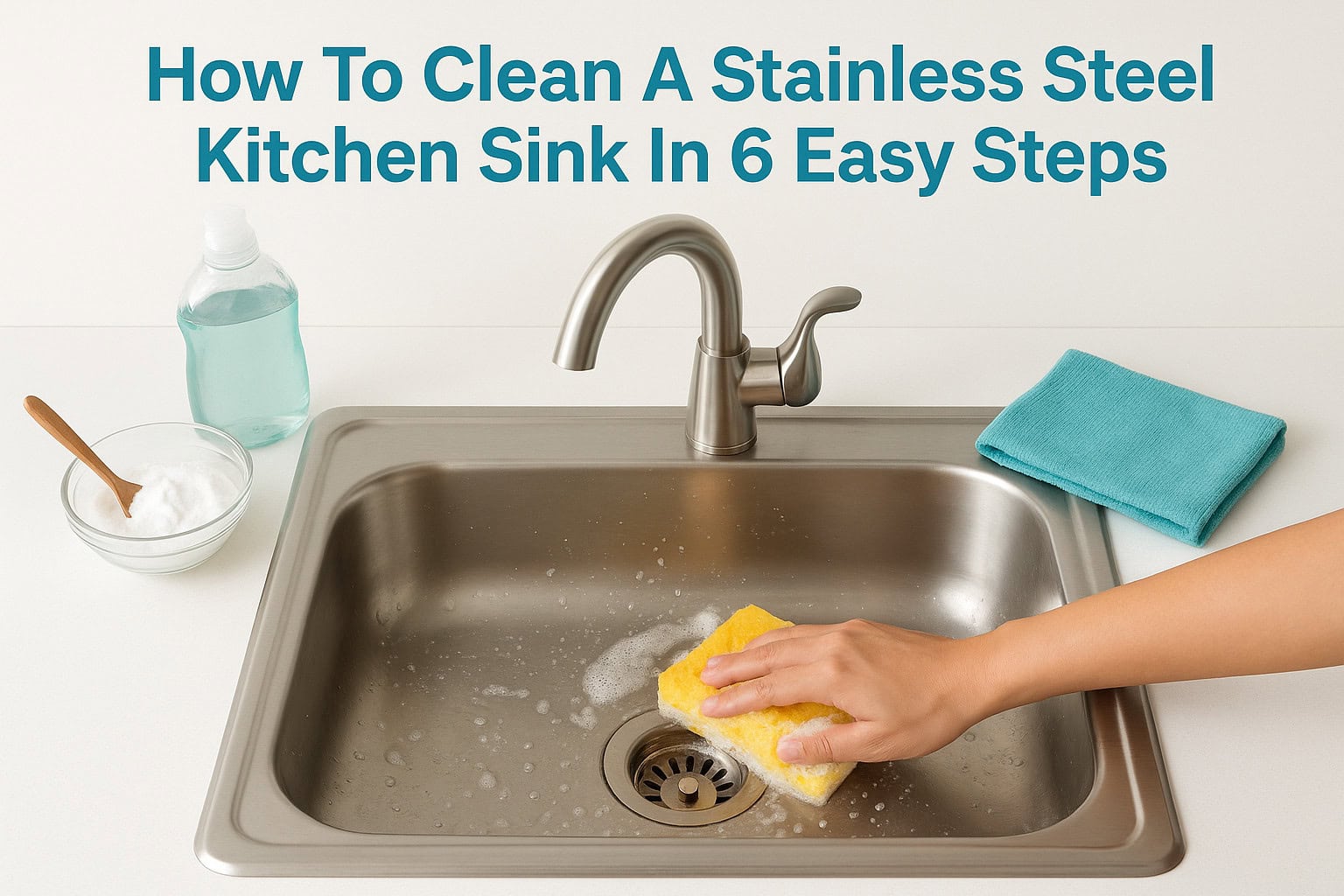
Your stainless steel sink handles a lot, dish duty, food prep, coffee dumps, and everything in between. Over time, water spots, soap residue, and stubborn stains start to dull that once-gleaming surface. If you’ve been wondering how to clean a stainless steel kitchen sink and actually keep it looking good, you’re in the right place. The process is simpler than most people think, and you likely already have what you need at home.
A clean sink isn’t just about appearances. It’s one of the most heavily used surfaces in your kitchen, and bacteria love to settle into grimy buildup. Regular cleaning protects your household’s health and extends the life of the sink itself. But using the wrong tools or harsh chemicals can scratch the finish or cause permanent discoloration, so knowing what to avoid matters just as much as knowing what to use.
At AlphaLux Cleaning, we clean kitchens across New York every day, and sinks are always part of the job. Our team knows what works, and what doesn’t, because we’ve handled hundreds of stainless steel surfaces in homes and businesses alike. Below, we’ll walk you through six straightforward steps to remove stains, restore shine, and keep your sink in top shape, plus share the products and techniques our professionals trust.
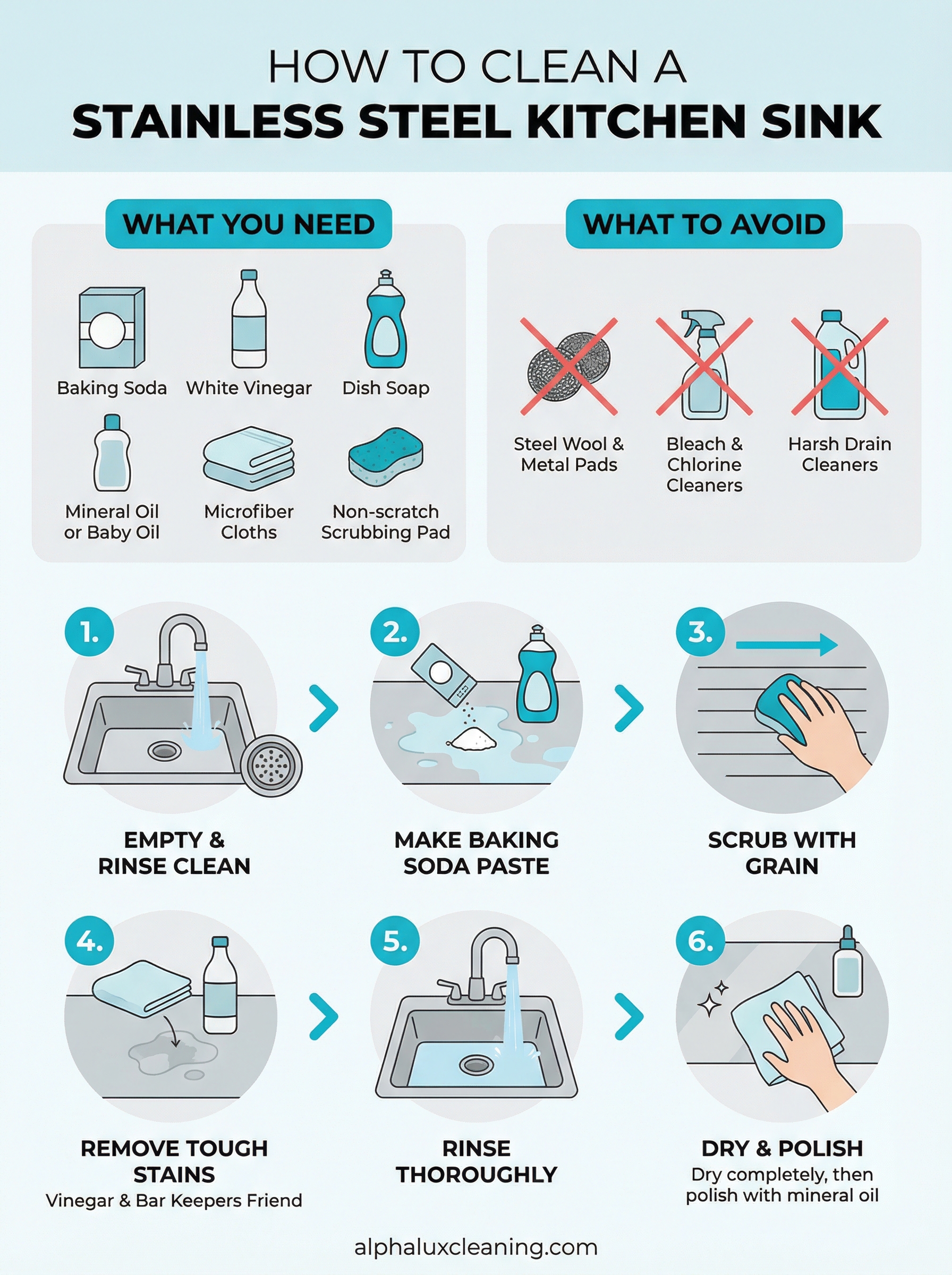
What you need before you start
Gathering your supplies before you start saves you time and keeps the process moving smoothly. You won’t need anything expensive or hard to find. Most of what it takes to clean a stainless steel kitchen sink is already sitting in your pantry or under your kitchen cabinet. Picking the right tools and products upfront also protects your sink’s finish, since the wrong choice can do more damage than the dirt itself.
Cleaning supplies you’ll need
The tools you choose matter more than most people realize. You want soft, non-scratch materials throughout the whole process to avoid leaving fine grooves in the metal that dull the finish and trap more grime over time. A few basic, inexpensive items are all you need.
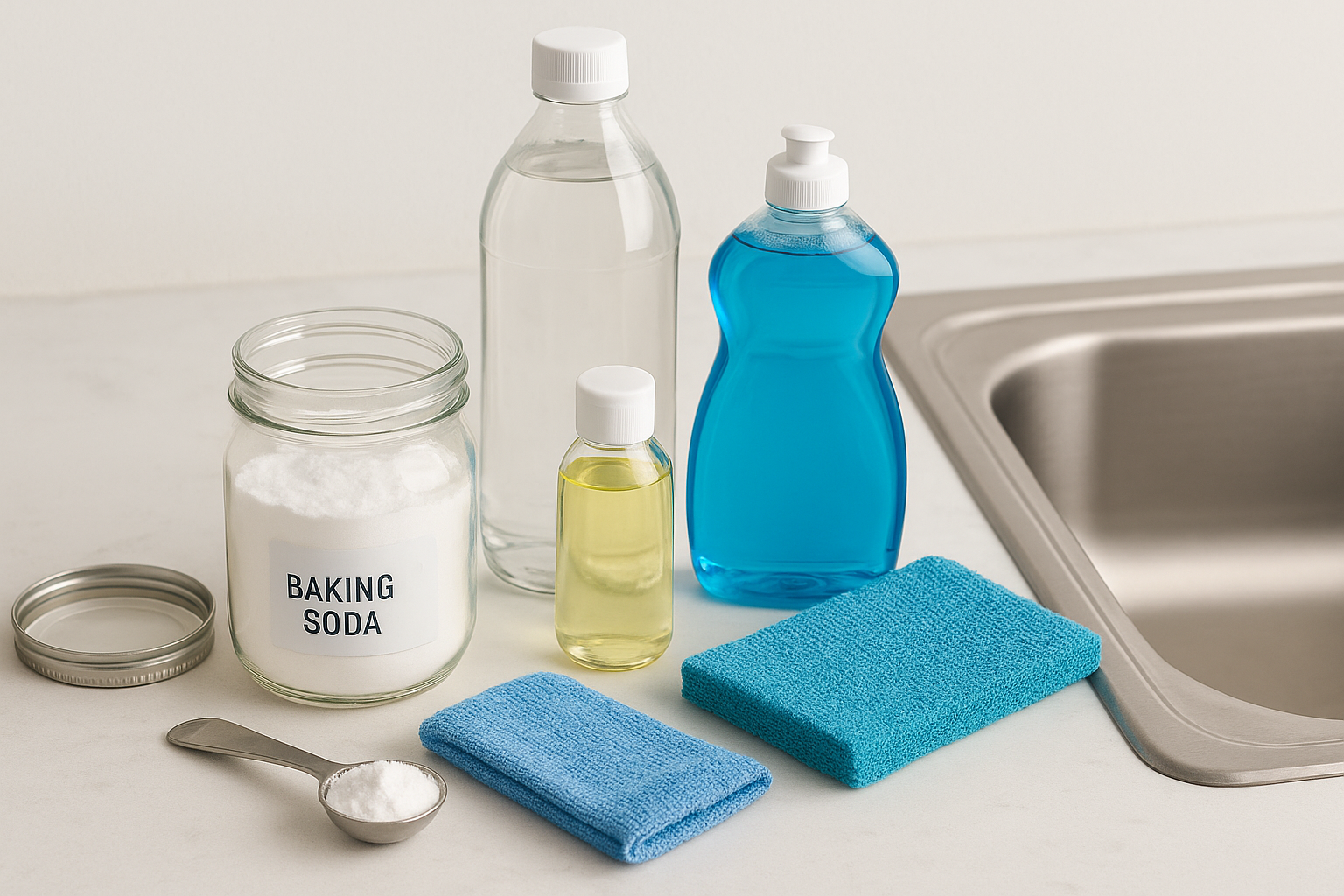
Here’s what to have ready before you begin:
| Item | Purpose |
|---|---|
| Baking soda | Gentle abrasive that lifts stains and odors |
| White vinegar | Dissolves hard water deposits and mineral buildup |
| Dish soap | Cuts through grease and daily grime |
| Mineral oil or baby oil | Final polish that repels water and fingerprints |
| Microfiber cloths or soft rags | Scrubbing and drying without scratching |
| Non-scratch scrubbing pad | Soft sponge-style pad for tougher buildup |
Having all of this within arm’s reach before you start means you won’t leave a wet, soapy sink unattended while searching for supplies.
What to avoid
Knowing what to keep away from your sink is just as important as knowing what to use. Bleach and chlorine-based cleaners break down the protective layer on stainless steel over time, leading to pitting and permanent discoloration. Steel wool and rough abrasive pads scratch the surface in ways you cannot reverse, and those scratches collect grease and bacteria going forward.
Keep these away from your sink entirely:
- Steel wool or any metal scrubbing pad
- Bleach or chlorine-based cleaning sprays
- Harsh drain cleaners left pooling on the sink basin
- Wet rubber mats or cast iron cookware sitting in the sink for extended periods, since both transfer rust onto the steel surface
Step 1. Empty the sink and rinse clean
Before you do anything else, clear everything out of the sink: dishes, sponges, drain stoppers, and dish racks. Leaving items in place while you clean means you’ll work around obstacles and miss spots, especially near the drain and along the sides where grime tends to collect. This first step in learning how to clean a stainless steel kitchen sink is the simplest, but it sets up everything that follows.
Clear the drain strainer
Once the sink is empty, remove the drain strainer and set it aside to clean separately. A loaded strainer will redeposit food debris and grease back onto your freshly cleaned surface the moment water runs through it. Rinse it under hot water and use your non-scratch pad with a drop of dish soap to scrub off any visible buildup before setting it to the side.
Clean the drain strainer separately first so nothing ends up back on the surface you’re about to scrub.
Rinse the full basin with hot water
Turn on the hottest water your tap produces and rinse the entire basin thoroughly, including the sides, the faucet base, and the area around the drain. Hot water loosens surface grease and dislodges loose food particles before you apply any cleaning products, which means your scrubbing does real work on actual stains rather than sitting on top of loose debris.
Give the basin a solid 30-second rinse and confirm that no visible particles remain before you move to the next step.
Step 2 and 3. Make paste and scrub with grain
These two steps are the core of the entire cleaning process. Baking soda paste does the heavy lifting on grease, discoloration, and light stains, while scrubbing with the grain ensures you work with the metal rather than against it, which keeps the finish intact.
Step 2: Mix your baking soda paste
Sprinkle a generous, even layer of baking soda directly over the entire wet basin. You don’t need to premix anything in a bowl. The moisture left from your hot water rinse combines with the baking soda on contact to form a light, workable paste right on the surface. Add a few drops of dish soap over the top for extra grease-cutting power before you start scrubbing.
Let the paste sit for two to three minutes before scrubbing so the baking soda has time to break down grease and surface residue.
Step 3: Scrub with the grain
Stainless steel has a visible grain, a faint series of lines that run in one direction across the surface. Always scrub in the same direction as those lines, never in circles. Circular scrubbing cuts across the grain and leaves fine scratches that catch dirt and dull the finish permanently.
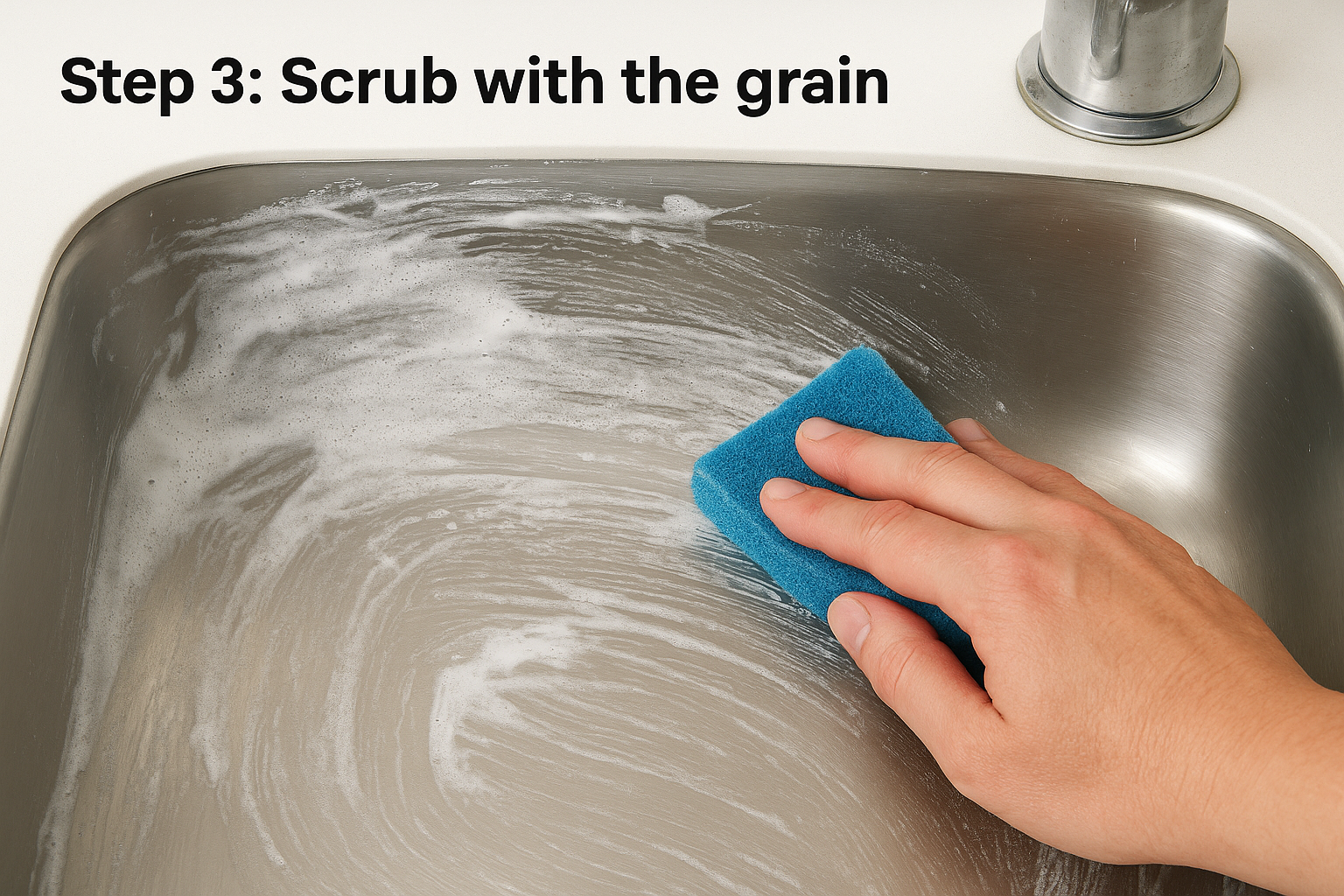
Using your non-scratch scrubbing pad, work the paste along the grain from one end of the basin to the other. Cover the sides, the bottom, and the area around the faucet base. Apply firm, consistent pressure and reload with paste as needed until the full surface has been scrubbed.
Step 4. Remove tough stains and hard water
After scrubbing with baking soda paste, you may notice stubborn white patches or orange-tinted spots that didn’t budge. These are typically hard water mineral deposits or light rust transfer from cookware, and they need a different approach than regular scrubbing. This is where white vinegar and targeted treatment do the work that baking soda alone cannot.
Dissolve hard water deposits with vinegar
Hard water leaves behind calcium and lime buildup that appears as chalky white rings, usually around the drain or at the faucet base. Soak a microfiber cloth in undiluted white vinegar and lay it directly over the affected area. Let it sit for five to ten minutes so the acid has time to break down the mineral deposits before you wipe or lightly scrub.
Don’t let vinegar sit on the sink for longer than fifteen minutes, as prolonged exposure can dull the finish over time.
Remove rust spots and discoloration
Rust transfer, the orange or brown staining left by cast iron pans or wet metal items, responds well to a product like Bar Keepers Friend. Wet the surface, sprinkle a small amount directly onto the stain, and rub gently with a soft cloth in the direction of the grain. This is one of the few commercial cleaners safe enough to use when figuring out how to clean a stainless steel kitchen sink without damaging it. Rinse completely once the stain lifts.
Step 5 and 6. Rinse, dry, and polish
These final two steps take less than five minutes combined, but they’re the ones most people skip, and skipping them is exactly why sinks look spotty or dull right after cleaning. Rinsing completely clears every trace of cleaning product from the basin before it dries on the surface. Drying and polishing immediately after locks in the shine and slows the return of water spots and fingerprints.
Step 5: Rinse thoroughly
Turn the hot water back on and rinse the entire basin from top to bottom, making sure no white residue from the baking soda paste remains anywhere on the surface. Any baking soda or vinegar left to dry will leave its own mineral deposits behind, which defeats the point of cleaning in the first place.
Focus your rinse on these spots where product tends to pool:
- Corners and seams along the basin walls
- The faucet base and handle area
- Around and just inside the drain opening
Step 6: Dry and polish
Once rinsed, use a dry microfiber cloth to wipe the entire surface completely dry. Water left to air dry leaves mineral spots within minutes, especially if your tap produces hard water.
Skipping the dry step is the fastest way to undo a thorough clean, so take the extra two minutes.
After drying, put a few drops of mineral oil or baby oil on a clean cloth and buff it into the sink following the grain. This is the final part of knowing how to clean a stainless steel kitchen sink properly, and it’s worth doing every single time. The oil creates a thin barrier that repels water and fingerprints and keeps your sink looking sharp between cleanings.
Keep your sink looking new
Now that you know how to clean a stainless steel kitchen sink from start to finish, the key is keeping up with it. A quick daily wipe-down after doing dishes, using a dry microfiber cloth, prevents mineral deposits from building up in the first place. Run through the full six-step process once a week, and your sink will hold its shine without needing heavy-duty treatment every time.
A few small habits make the biggest difference. Avoid leaving wet sponges, cast iron, or rubber mats sitting in the basin, since all three cause staining over time. Apply a thin coat of mineral oil every two to three weeks to maintain that water-repelling barrier between deep cleans. Consistent, light maintenance beats infrequent scrubbing sessions every time.
If keeping your whole kitchen spotless feels like more than you want to manage on your own, the professional cleaning team at AlphaLux Cleaning is ready to help.