
Did you know that your vegetable crisper and meat drawers are often the dirtiest places in your entire kitchen? Research shows these hidden corners frequently harbor more disease-causing bacteria than almost any other surface in the home. It’s an unsettling thought when you consider this is where your family’s fresh food resides. Knowing exactly how to deep clean a refrigerator is more than a simple chore; it’s a vital health intervention for your household. Most of us have felt the frustration of lingering odors or those stubborn, sticky spills tucked away in hard-to-reach crevices. You want a kitchen that feels like a sanctuary, not a source of stress or worry.
We believe that maintaining a pristine home environment is about peace of mind and the health of your loved ones. We’re here to help you master this essential task with a professional, eco-friendly system for a safer, more efficient kitchen. This guide provides a meticulous, step-by-step roadmap to achieve sparkling, odor-free results. You’ll learn how to eliminate bacteria, improve your appliance’s energy efficiency, and implement a clear system to maintain that fresh feeling for the long term. Let’s reclaim your kitchen and turn this necessary maintenance into a source of quiet satisfaction and clarity.
Key Takeaways
- Protect your household health and reduce utility costs by eliminating hidden pathogens and optimizing your appliance’s energy efficiency.
- Discover the exact professional sequence of how to deep clean a refrigerator, from safely purging perishables to preventing glass shelves from cracking.
- Learn the maintenance secrets for gaskets and coils that prevent compressor burnout and ensure a tight, efficient seal.
- Establish a long-term organization system using zone cleaning and the FIFO method to minimize food waste and cross-contamination.
- Understand how a professional deep cleaning can provide a comprehensive kitchen reset, reclaiming your time and mental clarity.
Why Knowing How to Deep Clean a Refrigerator is Essential for Your Health
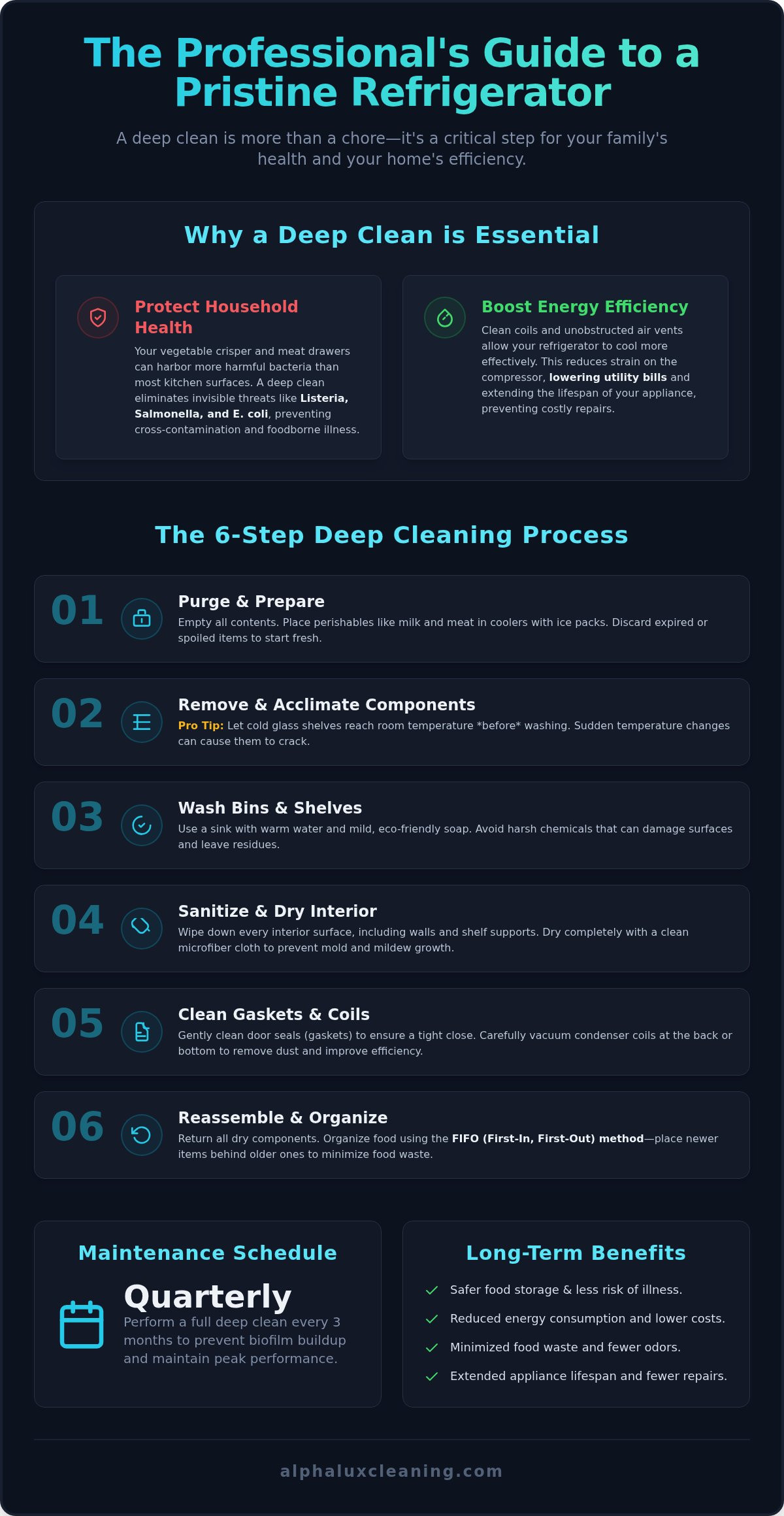
A refrigerator is more than an appliance; it’s the guardian of your family’s health. While many view it as a simple cold storage box, the reality is that its interior can become a breeding ground for pathogens if neglected. Learning how to deep clean a refrigerator is a fundamental skill for any homeowner who prioritizes wellness and efficiency. Beyond the visual appeal of a sparkling interior, a thorough cleaning removes invisible threats like Listeria and mold that thrive in cold, damp environments. These microorganisms can contaminate fresh produce and ready-to-eat meals, leading to preventable illness.
The Science of Fridge Hygiene
Food safety relies on maintaining temperatures outside the “Danger Zone,” which is between 40°F and 140°F. Even within a cold fridge, bacteria like Salmonella and E. coli can persist in spills. Biofilm is a thin, resilient layer of bacteria and microorganisms that adheres to surfaces like glass shelves and plastic bins, making them difficult to sanitize with a simple wipe. This invisible film acts as a protective shield for pathogens, requiring a professional-grade deep clean to fully eradicate. By removing these microscopic layers, you ensure your food remains truly safe for consumption.
Efficiency is another critical factor, especially for those managing high NY utility bills. A clean refrigerator operates with greater precision, as unobstructed air vents and clean surfaces allow for better temperature regulation. Using an essential food storage technique ensures that air circulates properly, preventing the compressor from overworking. This meticulous care extends the life of your food by preventing cross-contamination and premature spoilage. Ultimately, a sanitized kitchen contributes to a profound sense of mental clarity. When you open your fridge to find order instead of chaos, the sensory relief is immediate, allowing you to focus on the joy of cooking rather than the burden of maintenance.
Frequency: How Often Should You Deep Clean?
A standard weekly wipe-down handles immediate spills, but a comprehensive deep clean should occur at least once every quarter. This frequency ensures that biofilms don’t have the opportunity to mature and that hidden mechanical components remain functional. You should consider professional deep cleaning immediately if you notice persistent odors, visible mold, or significant frost buildup. Integrating this task into your seasonal home management routine ensures your kitchen remains a safe, high-performing environment year-round. It’s a proactive approach that saves time, money, and stress in the long term.
Step-by-Step: How to Deep Clean a Refrigerator Interior Like a Pro
Mastering how to deep clean a refrigerator requires a methodical approach that prioritizes both food safety and appliance longevity. A professional system ensures no corner is overlooked. Start with a tactical purge. Empty every item from the shelves and bins. Place perishables, such as milk and raw meats, into insulated coolers with ice packs. This preserves the cold chain and gives you the necessary space to work without rushing. Check expiration dates as you go. Toss anything that has lost its freshness or reached its “use by” date.
The next phase involves component removal. Take out all detachable shelves, crisper drawers, and door bins. A critical professional secret is to let glass components reach room temperature before they touch water. Applying hot water to cold glass can cause immediate cracking due to temperature shock. Once they have warmed slightly, wash them in a sink with mild, eco-friendly soap. By following this systematic approach, you can effectively prevent harmful bacteria from growing in your food storage areas. If your schedule is demanding, our Deep Cleaning specialists can manage this complex task as part of a total home reset.
After the interior is sanitized, drying and reassembly are paramount. Moisture is the primary enemy of a fresh fridge; it encourages mold growth and creates slippery surfaces. Use a clean microfiber cloth to dry every inch of the interior walls and the undersides of shelves. Once everything is bone-dry, slide the components back into place. This level of precision is what elevates a standard chore into a professional-grade maintenance routine.
Eco-Friendly Cleaning Solutions You Can Make at Home
You don’t need harsh chemicals to achieve a premium result. A simple one-to-one balance of white vinegar and filtered water acts as the ultimate non-toxic degreaser. For stubborn “mystery” stains or dried-on spills, a thick baking soda paste is the professional’s choice. Apply it to the spot, let it sit for ten minutes, and wipe it away. To leave your kitchen with an aspirational scent, add two drops of lemon or tea tree essential oil to your spray bottle for natural deodorization.
Tackling the “Gross” Spots: Drawers and Crevices
True cleanliness is found in the details. Use a soft toothbrush to scrub the tracks where crisper drawers slide; these areas often hide crumbs and sticky residues. Pay close attention to the shelf brackets and the small indentations in the egg tray or butter compartment. Sanitizing these high-touch zones prevents the buildup of biofilms. When these small details are handled with care, the entire kitchen feels more orderly and serene.
The Forgotten Details: Gaskets, Coils, and Exterior Surfaces
Many homeowners focus solely on the shelves and bins, but a professional’s approach to how to deep clean a refrigerator extends to the mechanical and structural elements. These forgotten details are what truly separate a standard cleaning from a meticulous deep clean. Neglecting the gaskets or coils can lead to higher utility bills and premature appliance failure. By addressing these areas, you ensure your kitchen remains a high-functioning environment where every detail is managed with precision and care. It’s about the quiet satisfaction of knowing your home is running at its absolute best.
Maintaining the Door Gasket
The rubber seal, or gasket, is the primary barrier between your fresh food and the warm kitchen air. Over time, crumbs and sticky residues accumulate inside the folds, compromising the airtight seal and inviting mold. Use a thin microfiber cloth dampened with a vinegar-water solution to gently wipe inside these crevices. To verify the integrity of your seal, perform the “Dollar Bill Test.” Close the fridge door on a dollar bill; if it pulls out easily without resistance, your gasket needs attention. Applying a very thin layer of petroleum jelly to the rubber once it’s clean will keep it supple and prevent it from drying out or cracking.
Dusting the Condenser Coils Safely
Dust acts as a silent insulator that forces your compressor to work harder than necessary. To begin, unplug the refrigerator to ensure absolute safety before accessing the mechanical parts. Depending on your specific model, the coils are typically located behind a bottom kickplate or a panel on the back of the unit. A specialized coil brush is excellent for dislodging packed-in debris, while a vacuum attachment with a crevice tool can capture the loosened dust. Clean coils reduce energy consumption by up to 30%. This simple maintenance task prevents compressor burnout and extends the life of your appliance investment.
Achieving exterior excellence requires understanding your materials to maintain a premium aesthetic. For stainless steel surfaces, always wipe in the direction of the metal’s grain. Avoid circular motions, as these create unsightly streaks and micro-scratches that catch the light. Finally, prioritize dispenser maintenance by flushing the water and ice system to prevent the growth of slime mold. When you master how to deep clean a refrigerator in its entirety, you create a space that reflects your high standards. This thoroughness provides the relief of a truly well-managed home, where even the hidden details are handled with professional intentionality.
Once you understand how to deep clean a refrigerator, the next logical step is establishing a system to preserve that pristine state. A well-organized fridge is a functional sanctuary that supports your lifestyle and health. We advocate for the “Naked Fridge” philosophy, which prioritizes space over surplus. Overstocking your appliance restricts airflow, creating inconsistent temperature zones that accelerate spoilage. Learning how to deep clean a refrigerator is only half the battle; maintaining proper airflow ensures the cooling system operates with professional precision and efficiency.
Managing inventory is equally important for long-term hygiene and mental clarity. The FIFO (First In, First Out) method is a simple but effective strategy to reduce food waste. By placing the newest items at the back, you naturally consume older items first, preventing forgotten rot. For air quality, look beyond the traditional box of baking soda. Activated charcoal or dried coffee grounds are exceptional natural alternatives that absorb odors with greater efficiency. These small adjustments transform your kitchen into a more intentional, serene environment where you feel in total control of your space. To complement this atmosphere, choosing sustainable organic linens from All Cotton and Linen can help reduce waste while adding a touch of natural elegance to your home.
Professional Zoning for Food Safety
Sustainable Maintenance Habits
Maintaining a sparkling environment doesn’t require hours of labor every day. A quick “One-Minute Wipe” of high-touch surfaces can prevent spills from becoming permanent stains. We also recommend labeling all leftovers with a clear date. This prevents the back of the fridge from becoming a graveyard for forgotten meals. These habits are essential components of a well-managed home that prioritizes order and health. If you prefer to delegate these meticulous details to experts, our recurring cleaning services provide a comprehensive solution for a consistently spotless kitchen. Our team handles the heavy lifting so you can enjoy the relief of a perfectly maintained space.
When DIY Isn’t Enough: The Case for Professional Deep Cleaning
While mastering the steps of how to deep clean a refrigerator is a valuable skill, the physical demand of a thorough kitchen reset can be overwhelming for a busy homeowner. A professional deep clean isn’t just about aesthetics; it’s a strategic investment in your home’s health and your personal time. Outsourcing this task allows you to reclaim hours that would otherwise be spent scrubbing tracks and vacuuming coils. Our team at AlphaLux Cleaning handles the heavy lifting with a level of precision that ensures every gasket is sanitized and every shelf is polished to a premium standard. We treat appliance maintenance as a professional craft, prioritizing the details that often go overlooked in a standard domestic routine.
If you’re transitioning between homes, a move-out clean is the ideal moment for a refrigerator reset. It’s the only time the appliance is truly empty and accessible, allowing for a comprehensive sanitization that prepares the space for its next chapter. Starting fresh in a new environment with a sparkling, odor-free kitchen provides an immediate sense of relief and order. You deserve the peace of mind that comes from knowing your food storage is pristine from the very first day in your new residence. Beyond the immediate visual results, professional care ensures your appliance operates at peak efficiency, protecting your investment for years to come.
Specialized Services for New York Homeowners
We provide a specialized deep cleaning service tailored to the unique needs of residents in Long Island and across New York. Our professionals utilize eco-friendly, non-toxic products that are safe for your family and your food storage areas. By integrating these high standards into a recurring cleaning schedule, you prevent the accumulation of grime and bacteria, eliminating the need for drastic, stressful annual interventions. This proactive approach maintains the sensory quality of your home while supporting a healthier lifestyle for everyone under your roof.
Before you consider the job finished, review what a truly deep-cleaned fridge looks like under professional standards:
- Gaskets are free of debris and pass the airtight seal test.
- Condenser coils are dusted to ensure maximum energy efficiency.
- Interior surfaces are sanitized with non-toxic solutions and are bone-dry.
- Stainless steel exteriors are polished to a streak-free, aspirational finish.
- Water and ice dispensers are flushed to eliminate any risk of slime mold.
Conclusion: Reclaiming Your Kitchen Peace
A clean, organized refrigerator is the heart of a well-managed home. It provides more than just a safe place for your groceries; it offers the quiet satisfaction of a sanctuary where you can focus on what truly matters. When you eliminate the stress of hidden mold and lingering odors, you reclaim your kitchen’s peace and your own mental clarity. Let us handle the complex details of your home maintenance so you can enjoy the sensory relief of a pristine environment. Get your free home cleaning estimate from AlphaLux Cleaning today!
Embrace the Clarity of a Pristine Kitchen
Mastering the art of how to deep clean a refrigerator is an investment in your family’s wellness and your home’s efficiency. We’ve explored the necessity of eradicating hidden pathogens, the technical precision required for coil maintenance, and the organizational systems that prevent future chaos. These steps transition your kitchen from a site of hidden stress to a well-ordered sanctuary. When every shelf is sanitized and every gasket is sealed, you gain more than just a clean appliance; you reclaim the mental peace that comes with a meticulously maintained environment.
If your schedule demands a more seamless solution, our team is ready to provide a professional reset. AlphaLux Cleaning specializes in high-end care using eco-friendly, non-toxic cleaning agents that protect your food and your health. Our vetted and insured professionals serve homeowners across Long Island and New York State, bringing a level of detail that elevates routine maintenance into a professional craft. Book your professional deep cleaning service with AlphaLux today! We’re here to help you achieve the quiet satisfaction of a home that truly reflects your high standards.
Frequently Asked Questions
How do I get rid of a bad smell in my refrigerator that won’t go away?
Persistent odors often originate in the drip pan or behind the back panel where spills can migrate. When you are determining how to deep clean a refrigerator to remove smells, start by cleaning these hidden areas with baking soda. If the odor remains, place a bowl of activated charcoal on the middle shelf for 24 hours to absorb the scent. This ensures your kitchen remains fresh without relying on synthetic fragrances.
Can I use bleach to clean the inside of my refrigerator?
You should avoid using bleach inside your refrigerator because it’s a harsh chemical that can damage plastic liners and pose a risk to food safety. Professional standards prioritize non-toxic, food-safe alternatives like white vinegar or specialized eco-friendly degreasers. These agents effectively sanitize surfaces without leaving behind toxic residues or strong chemical fumes. Choosing a gentler approach protects your health and maintains the high-end finish of your appliance’s interior.
Is it necessary to unplug the fridge before deep cleaning?
It’s highly recommended to unplug your appliance when you are learning how to deep clean a refrigerator, particularly when accessing mechanical parts. This precaution ensures your safety while cleaning the condenser coils and prevents the compressor from cycling unnecessarily while the doors are open. Unplugging also allows you to perform a thorough inspection of the rear panels for any signs of wear or significant dust accumulation.
How do I clean the mold off my refrigerator door seal?
To eliminate mold from a door seal, apply a solution of three percent hydrogen peroxide or straight white vinegar to the affected area. Let the liquid sit for ten minutes to penetrate the porous rubber before scrubbing gently with a soft brush. This meticulous process kills fungal spores at the root. Once the mold is removed, dry the gasket completely to prevent moisture from encouraging new growth.
How often should I vacuum the refrigerator coils?
You should vacuum your refrigerator coils at least every six months to maintain peak performance. Homes with shedding pets or high levels of dust may require a more frequent quarterly schedule to prevent debris from choking the cooling system. Regular maintenance prevents the compressor from overworking and helps avoid the costly repairs associated with overheating. It’s a simple habit that significantly extends the lifespan of your premium kitchen appliances.
What is the best eco-friendly cleaner for a refrigerator?
The best eco-friendly cleaner for a refrigerator is a simple solution of one part white vinegar to one part filtered water. This non-toxic mixture effectively cuts through grease and sanitizes surfaces without introducing harmful VOCs into your food storage area. At AlphaLux, we prioritize these sustainable methods to ensure your home remains a healthy sanctuary. This natural approach provides professional results while remaining safe for your household.
How do I clean a stainless steel refrigerator without leaving streaks?
Achieving a streak-free finish on stainless steel requires wiping strictly in the direction of the metal’s natural grain. Use a high-quality microfiber cloth and a specialized non-toxic stainless steel cleaner or a drop of olive oil on a damp cloth. Avoid circular motions; these create micro-scratches that dull the surface over time. This intentional technique preserves the aspirational aesthetic of your kitchen and provides the quiet satisfaction of a perfectly maintained space.