
A tipped mug can turn your morning routine into a mini crisis, especially when hot coffee hits light-colored carpet. Knowing how to remove coffee stains from carpet quickly can mean the difference between a small cleanup and a permanent brown mark on your floor. The good news? You probably already have everything you need in your kitchen.
Vinegar, baking soda, and dish soap are surprisingly effective at lifting both fresh and dried coffee stains from carpet fibers. No specialty products required. This guide walks you through the exact steps to tackle the stain yourself, whether it happened five minutes ago or five days ago.
At AlphaLux Cleaning, we handle tough stains like these across homes and offices throughout New York every day. Our team uses professional-grade techniques combined with eco-friendly products to restore carpets that seem beyond help. But we also believe in empowering you with the knowledge to act fast when spills happen between cleanings. Below, you’ll find practical, proven methods you can use right now with what’s already in your pantry.
What you need before you start
Before you touch the stain, gather everything first. Running back and forth to the kitchen wastes precious time, and every extra minute allows the coffee to set deeper into the carpet fibers. Having your supplies ready means you can work through each step without interruption, which matters a lot when you are dealing with a fresh spill.
The faster you act on a fresh spill, the easier it will be to fully lift it from the carpet.
Your cleaning supply list
You do not need anything exotic to handle this. Most of the items below are already sitting in your kitchen or bathroom cabinet, which is part of what makes this method so practical when you need to know how to remove coffee stains from carpet on the spot. Pull these together before you start:
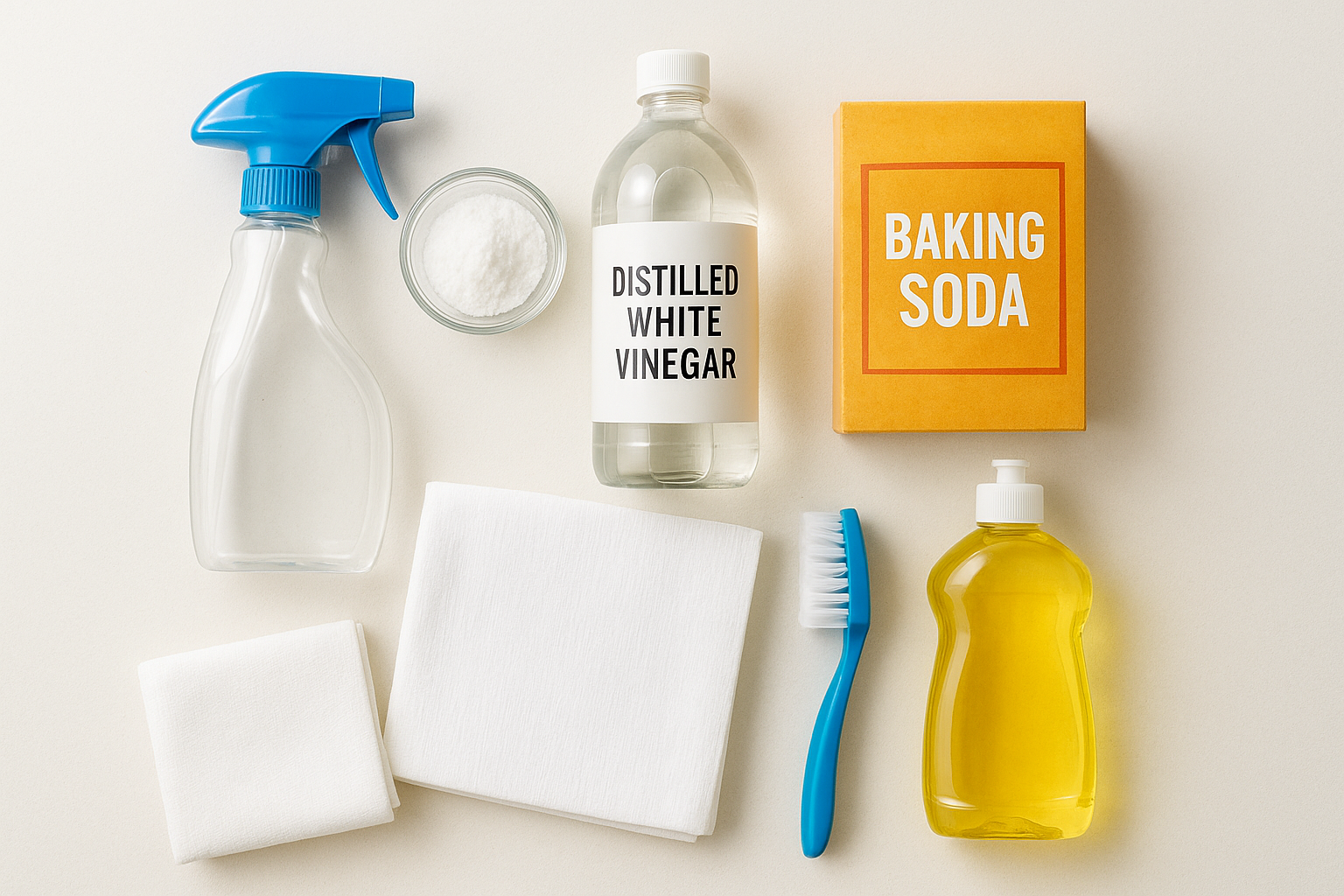
- White vinegar (distilled, not apple cider)
- Baking soda (a fresh, open box works best)
- Dish soap (a mild formula, just a small squirt)
- Cold water (warm or hot water can set the stain permanently)
- Clean white cloths or white paper towels (white prevents dye transfer)
- A spray bottle (for even, controlled application)
- A soft-bristle brush or old toothbrush (useful for dried stains)
- A clean, dry towel (for the final blotting and drying step)
Why white cloths matter
Using colored towels or printed paper towels can transfer dye directly onto your carpet, especially if the fibers are light or synthetic. Always grab plain white materials when blotting so you can also track how much of the stain you are actually lifting with each pass. This one small choice prevents you from adding a second problem on top of the first.
Your last prep step is to test the vinegar solution on a small, hidden patch of carpet before applying it to the stain. Inside a closet works well. Some carpet dyes are sensitive to acid, and a quick 60-second spot test confirms everything is safe to proceed before you treat the visible area.
Step 1. Blot and rinse a fresh coffee spill
The moment coffee hits your carpet, your first instinct might be to scrub it out fast. Resist that urge. Scrubbing spreads the stain wider and pushes the liquid deeper into the fibers, making it harder to fully lift later. Instead, start with controlled blotting and a quick rinse before you reach for any cleaning solution.
Blot from the outside in
Grab one of your clean white cloths and press it firmly onto the spill. Work from the outer edge of the stain toward the center, never the other way around. Moving inward keeps the stain from spreading into clean carpet fibers surrounding the spill.
The outside-in blotting technique is the single most important habit you can build when learning how to remove coffee stains from carpet.
Continue blotting with fresh sections of the cloth each time until you stop seeing coffee transfer onto the fabric. Switch to a new cloth if the first one becomes fully saturated.
Apply cold water to dilute the stain
Pour a small amount of cold water directly onto the stained area. Cold water dilutes the remaining coffee without bonding it to the fibers the way warm or hot water would. Blot again immediately with a dry cloth to absorb the diluted liquid.
Repeat this rinse-and-blot cycle two or three times until the area looks noticeably lighter. Once the cloth picks up very little color, your carpet is ready for the next step.
Step 2. Break down the stain with vinegar and soap
Once the stain looks lighter from blotting, your carpet is ready for a cleaning solution. White vinegar cuts through the tannins in coffee that bind to carpet fibers, while a small drop of dish soap lifts the loosened residue to the surface where you can blot it away cleanly.
Mix your vinegar solution
Combine these ingredients in your spray bottle before applying anything to the carpet:
| Ingredient | Amount |
|---|---|
| White vinegar | 1 cup |
| Cold water | 1 cup |
| Dish soap | 1 teaspoon |
Shake the bottle gently to combine everything. You want the soap evenly distributed, not foamy. Too many suds make the rinse step harder and can leave sticky residue deep in the fibers that attracts dirt later.
Apply and blot the solution
Spray the solution directly onto the stained area, enough to lightly saturate the fibers without soaking through to the carpet pad underneath. Let it sit for five full minutes so the vinegar can break down the coffee compounds before you touch it again.
Letting the solution dwell for a full five minutes is what separates a partial clean from a thorough one when you learn how to remove coffee stains from carpet.
Blot again with a clean white cloth, working inward from the outer edges. Repeat the spray-and-blot cycle until very little color transfers onto the cloth before moving to the next step.
Step 3. Use baking soda to lift and deodorize
After blotting out the vinegar solution, the stained area will still be slightly damp. Baking soda uses that leftover moisture to pull the last traces of coffee from the fibers while neutralizing any odor left behind in the pile.
Coat the stain generously
Sprinkle a thick, even layer of baking soda directly over the entire damp area. Press it gently into the fibers with your fingers so it makes direct contact with the residue sitting deeper in the pile. You want full coverage across the whole stained section, not just a light dusting at the surface.
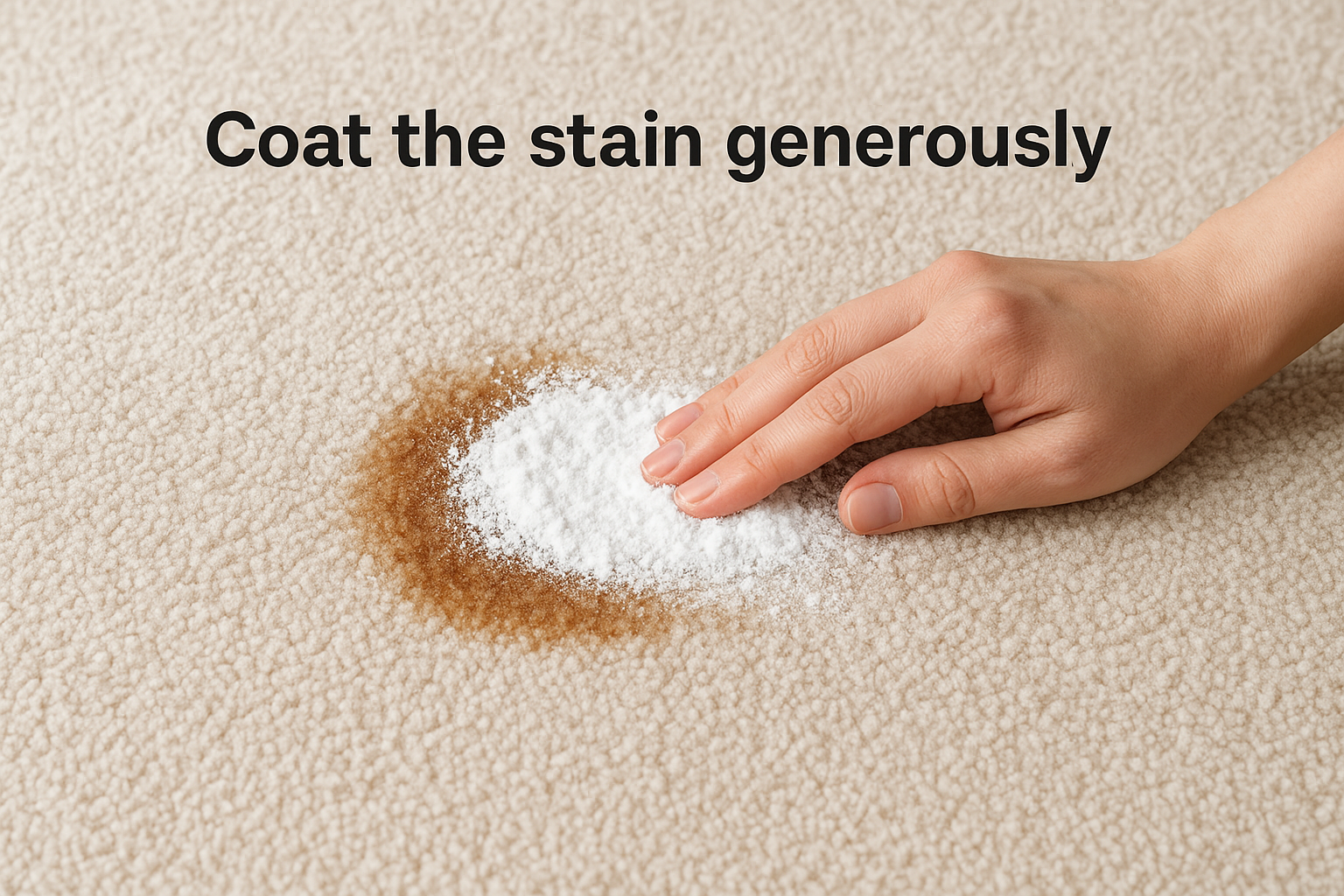
Let the baking soda sit for at least 15 minutes. Leaving it overnight gives it the most time to absorb moisture and pull out odor.
Once the powder looks dry and clumped rather than wet and flat, work through these steps in order:
- Vacuum the area using a standard upright or canister vacuum.
- Check the fibers under natural light to see how much the stain has lifted.
- Repeat the baking soda coat if any faint discoloration remains visible.
Vacuum and inspect the area
Run the vacuum slowly and in multiple directions so it pulls all the powder out of the carpet pile. This step matters more than most people expect when learning how to remove coffee stains from carpet, because leftover baking soda traps moisture and causes odor later. Take your time here before moving forward.
Step 4. Remove dried stains and prevent wick-back
Dried coffee stains require a slightly different approach than fresh spills. The fibers have already bonded with the coffee compounds, which means you need to loosen them before any cleaning solution can do its job. Take your time with this step, because rushing it is the main reason people end up searching again for how to remove coffee stains from carpet after their first attempt fails.
Rehydrate and loosen dried coffee
Start by applying a small amount of cold water directly to the dried stain and letting it sit for two to three minutes. This softens the dried residue without spreading it wider. Once the area feels slightly damp, apply your vinegar-and-soap solution from Step 2 and use a soft-bristle brush to work it gently into the fibers using short circular strokes. Blot thoroughly before moving on.
Stop wick-back from ruining your work
Wick-back happens when moisture from the carpet pad travels back up through the fibers after you finish cleaning, pulling dissolved coffee with it and leaving a faint ring or new stain at the surface. To prevent this, place a stack of dry white cloths over the damp area and weigh them down with a heavy book for at least 30 minutes. The cloths absorb the rising moisture before it redeposits on the fibers.
Skipping this drying step is the most common reason a stain reappears the next morning after an otherwise successful cleaning.
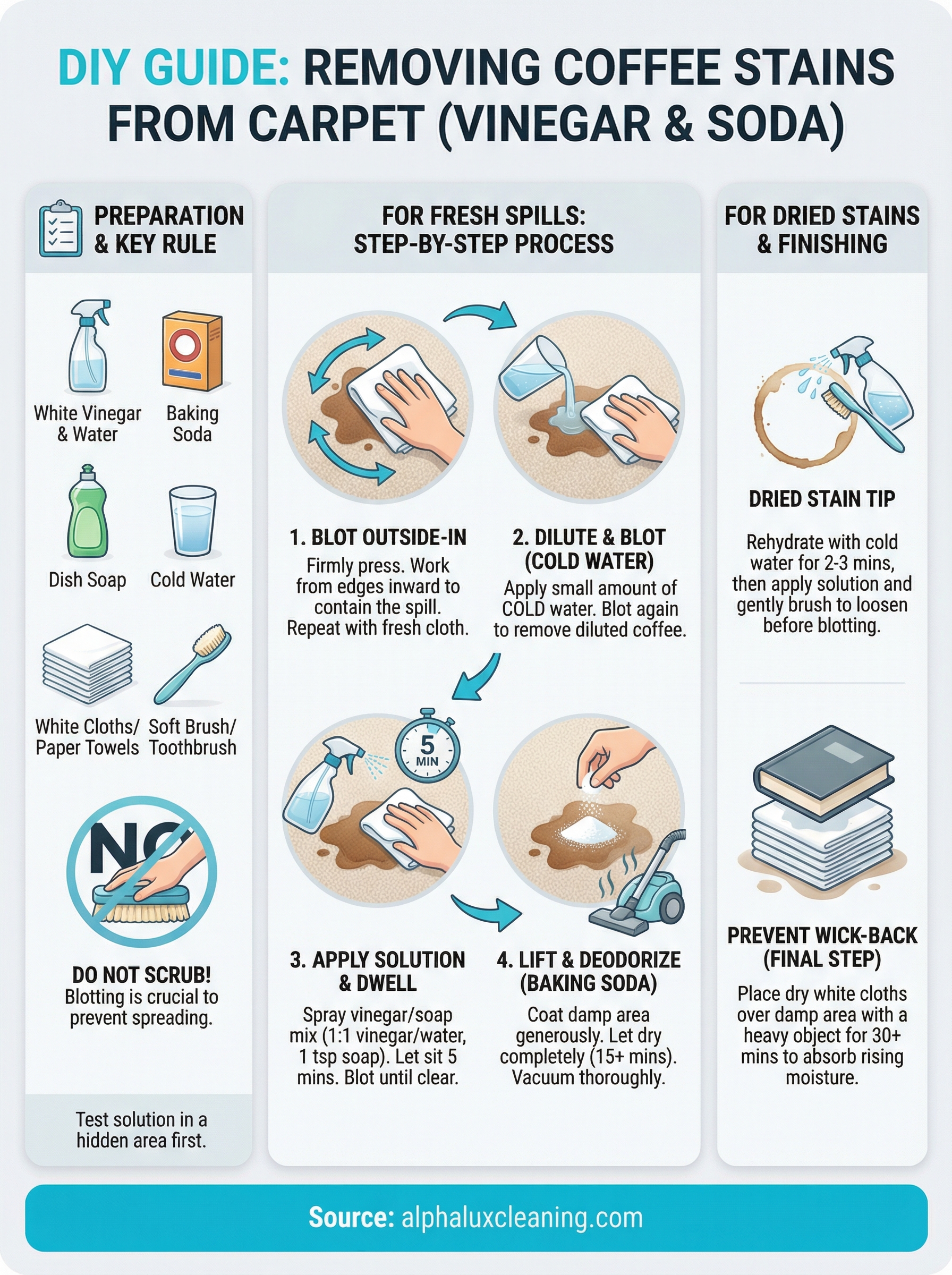
Quick recap and next steps
You now have a complete, step-by-step system for how to remove coffee stains from carpet using supplies you already own. Blot first, work inward, and always use cold water to dilute the spill before applying anything else. Follow that with your vinegar-and-soap solution, then baking soda to lift and deodorize, and finish with the weighted-cloth drying step to stop wick-back from undoing your work.
Most fresh spills come out fully when you move through these steps without skipping any. Dried stains take more patience, but rehydrating the fibers first and working the solution in gently gives you a strong shot at full removal.
Some stains go too deep or cover too much area for DIY methods to fully handle. If your carpet still shows discoloration after two full attempts, a professional cleaning makes sense. AlphaLux Cleaning serves homes and businesses across New York with eco-friendly, thorough carpet care that restores fibers without harsh chemicals.