
Whether you’re wrapping up a lease or selling your home, one of the first questions that comes up is: how much will the move out cleaning cost me? It’s a fair question, and one that doesn’t always have a straightforward answer. Prices can swing significantly depending on factors like square footage, the condition of your space, and the specific tasks involved.
At AlphaLux Cleaning, we handle move-out cleans across New York State every week, so we see the full range of what these jobs actually cost. Pricing transparency matters to us because we know you’re already juggling deposits, moving logistics, and a dozen other expenses. The last thing you need is a surprise on the cleaning bill.
This article breaks down average move-out cleaning prices, what drives them up or down, and how to evaluate quotes so you’re not overpaying. We’ll walk through the real numbers, based on home size, cleaning scope, and add-on services, so you can budget with confidence before your move-out day arrives.
What move-out cleaning includes
Move-out cleaning is more thorough than a standard recurring clean. Professional move-out cleaning covers the entire property from top to bottom, targeting areas that often get skipped during routine maintenance. The goal is to return the space to a condition that satisfies a landlord’s inspection checklist or impresses a buyer walking through before closing.
Understanding what’s included matters because scope directly affects your move out cleaning cost. If you compare two quotes without knowing what each one covers, you might choose the lower price only to find it excludes appliance cleaning or cabinet interiors that the other quote included. Scope clarity is how you make an honest comparison.
Standard tasks covered in every room
Every room in the property gets the same baseline treatment in a professional move-out clean. Cleaners dust and wipe all surfaces, including baseboards, window sills, door frames, and light switches. They also vacuum and mop floors, clean interior windows, and remove cobwebs from corners and ceiling lines that accumulate over time.
Here’s what you can expect as standard across each room:
- Dusting all horizontal and vertical surfaces
- Wiping down baseboards, door frames, and molding
- Cleaning interior window glass and tracks
- Vacuuming carpets or mopping hard floors
- Wiping inside closets and cabinets
- Spot-cleaning walls for scuffs and marks
- Cleaning light fixtures and ceiling fans
A thorough room-by-room clean is what separates a move-out service from a regular maintenance visit, and it’s also what justifies the higher price point.
Kitchen and bathrooms: the heavy hitters
Kitchens and bathrooms require significantly more time and effort than other areas of the property. In the kitchen, cleaners scrub the inside of the oven, degrease the stovetop and hood filter, and wipe down cabinet interiors and exteriors. The refrigerator interior is typically included in standard move-out packages as well, though you should confirm this before booking since some providers treat it as an add-on.
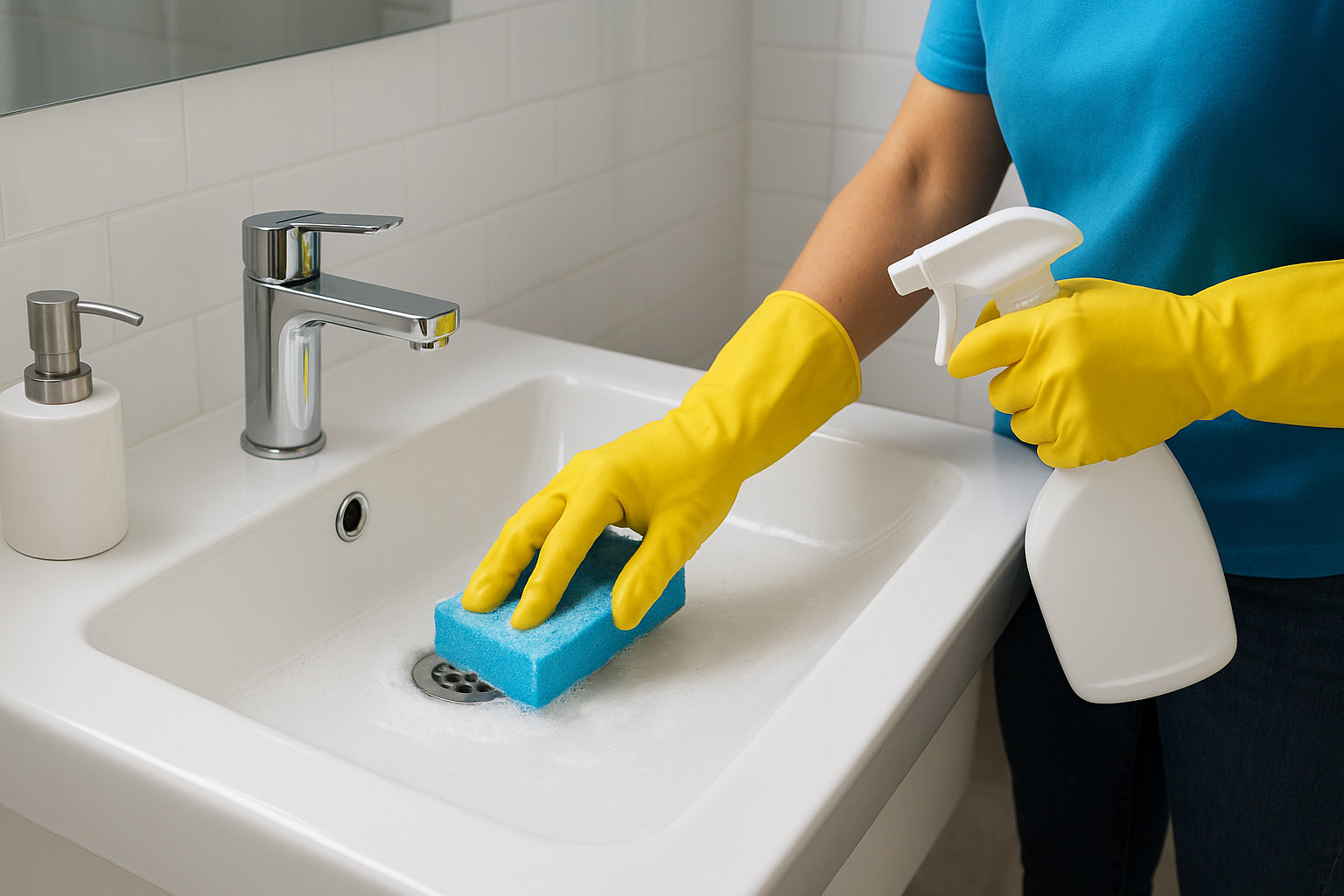
Bathrooms receive the same level of attention. Toilets, showers, tubs, and sinks are scrubbed and disinfected, grout lines are targeted for buildup and mildew, mirrors are wiped streak-free, and exhaust fans are dusted and cleared. These two rooms often determine whether a tenant gets their security deposit back, so professionals spend more time here than anywhere else.
What typically falls outside the scope
Knowing what’s NOT included helps you avoid surprises on the final invoice. Most standard move-out cleaning packages do not cover exterior windows, deep carpet shampooing, or biohazard cleanup. Garage cleaning, outdoor areas like patios or balconies, and anything involving damage repair or painting also fall outside the scope of a typical job.
Some tasks that seem obvious, like cleaning inside washer and dryer units or handling pest-related messes, may require separate service requests with different pricing structures. Always ask your cleaning provider for a written scope of work before you book, so you know exactly what’s covered and what you’ll need to add on to meet your landlord’s or buyer’s expectations.
Average move-out cleaning cost in 2026
Most move-out cleaning jobs in 2026 fall between $150 and $500 for standard residential properties, though the range stretches well beyond that depending on size, condition, and location. In New York State, where labor costs run higher than the national average, expect to pay toward the middle or upper end of that range for most apartments and single-family homes. A studio or small one-bedroom might come in around $150 to $200, while a 3,000-square-foot house could easily reach $400 to $600 or more.
The single biggest driver of move out cleaning cost is square footage, but the condition of the property plays an equally important role once cleaners actually see what they’re working with.
Cost by home size
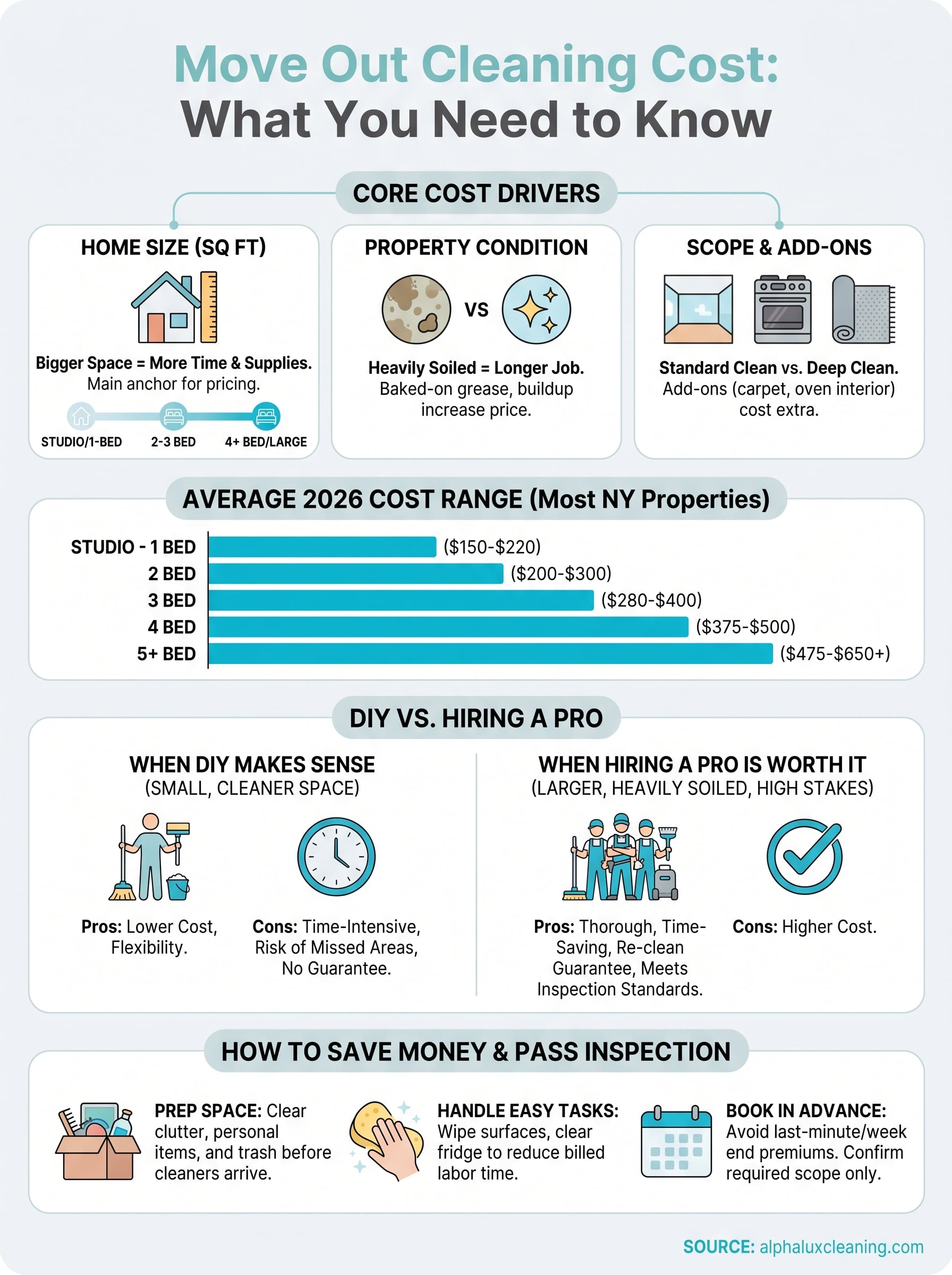
Your home’s size is the most reliable starting point for estimating what you’ll pay. Cleaning companies use square footage or bedroom count as the primary pricing anchor because larger spaces require more time, more labor, and more cleaning supplies. Here’s a general breakdown of what most professional services charge in 2026:

| Home Size | Estimated Cost |
|---|---|
| Studio / 1 bed (under 700 sq ft) | $150 – $220 |
| 2 bedroom (700-1,100 sq ft) | $200 – $300 |
| 3 bedroom (1,100-1,800 sq ft) | $280 – $400 |
| 4 bedroom (1,800-2,500 sq ft) | $375 – $500 |
| 5+ bedroom / large home | $475 – $650+ |
These figures reflect a standard move-out clean without add-ons like carpet shampooing or exterior window washing. Your actual quote may come in higher if the property hasn’t been cleaned in a while or if specific areas need extra attention.
What the price range tells you
A wide price range isn’t a red flag; it reflects how much variation exists between properties. Two 2-bedroom apartments can look completely different after a tenant moves out, and cleaning companies account for that when they price a job. A unit with built-up grease in the kitchen and soap scum in the bathrooms takes more time than a well-maintained space of the same size, so it costs more even at identical square footage.
This is why getting a quote based on an actual walkthrough or a detailed description of your space’s condition matters more than relying on ballpark averages. Use the table above to set a baseline expectation, then get at least two written quotes from local providers before you commit.
What affects move-out cleaning prices
Square footage gives you a starting estimate, but several other variables shift your final bill up or down once a cleaner gets an accurate picture of your property. Understanding these factors helps you anticipate cost differences between quotes and avoid paying more than necessary for your specific situation.
Property condition and how long the job takes
The condition of your home has a direct impact on how long the job takes, and time is what cleaning companies are pricing when they quote you. A property that hasn’t had a deep clean in months, or one where grease has baked onto the oven walls and soap scum has set into tile grout, will take significantly longer to restore than a well-maintained unit of the same size. Many companies factor this in during a walkthrough or ask detailed questions about the property before confirming a price.
A cleaner quoting you without asking about condition is a sign they may revise the price once they arrive, which puts you in a tough spot on move-out day.
Heavily soiled kitchens and bathrooms are the most common reason a move-out cleaning quote increases after initial contact. If your space falls into that category, being upfront about it when you request a quote saves you from surprises and lets the company allocate the right amount of time from the start.
Location, timing, and the type of provider you hire
Where you’re located within New York State also affects your move out cleaning cost. Services in New York City and Long Island typically charge more than providers upstate, reflecting higher operating costs, labor rates, and demand. The same 1,500-square-foot apartment costs more to clean in Brooklyn than in Albany, and that gap can reach $75 to $150 or more.
Timing matters too. Last-minute bookings and weekend appointments often carry a premium because they fall outside standard scheduling windows. If your move-out date gives you some flexibility, booking at least a week in advance on a weekday can bring the price down without sacrificing quality.
The type of provider you hire also shifts the price range. Larger cleaning companies tend to charge more than independent contractors, but they usually carry insurance, follow standardized checklists, and offer more predictable outcomes. Solo cleaners may quote lower, but you take on more risk if the work falls short of your landlord’s inspection standards.
Common pricing methods and how to compare quotes
Cleaning companies use different pricing structures, and knowing how each one works helps you understand why quotes vary even for properties of the same size. Before you request estimates, it’s worth understanding the two most common models so you can ask the right questions and compare offers accurately rather than just picking the lowest number.
Flat rate vs. hourly pricing
Most professional cleaning companies offer either a flat rate or an hourly rate for move-out jobs. A flat rate means you agree on a fixed price upfront based on your home’s size, number of rooms, and general condition. Hourly pricing means you pay per cleaner per hour, and the final total depends on how long the job actually takes.
Flat rates give you cost certainty, which matters when you’re managing a tight moving budget. Hourly pricing can work in your favor if your space is in good condition and the job wraps up quickly, but it can also run higher than expected if the property needs more work than anticipated.
Flat rate quotes protect your move out cleaning cost from creeping up mid-job, which is why most clients in New York prefer them for move-out services.
How to evaluate quotes side by side
Getting multiple quotes is the right move, but comparing them accurately requires more than looking at the total price. Two quotes at $300 may cover entirely different scopes of work, which means the cheaper one could actually cost you more if it leaves gaps your landlord flags during inspection.
When you receive a quote, ask each company to provide a written list of exactly what they will and will not clean. Confirm whether the price includes appliance interiors, cabinet cleaning, and bathroom grout scrubbing, since these are the areas most often responsible for deposit deductions. If a company offers a verbal quote without documentation, that’s a risk worth noting.
You should also ask whether the company offers a re-clean guarantee if the landlord or property manager flags issues after the job. Some providers include this at no extra charge, and it adds real value to a quote even if the number is slightly higher than a competitor’s. A re-clean policy can end up saving you more than any upfront discount.
Add-ons that change the final bill
Most base quotes cover the standard room-by-room clean described earlier, but several common services fall outside that scope and will increase your total. These extras aren’t upsells for the sake of it; they represent real labor and specialized equipment that take more time to complete. Knowing which add-ons exist, and which ones you actually need, helps you control your move out cleaning cost before you sign off on a final invoice.
Carpet cleaning and floor treatments
Carpet shampooing is one of the most frequently requested add-ons during a move-out, and it’s priced separately because it requires different equipment and a longer service window than a standard vacuum. Most providers charge between $25 and $75 per room for professional carpet extraction, depending on the room size and how soiled the carpet is. If your lease agreement requires professionally cleaned carpets, confirm this add-on is included in your quote before your cleaning day.
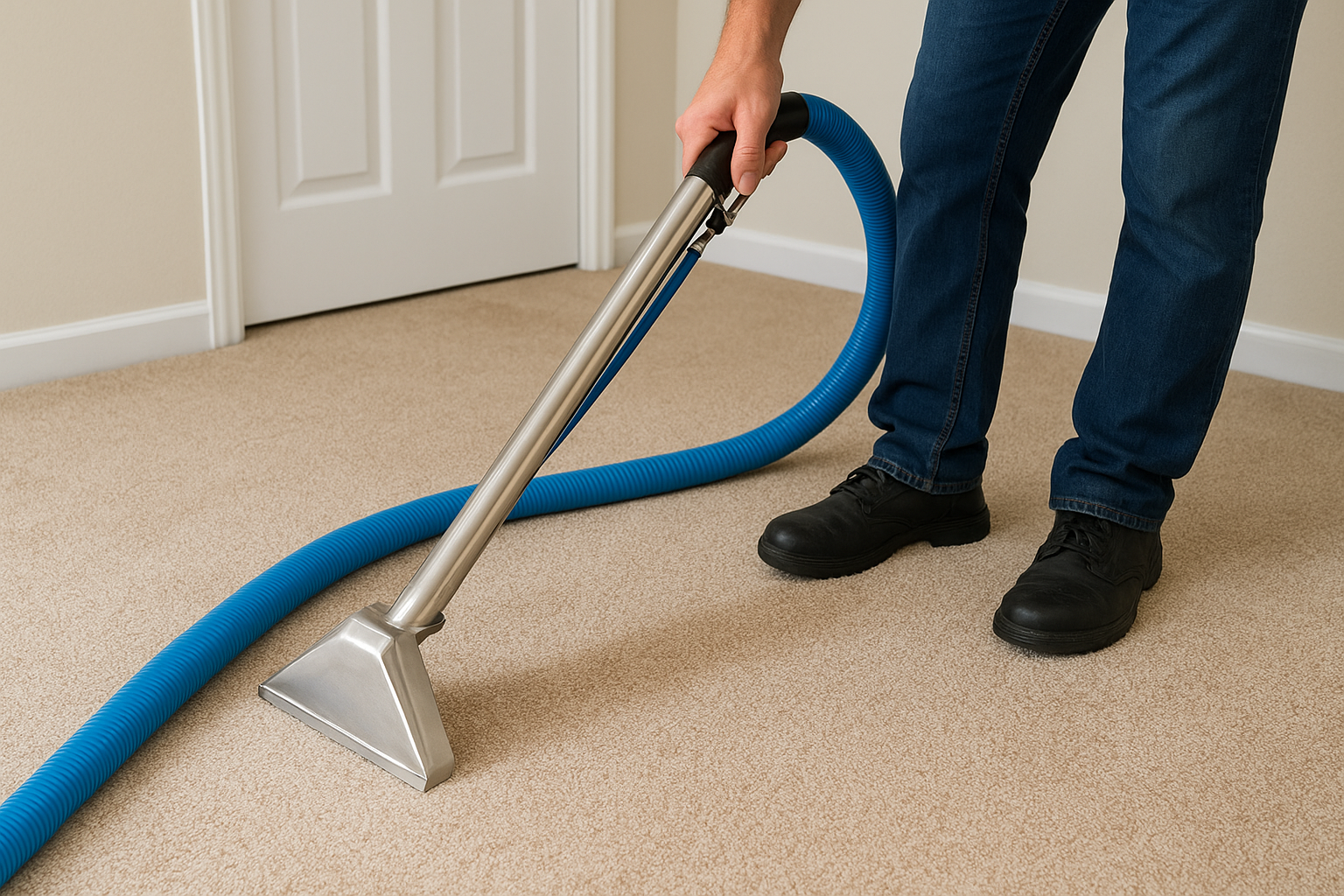
Skipping carpet cleaning when your lease requires it is one of the fastest ways to lose part of your security deposit, even if every other area passes inspection.
Hard floors sometimes carry their own add-on fees too. Tile buffing, grout sealing, or hardwood polishing go beyond a standard mop and may be quoted as separate line items. Ask specifically whether your floor type requires any of these treatments.
Window and appliance extras
Exterior window cleaning almost always falls outside the standard scope. If your property has large windows, second-story glass, or sliding door tracks with visible buildup, expect this to be quoted separately. Interior windows are typically included, but clarifying which surfaces the base price covers saves you from confusion after the job.
Appliance interiors follow the same logic. Oven and refrigerator cleaning are sometimes included in full move-out packages, but dishwasher interiors, washer drums, and dryer lint traps often carry a small added fee. These are worth requesting if your unit has them, since landlords frequently check all appliances during walkthrough inspections.
Specialty requests that carry higher rates
Some properties need work that goes beyond a typical move-out scope. Garage cleaning, balcony scrubbing, or removing heavy staining from tile and grout all fall into a specialty category that most companies price on a case-by-case basis. If your property includes any of these areas, mention them when you first request a quote so the company can factor the additional time into their estimate from the start.
DIY vs hiring a pro and when it pays off
Deciding between cleaning the property yourself and hiring a professional comes down to your specific situation, not a blanket rule. Both options can work, but they work in different circumstances. Understanding where each approach delivers real value helps you make the call that protects your deposit without overspending on your move out cleaning cost.
When DIY makes sense
Doing the cleaning yourself is a reasonable choice when your property is already in good shape and the space is small. If you’ve kept up with regular cleaning throughout your lease, live in a studio or one-bedroom, and have enough time before your move-out inspection, you can likely handle the work yourself without much risk. The key is using the right products for each surface and working from a detailed checklist that mirrors what landlords actually inspect.
Here’s where DIY holds up well:
- Small units under 800 square feet with minimal buildup
- Properties where you’ve maintained regular cleaning habits
- Situations where your lease has no specific clause requiring professional cleaning
- Move-outs where you have at least two full days to clean thoroughly
When hiring a pro is worth it
Larger homes, heavily soiled properties, and high-stakes move-outs tip the scale toward hiring a professional. If your kitchen has baked-on grease, your bathrooms have mildew in the grout, or your lease specifically requires a professional cleaning certificate, a DIY effort is unlikely to meet inspection standards. The cost of failing inspection and losing part of your deposit almost always exceeds what a professional would have charged.
Spending $300 on a professional clean is a better outcome than losing $600 from your security deposit because a few key areas didn’t pass inspection.
Time is also a real factor that people often underestimate. A full move-out clean on a two or three-bedroom apartment can take eight to twelve hours when done thoroughly. If you’re also coordinating a move, managing utility transfers, and handling logistics, that time has a concrete cost. Hiring a professional cleaning team frees you to focus on other priorities while experienced cleaners work through a proven checklist faster and more effectively than most tenants can manage on their own. For high-traffic kitchens and bathrooms especially, professional results are noticeably different from what most people achieve with standard household supplies.
How to save money and still pass inspection
Cutting your move out cleaning cost doesn’t require sacrificing quality. The most effective way to lower your bill is to reduce the amount of work a professional has to do, which means handling basic prep yourself before the cleaning crew arrives. A few hours of your time before the appointment can translate directly into a shorter service window and a lower final charge.
Prep the space before the cleaners arrive
Removing all personal belongings, trash bags, and loose items before your cleaning appointment saves time that would otherwise come out of your budget. Cleaners work faster and more thoroughly when they’re not navigating around boxes, furniture, or items left behind. Empty every cabinet, closet, and drawer so cleaners can access surfaces without stopping to move things out of the way first.
Handling easy tasks yourself also helps bring the total down. Wiping down exterior cabinet doors, clearing out the refrigerator, and removing surface debris from counters takes minimal effort on your end but reduces the labor time your cleaner needs to bill for. You don’t need to deep-clean anything; just clear and wipe so the professional can focus on the work that actually requires their expertise and equipment.
Choose the right package and skip what you don’t need
Paying for add-ons you don’t actually need is one of the most common ways people overspend on a move-out clean.
Review your lease agreement carefully before you book to confirm exactly what your landlord requires. If the lease says nothing about professional carpet cleaning and your carpets are in reasonable condition, skipping that add-on saves you $75 to $150 without putting your deposit at risk. Match your service scope to your actual inspection checklist, not to a generic package that bundles in services your situation doesn’t call for.
Booking in advance on a weekday also keeps your costs lower than a same-week or weekend appointment. Most providers in New York schedule premium rates for last-minute and weekend slots, so a flexible move-out timeline gives you real pricing leverage. Ask about scheduling discounts when you request your quote, since many companies offer them without advertising the option prominently. A small amount of planning upfront saves you more than most people expect.
Final takeaway
Your move out cleaning cost depends on a combination of factors: home size, property condition, location, timing, and which add-ons you actually need. Most residential move-out cleans in New York fall between $150 and $500, with larger or heavily soiled properties pushing past that range. Getting written quotes, comparing scope rather than just price, and prepping your space beforehand are the three moves that consistently produce the best outcome.
Hiring a professional makes the most sense when your deposit is on the line and you want a result that holds up to inspection. Skipping the right add-ons and booking in advance keeps your bill lower without cutting corners where it matters. Use the pricing ranges and factors in this guide to set realistic expectations before you contact any provider.
If you’re in New York State and want a straightforward, no-surprise quote, get a free estimate from AlphaLux Cleaning before your move-out date arrives.