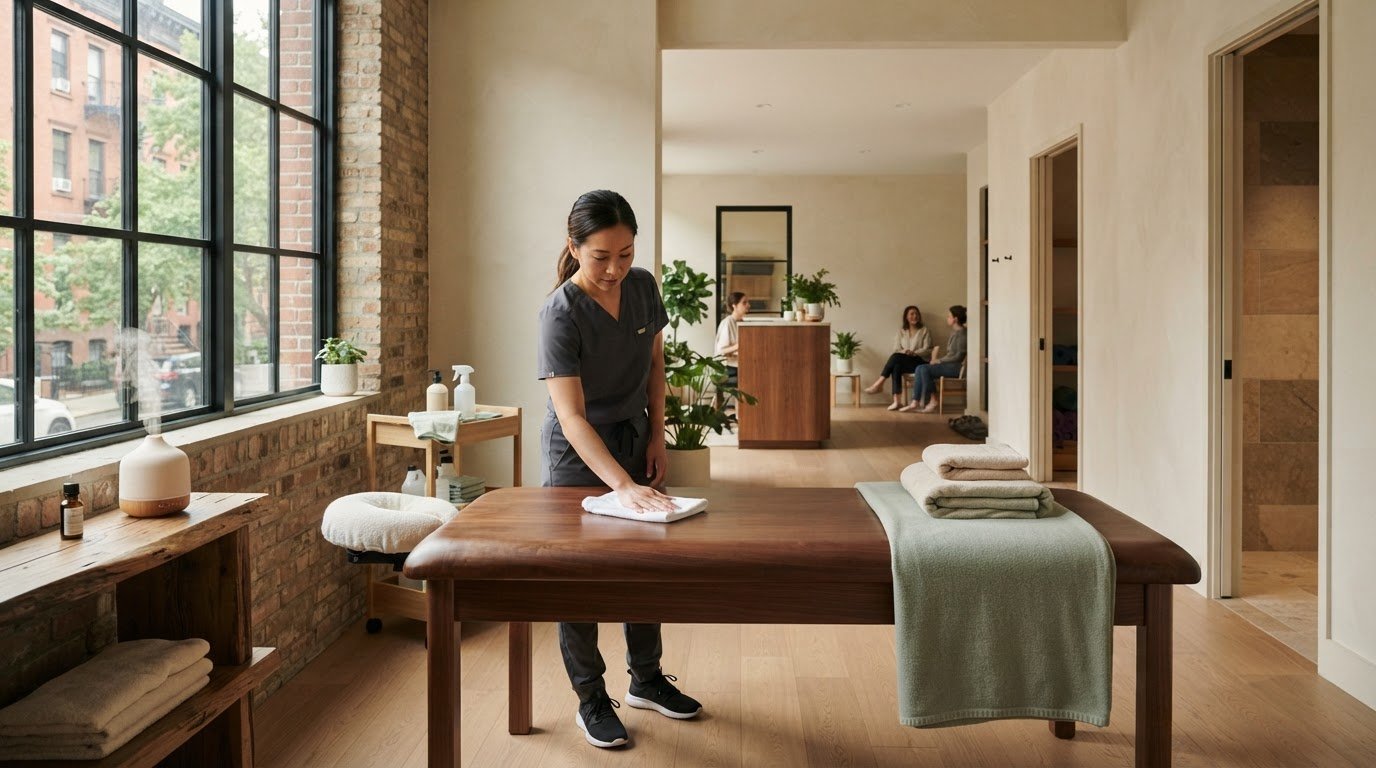
A welcoming wellness space depends on more than a tidy reception. The wellness center cleaning services Long Island operators choose should reflect each room’s purpose, from treatment spaces and studios to restrooms and shared areas. A room-by-room plan helps set clear priorities for the areas clients and staff use throughout the day.
Consistent cleaning should fit around appointments, classes, and site access. A tailored scope can distinguish routine care for floors and visible surfaces from more intensive tasks addressed through deep cleaning. AlphaLux Cleaning provides customizable commercial cleaning plans, with vetted, insured professionals and eco-friendly, non-toxic products.
This guide explains how to assess your center’s cleaning needs, compare service approaches, and plan visits around daily operations. You’ll find practical ways to define coverage for reception, treatment, class, and restroom areas, then shape a cleaning routine for your Long Island space.
Key Takeaways
- Wellness center cleaning services tribeca should be planned around how each room is used, not treated like a one-size-fits-all office routine.
- Organize the scope by room, task, frequency, and access so reception, treatment, movement, and shared areas each have clear priorities.
- Map operating hours and priority spaces first, then set visit timing and access arrangements around classes and appointments.
- Recurring cleaning supports ongoing upkeep, while deep cleaning addresses a more intensive scope.
- AlphaLux Cleaning offers customizable commercial cleaning plans with vetted, insured professionals and eco-friendly, non-toxic products.
Why Tribeca Wellness Centers Need a Cleaning Plan Beyond Basic Office Cleaning
A wellness center brings together spaces with different purposes. Clients may wait at reception, attend a movement class, receive a treatment, and use shared facilities during one visit. A general office routine may cover desks and floors without addressing the distinct priorities of studios, treatment rooms, and client-facing areas. Effective wellness center cleaning services tribeca businesses choose should reflect the site’s layout, room use, and operating rhythm.
Tribeca includes a mix of studios, practices, and commercial premises. The Tribeca neighborhood provides useful context for the location, but the cleaning plan should be based on the individual space. A compact practice with several treatment rooms has different priorities from a studio with classes and shared equipment. Define the scope, visit frequency, access arrangements, product preferences, and process for communicating changes or concerns.
Which Tribeca wellness spaces need different cleaning priorities?
Start with a room-by-room review. Reception and waiting areas need attention to agreed surfaces and floors. Treatment rooms may need a reset of specified furnishings and surfaces, with access coordinated around appointments. Class studios often call for floor care and attention to shared-equipment surfaces. Restrooms and staff spaces have their own fixtures, surfaces, and waste needs. The tasks depend on the center’s layout and the services it provides.
Materials and furnishings also affect the scope. A hard studio floor, carpeted waiting area, upholstered seating, and specialized equipment may each require different care methods. Identify what gets cleaned, how often, and which areas need particular access instructions. This keeps routine floor and visible-surface care distinct from deeper periodic tasks, rather than relying on a generic checklist.
What does professional wellness-center cleaning mean?
Professional wellness-center cleaning is a defined commercial cleaning routine tailored to a center’s rooms, surfaces, schedule, and access needs. It replaces an informal approach, where tasks may vary by person or day, with an agreed scope and repeatable expectations. The plan supports an orderly, welcoming environment and clear expectations for the work. It is not a medical or infection-control claim.
For managers, the practical benefit is clarity: staff understand which areas are covered, cleaning professionals know the agreed priorities, and changes to the space can prompt a scope review. Product preferences belong in the plan, too. Eco-friendly, non-toxic products can be part of the cleaning approach, alongside clear instructions about room access and surfaces or furnishings that need particular care.
What a Tailored Wellness Center Cleaning Scope Should Cover
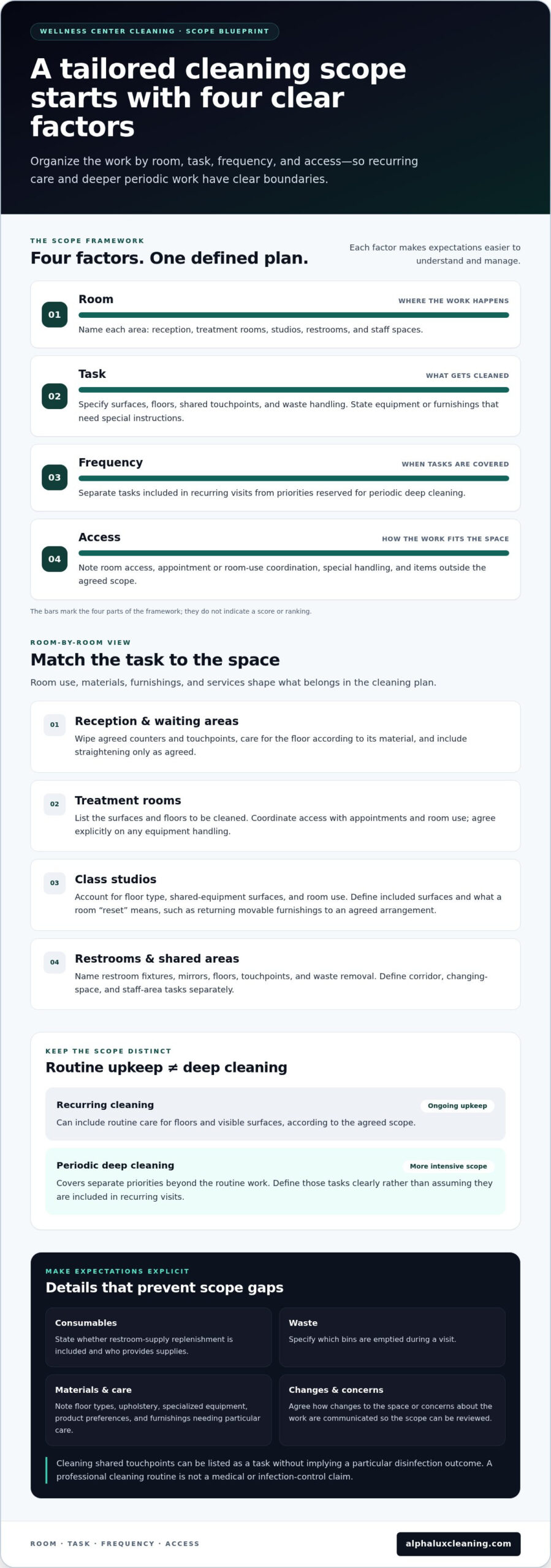
A useful scope turns broad expectations into clear tasks. For wellness center cleaning services tribeca managers can plan confidently, organize the work by room, task, frequency, and access. This makes it easier to distinguish routine floor and visible-surface care from periodic deep cleaning, while noting areas or items that need special instructions.
A room-by-room scope defines what gets cleaned, how often, and under what access conditions.
- Room: Name each area, including reception, treatment rooms, studios, restrooms, and staff spaces.
- Task: Specify the surfaces, floors, shared touchpoints, and waste handling to include.
- Frequency: Separate tasks included in recurring visits from periodic deep-cleaning priorities.
- Access: Note room access, furnishings or equipment requiring special handling, and items outside the agreed scope.
How should reception, treatment rooms, and studios be addressed?
Reception and waiting areas shape the first impression. The scope might include wiping agreed counters and other touchpoints, straightening the space as agreed, and caring for the floor according to its material. In treatment rooms, list the surfaces and floors to be cleaned, and coordinate access with appointments and room use. Agree on any equipment handling explicitly rather than assuming it is included.
Studio plans should account for floor type, shared-equipment surfaces, and how the room is used. Define which accessible surfaces are included and what a “reset” means, such as returning movable furnishings to an agreed arrangement. Routine care for visible surfaces and floors can be part of recurring cleaning, while deep cleaning covers a separate, more intensive scope.
How do restrooms and shared areas fit into the plan?
Restrooms, corridors, changing spaces, and staff areas each have distinct needs. A restroom scope can name fixtures, mirrors, floors, touchpoints, and waste removal. Corridors may need floor care and attention to visible marks, while changing spaces can require agreed surface and floor tasks. Define staff areas separately so shared kitchens or break spaces aren’t overlooked or mistakenly assumed to be included.
Set responsibilities for consumables and waste clearly. For example, state whether replenishing restroom supplies is included, who provides them, and which bins are emptied during a visit. Shared touchpoints can be listed as cleaning tasks without implying a particular disinfection outcome. For a wider view of commercial cleaning considerations, see the NYC commercial cleaning services guide.
A tailored scope makes these details easier to manage. Explore customizable commercial cleaning plans to shape a routine around your center’s rooms and priorities.
How to Evaluate Wellness Center Cleaning Services in Tribeca
A standard office-cleaning checklist may cover general surfaces and floors, but it won’t automatically reflect how a wellness center uses treatment rooms, studios, and shared spaces. Comparing wellness center cleaning services tribeca managers consider starts with a written, room-level scope. Then assess whether the schedule, access arrangements, product preferences, and communication approach fit the center’s daily operations.
AlphaLux Cleaning tailors commercial cleaning plans to each client’s needs and schedule. A useful plan makes expectations clear from the outset and gives managers a practical way to discuss adjustments as the space or routine changes. For broader evaluation criteria, explore this 2026 guide to choosing a cleaning company.
What should a wellness-center cleaning plan make clear?
Look for specifics rather than broad assurances. The plan should name the rooms and tasks included, set visit frequency, explain access arrangements, and describe how questions or changes will be communicated. For example, it should distinguish routine studio care from the tasks assigned to a treatment room, instead of grouping both under a vague “general cleaning” label.
A clear cleaning scope names the rooms, tasks, visit frequency, access arrangements, and communication expectations. These details help managers compare the plan with actual operations and understand what’s included in recurring cleaning versus a separate deep-cleaning scope.
How can managers assess products, trust, and consistency?
Product preferences are part of finding the right fit. AlphaLux Cleaning uses eco-friendly, non-toxic products as part of its cleaning approach. This product choice doesn’t imply clinical credentials or a particular health outcome. Managers can also consider information about who will enter the space. AlphaLux Cleaning’s professionals are vetted and insured.
Consistency depends on more than the initial scope. Clear communication gives managers a way to flag changes, such as a room being repurposed or access needs shifting, so the recurring plan can stay aligned. A written task list and an agreed process for sharing updates make expectations easier to follow on both sides.
Assess service fit through practical details, not broad claims. AlphaLux Cleaning’s customizable commercial cleaning plans reflect each client’s needs and schedule. Explore AlphaLux Cleaning and consider a cleaning routine suited to your space.
How to Plan Cleaning Around Classes, Appointments, and Tribeca Site Access
A workable cleaning routine starts with the center’s actual calendar, not a preset visit pattern. To coordinate wellness center cleaning services tribeca managers need with daily operations, map the schedule and space first, then agree on priorities, access, and timing. This keeps expectations clear without treating every room or operating day the same way.
- Map operating hours: Note classes, appointments, staff presence, and room turnover patterns.
- Identify priority rooms: Flag spaces with frequent use or tight transitions between clients.
- Set access arrangements: Clarify how cleaning professionals enter, which rooms they can access, and any instructions for furnishings or equipment.
- Agree on visit timing: Choose timing that fits the center’s activity and the agreed cleaning scope.
For a Tribeca premises, include practical site details in the plan, such as building entry arrangements, the route to the center, and how room access is coordinated. These are planning considerations, not assumptions about a building’s rules. Clear arrangements can reduce confusion when staff are preparing a room or clients are arriving.
How often should a wellness center schedule cleaning?
There’s no universal frequency for every center. Room use, appointment volume, layout, and the selected scope all shape the routine. Recurring cleaning supports agreed maintenance tasks, while deep cleaning addresses a different, more intensive scope. The plan should state which tasks belong to each.
Review priorities when class schedules change, appointment volume shifts, or a room takes on a new function. A check-in about what’s working can help keep the recurring plan aligned with how the space is actually used.
How can cleaning fit around clients and staff?
Build visit timing around the center’s activity. A studio may be available between classes, while access to a treatment room could need coordination around appointments. Some spaces may be prioritized during one visit, with other areas scheduled at a different time according to the agreed plan. Make staff presence and access instructions explicit so expectations are practical for everyone.
For more service-planning context, read this guide to NYC professional cleaning services. AlphaLux Cleaning offers customizable recurring and deep cleaning plans shaped around client needs and schedules. Plan a cleaning routine for your wellness center with a scope that reflects its rooms, access, and operating rhythm.
How AlphaLux Cleaning Can Support a Tribeca Wellness Center
A wellness center’s cleaning plan should reflect its layout and operating rhythm. AlphaLux Cleaning provides customizable commercial cleaning plans, with the scope and schedule shaped around the property’s rooms, priorities, and access arrangements. For managers considering wellness center cleaning services tribeca, this approach connects routine upkeep with the spaces clients and staff use each day.
Which AlphaLux Cleaning approach may fit your center?
Recurring cleaning supports an agreed ongoing routine for the areas and tasks in the scope. Deep cleaning is a more comprehensive service for areas or tasks that need more intensive attention. The two options serve different purposes: recurring visits maintain an established plan, while deep cleaning addresses a distinct, broader scope. The right approach depends on the center’s layout, room use, and priorities, not on an assumed wellness-specific formula.
The plan can distinguish reception and shared areas from treatment rooms and studios, then set out what’s included and how access will work. AlphaLux Cleaning’s commercial cleaning is customizable to the property and its operating routine, rather than relying on a generic office checklist.
What are the next steps for a tailored cleaning plan?
Start with a practical picture of the space. Share the room layout, operating schedule, priority areas, access arrangements, and product preferences. These details help shape a routine around how the center functions, including which spaces need regular attention and where deeper cleaning may be appropriate. If the schedule or use of a room changes, review and adjust the agreed priorities.
Trust matters in a client-facing environment. AlphaLux Cleaning’s professionals are vetted and insured, and the company uses eco-friendly, non-toxic products. These practical commitments support a considered cleaning approach without implying clinical credentials or guaranteed health outcomes.
A well-defined plan makes cleaning easier to coordinate and helps keep the space consistently cared for. Explore a tailored commercial cleaning plan with AlphaLux Cleaning to take the next step toward a cleaning scope tailored to your wellness center.
Build a Cleaning Routine That Fits Your Wellness Center
A welcoming wellness space depends on a plan that reflects how its rooms are used. A clear, room-by-room scope distinguishes routine care from deep cleaning, while practical scheduling accounts for appointments, classes, and access needs. These details help managers maintain reception, treatment, studio, and shared areas consistently.
Choosing wellness center cleaning services tribeca means looking beyond a generic checklist. AlphaLux Cleaning offers customizable commercial and recurring cleaning plans shaped around a property’s needs and operating routine. Vetted, insured professionals and eco-friendly, non-toxic products support a considered approach without overpromising outcomes.
Share your layout, priorities, schedule, and product preferences to shape a practical plan for your space. Explore a tailored commercial cleaning plan with AlphaLux and take a confident next step toward a clean, considered environment for clients and staff.
Frequently Asked Questions
What does wellness center cleaning include?
Wellness center cleaning covers agreed tasks for a facility’s rooms and surfaces, organized around how each space is used. A plan may cover reception, waiting areas, treatment rooms, class studios, restrooms, corridors, and staff spaces. It can specify floor and visible-surface care, shared touchpoints, and waste handling, with access instructions for furnishings or equipment. The scope should reflect the center’s layout and services.
How often should a wellness center be professionally cleaned?
Cleaning frequency depends on room use, appointment volume, class schedules, layout, and the agreed scope. A busy studio and a smaller practice may need different recurring routines. Managers can set regular cleaning for ongoing care, then revisit the plan if traffic increases or a room’s purpose changes. Deep cleaning is a separate, more comprehensive option, not a universal replacement for routine maintenance.
Can cleaning be scheduled around classes and client appointments?
Yes. A tailored plan can account for class times, appointments, staff presence, room turnover, and access arrangements. Managers can identify priority rooms and note when particular areas are available, so visit timing fits the center’s operating rhythm. Include building entry and room access details in the plan. AlphaLux Cleaning offers customizable recurring cleaning plans to fit client needs and schedules.
Are eco-friendly, non-toxic products suitable for wellness center cleaning?
Eco-friendly, non-toxic products can be included as a product preference in a wellness center’s cleaning plan. AlphaLux Cleaning uses these products as part of its cleaning approach. Managers can specify preferences and note surfaces or furnishings that require particular care. Product choice alone does not establish clinical credentials or guarantee a health outcome, so the cleaning scope should remain clear about the tasks being performed.
What should I look for when comparing wellness center cleaning services in Tribeca?
Compare the written scope, room-level task details, visit frequency, access arrangements, schedule fit, and communication expectations. The plan should distinguish spaces such as studios and treatment rooms rather than rely only on a general office checklist. Also consider product preferences and information about the cleaning professionals. AlphaLux Cleaning offers customizable commercial cleaning plans and employs vetted, insured professionals.
How is deep cleaning different from recurring cleaning for a wellness center?
Deep cleaning is a comprehensive, one-time service that goes beyond standard cleaning to address areas that are often overlooked. Recurring cleaning is scheduled regularly, with frequency and details customized to the client’s needs and schedule. For a wellness center, the plan can define which routine tasks belong in recurring visits and which more intensive priorities are part of a deep-cleaning scope.
How much do wellness center cleaning services in Tribeca cost?
The cost depends on the cleaning scope rather than one universal rate. Factors include the facility’s layout, number and type of rooms, tasks included, visit frequency, access arrangements, and whether the work calls for recurring cleaning or a one-time deep clean. A clearly defined room-by-room scope makes it easier to understand what the service covers and compare plans on consistent terms.