In a clinical environment, cosmetic cleanliness is a dangerous illusion. When standard janitorial crews treat exam rooms like ordinary corporate suites, the risk of healthcare-associated infections and failed regulatory audits quickly becomes an everyday anxiety. You already know that protecting patients requires systematic pathogen containment rather than superficial surface wiping. Finding qualified commercial cleaning services for medical facilities starts with answering one critical question: what standards, training, and certifications must an outside team meet to ensure total clinical safety?
You shouldn’t have to micromanage your cleaning staff just to remain compliant with strict CDC, OSHA, and state healthcare hygiene regulations. In this 2026 guide, you’ll discover how to evaluate, select, and contract certified commercial cleaning services tailored to clinical compliance and patient safety. We break down the vital difference between routine sanitation and terminal disinfection, examine essential pathogen control standards, and outline how to choose an insured partner that safeguards your practice every day.
Key Takeaways
- Understand why clinical environments require strict, two-step pathogen containment rather than superficial cosmetic dusting to prevent cross-contamination.
- Learn how to vet commercial cleaning services for medical facilities by inspecting bloodborne pathogen training, personal protective equipment protocols, and full liability coverage.
- Master the critical regulatory expectations from OSHA, the CDC, and the EPA to protect your clinic against severe audit penalties and operational disruptions.
- Discover how tailored terminal disinfection schedules and dependable regional partners deliver effortless compliance and total peace of mind.
Clinical Sanitation vs. General Office Cleaning: Understanding the Difference
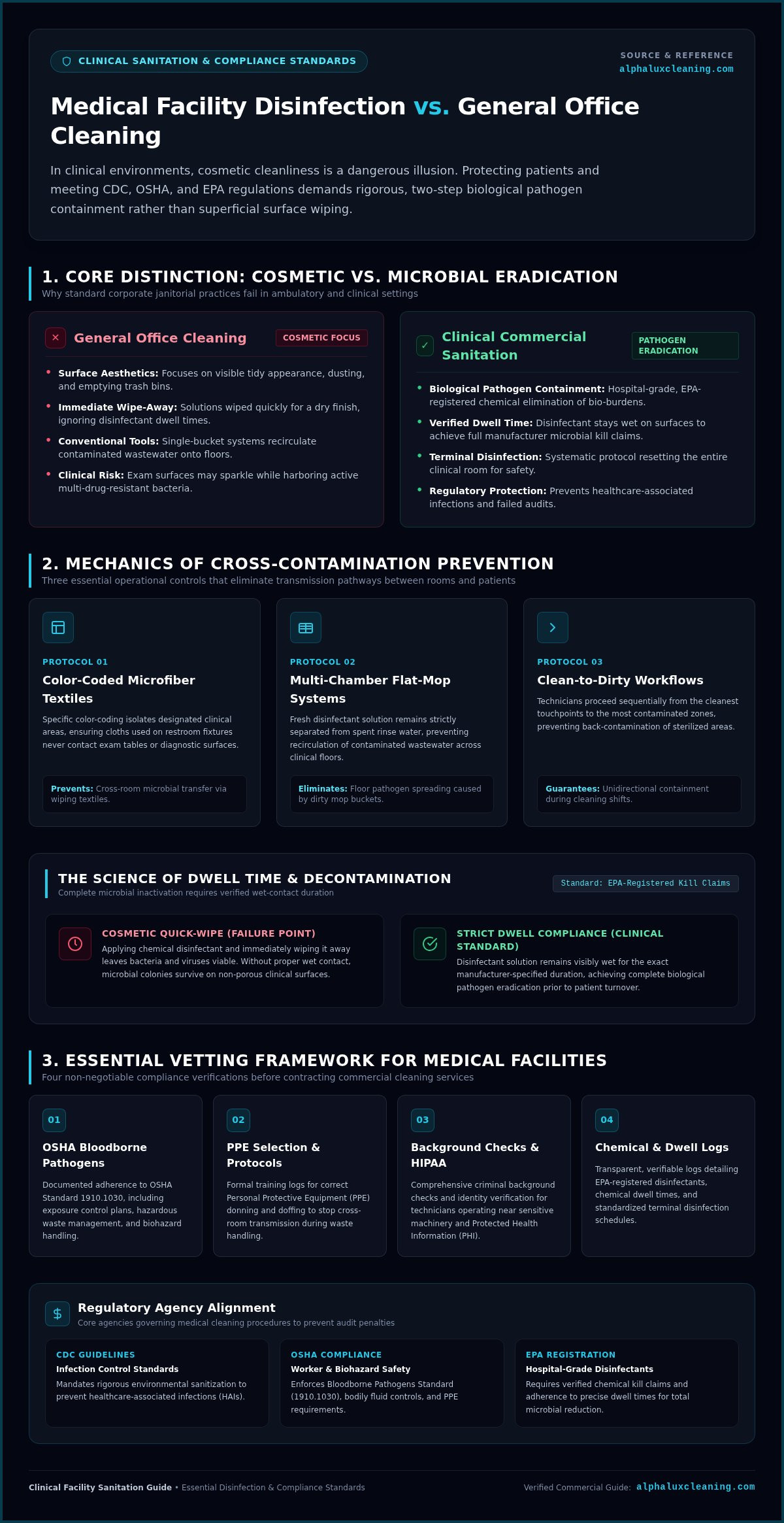
A spotless corporate lobby and a disinfected patient examination room might look identical to the naked eye. In healthcare, however, visual cleanliness is merely cosmetic. Standard office janitorial methods focus on surface appearance, clearing dust, and emptying trash. Specialized commercial cleaning services for medical facilities operate under an entirely different paradigm: rigorous biological pathogen eradication. Clinical settings require hospital-grade, EPA-registered disinfectants applied with strict containment protocols to eliminate invisible bio-burdens and maintain uninterrupted regulatory compliance.
The Mechanics of Cross-Contamination Prevention
Using conventional cleaning tools in a clinical setting creates dangerous transmission pathways. In ambulatory healthcare settings, medical cross-contamination is the inadvertent transfer of viable microorganisms between surfaces, equipment, and patients caused by unmonitored cleaning textiles and erratic sanitization paths. Dedicated medical cleaning prevents these vectors through precise operational controls:
- Color-coded microfiber textiles: Specific colors isolate designated areas, ensuring a cloth used on a restroom fixture never touches an examination table.
- Multi-chamber flat-mop systems: Fresh disinfectant remains strictly separated from spent rinse water, preventing the recirculation of contaminated wastewater across clinical floors.
- Clean-to-dirty workflows: Technicians proceed sequentially from the cleanest touchpoints to the most contaminated zones, preventing the spread of environmental contaminants.
Surface Aesthetics vs. Microbial Eradication
A sparkling exam table can easily harbor active colonies of multi-drug-resistant bacteria. Aesthetic cleaning focuses entirely on visual presentation, while true clinical sanitation targets unseen biological risks. The foundation of this distinction is dwell time, the verified duration a disinfectant must remain wet on a non-porous surface to achieve complete microbial inactivation.
While an ordinary office cleaner wipes away solutions immediately to leave a dry finish, medical decontamination respects the manufacturer’s precise kill claims. Specialized procedures like terminal cleaning take this discipline to the highest level, transforming an entire clinical room into a biologically safe environment for the next patient. For regional practices navigating strict compliance, investing in specialized commercial cleaning services nyc ensures clinical spaces are truly pathogen-free, rather than just visibly tidy.
Essential Criteria for Vetting Medical Commercial Cleaning Services
Selecting an external sanitation team requires looking far beyond standard janitorial bids. In healthcare, a vendor’s procedural oversights directly compromise patient outcomes and clinical licensure. Clinic administrators need a concrete procurement framework that prioritizes clinical competencies, formal compliance documentation, and clear administrative accountability. Evaluating commercial cleaning services for medical facilities demands verified proof that frontline crews understand the acute biological risks of healthcare environments.
Staff Training, Vetting, and Biohazard Protocols
Clinical cleaning crews operate alongside sensitive diagnostic machinery, prescription supplies, and protected health information (PHI). Because routine operations require unsupervised facility access, cleaning contractors must provide documented proof of comprehensive criminal background checks and identity verification. This scrutiny protects your physical assets while maintaining strict HIPAA alignment.
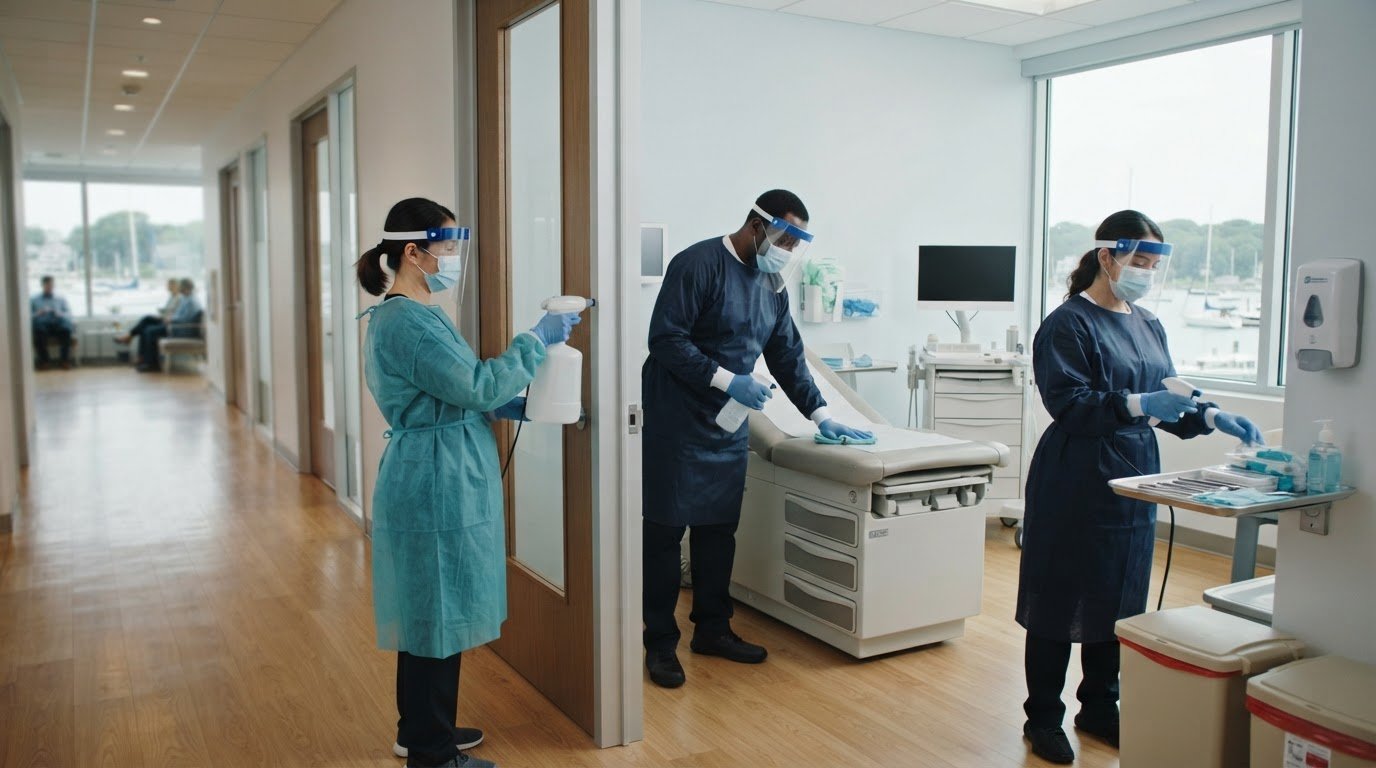
Technical qualifications must be equally transparent. Prospective providers must document employee training in hazardous waste management, correct personal protective equipment (PPE) donning and doffing, and strict adherence to OSHA’s Bloodborne Pathogens Standard. Proper PPE selection prevents cross-room transmission and protects technicians when handling regulated medical waste or bodily fluids. If a company cannot show current employee training logs covering chemical dwell times and pathogen exposure control plans, they aren’t equipped for healthcare spaces.
Insurance, Licensing, and Accountability in New York
General commercial insurance policies rarely cover the complex liabilities inherent to clinical sanitation. When vetting regional contractors across New York, administrators must confirm specific coverage parameters:
- Healthcare-specific liability: Policies must include explicit endorsements for third-party medical property damage and environmental contamination incidents.
- Bonded personnel: Bonding safeguards your practice against theft in areas containing high-value surgical tools or pharmaceuticals.
- Objective quality auditing: Accountable teams deploy ATP (adenosine triphosphate) bioluminescence swabs to quantify cleanliness, validating microbial clearance instead of relying on subjective visual inspections.
- Transparent escalation paths: Dedicated field supervisors must offer direct contact channels to resolve emergency spill protocols or schedule adjustments instantly.
Establishing these parameters early eliminates daily micromanagement. To build a reliable framework for your facility, review our comprehensive breakdown on how to choose a cleaning company. When you’re ready to partner with fully bonded, insured professionals trained in clinical hygiene, consider requesting a consultation with AlphaLux Cleaning to establish a dependable sanitization schedule tailored to your regional practice.
Regulatory Compliance Standards: CDC, OSHA, and EPA Guidelines
Healthcare facilities carry ultimate legal accountability for maintaining hygienic, biohazard-free treatment zones under federal and state oversight. When contracting commercial cleaning services for medical facilities, administrators must ensure vendor procedures mirror actionable Centers for Disease Control and Prevention (CDC) environmental infection control guidelines. Beyond biological containment, federal OSHA mandates require documented Hazard Communication compliance, meaning cleaning teams must maintain updated, easily accessible Safety Data Sheets (SDS) on site for every chemical formulation in use.
Disinfectant Chemistry and Contact Dwell Times
Clinical sanitation relies on chemistry matched precisely to target pathogens. Technicians must verify that disinfectants appear on relevant EPA registers, such as List N, and maintain exact dilution ratios to avoid chemical deactivation. Disinfectant dwell time is biologically essential because biocidal agents require sustained liquid contact to penetrate tough cell walls and denature internal microbial proteins before pathogens can adapt or survive.
Prematurely wiping treated surfaces dry renders potent agents ineffective, leaving resilient colonies intact. Modern clinical workflows increasingly utilize hospital-grade, eco-conscious, and non-toxic formulations. These advanced chemistries neutralize broad-spectrum pathogens reliably while preserving indoor air quality and eliminating harsh chemical vapors in patient-facing recovery areas.
Air Quality and High-Efficiency Particulate Air Filtration
Sanitation extends beyond hard surfaces to include the air patients breathe. To protect immunocompromised individuals and vulnerable post-procedure recovery rooms, commercial cleaning services for medical facilities must deploy specialized vacuum equipment equipped with multi-stage HEPA filtration.
Standard commercial vacuums often expel fine dust particles back into ambient room air, compromising sterile fields. Professional clinical systems use sealed filtration housings certified to trap 99.97% of airborne particles down to 0.3 microns. By routinely testing exhaust integrity and maintaining filter replacement logs, technicians prevent microbial redistribution and support clinical air systems in sustaining pristine, allergen-free treatment suites.
Tailoring Cleaning Protocols to Your Specific Healthcare Facility
A standardized, one-size-fits-all checklist cannot protect a specialized medical practice. While massive hospital systems rely on vast internal housekeeping departments, private clinics, outpatient centers, and dental operatories face distinct operational hurdles. Each space features specific foot-traffic flows, physical layouts, and infection transmission vulnerabilities. Effective commercial cleaning services for medical facilities align their schedules and sanitation workflows with your clinic’s precise specialty, ensuring daily patient consultations proceed without operational interruptions.
Outpatient Clinics and Urgent Care Centers
Walk-in clinics face constant patient throughput, which increases cross-transmission risks. Waiting rooms, registration desks, check-in kiosks, and payment card terminals collect microbial bio-burdens quickly throughout the day. These shared touchpoints require frequent wipe-downs using gentle, non-abrasive sanitizers that won’t degrade touchscreens or seating upholstery.
Triage and examination spaces require dual-phase maintenance. Midday operations demand rapid decontamination following unexpected fluid spills or patient turnover. Once the facility closes, teams perform intensive restorative sanitation, clearing exam tables, baseboards, and patient restrooms to ensure a sterile baseline for the following morning.
Dental Offices and Specialized Surgical Suites
Dental suites face severe challenges from aerosolized fluids generated during routine cleanings and surgical procedures. Fine airborne mists settle across operatory chairs, overhead task lights, cabinetry, and delivery carts. Sanitizing these areas requires broad-spectrum, non-corrosive disinfectants that kill oral pathogens without pitting delicate synthetic leather or stripping electronic control surfaces.
Ambulatory surgical centers demand rigorous decontamination protocols that mirror acute-care operating rooms. Technicians execute complete terminal sanitation after procedure schedules conclude, covering ceiling vents down to conductive flooring:
- Systematic top-to-bottom surface wipe-downs: Technicians clean surgical lighting, anesthesia carts, monitors, and procedure tables using verified biological dwell times.
- Regulated waste containment: Teams manage biohazard red bags and sharps containers according to strict New York disposal mandates.
- Cross-zone isolation: Crews sanitize dirty utility spaces, scrub sinks, and clean supply rooms using dedicated, segregated gear.
Every clinical setting presents distinct procedural risks. If you need a customized recurring sanitation plan built around your treatment hours, schedule a tailored site consultation with AlphaLux Cleaning to safeguard your patients and streamline your operations.
Choosing the Right Commercial Cleaning Partner for Your Clinic
Securing the right sanitation partner comes down to three operational pillars: transparent communication, objective inspection systems, and unwavering consistency. National franchise brokerages often subcontract accounts to rotating third-party crews, leaving clinical directors with little accountability when standards slip. In contrast, partnering with a dedicated regional provider ensures direct oversight, immediate managerial responsiveness, and a personal investment in your facility’s reputation.
Selecting dependable commercial cleaning services for medical facilities isn’t just about outsourcing chores. It’s about protecting clinical integrity. When evaluating options, understanding the nuances of choosing a cleaning company in new york city helps you separate generic janitorial vendors from true healthcare partners.
Developing a Transparent Scope of Work
A resilient partnership starts with an airtight, customized scope of work. Clinical workflows require structured task management that clearly delineates between daily pathogen containment, weekly restorative care, and monthly deep cleans:
- Operating-hour alignment: Schedules must integrate smoothly around patient appointment blocks to eliminate clinical disruptions.
- Audit-ready verification: Digital check-in logs and standardized inspection rubrics provide instant documentation during state health department or OSHA audits.
- Adaptive capacity: Service frequencies should scale seamlessly as your patient volume grows or seasonal respiratory surges require increased terminal cycles.
The Value of Dedicated Local Oversight
Direct communication makes an enormous operational difference. When an urgent spill occurs or scheduling changes arise, direct access to regional company leadership eliminates call-center bottlenecks. Placing the same dedicated technicians on your account also fosters operational familiarity. Cleaners learn your building’s precise security codes, alarm protocols, and high-risk zones, providing consistent protection without recurring orientation delays.
AlphaLux Cleaning delivers dependable recurring and deep commercial cleaning services for medical facilities across New York and Long Island. Our vetted, bonded, and fully insured specialists use eco-conscious, non-toxic sanitizing technologies to protect your patients, staff, and clinical reputation. Schedule your clinical facility consultation with AlphaLux Cleaning today to establish a tailored sanitization program that gives your practice total peace of mind.
Protect Your Practice With Confident Clinical Sanitation
Elevating your facility’s hygiene routine from basic cosmetic upkeep to systematic pathogen eradication is vital for patient safety and regulatory peace of mind. When your practice pairs verified disinfectant dwell times with rigorous containment protocols, meeting strict CDC and OSHA standards becomes seamless rather than stressful. You shouldn’t have to sacrifice administrative hours micromanaging janitorial staff when your primary focus belongs on patient care.
Choosing specialized commercial cleaning services for medical facilities ensures your clinic maintains an audit-ready, pristine environment every day. AlphaLux Cleaning supports regional practices with vetted, bonded, and fully insured commercial cleaning specialists delivering hospital-grade sanitization tailored to New York healthcare compliance. Through reliable recurring scheduling designed around your clinical operating hours, we provide the dependable protection your patients deserve. Request your medical facility commercial cleaning consultation today to experience the relief of a truly compliant clinical space.
Frequently Asked Questions
How do commercial cleaning services for medical facilities differ from standard office janitorial services?
Commercial cleaning services for medical facilities prioritize biological pathogen eradication over surface-level aesthetics. While standard office cleaners focus on emptying trash and visual dust removal, healthcare technicians use EPA-registered hospital-grade disinfectants, observe strict dwell times, and follow biohazard containment workflows. This systematic approach neutralizes invisible bacteria and viruses to keep patients safe and safeguard clinic licensure.
What specific regulatory guidelines must medical cleaning companies comply with?
Cleaning vendors must comply with OSHA, CDC, and EPA mandates. Crucial benchmarks include OSHA’s Bloodborne Pathogens Standard and Hazard Communication rules requiring accessible Safety Data Sheets. Technicians must also mirror CDC environmental infection control recommendations and strictly utilize EPA-registered disinfectants approved for target clinical pathogens. In New York, teams must also adhere to regional biohazard disposal regulations.
How frequently should an outpatient medical or dental clinic undergo terminal cleaning?
High-traffic outpatient clinics and dental practices should conduct terminal cleaning daily at the close of business. While routine contact-point sanitization happens between daytime patient consultations, complete top-to-bottom decontamination every evening resets the clinical space. Specialized procedure suites or operatories handling invasive treatments may also require localized terminal cycles immediately following complex appointments to eliminate aerosolized bio-burdens.
Are eco-friendly or non-toxic cleaning products effective enough for healthcare sanitization?
Yes, advanced eco-conscious and non-toxic sanitizing formulations meet rigorous hospital-grade standards while neutralizing resilient clinical pathogens. Modern EPA-registered biocides achieve complete microbial inactivation without releasing harsh volatile organic compounds or toxic chemical fumes into recovery suites. These sophisticated solutions protect patient respiratory comfort and indoor air quality while upholding strict healthcare sanitization standards.
How do professional cleaning technicians prevent cross-contamination between examination rooms and restrooms?
Technicians prevent cross-contamination through strict physical barriers, color-coded microfiber tools, and sequential workflows. Microfiber cloths and mops assigned to restrooms are never introduced into examination suites or consultation spaces. Reliable crews also utilize dual-chamber flat-mop systems to keep fresh disinfectant separated from soiled wastewater, progressing methodically from clean areas to contaminated surfaces.
What credentials, insurance, and background checks should a medical facility require from cleaning staff?
Medical administrators should mandate proof of comprehensive background checks, bonding, and dedicated healthcare commercial liability insurance covering environmental contamination. Technicians must hold documented training in bloodborne pathogen containment, proper PPE usage, and chemical handling. Selecting vetted, bonded commercial cleaning services for medical facilities ensures staff members respect HIPAA protocols, protecting sensitive patient records, diagnostic instruments, and practice reputation.
Can commercial medical cleaning services work around sensitive clinical hours and patient schedules?
Yes, professional cleaning partners routinely customize their recurring schedules around clinical operating hours. Reliable regional services offer scheduled evening or early morning visits, ensuring detailed terminal cleaning happens after patients depart. Dedicated local managers coordinate directly with your administrative team to adjust timing when extended clinic shifts, scheduled procedures, or unexpected patient surges arise, preventing operational disruptions entirely.