Last Updated: November 22, 2026
Quick Summary
To remove construction dust from furniture, vacuum first with a HEPA vacuum and soft brush attachment on low suction, then wipe hard surfaces with a barely damp microfiber cloth and do a second damp pass. Construction dust must be trapped damp, never dry-dusted, and you should work top to bottom so particles do not resettle on clean pieces.
- Wear an N95 respirator, gloves, and eye protection, and keep children and pets out of the room.
- Turn off your HVAC system and cover vents with plastic and tape before you start.
- Vacuum seams, crevices, and drawer interiors with a crevice tool on low suction.
- On wood, wipe with the grain and dry immediately to avoid white rings and raised grain.
- Empty the vacuum canister when it is about half full and replace the HVAC filter after heavy work.
Table of Contents
- What You Need Before You Start Removing Construction Dust
- The Best Way to Clean Up Drywall Dust Without Spreading It
- How to Clean Construction Dust from Furniture, Step by Step
- The Best Way to Clean Heavy Dust from Upholstery and Crevices
- Where Post-Construction Cleaning Fits in Your Whole-Home Plan
- Repeat Cleaning Schedule and Vacuum Filter Maintenance
- Book a Post-Renovation Deep Clean with AlphaLux Cleaning
- Frequently Asked Questions
What You Need Before You Start Removing Construction Dust
Removing fine construction dust from furniture starts before you touch a single cloth. Construction dust is a mix of drywall powder, silica, sawdust, and debris that settles into every seam and fiber.
Fine dust behaves like flour. It floats, then lands everywhere. Wipe it dry and it goes airborne again. That is why the right tools and a set order matter more than effort.
Tools and Supplies Checklist
Gather everything first so you are not hunting mid-clean:
- HEPA-filter vacuum with a soft brush attachment
- Several microfiber cloths, plus a pack of disposable ones
- Two buckets: one for rinse water, one for cleaning solution
A pro-grade equipment list helps if you plan to tackle the whole house. Our guide to post construction cleaning equipment covers HEPA vacuums and the tools professionals rely on.
Dust Safety and Protective Equipment
Construction dust is a real health concern, not just a mess. Drywall dust and silica particles can irritate your lungs and eyes. Breathing fine silica dust over time can harm lung tissue, so protection matters even for a weekend cleanup.
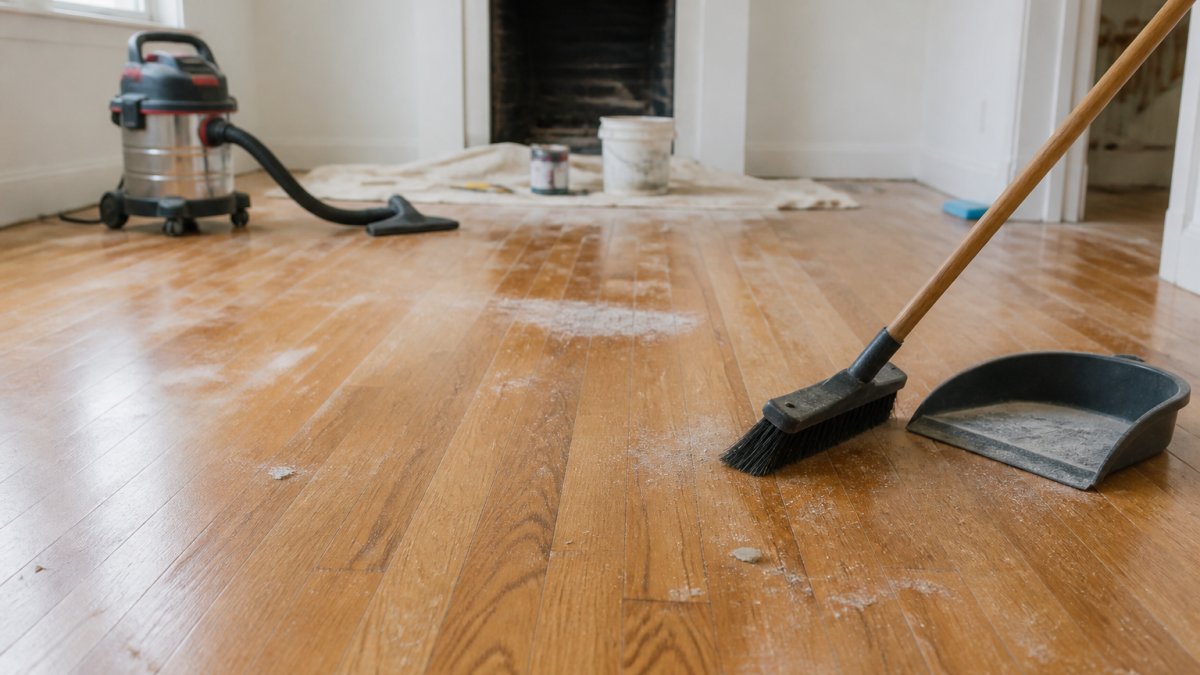
Wear an N95 respirator, gloves, and eye protection. Keep children and pets out of the room. Open windows when you can, and never dry-sweep a dusty floor.
If dust has already left you sneezing or itchy, our breakdown of post-renovation dust allergy symptoms explains when it is irritation versus an allergy and when to call a doctor. For a full walkthrough of safe handling, follow this post-construction cleaning safety checklist.
The Best Way to Clean Up Drywall Dust Without Spreading It
The best way to clean up drywall dust is to work top to bottom and never let it go airborne.
A common rule for dust cleanup is: damp, don’t dry.
Turn off your HVAC system while you work. Otherwise the fan keeps cycling dust through the house and into your ducts.
Work in this order:
- Ceiling and light fixtures first
- Walls, trim, and blinds next
- Furniture after that
That sequence keeps falling dust from landing on clean surfaces.
How to Clean Construction Dust from Furniture, Step by Step
Here is how to clean construction dust from furniture without damaging finishes or grinding grit into fabric.
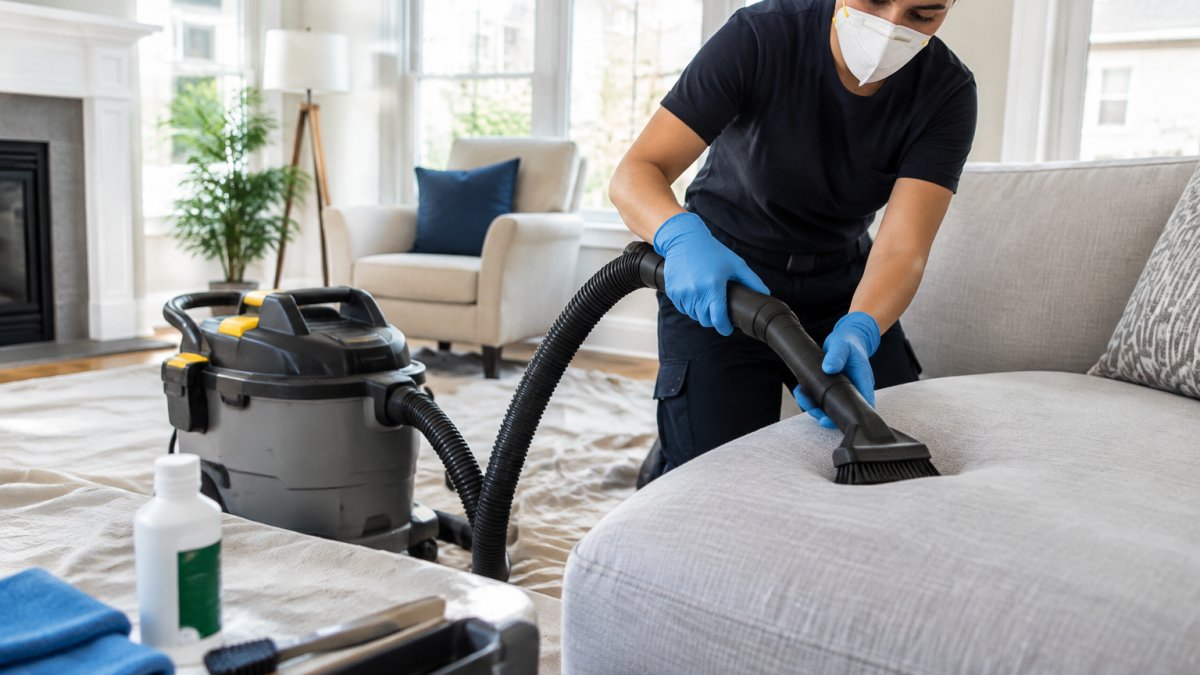
- Vacuum first. Fit the HEPA vacuum with a soft brush attachment. Use low suction on upholstery and delicate wood. Go slowly over every surface, overlapping each pass by about half the brush width so you do not miss a strip.
- Work the seams and crevices. Run the brush along cushion seams, carved details, and drawer interiors. Dust hides there, and a crevice tool on low suction lifts it without packing it deeper.
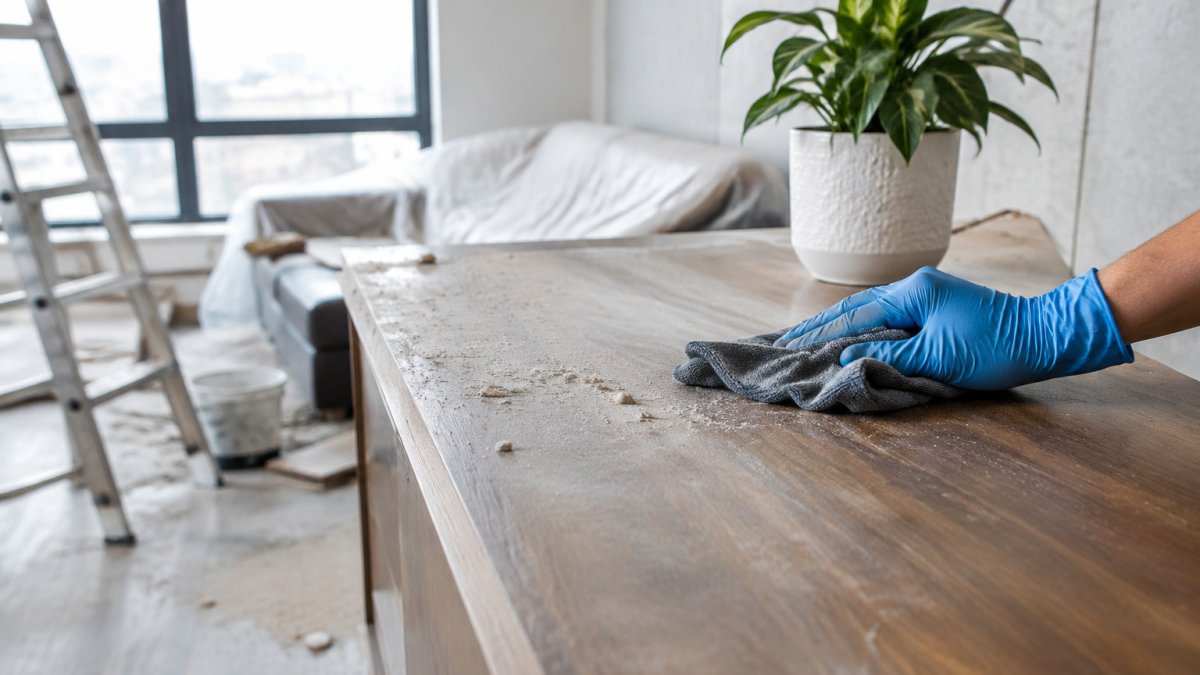
- Wipe hard surfaces with a damp microfiber cloth. Rinse the cloth often. Change the water before it turns cloudy, and fold the cloth into quarters so you always have a clean face to work with.
- Clean upholstery with light passes. Vacuum both sides of removable cushions. A damp cloth handles fabric fibers that trap dust, but wring it until it is barely damp so moisture does not wick into the cushion fill.
- Do a second damp pass. The first pass lifts most dust. The second catches what settled while you worked.
Material-Specific Instructions for Wood, Fabric, Metal, and Glass
Different materials need different handling, and this is where most guides stay vague.
- Wood, including painted and stained finishes: Use a barely damp microfiber cloth and dry immediately with a second cloth. Too much moisture can raise the grain, cloud a lacquer or polyurethane finish, or leave white rings. Wipe with the grain, not across it, so grit is carried off rather than dragged. Skip oil soaps, waxes, and polishes until all the grit is gone; working them over dust can grind particles into the finish. For carved details, wrap a thin cloth around a soft brush rather than digging with a dry rag.
- Leather and faux leather: Vacuum with a soft brush on low suction, then wipe with a barely damp cloth and buff dry right away. Leather can darken or stiffen if water sits on it, so do not let droplets linger in seams or stitching. Hold off on conditioners and leather cleaners until the dust is fully removed, and test any product on the back or underside first.
- Fabric and upholstery: Vacuum with low suction first, working in overlapping passes and lifting cushions to get the deck and frame. Spot-clean only if needed, and test any product on a hidden area such as the back of a cushion or under the skirt. Blot, do not rub, so you do not drive dust deeper into the weave or create a ring.
Watch out: a cloth that feels only slightly damp can still leave enough water on a seam or a raw wood edge to cause swelling or a watermark, so wring it out and keep a dry buffing cloth in your other hand.
Here is the order to work in so dust comes off the furniture instead of settling back onto it.
| Step | What to do | Key detail |
|---|---|---|
| 1 | Vacuum first with HEPA and soft brush | Low suction; overlap passes by half the brush width |
| 2 | Work seams and crevices | Crevice tool on low suction lifts dust without packing it deeper |
| 3 | Wipe hard surfaces with damp microfiber | Rinse often; change water before it turns cloudy |
| 4 | Clean upholstery with light passes | Vacuum both sides of removable cushions; cloth barely damp |
| 5 | Do a second damp pass | Catches what settled while you worked |
The Best Way to Clean Heavy Dust from Upholstery and Crevices
The best way to clean heavy dust from upholstery is slow, repeated vacuuming with low suction, not scrubbing.
Start with the soft brush attachment. Vacuum the top, then lift cushions and clean underneath.
For carved wood and drawer interiors, wrap a thin microfiber cloth around a soft brush or use a vacuum brush nozzle.
Repeat the upholstery pass after the room’s floors are clean.
Where Post-Construction Cleaning Fits in Your Whole-Home Plan
Furniture is one piece of a bigger job. Dust travels: it settles on walls, trim, blinds, shelves, rugs, and curtains, and it works into your HVAC system and filters.
Plan the whole home as one sequence. Protect clean areas with drop cloths and plastic sheeting. Seal off rooms you have finished.
If the scope feels large, a structured plan helps. Our guide to residential post construction cleaning walks through protecting your home and getting it truly move-in ready.
Repeat Cleaning Schedule and Vacuum Filter Maintenance
Construction dust comes back.
Follow a repeat schedule and use the checkpoints to decide when to stop:
- Day 1: Full top-to-bottom clean, furniture last before floors.
- Day 3: Vacuum furniture and floors again. Checkpoint: run a clean white cloth or a dry microfiber square across a shelf and a sofa arm. If it comes up gray or gritty, keep going.
- Week 1: Wipe hard surfaces and vacuum upholstery. Checkpoint: look at the room in raking light from a window or a lamp held low, which shows the film that overhead light hides.
- Week 2: Final pass on crevices, vents, and the tops of doors and frames. Checkpoint: wipe a vent grille and the top edge of a baseboard; if either is clean, the room is likely settled.
A common pattern is that dust keeps reappearing for a week or two after heavy drywall work, then tapers off. If a room still shows a fresh film after two weeks, check whether the HVAC filter is loaded or whether an unfinished area is still shedding dust.
Maintain your vacuum too, because a vacuum that is full or clogged stops trapping fine particles and starts releasing them back into the room.
- Empty the canister when it is about half full. Fine dust packs loosely and fills a canister faster than household debris, and a full canister cuts suction before the gauge or your hand tells you.
- Empty bags and canisters carefully. Take the vacuum outside or to a garage before opening it, hold the bag closed as you remove it, and seal it in a trash bag before carrying it through the house. For bagless canisters, empty into a lined bag rather than tipping over an open bin.
- Use a sealed system where you can. Vacuums with sealed HEPA systems and gasketed canisters keep captured dust inside; a unit with a loose lid or a worn gasket can leak fine dust back into the air even with a good filter.
- Check the filter more often during heavy cleanup. Rinse or replace the HEPA filter per the manufacturer’s instructions, and let a washable filter dry completely before reinstalling, since a damp filter can clog and smell. Note the filter type: true HEPA media traps fine particles, while a foam or screen pre-filter only catches larger debris.
The EPA’s guidance on indoor air quality and filtration explains why a clean filter matters for the air you breathe.
For a wider look at safe dust handling, the EPA’s indoor air quality resources are a solid reference.
Book a Post-Renovation Deep Clean with AlphaLux Cleaning
Doing this yourself is possible, but fine construction dust is stubborn, and missing a spot means living with it.
AlphaLux Cleaning is locally owned and serves New York, New Jersey, and Long Island.
Ready to hand it off? Book post-construction cleaning with AlphaLux Cleaning and walk into a clean, move-in ready space.
Construction dust gets into everything, and the last thing you want is to clean twice.
Frequently Asked Questions
Should you vacuum or wipe construction dust first?
Vacuum first with a HEPA-filter vacuum and a soft brush attachment on low suction. Dry wiping first pushes fine construction dust back into the air and grinds particles into finishes. Once the loose dust is captured, follow with a damp microfiber cloth to pick up what the vacuum left behind. This order keeps settled dust from becoming airborne dust again and protects both your furniture and your lungs.
Can construction dust damage wood or fabric furniture?
Yes. Drywall dust is alkaline, and left on wood finishes it can dull or etch the surface over time. In fabric fibers, fine dust works into the weave and acts like an abrasive when anyone sits down, which wears upholstery faster. Remove it within a few days of the work ending rather than waiting weeks, and use a damp cloth rather than a soaking one so moisture does not raise the grain on wood.
How often should you clean after construction dust settles?
Plan on repeat cleaning for two to three weeks. Fine dust keeps settling out of the air and off walls, trim, and blinds long after the work stops. Wipe furniture every two to three days for the first week, then weekly until a white cloth comes up clean. Replace the HVAC filter at the end of the project and again about a month later, since the system keeps cycling residual particles through the rooms.
When should you hire a post-construction cleaning service?
Call a professional when the renovation covered multiple rooms, involved drywall sanding or demolition, or when anyone in the home has asthma or allergies. A service brings HEPA equipment, reaches high shelves and HVAC registers, and handles upholstery and crevices in one pass. AlphaLux Cleaning provides a free estimate for residential cleaning across New York, New Jersey, and Long Island.