You vacuum every week. You wipe down surfaces. You stay on top of the visible messes. But when was the last time your carpets or couch got a real, deep clean?
Most people don’t think about it until something smells off or a stain won’t budge. By then, months or even years have passed, and the buildup hiding in those fibers has quietly been affecting your home’s air quality, your furniture’s lifespan, and how your space actually feels to live in. The truth is, there’s a rhythm to keeping carpets and upholstery in good shape—and it’s not as complicated as you might think.
Let’s walk through how often you should really be cleaning these surfaces, what changes that timeline, and how to know when you’re already overdue.
How Often Should Carpets Be Professionally Cleaned
The general recommendation from carpet manufacturers and cleaning industry experts is every 12 to 18 months. That’s the baseline for an average household—no major spills, moderate foot traffic, and no pets running around.
But here’s the thing: most homes don’t fit that “average” description. If you’ve got kids tracking in dirt from the backyard, a dog that sheds year-round, or you just spend a lot of time at home, your carpets are working overtime. In those cases, you’re looking at professional carpet cleaning every 6 to 12 months to keep things in decent shape.
And if you’re in a high-traffic household—think multiple pets, young children, or frequent entertaining—every 3 to 6 months isn’t overkill. It’s maintenance. Because once dirt gets ground into the padding, it’s not just unsightly. It starts breaking down the fibers from the inside out.
What Happens When You Wait Too Long to Clean Carpets
Skipping professional carpet cleaning doesn’t just make your floors look dingy. It creates a chain reaction that affects your home in ways you don’t always see right away.
First, dirt acts like sandpaper. Every time someone walks across the carpet, those particles grind against the fibers, wearing them down. Over time, that leads to matting, thinning, and those permanent traffic patterns that no amount of vacuuming will fix. You’re essentially shortening the lifespan of something you paid good money for.
Then there’s the allergen issue. Carpets trap dust mites, pet dander, pollen, and mold spores—sometimes in amounts you wouldn’t believe. Regular vacuuming picks up surface stuff, but it doesn’t reach what’s settled deep in the pile or the padding underneath. That buildup gets kicked back into the air every time you walk by, and if anyone in your house deals with allergies or asthma, they’re breathing it in constantly.
And let’s not forget odors. When spills, pet accidents, or even just everyday sweat and body oils seep into carpet fibers, they don’t just disappear. They sit there, breaking down slowly, releasing smells that get worse over time. You might not notice it because you’re used to it, but guests do. That musty, stale smell? It’s not the carpet’s fault—it’s what’s been sitting in it for months.
The longer you wait, the harder it becomes to reverse the damage. Stains set in permanently. Odors become embedded. Fibers lose their texture. And by the time you finally call someone in to clean it, you’re often looking at a much bigger job than if you’d just stayed on schedule.
Professional cleaning isn’t about perfection. It’s about prevention. It’s about not letting small problems turn into expensive ones. And it’s about making sure the place you live actually feels clean, not just looks clean on the surface.
Signs Your Carpets Need Cleaning Right Now
Sometimes the timeline doesn’t matter because your carpet is already telling you it’s overdue. You just have to know what to look for.
The most obvious sign is discoloration. If your high-traffic areas—hallways, living room paths, the space in front of the couch—are noticeably darker or duller than the rest of the carpet, that’s dirt buildup. It’s not going to vacuum out, and it’s not going to fade on its own. That’s the carpet holding onto months of grime, and it needs professional extraction to get it out.
Odors are another dead giveaway. If you walk into your home and notice a smell that you can’t quite place—something musty, stale, or just off—your carpet is likely the source. Pet accidents, spilled drinks, food crumbs, even the oils from bare feet can all contribute to lingering odors that DIY cleaning won’t touch. Once that smell has set in, you need equipment and solutions that can break it down at the source, not just cover it up.
Then there’s the texture test. Run your hand across your carpet. Does it feel rough, matted, or sticky? That’s not normal wear and tear. That’s residue from old cleaning attempts, dirt that’s been pressed in, or moisture that never fully dried. Carpets should feel soft and slightly springy. If yours doesn’t, it’s holding onto something it shouldn’t be.
Allergy flare-ups are another clue people often miss. If you or your family members are sneezing more at home, waking up congested, or dealing with itchy eyes and scratchy throats, your carpet could be harboring allergens like dust mites, pollen, and pet dander. Vacuuming helps, but it’s not enough to remove what’s embedded deep in the fibers. Professional cleaning can pull out what’s been trapped and give your indoor air quality a real reset.
And finally, if you honestly can’t remember the last time your carpets were professionally cleaned, that’s your sign. If it’s been more than two years, you’re overdue. If it’s been longer than that, you’re way overdue. The good news is that it’s never too late to get back on track. One deep cleaning can make a noticeable difference, and from there, staying on a regular schedule becomes a lot easier.
How Often Should Upholstery Be Professionally Cleaned
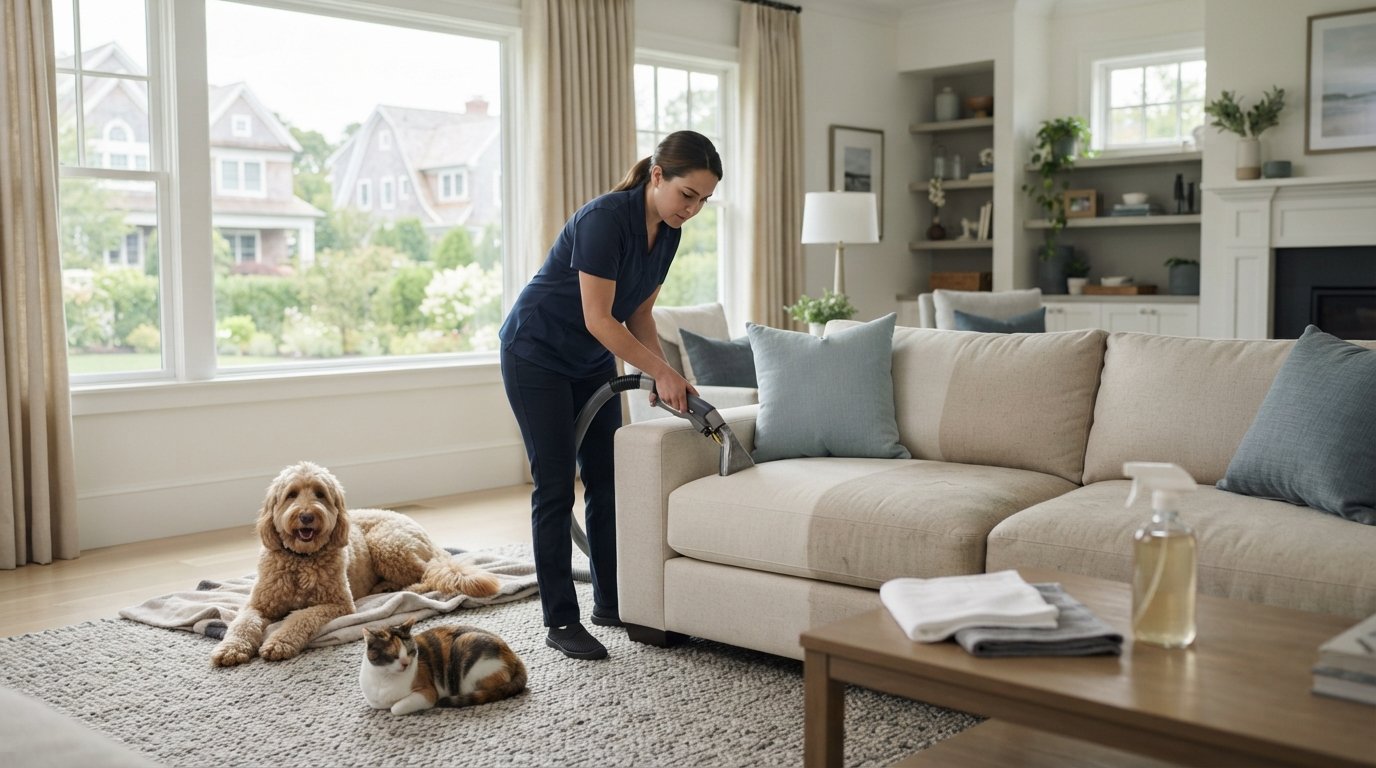
Upholstery doesn’t get nearly as much attention as carpet, but it should. Your couch, chairs, and other fabric furniture collect the same dirt, oils, allergens, and odors—sometimes more, because you’re sitting on them, eating on them, and letting pets curl up on them.
The general recommendation is professional upholstery cleaning every 6 to 12 months. If your furniture sees heavy use—think family movie nights, daily lounging, kids doing homework on the couch—you’re better off leaning toward the 6-month mark. If it’s a guest room chair that barely gets touched, once a year is probably fine.
But just like with carpet, the timeline shifts based on your household. Pets, kids, and high traffic mean more frequent cleaning. And if someone in your home has allergies, keeping upholstery clean can make a real difference in how they feel day to day.
Why Upholstery Cleaning Gets Overlooked and Why That’s a Problem
Most people don’t think about cleaning their couch until there’s a visible stain or a smell they can’t ignore. And that’s understandable—upholstery doesn’t show dirt the way carpet does. But that doesn’t mean it’s not there.
Every time you sit down, you’re transferring body oils, sweat, dead skin cells, and whatever was on your clothes onto the fabric. If you eat on the couch, crumbs fall into the crevices. If you have pets, their dander, fur, and the occasional accident all get absorbed into the cushions. Over time, all of that builds up in ways you don’t see but definitely feel—and smell.
Neglected upholstery doesn’t just look dull. It starts to feel different. The fabric gets stiff or sticky. It loses that soft, inviting texture it had when it was new. Colors fade. And if moisture gets trapped—whether from a spill, humidity, or a pet accident—you’re creating the perfect environment for mold and mildew to grow. That’s not just unpleasant. It’s a health risk.
Another thing people don’t realize is how much upholstery contributes to indoor air quality. Just like carpet, fabric furniture traps dust, pollen, and allergens. When you flop down on the couch or fluff a pillow, those particles get released back into the air. If you’re vacuuming your floors but ignoring your furniture, you’re only solving half the problem.
And here’s the kicker: once upholstery gets really dirty, it’s harder to clean. Stains set in. Odors become permanent. The fabric itself starts to break down. What could have been a simple maintenance cleaning turns into a much bigger job—or worse, a reason to replace the furniture entirely.
Regular upholstery cleaning isn’t about being obsessive. It’s about protecting something you use every single day. It’s about making sure your home feels as clean as it looks. And it’s about not waiting until there’s a problem to take action.
How to Know When Your Upholstery Needs Professional Attention
Unlike carpet, upholstery doesn’t always give you obvious visual cues that it’s overdue for cleaning. But there are signs if you know where to look—and feel.
Start with the smell test. Sit down on your couch and take a breath. If there’s a musty, stale, or sour odor, that’s not just “lived-in.” That’s buildup. It could be from pet dander, spilled drinks, food particles, or just months of body oils soaking into the fabric. Once that smell is there, it’s not going away without professional cleaning.
Next, check the texture. Run your hand over the cushions and armrests. Does it feel rough, sticky, or greasy? Fabric should feel soft and relatively clean to the touch. If it doesn’t, that’s a sign that oils, dirt, and residue have built up over time. Even if it looks okay, the feel will give it away.
Look for discoloration, especially on armrests, headrests, and seat cushions—the spots that get touched the most. If those areas are noticeably darker or duller than the rest of the furniture, that’s dirt and oil buildup. It’s the same concept as high-traffic carpet, just on a smaller scale. And just like carpet, it’s not going to come out with a quick wipe-down.
If anyone in your household is dealing with unexplained allergy symptoms—sneezing, congestion, itchy eyes—your upholstery could be part of the problem. Fabric furniture is a magnet for dust mites, pet dander, and pollen, and those allergens don’t just sit there. They get stirred up every time someone sits down or moves a pillow. Professional cleaning can remove what’s been trapped and help improve the air quality in your home.
And finally, if you’ve had a spill or pet accident that you cleaned up yourself, but the spot keeps coming back, that’s a sign the problem wasn’t fully resolved. DIY cleaning often leaves residue or moisture deep in the cushion, which then attracts more dirt or allows bacteria to grow. Professional equipment can extract what’s still in there and actually solve the problem instead of just covering it up.
Upholstery cleaning doesn’t have to be complicated. But it does need to happen. And the sooner you address the signs, the easier—and cheaper—the job will be.
Keeping Your Home Clean Without the Guesswork
Carpets and upholstery aren’t just part of your décor. They’re part of your home’s health. They affect how your space looks, how it smells, and how it feels to actually live there. And when they’re neglected, the consequences go beyond aesthetics—they impact your family’s comfort, your indoor air quality, and the longevity of the things you’ve invested in.
The good news is that staying on top of it doesn’t have to be overwhelming. Professional carpet cleaning every 12 to 18 months for most households, and every 6 to 12 months for homes with pets or kids. Upholstery cleaning every 6 to 12 months depending on use. And if you’re seeing signs like discoloration, odors, or allergy flare-ups, don’t wait—address it now before it becomes a bigger problem.
If you’re in Nassau County, NY or Suffolk County, NY and you’re ready to give your carpets and furniture the deep clean they’ve been needing, we can help. Reach out to get started, and take one more thing off your plate while making sure your home is as clean as it deserves to be.