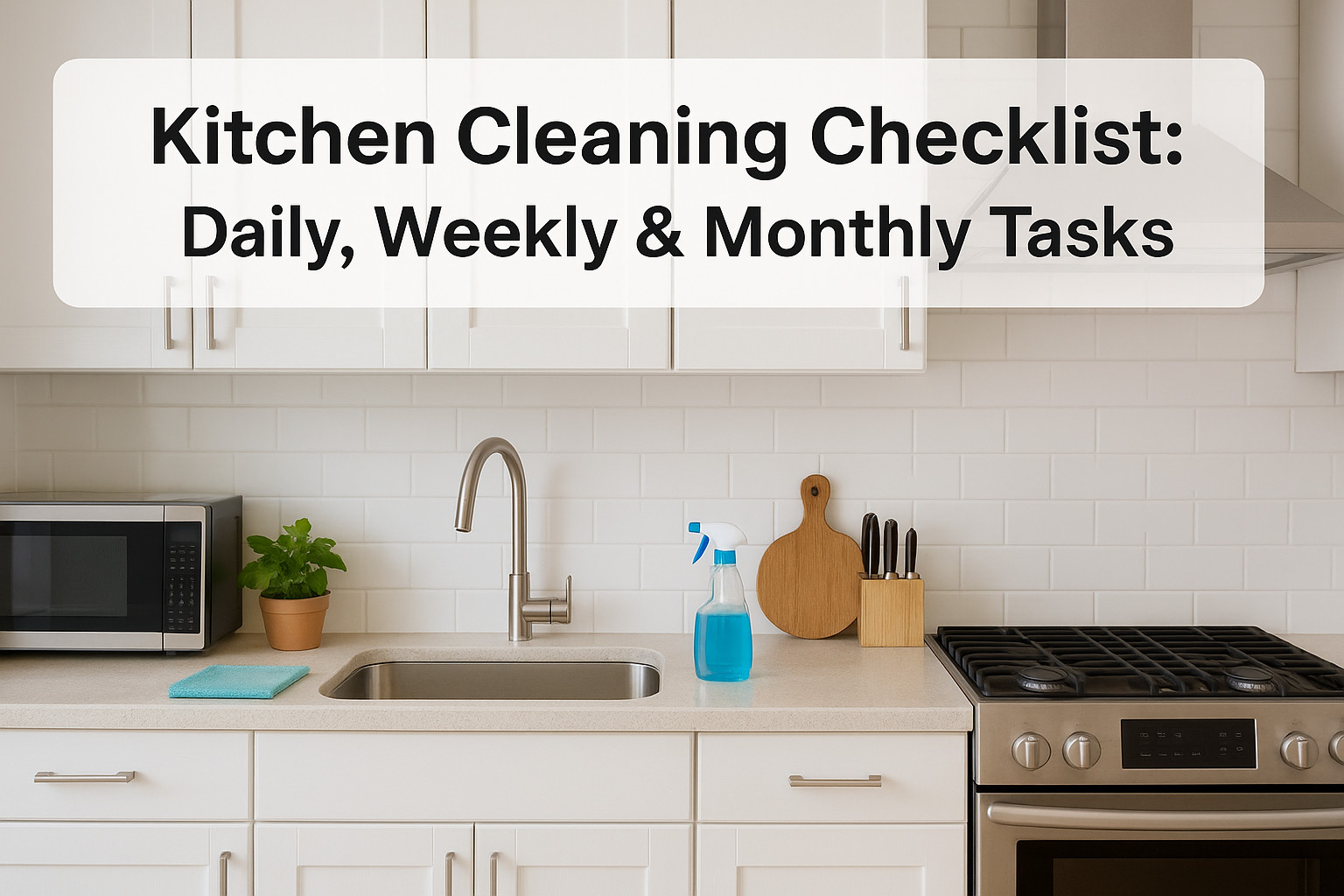
A clean kitchen doesn’t happen by accident, it happens with a system. Without one, grease builds up on the stovetop, crumbs collect in corners, and that mystery smell in the fridge just keeps getting worse. A solid kitchen cleaning checklist breaks the work into manageable steps so nothing gets overlooked, and your kitchen stays a space you actually want to cook in.
The trick is knowing what to clean and how often. Some tasks need daily attention. Others only matter once a month. When you organize your cleaning by frequency, the whole process becomes less overwhelming and far more effective, whether you’re maintaining your own home or managing a commercial kitchen that needs to meet higher standards.
At AlphaLux Cleaning, we help homeowners and businesses across New York keep their spaces spotless through professional, detail-oriented cleaning services. We built this checklist from real experience, the same approach our trained team uses when deep cleaning kitchens throughout Long Island and beyond. Below, you’ll find a complete breakdown of daily, weekly, and monthly tasks to keep your kitchen fresh, sanitary, and ready for whatever you’re serving up next.
1. Hire AlphaLux Cleaning for a kitchen deep clean
Before you work through your personal kitchen cleaning checklist, it helps to start from a clean baseline. AlphaLux Cleaning provides professional kitchen deep cleans for homeowners and businesses across New York, so you can take over with a maintenance routine instead of trying to tackle years of buildup on your own.
What it covers
A deep clean from AlphaLux goes far beyond wiping down surfaces. Our trained team scrubs inside appliances like ovens, microwaves, and refrigerators, degreases range hoods and stovetops, cleans behind and underneath heavy equipment, and tackles grout lines, cabinet faces, and baseboards that most people skip entirely.
A professional deep clean removes the built-up grease, grime, and bacteria that regular wiping simply cannot reach.
Here is a quick look at what a kitchen deep clean from AlphaLux typically includes:
- Oven interior cleaning, including racks, walls, and door glass
- Refrigerator interior wipe-down and deodorizing
- Range hood and filter degreasing
- Cabinet exterior scrubbing
- Sink and faucet sanitizing
- Floor cleaning, including corners and edges
- Countertop and backsplash disinfecting
When it matters most
Certain situations call for a professional deep clean rather than a standard wipe-down. If you are moving into a new home, preparing a rental for new tenants, recovering from a kitchen renovation, or simply realizing your kitchen has not had a thorough clean in months, a professional service is the right move.
Businesses running commercial kitchens or office break rooms should schedule professional cleaning regularly to maintain sanitation standards and keep staff and clients comfortable. A single visit can also give you a proper reset before you start maintaining the space yourself.
Helpful tips
When you book with AlphaLux, clear your countertops and empty your fridge before the team arrives. This allows the cleaners to reach every surface without wasting time moving items around.
You should also flag any specific problem areas upfront, whether that is a burnt oven bottom, a greasy range hood, or a fridge with a persistent odor. The more detail you provide ahead of the appointment, the more thorough and targeted the results will be.
2. Set up your kitchen cleaning routine
A cleaning routine only works when it fits your real life. Before you commit to any schedule, think about how often your kitchen gets used, how many people cook in it, and how much time you can realistically set aside each day. Building a routine around your actual habits is what makes it stick long-term.
What it covers
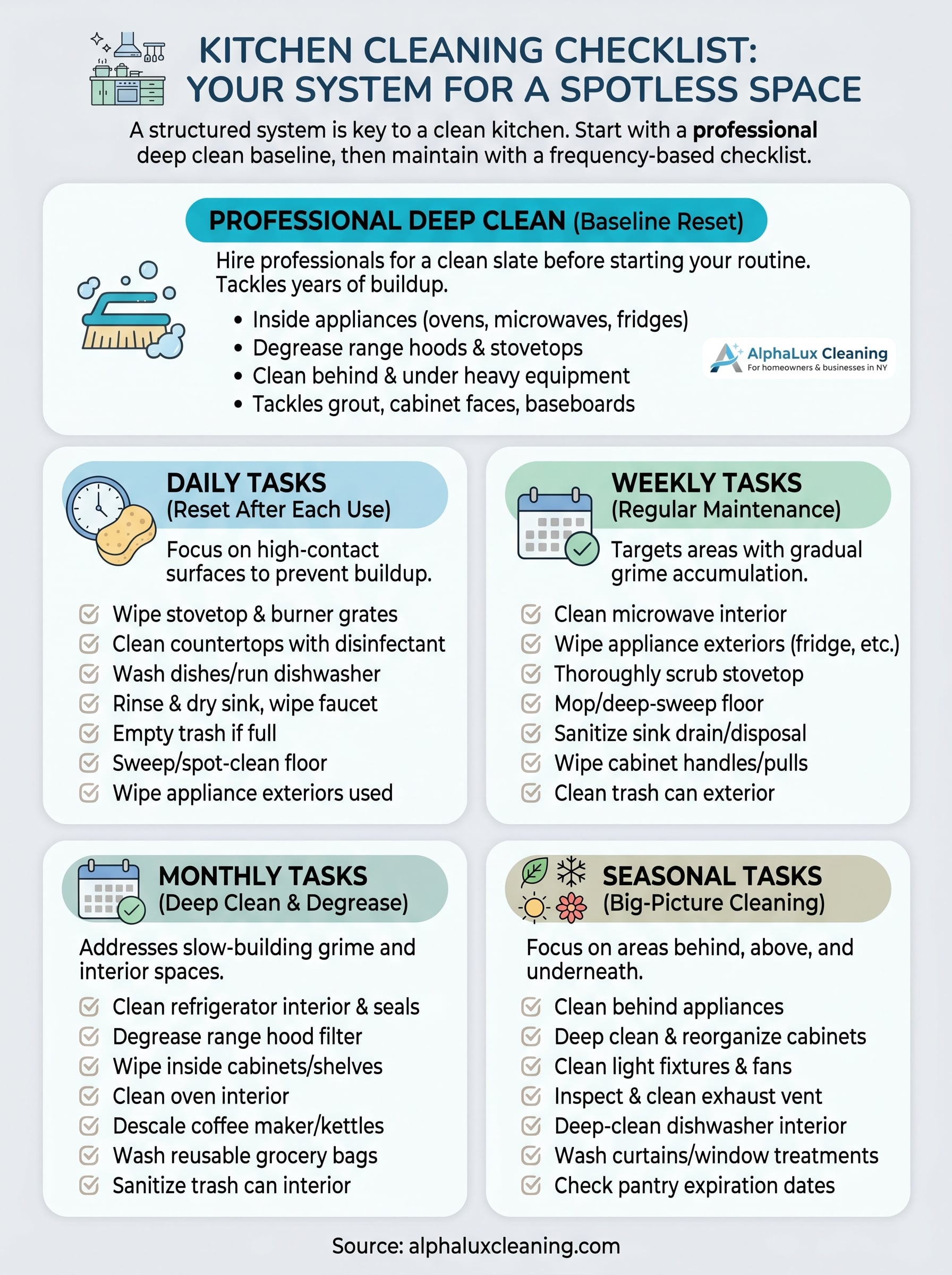
Setting up your routine means deciding which tasks belong to which frequency tier. Your kitchen cleaning checklist works best when divided into daily, weekly, monthly, and seasonal layers, each matched to how much attention those areas actually need. Here is a simple way to think about it:
- Daily: high-contact surfaces like stovetops, sinks, and countertops
- Weekly: appliance exteriors, floors, and the inside of the microwave
- Monthly: refrigerator interiors, cabinet faces, and range hood filters
- Seasonal: deep cleaning behind appliances, inside cabinets, and overlooked fixtures
When it matters most
Your routine matters most when life gets busy and consistency becomes harder to maintain. Picking a specific time for daily tasks, like right after dinner, removes the decision fatigue that causes skipped cleaning. Writing your schedule down and posting it somewhere visible makes it far more likely you will follow through.
A routine built around your real habits will always outperform a perfect one you never follow.
Helpful tips
Start with two or three non-negotiable daily tasks before adding anything else. Once those feel automatic, layering in weekly and monthly tasks becomes much easier. A simple checklist format lets you track what gets done and catch gaps before they turn into bigger cleaning problems down the line.
3. Daily kitchen cleaning checklist
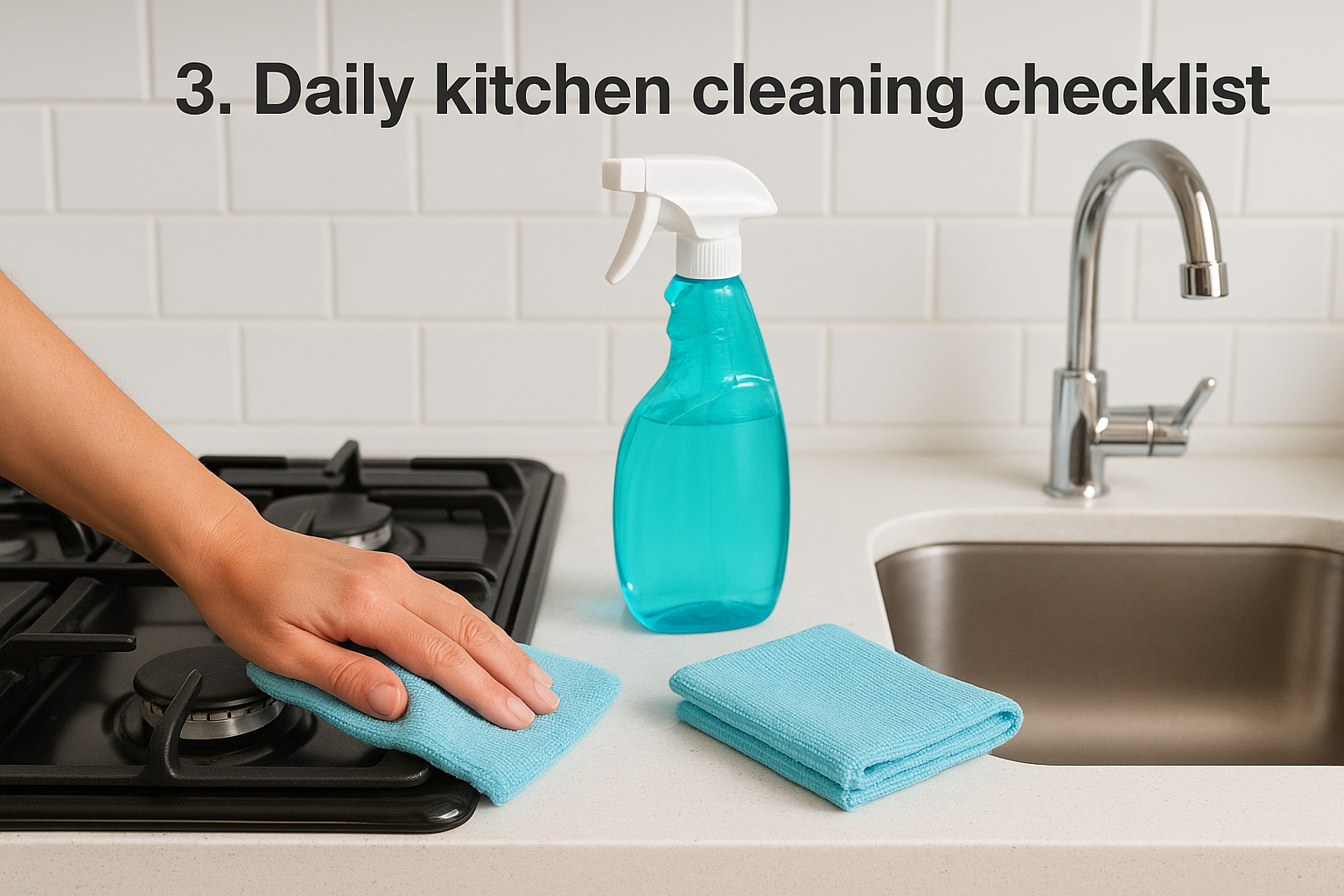
Your daily tasks are the backbone of any kitchen cleaning checklist. They take less than ten minutes when done consistently, but skipping even a few days allows grease, bacteria, and odors to build up fast. The goal with daily cleaning is to reset your kitchen after each use so it never reaches a point where a quick wipe-down is no longer enough.
What it covers
Daily kitchen cleaning focuses on the high-contact surfaces and items that collect grime with every meal. These are the areas that affect both hygiene and how your kitchen feels to cook in the next day.
- Wipe down stovetop and burner grates after cooking
- Clean countertops with a food-safe disinfectant
- Wash dishes or run the dishwasher
- Rinse and dry the sink, then wipe the faucet
- Empty the trash if it is full or smells
- Sweep or spot-clean the floor around the stove and prep areas
- Wipe down the exterior of appliances you touched during cooking
When it matters most
Daily cleaning matters most on the days you cook the most, especially after meals involving oil, raw meat, or anything that splatters. Doing these tasks right after cooking while surfaces are still warm makes the work faster and prevents residue from hardening overnight.
A ten-minute daily reset is far easier than a two-hour scrub session you put off for a week.
Helpful tips
Keep a spray bottle and a few clean microfiber cloths within arm’s reach of your prep area so there is no friction between finishing a meal and wiping things down. Setting a specific trigger, like cleaning up immediately after dinner, removes the need to decide when to do it each day.
4. Weekly kitchen cleaning checklist
Weekly tasks fill the gap between your daily resets and your deeper monthly work. While daily cleaning handles surfaces you touch every single day, weekly cleaning targets the areas that accumulate grime more gradually but still need regular attention to stay manageable. Skipping weekly tasks is usually where kitchens start to look and smell noticeably neglected.
What it covers
Your weekly kitchen cleaning checklist should include every area that gets indirect exposure to cooking grease, food particles, and moisture throughout the week. These spots do not need daily attention, but they do need a reliable weekly pass to stay clean.
- Clean the inside of the microwave
- Wipe down all appliance exteriors, including the refrigerator, dishwasher, and toaster
- Scrub the stovetop more thoroughly, including burner bases
- Mop or deep-sweep the full kitchen floor
- Sanitize the sink drain and garbage disposal
- Wipe cabinet handles and drawer pulls
- Check and wipe down the trash can exterior
When it matters most
Weekly cleaning matters most if your kitchen sees heavy daily cooking or multiple people using it throughout the week. Households that cook frequently will find that grease and food residue accumulate faster, making the weekly pass essential rather than optional.
Staying consistent with weekly cleaning prevents the kind of buildup that eventually requires hours of scrubbing to undo.
Helpful tips
Pick one consistent day each week for these tasks and treat it as a fixed appointment. Grouping your weekly cleaning with another regular habit, like Saturday morning coffee, makes it far easier to follow through without relying on motivation alone.
5. Monthly kitchen cleaning checklist
Monthly tasks handle the slow-building grime that daily and weekly cleaning never fully reaches. These are the areas where grease and residue accumulate quietly over time until they become a much bigger job. Your monthly kitchen cleaning checklist gives you a reliable moment each month to address these spots before they get out of hand.
What it covers
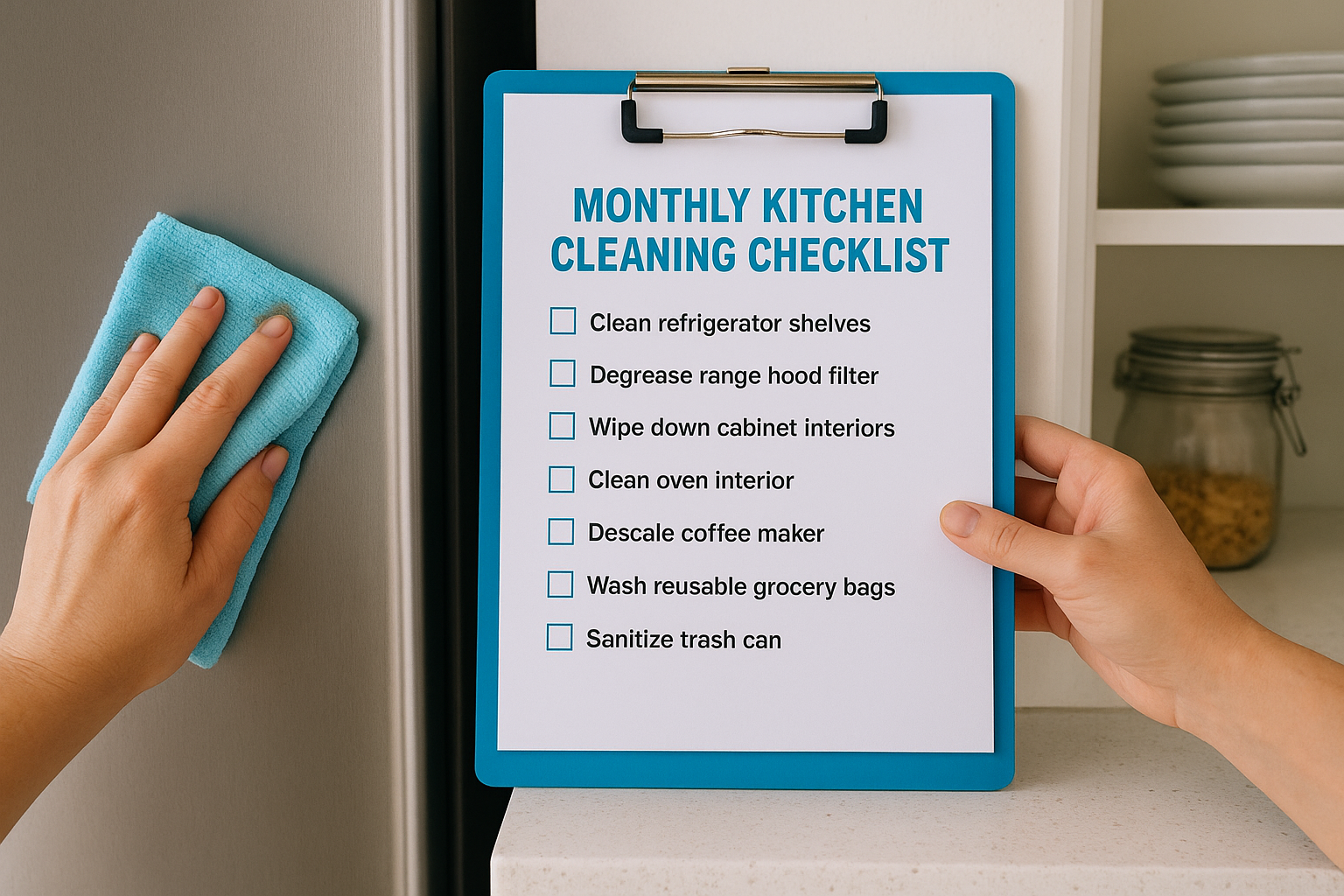
These tasks target the interior spaces and fixtures that do not need weekly attention but will deteriorate noticeably if you leave them for several months. Setting aside an hour once a month keeps your kitchen in genuinely good shape year-round.
- Clean the refrigerator interior, including shelves, drawers, and door seals
- Degrease the range hood filter or replace it if needed
- Wipe down the inside of cabinets and pantry shelves
- Clean the oven interior thoroughly
- Descale the coffee maker and any kettles
- Wash reusable grocery bags stored in the kitchen
- Sanitize the trash can interior
When it matters most
Monthly cleaning matters most in kitchens that see consistent daily cooking, where grease and odors accumulate faster. Skipping even two or three months on tasks like refrigerator seals or range hood filters means you are dealing with buildup that takes significantly longer to remove.
Scheduling your monthly cleaning on the first weekend of each month turns it into a habit rather than a chore you keep pushing back.
Helpful tips
Use a printed checklist posted inside a cabinet door to track which monthly tasks you have completed and which ones still need attention.
Breaking the work into two short sessions, appliances one day and storage areas another, makes the total effort far more manageable than doing everything at once.
6. Seasonal kitchen cleaning checklist
Seasonal cleaning handles the big-picture tasks that fall outside any monthly routine. These are the jobs you only need to tackle two to four times per year, but they have a significant impact on how your kitchen functions, smells, and holds up over time. Adding a seasonal layer to your kitchen cleaning checklist ensures the areas that are truly easy to forget get the attention they need.
What it covers
Seasonal cleaning targets the spaces behind, underneath, and above your everyday reach. These spots accumulate dust, grease, and debris slowly enough that you rarely notice, until you finally get back there and see the buildup for yourself.
- Pull out and clean behind the refrigerator, stove, and dishwasher
- Wipe down the inside of all cabinets and reorganize as needed
- Clean light fixtures and ceiling fan blades above the cooking area
- Inspect and clean the exhaust vent and ductwork above the range
- Descale and deep-clean the dishwasher interior
- Wash curtains or window treatments near the cooking area
- Check expiration dates on pantry staples and clear out expired items
When it matters most
Seasonal cleaning matters most when you are transitioning between cooking patterns, such as moving into heavier cooking months in fall and winter, or opening windows more often in spring. These natural shifts are a good prompt to reset the areas that your weekly and monthly routine never fully reaches.
Tying your seasonal clean to a calendar event, like the start of a new season, removes the guesswork of when to schedule it.
Helpful tips
Set a phone reminder at the start of each season so the task does not get buried under daily life. Tackling seasonal cleaning over a full weekend morning, rather than squeezing it into an hour, gives you enough time to move appliances, sort through storage, and do the job properly without rushing.
7. Deep-clean targets people forget
Even a well-maintained kitchen cleaning checklist leaves certain spots untouched. These are the areas that do not collect visible grime quickly, so they rarely make it onto any routine. Over time, however, they become some of the dirtiest and most bacteria-prone surfaces in your entire kitchen without ever looking obviously dirty.
What it covers
Several common spots get skipped in almost every cleaning routine, and most people do not realize how much buildup accumulates there. Addressing these targets occasionally makes a real difference in both hygiene and kitchen performance.
- Refrigerator door seals and gaskets, where mold grows in the folds
- The underside of the range hood, which collects grease that drips down
- Inside cabinet hinges and corners where crumbs and grease settle
- The area around the faucet base, which traps mineral deposits and grime
- Cutting board surfaces, especially if they have deep knife grooves
- Knife block slots, which collect debris and moisture over time
- The back wall behind the stove, often coated in splattered grease
When it matters most
These forgotten spots matter most when you notice unexplained odors or recurring grime appearing even after a full cleaning session. If your kitchen still does not feel truly clean after your routine, these overlooked areas are almost always the reason.
Cleaning what you can see keeps a kitchen looking fine. Cleaning what you overlook is what keeps it genuinely sanitary.
Helpful tips
Work through this list once every season as part of your deeper cleaning pass. Taking photos before and after each spot helps you track how quickly buildup returns and adjust your schedule accordingly.
Next steps for a cleaner kitchen
A complete kitchen cleaning checklist gives you the structure to stay on top of every area, from your daily stovetop wipe-down to the seasonal deep clean behind the refrigerator. Staying consistent is what separates a kitchen that looks clean from one that genuinely is, and now you have a clear, frequency-based framework to build that habit into your routine.
Start small if the full schedule feels like a lot at once. Pick two or three non-negotiable daily tasks first and get those locked in before adding anything else. Once they feel automatic, layering in weekly and monthly tasks becomes far more manageable, and your kitchen stays on top of things instead of falling behind.
If your kitchen needs a proper reset before you take over maintenance, AlphaLux Cleaning handles professional deep cleans for homeowners and businesses across New York. Our trained, insured team gives you a genuinely clean baseline to work from.