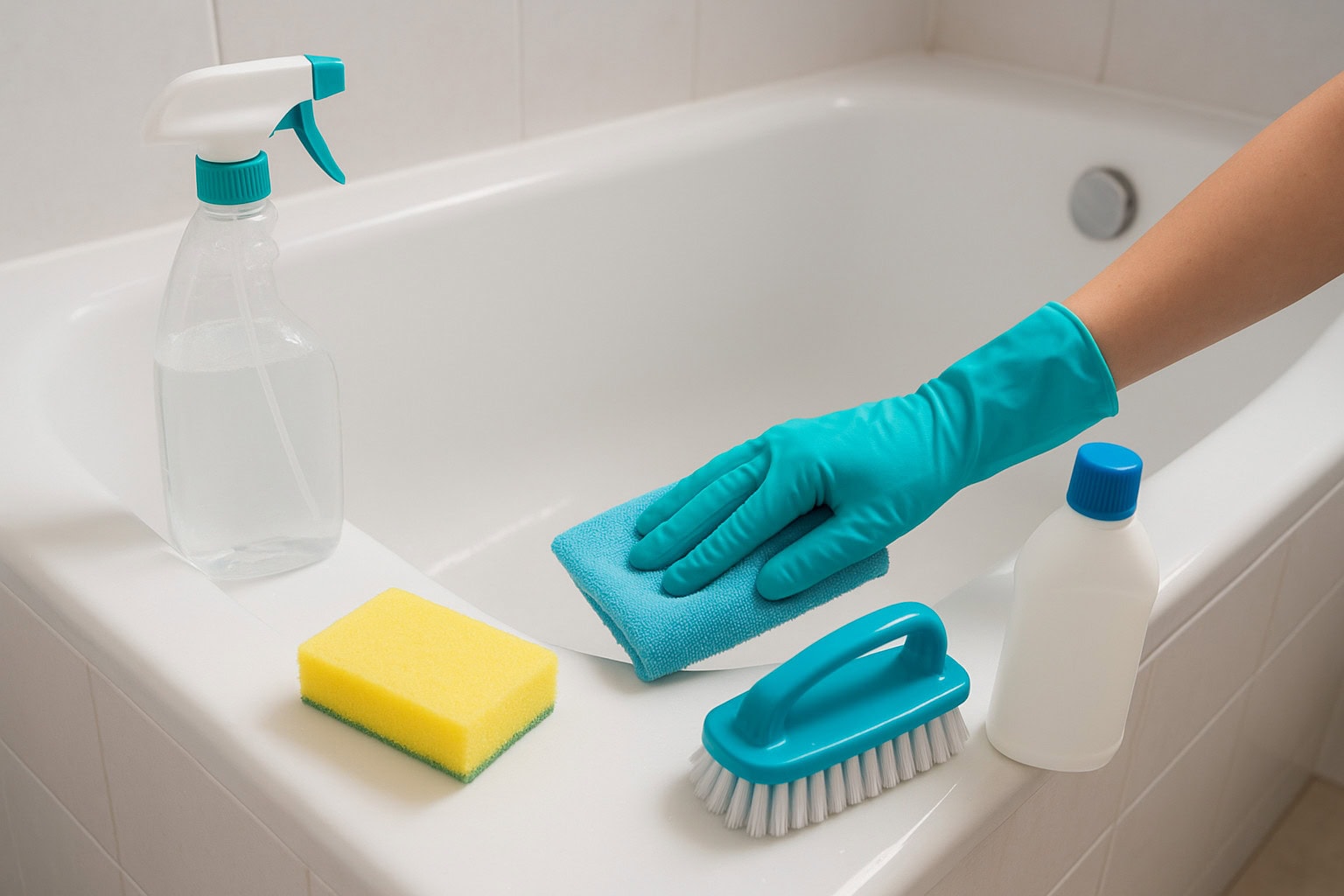
A grimy bathtub doesn’t just look bad, it can harbor bacteria, mold, and stubborn buildup that gets harder to remove the longer you wait. Whether you’re dealing with soap scum, hard water stains, or discoloration, knowing how to clean a bathtub the right way saves you time and keeps your bathroom looking its best.
The trick is matching your cleaning method to the type of tub you have. Porcelain, acrylic, and fiberglass all respond differently to certain products and techniques. Use the wrong approach, and you risk scratching the surface or wasting effort on something that won’t work. At AlphaLux Cleaning, we handle bathtubs across New York homes every day, so we know exactly what cuts through grime and what methods actually deliver results.
This guide breaks down everything from quick daily maintenance to deep-clean techniques for the toughest stains, including both DIY natural solutions and commercial products worth your money.
What to know before you start
Before you figure out how to clean a bathtub properly, you need to know two things: what your tub is made of and what tools you have on hand. Using the wrong cleaner on the wrong surface is the most common reason people scratch finishes or end up with dull, damaged tubs. A few minutes of prep work here saves you real frustration down the line.
Know your tub material
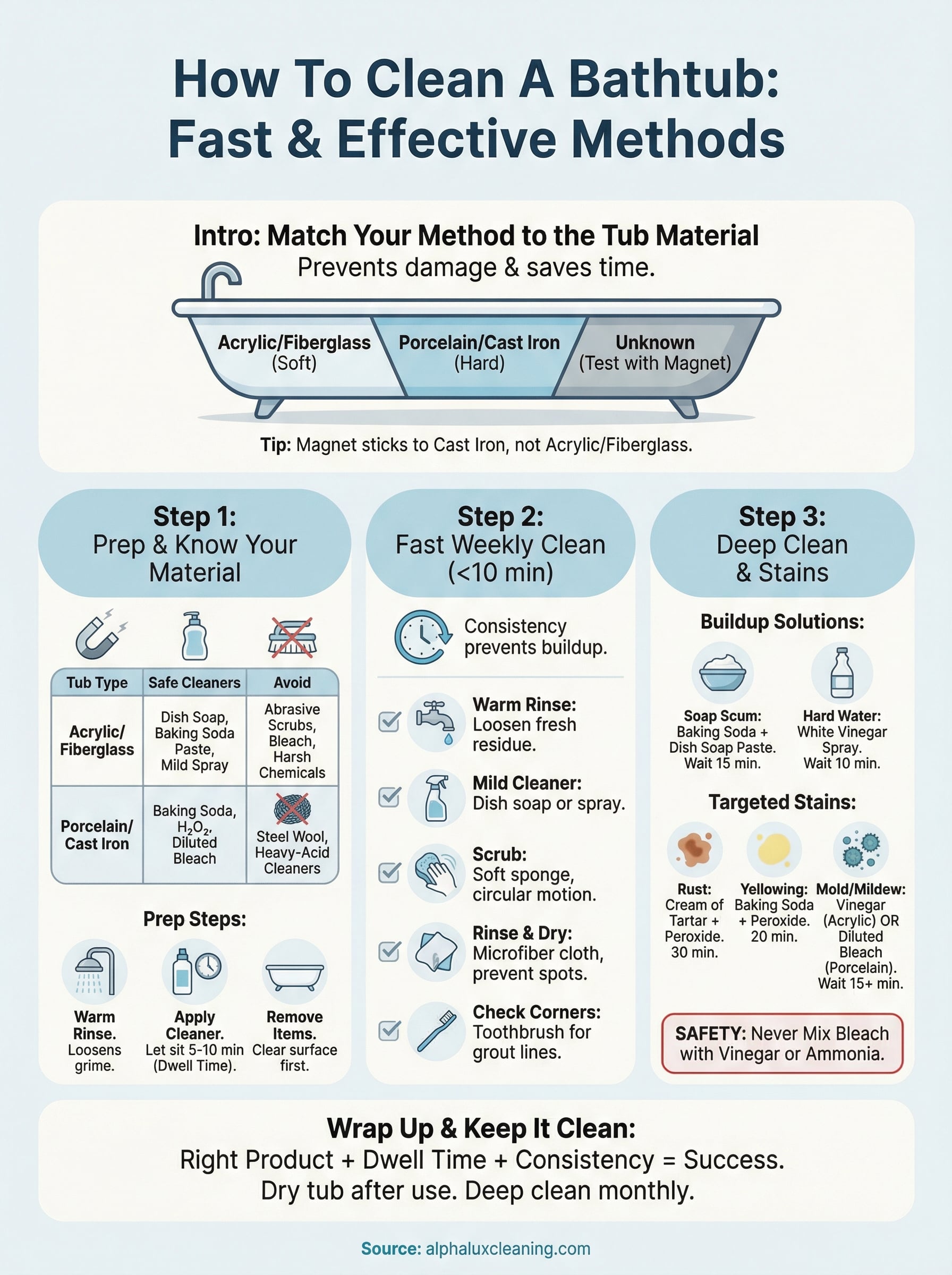
Your tub material determines which cleaners are safe and which ones will cause damage. Acrylic and fiberglass tubs are lightweight and common in modern bathrooms, but they scratch easily and cannot handle abrasive scrubbers or harsh chemical cleaners. Porcelain and cast iron tubs are more durable, but they can chip if you use anything too aggressive on the surface.
If you’re unsure what your tub is made of, hold a magnet to the side. Cast iron will attract it; acrylic and fiberglass won’t.
| Tub Type | Safe Cleaners | Avoid |
|---|---|---|
| Acrylic | Dish soap, baking soda paste, mild spray | Abrasive scrubs, bleach |
| Fiberglass | Mild soap, white vinegar solution | Scouring pads, ammonia |
| Porcelain | Baking soda, hydrogen peroxide, diluted bleach | Steel wool |
| Cast Iron | Mild dish soap, baking soda | Heavy-duty acid cleaners |
Gather the right tools
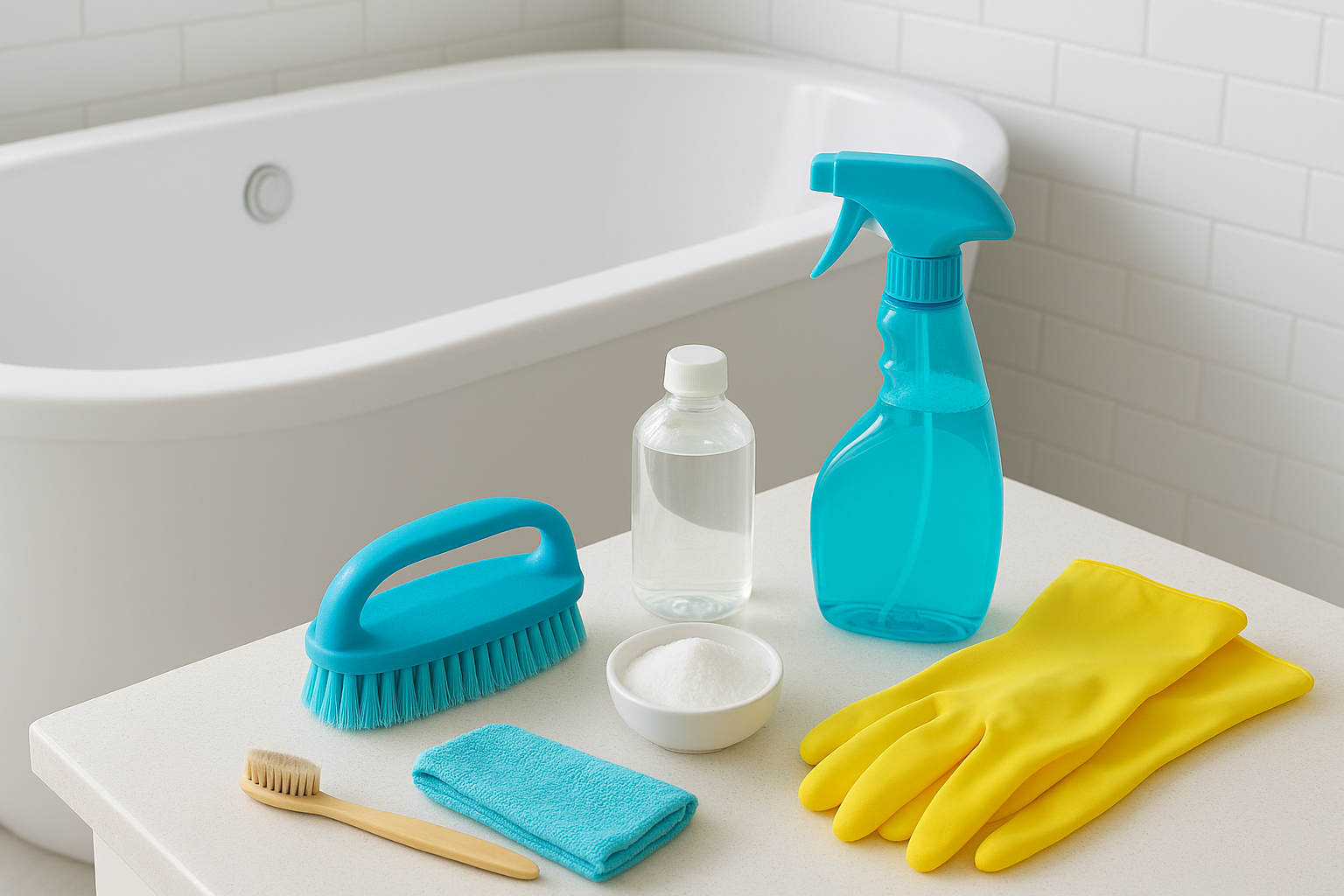
Having the right supplies ready before you start makes the whole process faster and more effective. You don’t need anything specialized; a non-scratch scrub brush, microfiber cloths, and a spray bottle handle most situations well.
- Non-scratch scrub brush or soft sponge
- Microfiber cloths or old cotton rags
- Spray bottle for DIY solutions
- Old toothbrush for grout lines and corners
- Rubber gloves to protect your hands
Step 1. Prep the tub and loosen grime
Starting with the right prep work is what separates a fast, effective clean from one that takes multiple rounds of scrubbing. Before you apply any cleaner, remove loose items from the tub (shampoo bottles, soap bars, loofahs) and rinse the surface with warm water. This wets the grime and makes it easier for your cleaner to penetrate right away.
Warm water loosens the top layer of soap scum before you even apply a product, which cuts your total scrubbing time significantly.
Apply your cleaner and let it sit
The biggest mistake people make when figuring out how to clean a bathtub is rinsing off the cleaner too soon. Whatever product you choose, spray or apply it across the entire surface and let it sit for at least 5 to 10 minutes. That dwell time is what actually does the heavy lifting; it breaks down soap scum and loosens grime so you’re not scrubbing from scratch.
Follow this application order for the best coverage:
- Spray from the top edges and work downward
- Focus on the waterline, corners, and drain area where buildup collects most
- Set a timer so you don’t rinse before the cleaner has done its job
Step 2. Do a fast weekly clean
A weekly cleaning routine takes less than 10 minutes and prevents the heavy buildup that makes deep cleaning necessary more often. If you stay consistent, you won’t need to figure out how to clean a bathtub from scratch every time; a light pass each week keeps grime from bonding to the surface.
Cleaning your tub weekly cuts your deep-cleaning time in half because soap scum never gets the chance to harden.
Your weekly cleaning checklist
Stick to simple, fast steps that you can complete without breaking out heavy-duty products. A mild dish soap or an everyday bathroom spray is all you need for a routine pass. Run through this checklist every week to keep your tub looking clean between deeper sessions.
- Rinse the tub with warm water to loosen any fresh residue
- Apply a small amount of dish soap or mild bathroom cleaner across the surface
- Scrub with a soft sponge in circular motions, focusing on the waterline and drain
- Rinse thoroughly and wipe down with a dry microfiber cloth to prevent water spots
- Check the grout lines and corners with a quick swipe of an old toothbrush
Step 3. Deep clean soap scum and hard water
When weekly scrubbing isn’t cutting it, soap scum and hard water deposits need a targeted approach. These buildups bond to the surface over time, and you’ll need solutions that break down mineral deposits while cutting through layers of residue without damaging the finish. Knowing how to clean a bathtub at this level is mostly about dwell time and the right product pairing.
A baking soda and white vinegar combination dissolves both soap scum and hard water stains without scratching your tub’s surface.
Use the right solution for the buildup
For soap scum, mix baking soda with a small amount of dish soap to form a paste. Apply it directly to the affected areas, let it sit for 15 minutes, then scrub with a soft brush in circular motions. For hard water rings, white vinegar works best. Spray it undiluted on the stain, wait 10 minutes, and scrub firmly before rinsing.
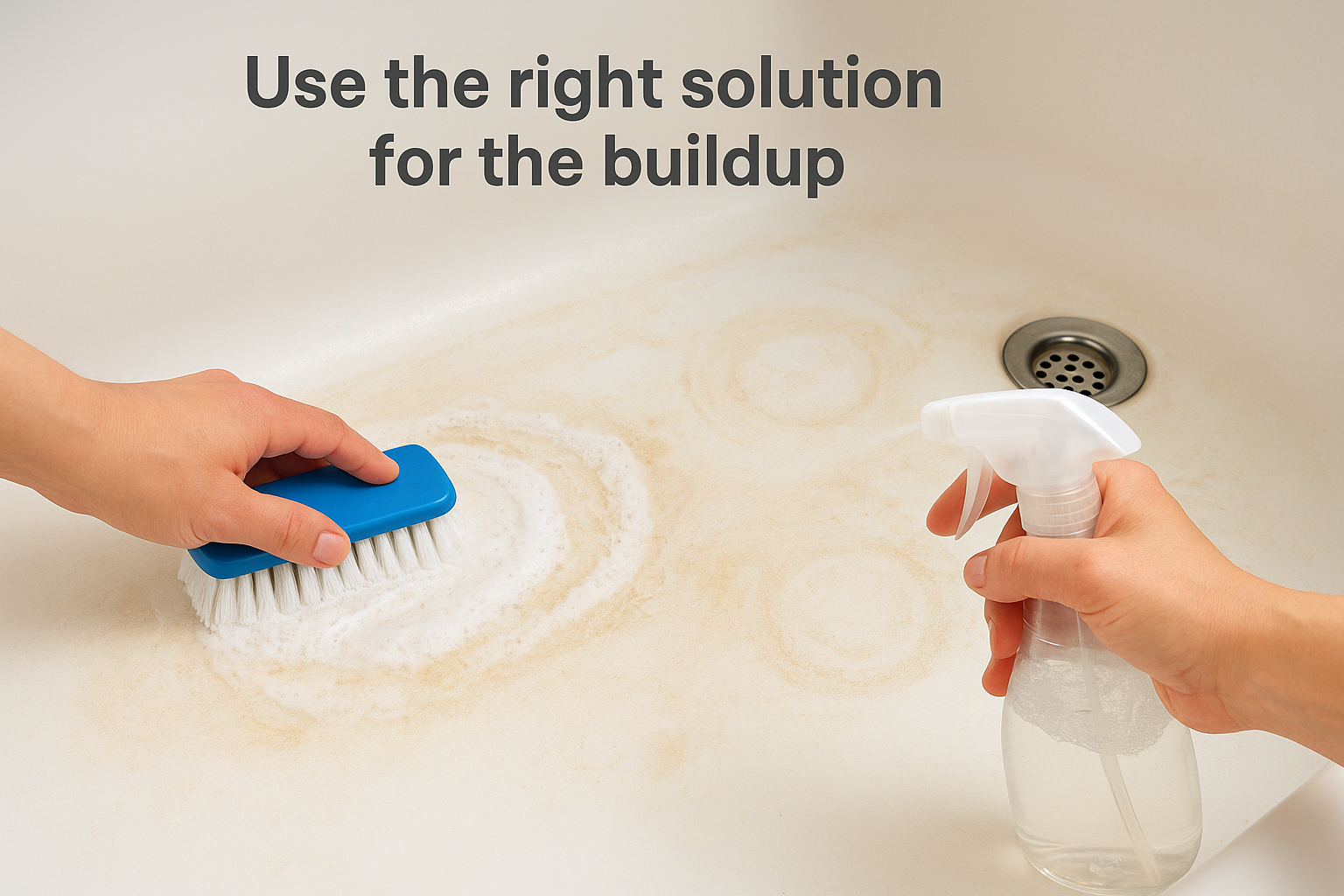
- Baking soda paste: mix with dish soap, apply to scum, wait 15 minutes
- White vinegar spray: apply undiluted directly on hard water rings, wait 10 minutes
- Combo method: apply baking soda paste first, then spray vinegar on top and let it fizz before scrubbing
Step 4. Remove stains, mold, and mildew safely
Stains, mold, and mildew need different treatment than everyday soap scum. Using the wrong product can set a stain deeper or spread mildew spores across your tub. This part of knowing how to clean a bathtub thoroughly is about targeting the right problem with the right solution while keeping your surface intact.
Never mix bleach with vinegar or ammonia; the fumes are harmful and the combination performs no better than either product used alone.
Tackle stains by type
Rust stains respond well to a paste made from cream of tartar and hydrogen peroxide. Apply it directly to the affected spot, let it sit for 30 minutes, then scrub and rinse. Yellow discoloration from hard water or aging often lifts with a hydrogen peroxide and baking soda paste left on your surface for 20 minutes before scrubbing off.
Remove mold and mildew
Mold and mildew grow in corners and along grout lines where moisture collects. For acrylic and fiberglass tubs, spray undiluted white vinegar on the affected areas, wait 15 minutes, and scrub with an old toothbrush. For porcelain, a diluted bleach solution (1 part bleach to 10 parts water) clears it faster.
- Apply vinegar or diluted bleach directly on visible mold spots
- Wait at least 15 minutes before scrubbing
- Rinse thoroughly and dry the area with a cloth to prevent regrowth
Wrap up and keep it clean
Knowing how to clean a bathtub comes down to three things: using the right product for your tub material, giving cleaners enough dwell time to work, and staying consistent with a weekly routine. Each step in this guide builds on the last, so whether you’re doing a quick weekly pass or tackling mold and hard water stains, you have a clear method to follow without guessing.
Staying on top of your tub prevents the kind of buildup that turns a 10-minute job into an hour of scrubbing. Dry your tub after each use, keep a spray bottle of white vinegar nearby for quick spot treatments, and deep clean once a month to stay ahead of soap scum and stubborn mineral deposits.
If your bathroom needs more attention than a DIY clean can handle, AlphaLux Cleaning offers professional residential cleaning services across New York to get every surface thoroughly spotless.