When you’re hiring someone who will enter homes or offices, the question of how long do employee background checks take isn’t just administrative, it’s personal. At AlphaLux Cleaning, we run background checks on every team member before they ever step foot in a client’s space. It’s a non-negotiable part of how we build trust. So we’ve been through this process hundreds of times, and we know exactly where delays happen and why.
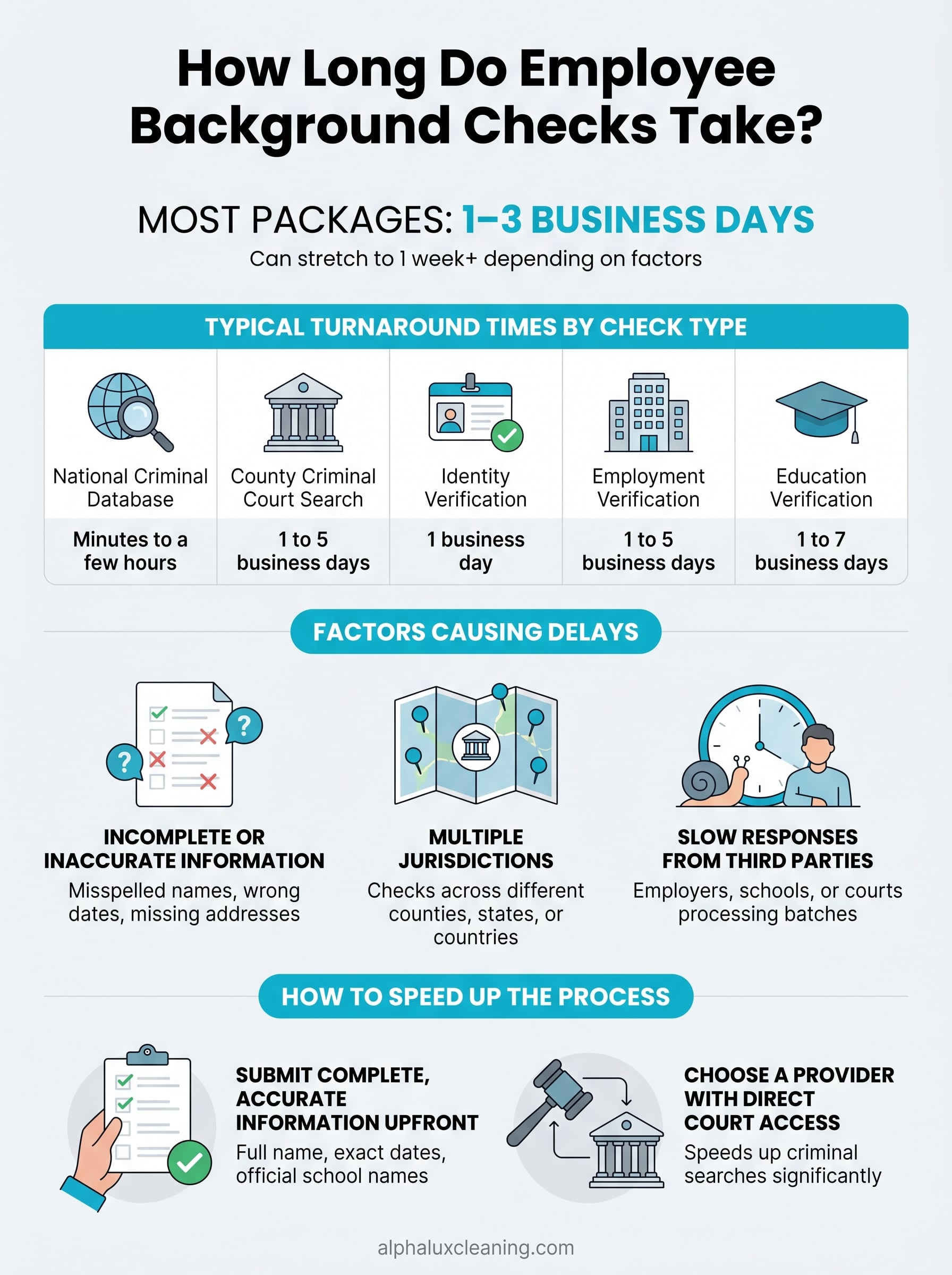
The short answer? Most pre-employment background checks wrap up in one to three business days. But that timeline can stretch to a week or more depending on the type of check, the jurisdictions involved, and whether anything gets flagged along the way. County court searches, employment verifications, and education confirmations each move at their own pace.
This article breaks down realistic timelines for different types of background checks, explains what causes delays, and offers practical steps to keep the process moving. Whether you’re a business owner screening new hires or a candidate wondering why things are taking so long, you’ll walk away with a clear picture of what to expect and why.
Why background check timelines vary
When you ask how long do employee background checks take, the honest answer is: it depends. No two checks move at the same speed because they pull information from different sources, and each source runs on its own schedule. The type of check you order, where the candidate has lived and worked, the accuracy of the details they submitted, and how quickly third parties respond all feed into the final turnaround time. Understanding these variables is what separates realistic hiring timelines from frustrating surprises.
The type of check being run
Different checks tap different databases, and those databases don’t all update at the same pace. A national criminal database search can return results in minutes because it pulls from a centralized, digital index. County-level court searches work differently. They require a researcher to access local court records directly, and some counties still rely on paper-based filing systems that take several business days to process a single request.
County court searches are often the single biggest bottleneck in any background check, especially when a candidate has lived in multiple counties over the years.
Here’s a general breakdown of how check types differ in speed:
- National database search: Minutes to a few hours
- County criminal court search: 1 to 5 business days
- Federal court search: 1 to 3 business days
- Employment verification: 1 to 5 business days
- Education verification: 1 to 7 business days
The jurisdictions involved
Every county, state, and country operates under its own rules for how records are stored, accessed, and released. If your candidate has lived or worked across multiple states, your screening provider needs to run separate checks in each relevant jurisdiction. Some states maintain fast, digitized court systems. Others require a court runner to visit a physical courthouse, which adds real time to the process.
Foreign work history adds another layer. International background checks depend on what each government allows third parties to access, and some countries restrict criminal record disclosures entirely. For any role that involves entering private homes or offices, knowing these jurisdictional differences upfront helps you plan your hiring timeline without unnecessary stress.
Typical turnaround times by check type
Knowing how long do employee background checks take for each specific check type helps you set realistic expectations from day one. The range across check types is wide, running from a few hours to over a week, so understanding where your screening package falls on that spectrum lets you plan your hiring timeline without guessing.
Criminal background checks
Criminal checks form the core of most screening packages, and their speed depends heavily on the source being searched. A national criminal database search typically returns results within minutes to a few hours since it pulls from a large, digitized index. County court searches routinely take one to five business days because they require direct access to local court records, sometimes through an in-person visit to the courthouse.
If your candidate has lived in multiple counties, each one adds its own turnaround window to the overall process.
Identity, employment, and education checks
Identity verification through government databases like the Social Security Administration typically wraps up within one business day. Employment verification takes longer because it depends on a former employer’s HR team actually responding to the inquiry. Expect one to five business days for employment history and one to seven for education verification, since institutions vary widely in how quickly they confirm records.
Here’s a quick reference for the most common check types:
| Check Type | Typical Turnaround |
|---|---|
| National criminal database | Minutes to a few hours |
| County criminal court search | 1 to 5 business days |
| Identity verification | 1 business day |
| Employment verification | 1 to 5 business days |
| Education verification | 1 to 7 business days |
What delays background checks most often
Understanding how long do employee background checks take is only half the picture. Knowing what slows the process down lets you get ahead of problems before they push your hiring timeline out by days.
Incomplete or inaccurate candidate information
Errors in the information your candidate submits are the most preventable source of delays. If a name is misspelled, a date of birth is wrong, or a previous address is missing, the screening provider has to pause and request corrections before they can run the check. That back-and-forth adds days.
A single transposed digit in a Social Security number can hold up an entire screening package until the candidate corrects it.
The most common data errors that slow checks down include:
- Incorrect or missing previous addresses
- Name discrepancies between legal documents and submitted forms
- Wrong dates of employment or graduation
- Missing middle names or suffixes that courts need to match records accurately
Slow responses from third parties
Former employers and educational institutions are under no obligation to respond quickly, and many HR departments process verification requests in batches once or twice a week. If your candidate worked at a company that has since closed, tracking down those employment records takes significantly longer since the process may involve contacting state labor boards or third-party record-keepers.
Court systems add a different kind of friction. Some county courthouses are short-staffed or working through backlogs, which delays record retrieval regardless of how fast your screening provider moves. International jurisdictions compound this problem further because some countries limit what outside parties can legally access.
How to speed up the process
When you’re trying to figure out how long do employee background checks take, the good news is that you have more control over the timeline than you might think. Most delays trace back to avoidable mistakes or process gaps on the hiring side, not the screening provider.
Submit complete, accurate information upfront
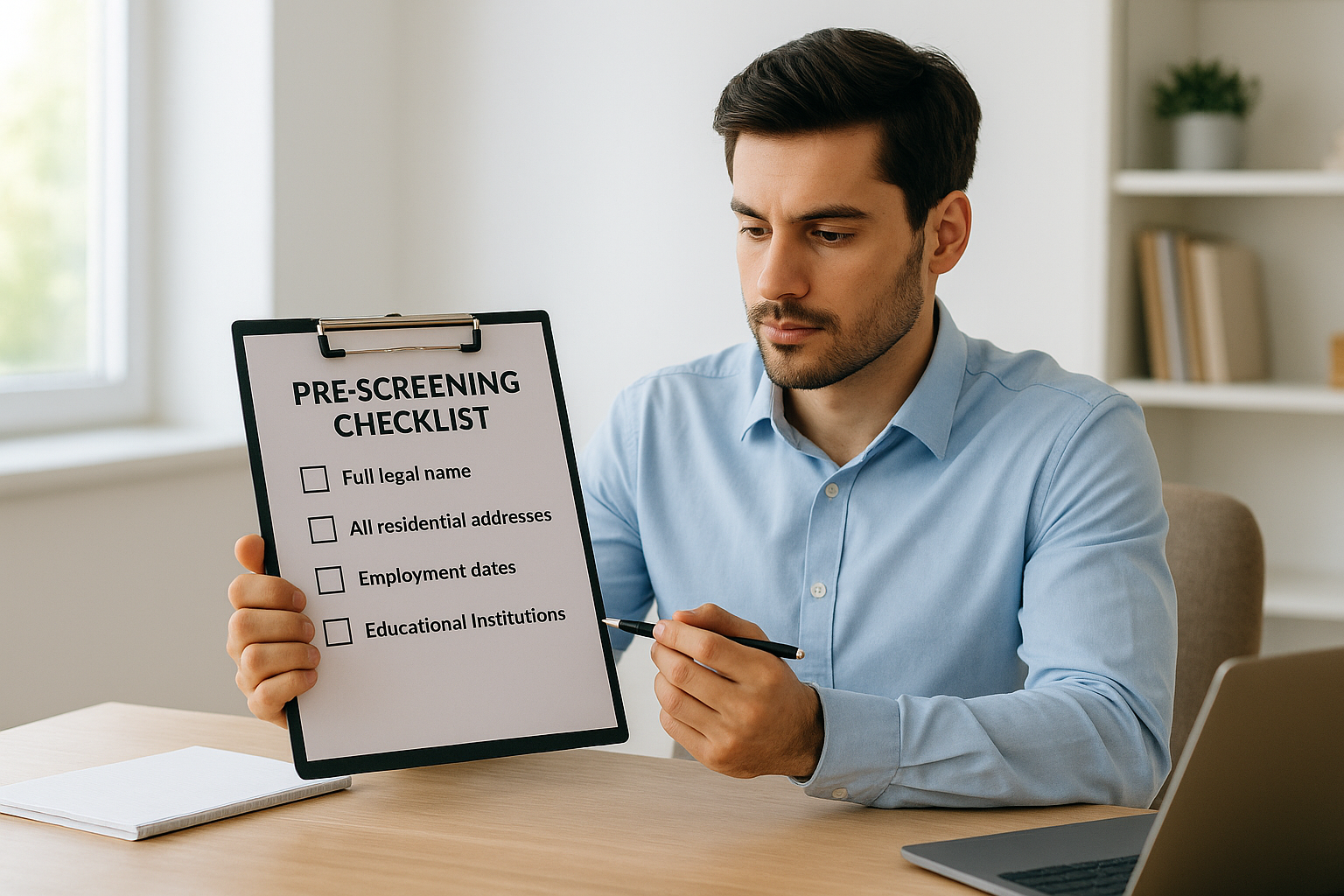
The single fastest thing you can do is send candidates a clear checklist before they fill out their screening forms. Ask for their full legal name, all previous addresses for the past seven years, exact dates of employment, and the official names of their schools. When candidates submit this information correctly on the first attempt, your provider can start running every check immediately without stopping to chase corrections.
Errors in candidate submissions are responsible for more delays than court backlogs or slow employer responses combined.
Here’s what to include in your pre-screening checklist:
- Full legal name including middle name and any suffixes
- All residential addresses for the past seven years
- Exact start and end dates for each employer
- Official institution names for any degrees being verified
Choose the right screening provider
Not all background check companies access court records the same way. Some rely on database aggregators that refresh records infrequently, while others send court runners directly to county courthouses for the most current data. Choosing a provider with direct court access speeds up criminal searches significantly, particularly for candidates with work history spread across multiple counties or states. Ask your provider upfront how they handle county-level searches before you commit to a package.
FAQs about background check timing
These are the questions hiring managers and candidates ask most often when a screening package is in progress. The answers are straightforward once you understand how the process works.
How long do employee background checks take on average?
Most standard packages finish in one to three business days when the candidate submits complete, accurate information. If your package includes county court searches across multiple jurisdictions or employment verification from past employers, the realistic range stretches to five to seven business days. Build that buffer into your hiring timeline rather than assuming the fast end of the range.
Can a background check take longer than two weeks?
Yes, and it’s more common than most employers expect. International checks, records from heavily backlogged county courts, and slow-responding educational institutions can all push timelines past the two-week mark. If your check is still pending after seven business days, contact your screening provider directly to find out which specific component is holding things up and whether any action on your end can help move it forward.
Two weeks is not a red flag on its own. It often just means one jurisdiction is slower than the rest.
Does a flagged result slow down the process?
When something surfaces in a criminal search, the process enters an additional review step called adverse action, which is regulated under the Fair Credit Reporting Act. Your provider must notify the candidate and allow time for a response before you make a final hiring decision. This adds several business days to the overall timeline, so factor it in if you’re hiring for a role that requires entering private spaces.
Final takeaways
So, how long do employee background checks take? For most standard packages, one to three business days is realistic, but county court searches, international records, and slow third-party responses can push that timeline to a week or more. The biggest lever you control is the quality of the information your candidate submits upfront.
When you hire someone who will work inside homes or offices, that timeline matters. Every delay in the screening process stalls your entire hiring schedule, and most of those delays are preventable. Submit complete and accurate candidate details, choose a provider with direct court access, and build a realistic buffer into your timeline rather than assuming everything will move at the fastest possible pace.
AlphaLux Cleaning runs background checks on every team member before they step inside a single client’s space. That commitment to verified, trusted professionals is what a higher standard of clean actually looks like in practice.