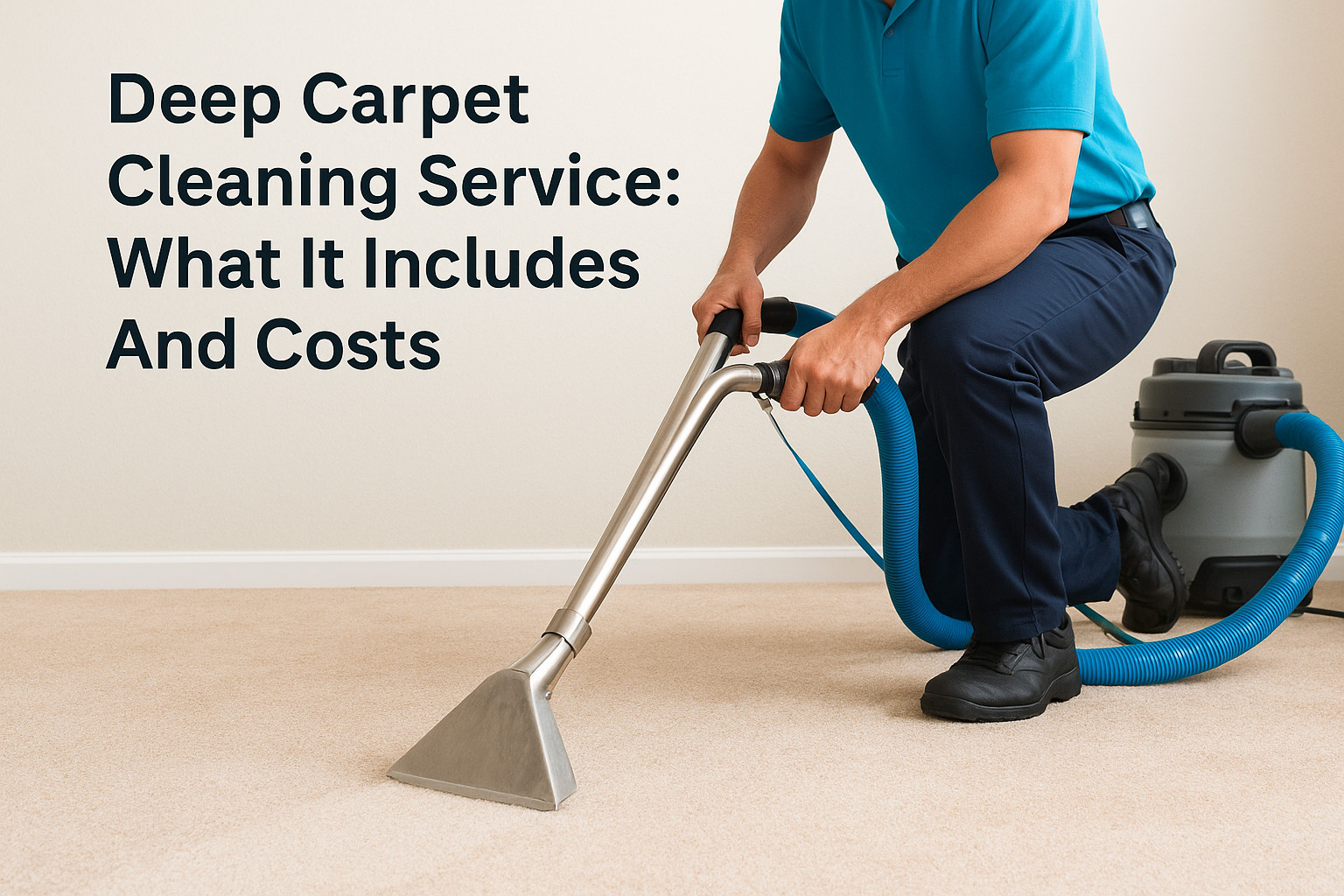
Your carpets look fine on the surface, but after a few years of foot traffic, spills, and pet dander, vacuuming alone stops cutting it. That’s where a deep carpet cleaning service comes in, reaching down into the fibers to pull out what a regular clean leaves behind. If you’re trying to figure out whether it’s worth the money and what you’re actually paying for, you’re in the right place.
A real deep clean means hot water extraction, pre-treatment for stains, and enough dry time to matter, not a quick pass with a rented machine. Costs in New York typically run by room or square footage, and they shift based on carpet type, soil level, and whether you need add-ons like pet odor treatment or stain protection. Knowing these details upfront helps you spot a fair quote versus one padded with hidden fees.
Below, we break down exactly what’s included in a professional deep clean, how pricing works room by room, and what separates a thorough job from a rushed one. Whether you’re maintaining a home or keeping an office presentable for clients, you’ll walk away knowing what to expect and how to budget for it.
Why deep carpet cleaning matters for your home
Carpet fibers act like a filter for everything that touches your floor. Dust, dead skin cells, pollen, and pet dander settle deep into the pile long before you notice a stain, and a standard vacuum only pulls out what’s sitting on top. Trapped allergens build up over months, and every footstep pushes them back into the air you breathe. If someone in your house deals with asthma or seasonal allergies, that buildup isn’t just unsightly, it’s actively working against them.
What’s hiding in your carpet fibers
Researchers at the EPA note that indoor air can carry pollutant levels several times higher than outdoor air, and carpet is one of the biggest reservoirs for that buildup, especially in homes with pets or high foot traffic. A single square yard of carpet can hold pounds of embedded soil that vacuuming never touches, because those particles wedge themselves around the fiber base, not just the visible surface. Soil buildup like this also breaks down the carpet backing over time, which is why carpets in high-traffic hallways tend to wear out years before carpets in a guest room.
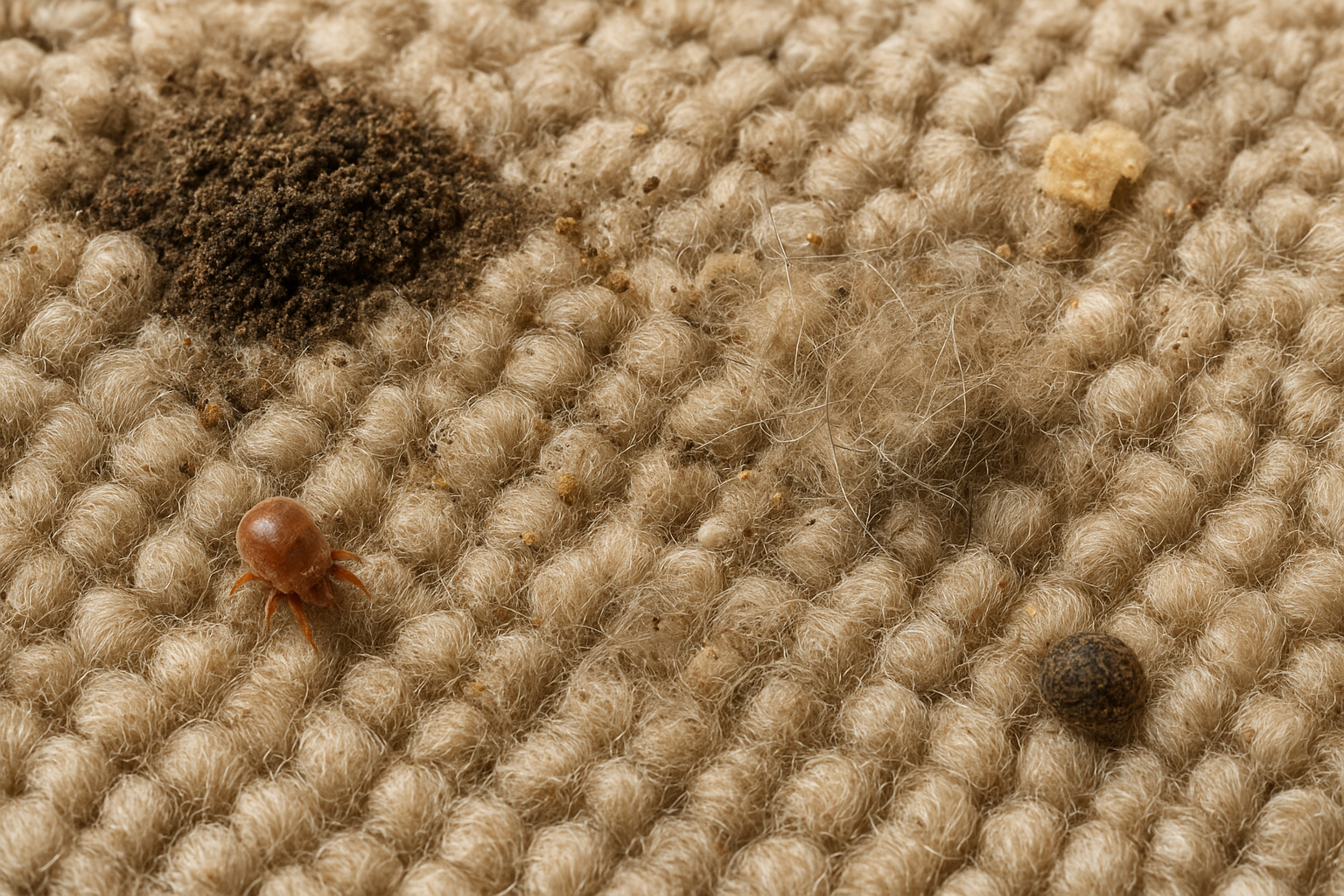
Here’s a quick look at what typically accumulates between deep cleans:
- Dust mites and their waste, a common trigger for allergic reactions
- Pet dander, hair, and dried urine that vacuuming can’t fully lift
- Mold spores in humid basements or homes near water damage
- Bacteria from shoes, spills, and everyday tracked-in debris
- Volatile compounds from old cleaning products that never fully rinsed out
Health effects you might not connect to your carpet
Many people don’t realize their stuffy nose or scratchy throat traces back to the carpet under their feet. Dust mites thrive in fiber environments and feed on skin cells shed by people and pets, and their waste is one of the most common indoor allergy triggers according to the American Lung Association. Indoor air quality drops noticeably in homes with heavily soiled carpet, and that matters even more if you have young kids who spend time playing on the floor or a family member managing respiratory issues.
A carpet that looks clean can still be one of the dirtiest surfaces in your home.
Offices see this too. Employees sitting near heavily trafficked carpet report more fatigue and irritation during allergy season, and a musty odor in a commercial space tends to scare off clients faster than almost anything else. Deep cleaning resets that environment instead of just masking it with air freshener.
Why vacuuming isn’t enough
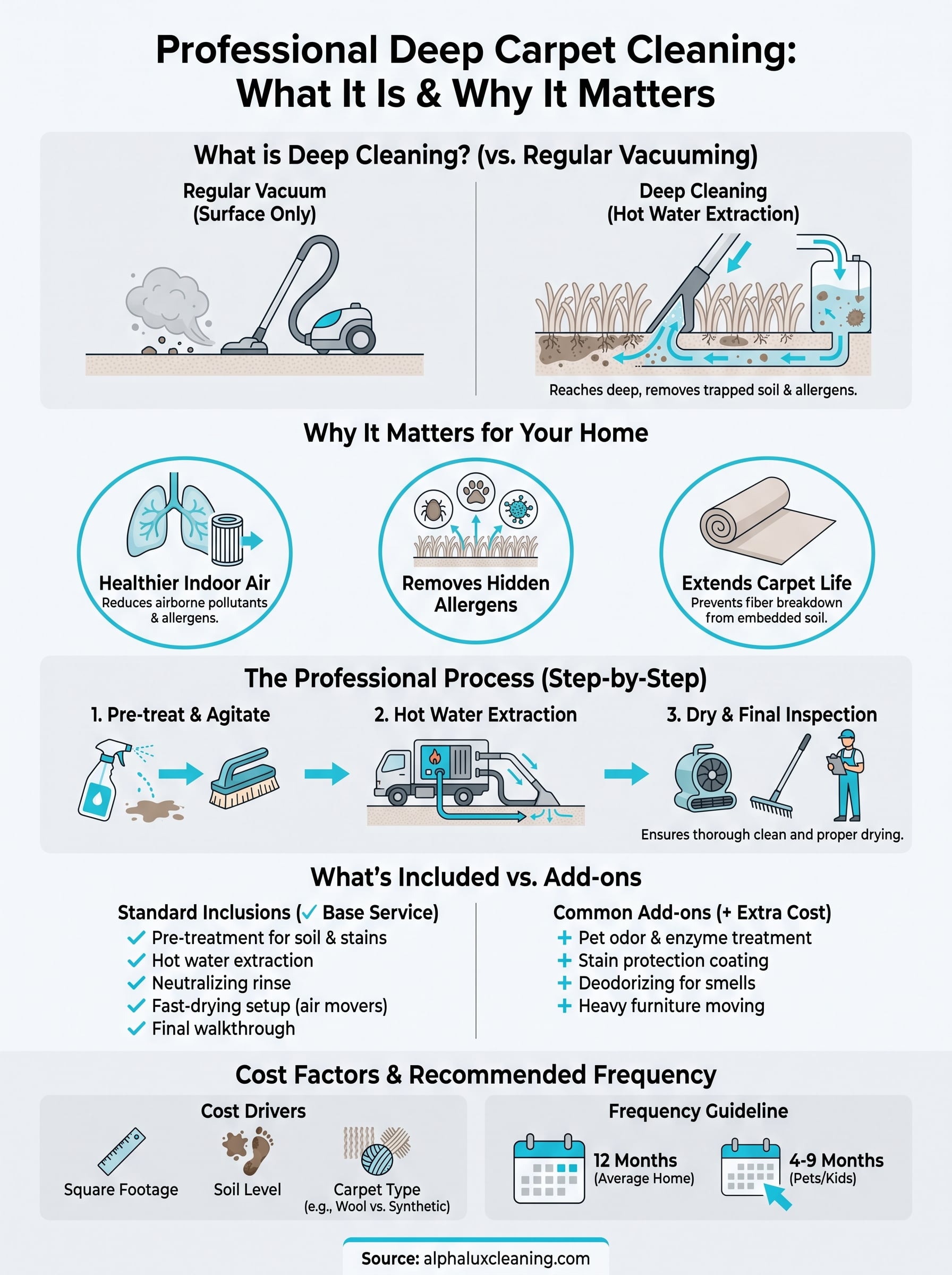
Regular vacuuming does a good job with surface debris, but it was never designed to reach the base of the fiber where oils, allergens, and bacteria settle. A deep carpet cleaning service uses hot water extraction, which pushes heated water and cleaning solution into the pile under pressure, then pulls it back out along with everything it loosened. That combination of heat, agitation, and suction is what actually resets the carpet instead of just refreshing the surface.
Think about the difference this way:
| Cleaning Method | What It Removes | What It Leaves Behind |
|---|---|---|
| Regular vacuuming | Loose surface dust and debris | Embedded oils, allergens, deep stains |
| Spot cleaning | Visible surface stains | Underlying residue, odor sources |
| Deep hot water extraction | Embedded soil, allergens, bacteria, most odors | Minimal residue when done correctly |
Skipping deep cleaning doesn’t just shorten your carpet’s lifespan, it also lets everything trapped inside keep circulating through your home or office every time someone walks across the room.
How professional deep carpet cleaning works
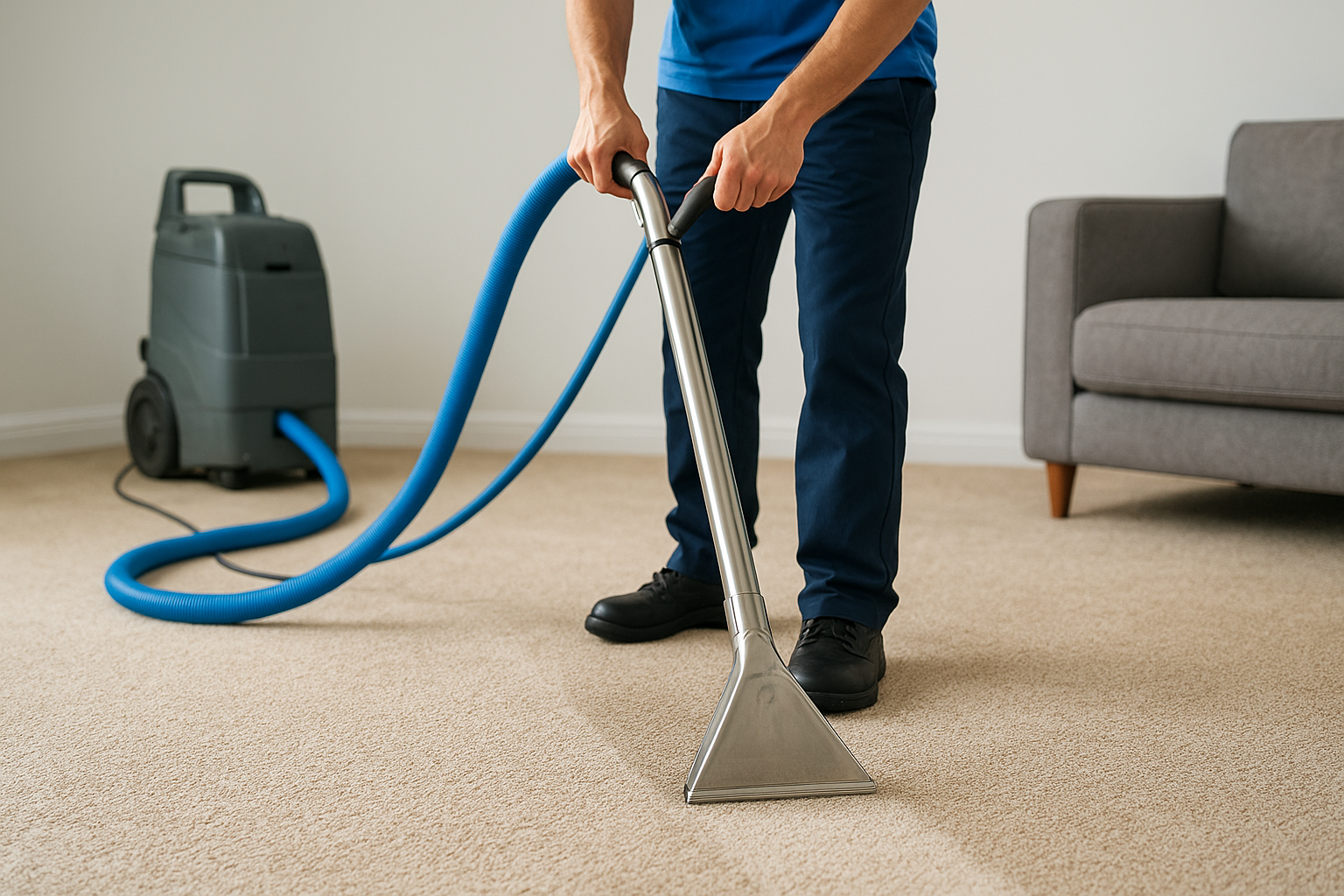
Walking into a real deep clean, a technician doesn’t just plug in a machine and start scrubbing. Professional carpet cleaning follows a sequence designed to loosen soil first, then flush it out completely rather than pushing it around. Skipping steps is exactly how a $50 rental machine leaves carpets damp and dingy, while a trained crew leaves them dry, fresh, and free of residue.
The walkthrough and pre-treatment
Before any water touches the floor, a good technician inspects the carpet fiber, checks for existing stains, and identifies the traffic patterns that need extra attention. Pre-treatment solution gets sprayed on heavily soiled areas and left to sit for several minutes, breaking down oils and ground-in dirt so the extraction step can actually pull them free. Skipping this step is the most common shortcut cheap operators take, and it’s why their results fade within weeks.
Hot water extraction step by step
Once the pre-treatment has time to work, the crew runs a truck-mounted or portable extraction unit across the carpet. Here’s the typical sequence:
- Agitate the carpet with a brush or rotary tool to lift embedded debris.
- Inject hot water and cleaning solution deep into the pile under pressure.
- Extract the water immediately, pulling loosened soil, allergens, and residue with it.
- Spot-treat any remaining stains with a targeted solution.
- Apply a neutralizing rinse so no soap residue attracts new dirt later.
The extraction step is where the real cleaning happens, not the scrubbing before it.
Drying and final inspection
After extraction, airflow and dry time matter as much as the wash itself. Technicians often set up air movers to speed drying, since carpet left damp for too long risks mildew growth or a musty smell creeping back in. Most jobs dry within 4 to 8 hours depending on humidity and carpet thickness, and a good company will walk the space with you afterward to confirm every spot looks and smells right before they pack up.
Grooming the pile with a carpet rake at the end isn’t cosmetic fluff, either. It stands fibers back up so the carpet dries evenly and looks like new rather than matted down in one direction.
What a deep carpet cleaning service includes
Booking a deep carpet cleaning service should get you more than a quick vacuum with a wet machine. A legitimate package covers the full walkthrough, pre-treatment, extraction, and drying steps described above, plus a few extras that separate a thorough job from a bare-minimum one. Knowing what’s standard helps you compare quotes accurately instead of guessing why one company charges twice as much as another.
Standard inclusions
Most reputable companies build their base price around the same core checklist, even if the marketing language differs from one provider to the next:
- Furniture moving for light pieces like chairs and side tables
- Pre-treatment on stains, traffic lanes, and pet areas
- Hot water extraction across the full carpeted area
- A neutralizing rinse to prevent residue buildup
- Fast-drying setup with air movers
- A final walkthrough to confirm results before the crew leaves
If a quote skips the pre-treatment and rinse steps, it isn’t a deep clean, it’s a surface refresh.
Common add-ons and what they solve
Beyond the base service, most companies offer add-ons priced separately because they require extra time, product, or equipment. Pet odor treatment uses an enzyme-based solution that breaks down urine crystals instead of just masking the smell, which matters because regular shampoo won’t touch odor sitting in the carpet pad. Stain protection applies a topical sealant after cleaning so future spills bead up instead of soaking in, buying you time to blot them before they set.
| Add-On Service | What It Addresses | Typical Use Case |
|---|---|---|
| Pet odor and enzyme treatment | Urine odor trapped in pad and backing | Homes with dogs or cats |
| Stain protection coating | Future spill resistance | Households with kids or frequent guests |
| Carpet deodorizing | General musty or stale smell | Older homes, basements |
| Scotchgard-style sealant | Fiber-level stain barrier | High-traffic living rooms |
What usually isn’t included
Heavy furniture moving, wall-to-wall stretching for loose carpet, and mold remediation typically sit outside a standard deep clean package. Sofas, bookshelves, and beds usually stay in place unless you request help moving them ahead of time, and any structural carpet repair gets quoted separately since it involves different tools and skills entirely. Asking about these exclusions before the crew arrives saves you from an awkward conversation about scope once the job is already underway.
How much does deep carpet cleaning cost
Pricing for a deep carpet cleaning service in New York usually comes down to two models: per room or per square foot. Most residential jobs land somewhere between $25 and $75 per room, while whole-home jobs priced by square footage typically run $0.25 to $0.75 per square foot depending on soil level and carpet type. Commercial spaces often get quoted differently since office carpet tends to see heavier daily traffic and larger continuous areas that don’t split neatly into rooms.
What drives the price up or down
Several factors push a quote higher than the baseline, and knowing them ahead of time keeps you from getting blindsided at checkout. Carpet type matters a lot, since wool and high-pile carpets need gentler agitation and longer dry times than basic synthetic blends. Soil level plays an even bigger role, because a carpet that hasn’t been cleaned in three years takes more pre-treatment and passes than one cleaned every six months.
- Square footage or number of rooms being cleaned
- Carpet material (wool costs more to clean than synthetic)
- Soil and stain severity, including pet accidents
- Add-ons like enzyme treatment, deodorizing, or stain protection
- Furniture that needs moving before cleaning starts
- Stairs, which are usually priced separately per step
The final number almost always tracks soil level more than square footage alone.
A sample cost breakdown
Here’s a rough breakdown of what homeowners typically see on a quote, based on common pricing structures across New York providers:
| Service Scope | Typical Price Range |
|---|---|
| Single room (standard soil) | $25 – $50 |
| Whole home (3-4 bedrooms) | $150 – $350 |
| Pet odor/enzyme treatment | $40 – $100 add-on |
| Stain protection coating | $0.10 – $0.20 per sq ft |
| Stairs (per flight) | $25 – $60 |
Most reputable companies offer a free estimate before booking, and you should treat that as a chance to ask specific questions rather than just get a number. Ask whether the quote includes pre-treatment, a neutralizing rinse, and furniture moving, since a suspiciously low price often means one of those steps gets skipped. A fair quote should also account for your home’s square footage and soil level rather than quoting a flat rate that ignores how many pets or kids track through the house daily.
How often you should schedule a deep clean
Most cleaning professionals recommend a deep carpet cleaning service every 12 months for an average household, but that number shifts fast once you add pets, kids, or heavier foot traffic into the mix. Waiting too long lets soil grind into the fiber base, which shortens the carpet’s lifespan and makes each future cleaning harder to fully reverse. Booking too often, on the other hand, just burns money on a job your carpet doesn’t need yet.
A general timeline by household type
Different living situations wear carpet down at different speeds, so the right interval depends on who’s walking across it every day. Use this as a starting point, then adjust based on how the carpet actually looks and smells between cleanings.
| Household Type | Recommended Frequency |
|---|---|
| Single adult, no pets | Every 12-18 months |
| Family with kids | Every 9-12 months |
| Homes with 1-2 pets | Every 6-9 months |
| Multiple pets or heavy allergies | Every 4-6 months |
| Rental turnover carpets | Before every new tenant |
Signs your carpet needs attention sooner
Sometimes the calendar matters less than what’s actually happening in the room. Visible traffic lanes near doorways and hallways, a musty smell that lingers even after airing out the house, or a noticeable uptick in sneezing and stuffy noses all point to soil buildup that’s outpacing your current schedule. If you’re vacuuming daily and the carpet still looks dull within a week, that’s usually a sign the fibers are holding onto more than surface dust.
If you can smell your carpet before you see the stain, you’ve already waited too long.
Commercial spaces need a different rhythm
Offices and retail spaces see far more foot traffic in a single day than most homes see in a month, which changes the math entirely. High-traffic commercial carpet in lobbies, hallways, and reception areas often needs cleaning every 3 to 6 months to stay presentable for clients and employees alike. Lower-traffic areas like private offices or conference rooms can usually stretch to a 12-month cycle without looking worn, so it’s worth asking your provider about a tiered schedule that treats different zones separately rather than paying for a full deep clean everywhere at once.
How to choose the right carpet cleaning company
Picking a deep carpet cleaning service comes down to trust more than price. A cheap quote that skips steps costs you more in the long run, since you’ll end up rebooking sooner and dealing with soil that never fully lifted the first time. Take a few minutes upfront to vet a company the same way you’d vet a contractor working inside your home.
Credentials and insurance to verify
Before anyone steps through your door, confirm the basics that protect you if something goes wrong. Insured and bonded technicians mean you’re covered if furniture gets damaged or a spill happens mid-job, and background checks matter for any company sending staff into occupied homes or offices. Ask directly whether the crew is employed or subcontracted, since subcontracted teams vary more in training and consistency from one job to the next.
- Proof of liability insurance and worker’s comp coverage
- Background-checked, trained staff rather than day-labor hires
- Clear pricing sheet before the crew arrives
- Willingness to walk the space with you before and after
- Positive, verifiable reviews mentioning specific services, not just star ratings
Questions to ask before booking
Getting a fair answer to a few pointed questions tells you more than any advertisement. Ask what equipment they use, since truck-mounted extraction typically outperforms portable units on drying time and suction power. Ask how they handle pet stains, whether pre-treatment is included, and how long the carpet will take to dry, since vague answers usually mean vague results.
A company that hesitates to explain its process is a company you should skip.
Red flags that signal a rushed job
Some warning signs show up before the crew even arrives. A quote with no square footage attached, pressure to book same-day without a walkthrough, or a price that seems far below every competitor usually means corners get cut somewhere. Watch for companies that can’t explain their drying process, since carpet left too wet invites mildew and undoes the whole point of the job.
Watch out for these specific patterns:
- No mention of pre-treatment or a neutralizing rinse in the quote
- Refusal to provide proof of insurance when asked
- Reviews mentioning lingering odor or damp carpet days later
- Flat rates that don’t account for soil level or room count
A little research now saves you from redoing the job, and the money, within a few months.
What to remember before you book
A real deep carpet cleaning service always includes pre-treatment, hot water extraction, a neutralizing rinse, and proper dry time. Anything less is a surface refresh dressed up as a deep clean. Pricing should track your square footage and soil level, not a flat rate that ignores pets, kids, or years of buildup.
Before you sign off on a quote, confirm insurance, ask about equipment, and get the drying timeline in writing. Skipping that homework is how homeowners end up rebooking within months and paying twice for the same job.
Your carpet holds more than dust, and it deserves more than a rushed pass with a rental machine. If you’re in New York and ready for a crew that actually follows every step above, book a free estimate with AlphaLux Cleaning and see what a real deep clean feels like underfoot.