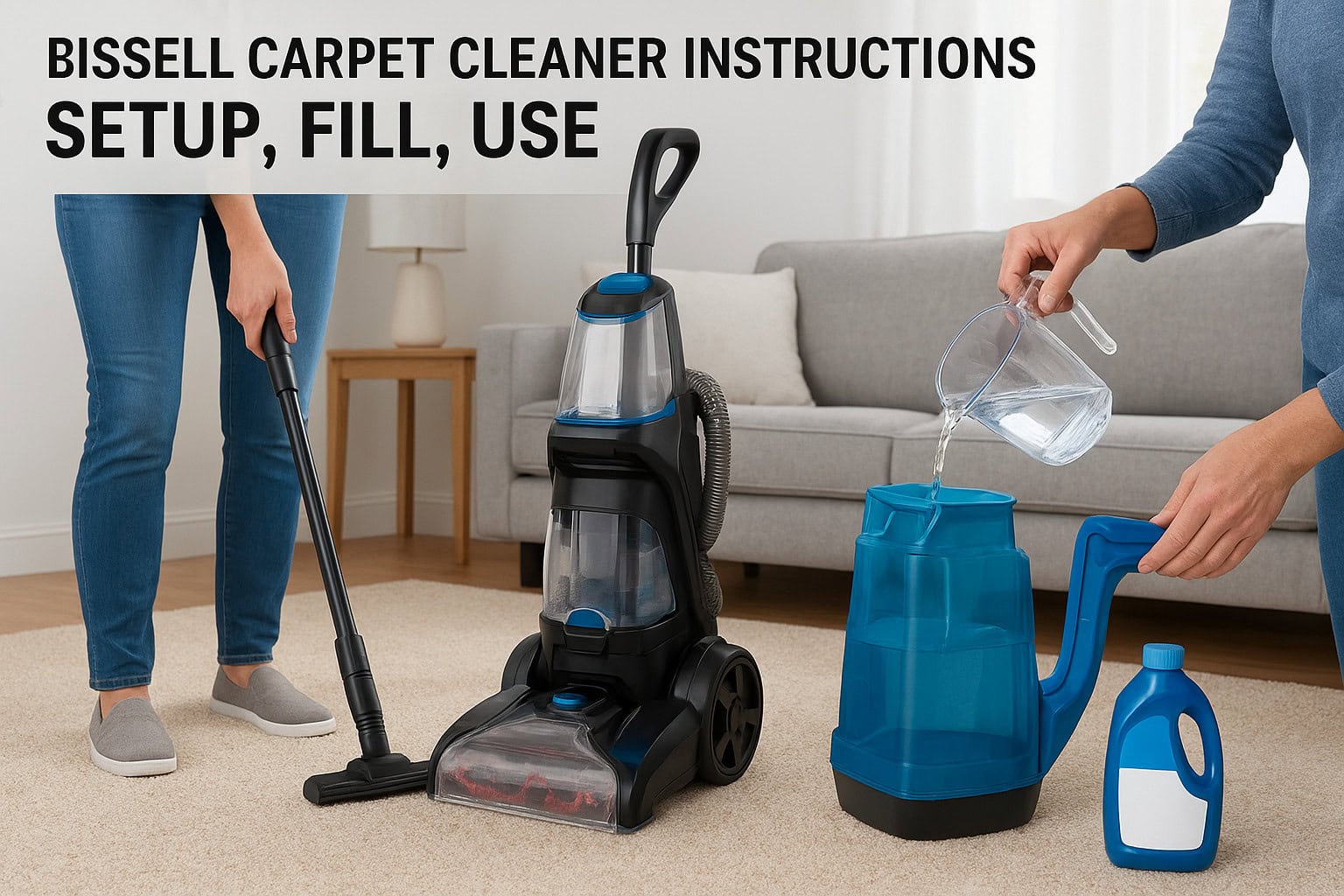
Your Bissell carpet cleaner is one of the most effective tools you can own for keeping carpets fresh between professional visits. But if you’ve ever stared at the machine wondering which tank gets the water and which gets the formula, you’re not alone. Searching for Bissell carpet cleaner instructions usually means you want clear, no-nonsense steps, not a scavenger hunt through a 40-page manual. That’s exactly what this guide delivers: straightforward directions for setting up, filling, and operating your machine the right way.
At AlphaLux Cleaning, we handle carpet and deep cleaning across New York State using professional-grade equipment daily. We know what works, what damages fibers, and where DIY mistakes happen most often. This guide draws on that hands-on experience to walk you through each step, model differences included, so you can get real results at home. Whether it’s routine maintenance or a move-out refresh you’re tackling on your own, you’ll have everything you need below to use your Bissell with confidence.
Before you start: model types, tools, and safety
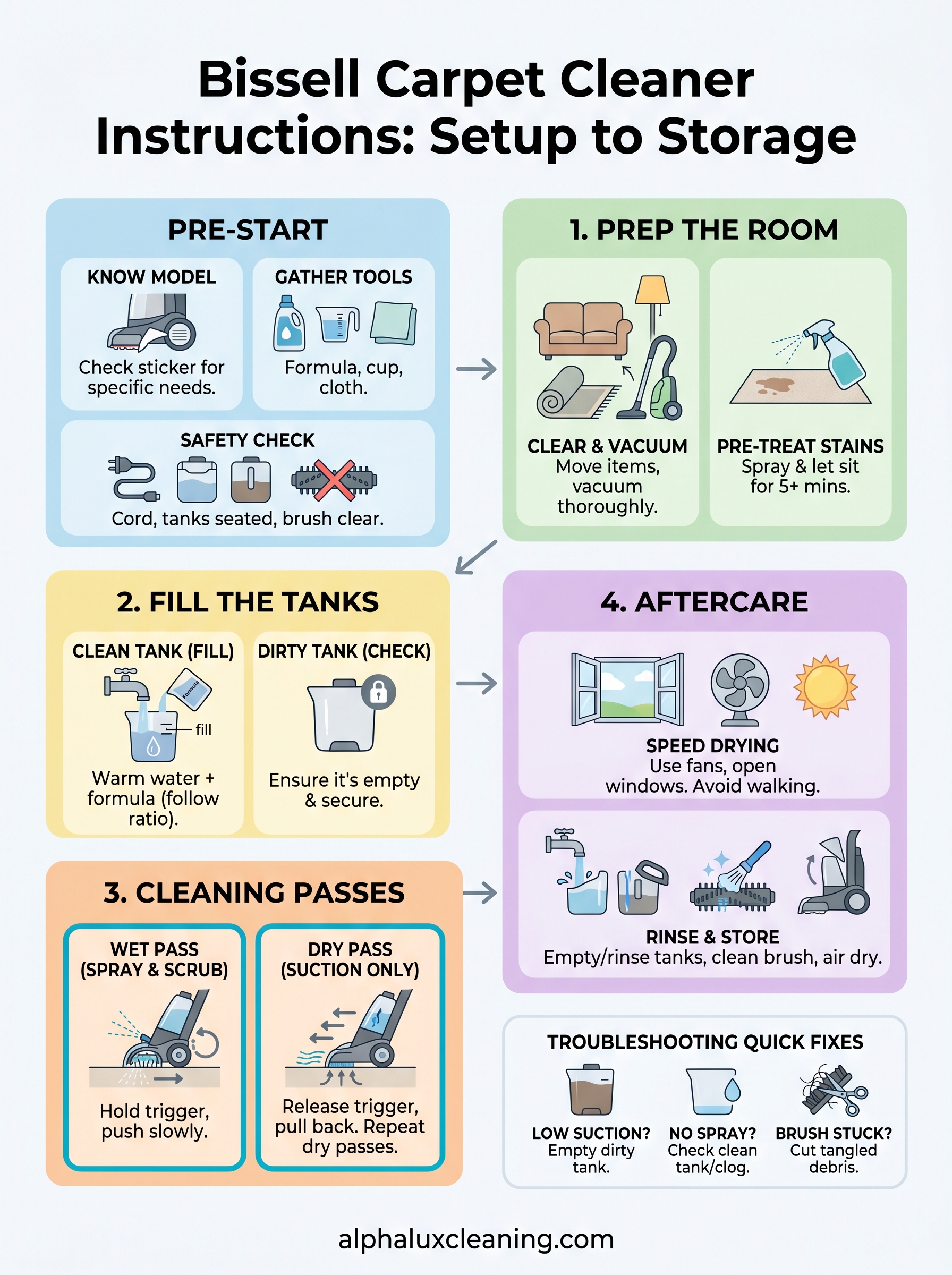
Before you touch a single button, knowing which machine you have and what it needs saves time and prevents damage. Bissell carpet cleaner instructions vary by model, so matching the right steps to your specific unit is the first thing to get right. Skipping this step is how people end up using the wrong formula, overfilling a tank, or running a setting that isn’t suited for their carpet type.
Know your Bissell model
Bissell makes several carpet cleaner lines, and each one works a little differently. The ProHeat 2X Revolution uses a HeatWave heating element and two separate tanks, while the CrossWave is designed for hard floors and area rugs rather than wall-to-wall carpet. The Little Green machine is a portable spot cleaner, not a full-pass carpet cleaner. Checking the model number on the bottom of your unit before reading any instructions is non-negotiable.
If you’re unsure which model you own, the model number is printed on a sticker on the bottom or back of the machine. Bissell’s product support page at bissell.com can help you identify it and download the correct manual.
Here’s a quick reference for the most common Bissell carpet cleaner types:
| Model | Best For | Tank Setup |
|---|---|---|
| ProHeat 2X Revolution | Full carpet cleaning | Separate clean/dirty water tanks |
| TurboClean PowerBrush | Small rooms, quick cleans | Combined formula and water tank |
| Little Green | Spot and stain removal | Single portable tank |
| CrossWave | Hard floors and area rugs | Single clean tank, separate dirty |
Gather your tools and supplies
You don’t need much before you start, but having everything within reach keeps you moving without stopping mid-job. Grab your Bissell cleaning formula (always use the brand-specific solution matched to your model to protect the warranty and avoid foam buildup), a measuring cup, and a clean microfiber cloth for wiping down surfaces afterward. Some models also benefit from a pre-treatment spray applied to stubborn stains before you run the machine.
Make sure you also have enough cord clearance across your workspace and an extension cord if the area is large. Most Bissell machines have a cord roughly 25 feet long, which covers an average bedroom but may fall short in open-plan living areas.
Safety checks before every use
Running a quick safety check takes under two minutes and prevents both machine damage and injury. Inspect the power cord for fraying or exposed wires before plugging in, check that both tanks are firmly seated since a loose dirty-water tank can leak onto the motor, and confirm the brush roll is clear of tangled hair or debris, especially if you skipped cleaning it after your last session.
Avoid running the machine on a carpet that’s already saturated from a spill or a previous cleaning pass. Excess moisture trapped beneath carpet fibers creates the right conditions for mold growth, which is far more difficult to address than the original stain.
Step 1. Prep the room and pre-treat stains
Good room prep is the single step most people skip, and it’s the reason carpet cleaners miss spots or leave behind uneven results. Before following any Bissell carpet cleaner instructions, you need a clear, vacuumed surface and any set-in stains treated in advance. Skipping prep means the machine pushes debris around instead of lifting it, and it means your cleaning pass has to fight through soil that a vacuum could have removed in two minutes.
Clear the space and vacuum thoroughly
Move all furniture, rugs, and loose items off the carpet before you bring the machine into the room. Even lightweight chairs left in place create zones the Bissell can’t reach, and those patches show up clearly once the surrounding carpet dries and brightens. If furniture is too heavy to move completely, place plastic furniture protectors or small pieces of foil under the legs to prevent rust or dye transfer onto your wet carpet.
Once the space is clear, vacuum the entire area with a standard upright or canister vacuum. Run at least two passes in opposite directions to pull up embedded dirt, hair, and dry debris. A carpet cleaner uses water and suction to extract stains, not dry soil, so anything left on the surface before the wet pass ends up mixed into your clean water tank faster than it should.
Vacuuming before a wet cleaning pass can reduce the amount of dirty water your machine collects by up to half, which means fewer tank empties and a cleaner result overall.
Pre-treat visible stains before the main pass
Apply a Bissell-compatible pre-treatment spray directly to any stains you can see, such as pet spots, tracked-in mud, or food spills. Let the solution sit for at least 5 minutes so it can break down the stain at the fiber level before the machine passes over it. For older, dried stains, lightly blot the area with a damp cloth first to rehydrate it, then apply the pre-treatment and wait the full dwell time before moving to the next step.
Step 2. Fill the tanks and choose the right settings
Filling your machine incorrectly is one of the most common reasons people get poor results even when following Bissell carpet cleaner instructions closely. Most Bissell upright models use two separate tanks: one for clean water mixed with formula, and one to collect dirty water during the cleaning pass. Knowing which tank does what, and how much solution to add, keeps the machine running efficiently and protects your carpet fibers from over-saturation.
Fill the clean water tank correctly
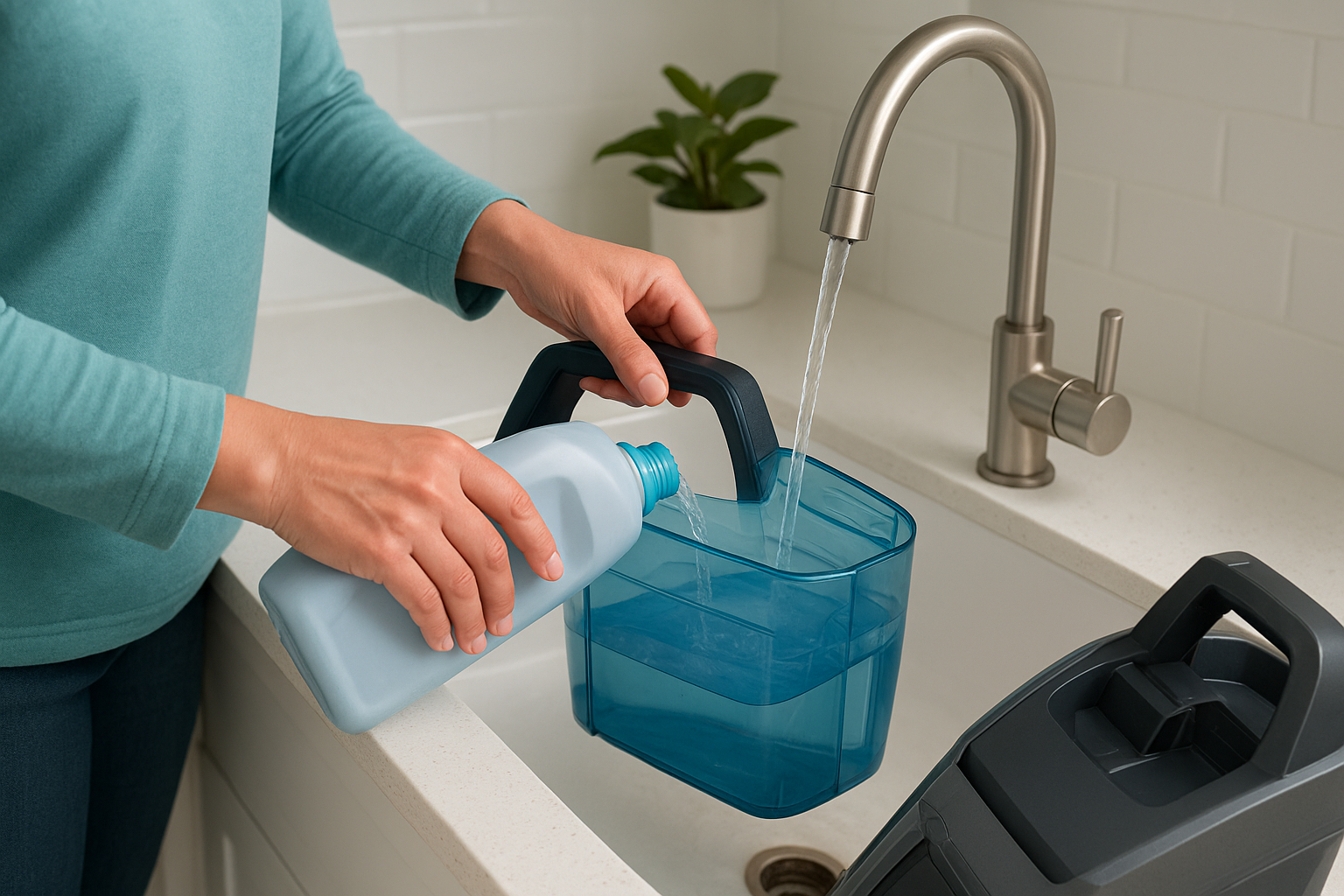
Remove the clean water tank from the machine by pressing the release tab, usually located on the front or top of the unit. Carry it to a sink and fill it with warm (not hot) tap water to the marked fill line. Then add the Bissell cleaning formula according to the ratio printed on the formula bottle. For most ProHeat models, that’s roughly 4 ounces of formula per full tank. Replace the tank firmly until you hear it click into place.
Never substitute dish soap or generic cleaners for Bissell formula. Non-approved solutions create excessive foam that can clog internal components and void your warranty.
The dirty water tank doesn’t need any preparation before you start. Just confirm it’s empty, clean, and seated securely. A loose dirty-water tank is one of the fastest ways to end up with water on your floor instead of in the collection chamber where it belongs.
Choose the right heat and brush settings
Most ProHeat models offer a HeatWave setting that keeps water at a consistent cleaning temperature throughout the pass. Turn this on for deep cleaning sessions and leave it off for lightly soiled areas where a cold pass is enough. Set the brush roll speed to high for plush or thick carpet and low for delicate or low-pile rugs to avoid pulling fibers.
Check your specific model’s dial or button layout before starting. Running the wrong brush speed on a high-pile carpet causes visible wear over time, which no amount of cleaning can reverse.
Step 3. Clean the carpet with wet and dry passes
With your tanks filled and your settings dialed in, you’re ready to run the machine. Most Bissell carpet cleaner instructions describe two distinct types of passes: a wet pass that sprays solution and scrubs the fibers, and a dry pass that suctions moisture back out without adding more water. Running both types correctly is what separates a carpet that dries in two hours from one that stays damp all day.
Make the wet pass first
Start at the far end of the room, farthest from the door, and work your way backward toward the exit. This keeps you from walking over sections you’ve already cleaned. Press and hold the trigger or spray button as you push the machine forward slowly, about one foot per second. Release the trigger on the pull-back stroke so you’re not adding more water on top of what you just applied.
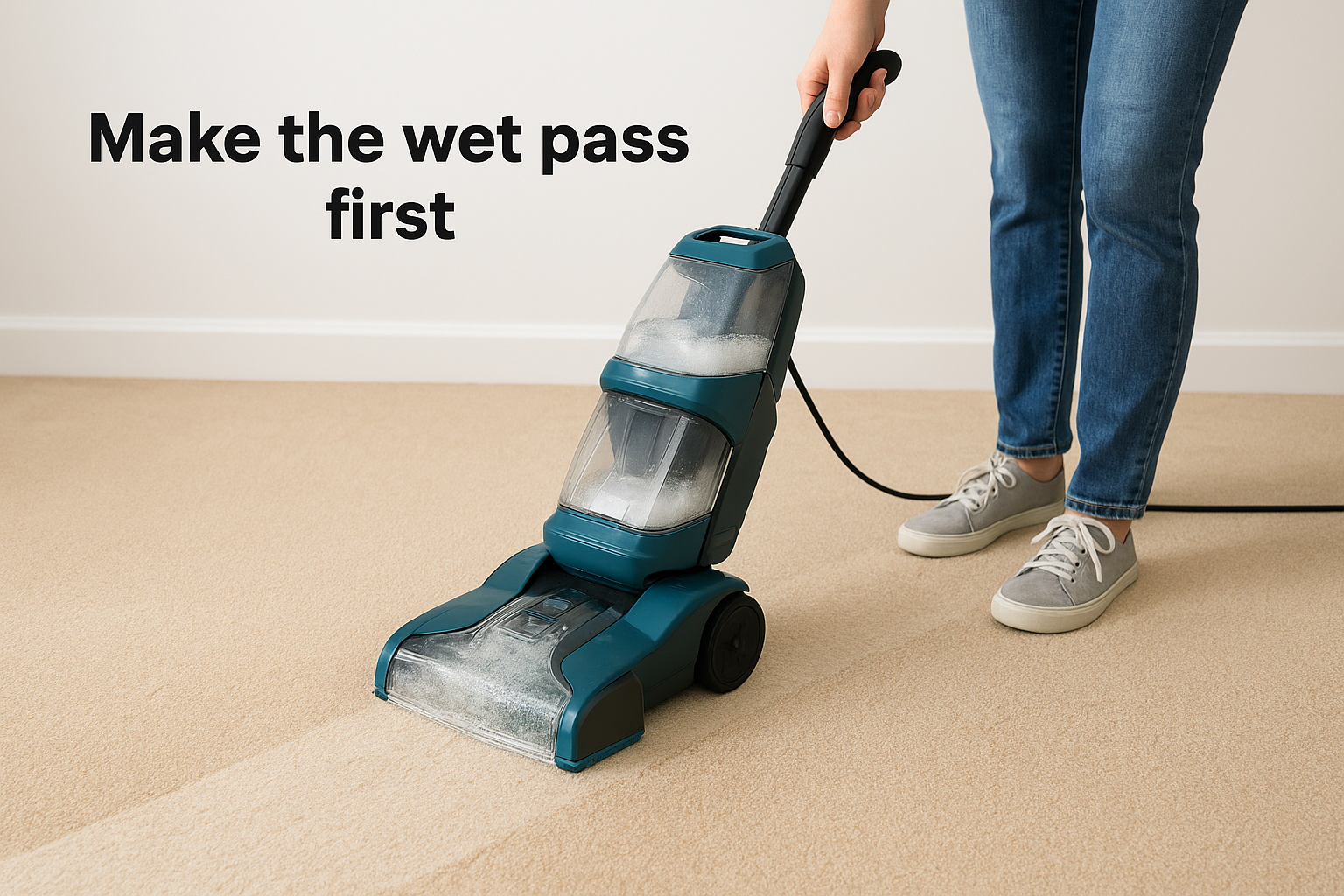
Overlap each pass by about two to three inches so you don’t leave dry strips between rows. For heavily soiled areas, make two wet passes in opposite directions before moving on. This cross-pattern technique loosens embedded dirt that a single-direction pass misses entirely.
Slow, steady strokes extract far more soil than fast passes. Rushing the wet phase is the most common reason carpets look flat and dull after cleaning.
Follow with dry passes to pull moisture out
After completing the wet pass across the entire carpet, go back over the same area with the trigger released the whole time. This is your dry pass. The machine’s suction pulls water and loosened soil out of the fibers without adding any additional solution. Run at least two to three dry passes over each section, especially along baseboards and high-traffic zones where moisture tends to collect.
Repeat this wet-then-dry sequence room by room rather than wet-cleaning the entire floor first. Tackling one area at a time helps the carpet begin drying faster and keeps your dirty water tank from filling up mid-room.
Step 4. Dry faster, then rinse and store the machine
After your cleaning passes are complete, drying time and proper machine care are what determine how long your results last. Most standard Bissell carpet cleaner instructions mention rinsing the tanks, but few explain how to actively reduce drying time and store the machine so it stays in working condition for the next use.
Speed up drying after cleaning
Your carpet will dry faster with increased airflow in the room. Open windows and doors immediately after cleaning, and run ceiling fans or portable fans pointed low across the carpet surface. If you have a dehumidifier, turn it on as well. Avoid walking on the carpet until it feels completely dry to the touch, which usually takes two to four hours depending on how heavy your cleaning pass was and how well-ventilated the space is.
Placing a box fan flat on the floor pointed at the wet carpet rather than across it pushes air directly through the pile, cutting drying time significantly.
Keep furniture off the carpet during drying. If legs rest on damp fibers, rust stains or dye marks can transfer permanently into the carpet within a few hours and cannot be reversed by additional cleaning.
Rinse the tanks and clean the machine
Empty the dirty water tank immediately after finishing. Rinse it with clean water, swirl it around, and pour it out until the water runs clear. Leaving dirty water in the tank even overnight causes odor buildup that is very difficult to remove later. Rinse the clean water tank the same way to flush out any remaining formula residue before storing.
Remove the brush roll by following the access panel instructions for your specific model. Rinse it under running water, pull out any tangled hair or fibers, and let it air dry completely before snapping it back in. Store your Bissell upright in a dry location with both tanks removed and left slightly open so air can circulate inside the chambers. This one habit prevents mildew growth between uses.
Step 5. Troubleshooting and FAQs for common issues
Even when you follow Bissell carpet cleaner instructions carefully, problems come up. Most trace back to a handful of simple causes: a full dirty-water tank, a clogged spray nozzle, or a brush roll wrapped with hair. Identifying the specific issue before disassembling anything saves you time and prevents unnecessary wear on the machine.
Machine loses suction mid-clean
When suction drops noticeably during a pass, the dirty-water tank is usually full and needs to be emptied. Stop the machine, remove the tank, pour it out, rinse it quickly, and reseat it firmly before continuing your pass.
If suction stays weak after emptying the tank, check that the tank lid and gasket are both seated correctly. A partial seal is enough to break suction entirely, and it’s easy to miss at a quick glance.
Inspect the dirty-water tank after every two to three passes in heavily soiled rooms rather than waiting for suction to drop on its own.
No solution spraying onto the carpet
If you press the trigger and nothing comes out, the clean water tank may be empty or not fully clicked into place. Remove it, confirm the water level, and reseat it until you hear it lock before trying again.
When the tank is full and seated correctly but spray is still absent, the nozzle may be clogged with dried formula residue from a previous session. Remove the nozzle based on your model’s manual and hold it under warm running water for 30 seconds to clear the blockage.
Brush roll stops spinning during use
A brush roll that stops mid-clean almost always has hair or string wrapped tightly around the axle. Power off and unplug the machine, then use scissors to cut through the tangled material before pulling it free. Avoid yanking without cutting first, as that can bend the axle.
After clearing the debris, confirm that the brush roll access door is fully latched. On most Bissell models, a partially open door triggers a built-in safety shutoff that stops the roll from spinning even when the motor is running.
Conclusion
Following Bissell carpet cleaner instructions from prep to storage gives you cleaner results and extends the life of both your carpet and your machine. You now have a clear sequence to work through: vacuum and pre-treat first, fill the right tanks with the correct solution ratio, run wet passes slowly, follow with dry passes to pull moisture out, and rinse the machine before storing it. Troubleshooting common problems like lost suction or a stalled brush roll comes down to checking the basics before assuming something is broken.
Your Bissell handles routine maintenance well, but some situations call for a deeper clean than a home machine can deliver. Deep-set stains, high-traffic zones, and post-move cleanups benefit from professional equipment and trained hands. If you’re in New York State and need that level of clean, reach out to AlphaLux Cleaning for a free estimate.