Last Updated: November 4, 2026
Quick Summary
To handle cleaning staff damage, stop and secure the area, photograph everything before moving it, write an incident timeline, and report the damage to the company in writing the same day. Send photos, your timeline, and a clear request for repair, replacement, or a claim, then file against the company’s general liability insurance.
- Don’t clean up the mess before photographing the damaged item, the surrounding area, and a wide shot of the room.
- Email written notice the same day with the date, time, address, photos, timeline, and a clear request.
- Ask the company for its insurer’s name, policy number, and certificate of insurance before filing a claim.
- Get a repair estimate from a licensed contractor before you file, not after.
- Try the company’s liability coverage before your homeowner’s insurance, which can raise your premium and hit your deductible.
Table of Contents
- Cleaner Broke Something: What to Do in the First Hour
- Documenting Property Damage After Cleaning: The Evidence That Wins Claims
- How to Report Damage to a Cleaning Company in Writing
- Filing a Cleaning Service Property Damage Claim
- General Liability, Worker’s Compensation, and Your Homeowner’s Insurance
- When the Company Denies Responsibility: Dispute Resolution and Small Claims
- Protecting High-Value Items and Preventing Future Damage
- Booking a Vetted, Insured Cleaning Team You Can Trust
- Frequently Asked Questions
Cleaner Broke Something: What to Do in the First Hour
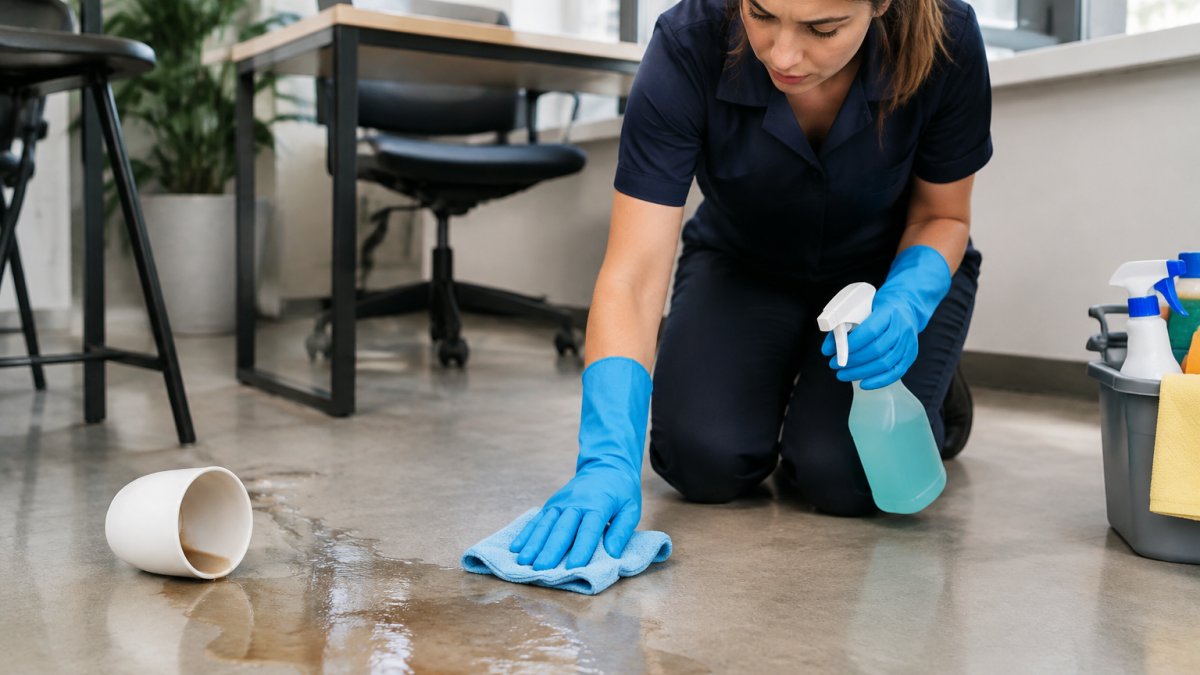
A cleaner just knocked over a vase, and you’re standing in the doorway deciding what to do next. The first hour matters more than the next thirty days.
The cleaning services market is projected to reach about $481.75 billion in 2026, according to Service Autopilot’s cleaning industry trends report. With that much work happening in homes, accidents are common. At AlphaLux Cleaning, we’ve seen how a calm, documented response protects both sides.
Here’s the short version: stop, secure, photograph, write it down, then report it in writing.
Stop, Secure, and Photograph Before Anything Else
Don’t clean up the mess yet. Move pets and kids away from broken glass or spilled liquid. If water is spreading, shut it off at the source, then stop.
Now take photos before anything moves. Get the damaged item, the surrounding area, and a wide shot of the room. Shoot from several angles.
Write Down the Incident Timeline While It’s Fresh
Open your phone’s notes app and write the time, what happened, who was present, and what the cleaner told you. Memory fades fast, and a written incident timeline settles disputes later.
Keep it factual. Skip the anger.
Documenting Property Damage After Cleaning: The Evidence That Wins Claims
Documenting cleaning staff damage is the step most people rush, and it’s the one that decides claims. Strong evidence means a fast, fair resolution. Weak evidence means a back-and-forth that drags on.
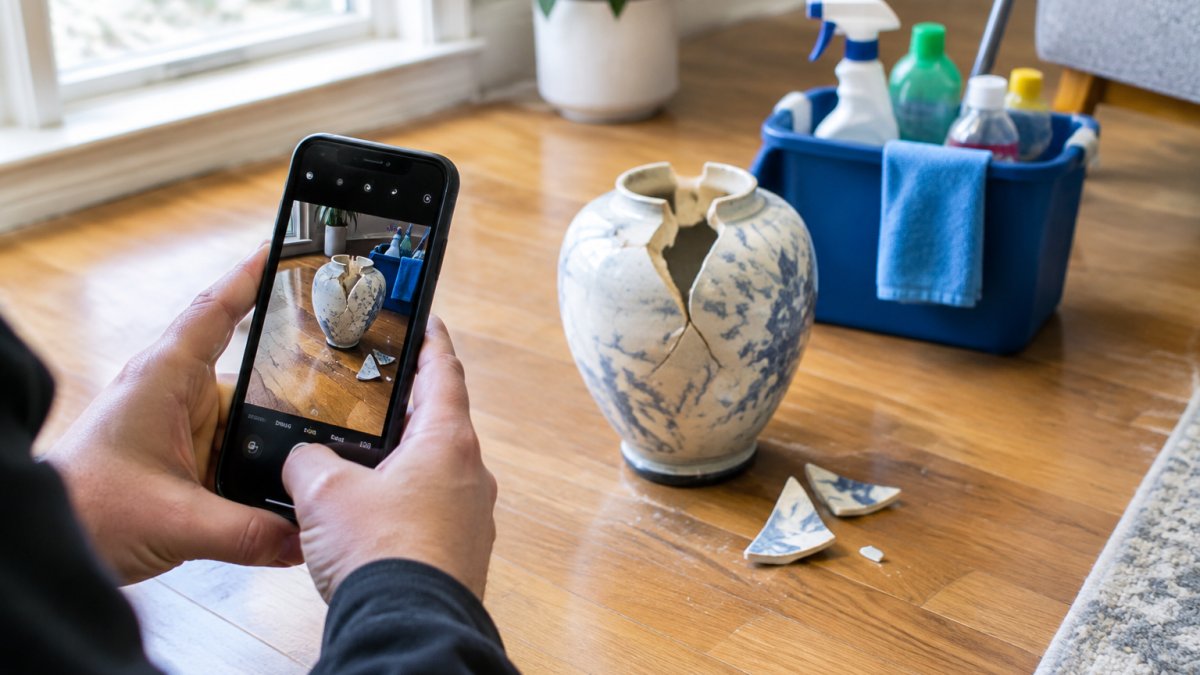
Photographic Evidence and Inventory Lists
Photographic evidence should include close-ups of the damage, wide shots showing context, and a timestamp. Most phone cameras stamp automatically.
Build an inventory list of what was damaged: item, approximate age, condition before the cleaning, and any receipt or photo you already have. Industry guidance for 2026 stresses photo audits and digital checklists as a core standard for protecting owners, per 4Way Contractors’ rental turnover standards.
How to Report Damage to a Cleaning Company in Writing
Send written notice the same day. Email is best because it creates a record. Text works too, but email is cleaner.
Your message should include:
- The date, time, and address
- A short description of the damage
- Attached photos
- The incident timeline
- A clear request: repair, replace, or file a claim
Keep your tone calm and specific. Ask for a written response and a timeline. Save every reply.
Filing a Cleaning Service Property Damage Claim
A cleaning service property damage claim starts with the company’s general liability insurance. If you are unsure what that coverage includes, this guide on why you must hire an insured and bonded cleaning company in NYC explains what insured and bonded status means for recovering damages. Ask the company for its insurer’s name, policy number, and a certificate of insurance before you file anything.
What to Send With the Claim
Insurers process claims faster when the file is complete on day one. Include:
- A signed written statement of what happened, with date, time, and address
- Photos of the damage from multiple angles, plus a wide shot showing context
- Your inventory list with item, age, condition before cleaning, and any receipt or prior photo
- The incident timeline you wrote in the first hour
- A repair estimate from a licensed contractor or a replacement quote from a retailer
- The company’s certificate of insurance and policy number
Get a repair estimate before you file, not after.
Replacement Cost vs. Actual Cash Value, and the Depreciation Math
Here is where people lose money. Replacement cost pays what it costs to buy a new version of the item today. Actual cash value (ACV) subtracts depreciation, so a five-year-old sofa pays out far less than its sticker price.
Ask which basis the policy uses before you accept anything. If the offer feels low, request the depreciation math in writing.
Run the math yourself before you respond. A simple ACV calculation is: replacement cost minus (replacement cost × depreciation rate × age in years), floored at salvage value.
High-Value Items: Art, Electronics, and Antiques
General advice does not cover the specialized documentation high-value assets require, and this is where claims most often stall. For art, antiques, and collectibles, insurers typically want provenance, prior appraisal, purchase receipt, gallery paperwork, or a condition report. A phone photo taken after the break is not enough.
For electronics, serial numbers matter. Photograph the model and serial plate before the crew starts, and keep the original box or receipt where possible.
For antiques, document condition before cleaning, not just damage after. A pre-cleaning photo showing existing patina or a prior repair protects you from a dispute over what the crew actually caused.
When to Route Through Your Homeowner’s Insurance Instead
Your homeowner’s insurance may also cover the damage, but filing can raise your premium and hit your deductible. Try the company’s liability coverage first.
General Liability, Worker’s Compensation, and Your Homeowner’s Insurance
General liability insurance covers damage the cleaning crew causes to your property. Maintaining clear documentation of these incidents is essential when you need to assess property damage to ensure that repair costs are accurately identified and addressed.
Your homeowner’s insurance may also cover the damage, but filing can raise your premium and hit your deductible. Try the company’s liability coverage first.
Watch out: hiring an uninsured cleaner can leave you covering the repair yourself. For a closer look at those risks, see our guide on the liability of using an uninsured cleaning service.
When the Company Denies Responsibility: Dispute Resolution and Small Claims
A denial isn’t the end. Most denials are opening positions, not final answers, and the outcome depends on how methodically you escalate. Work the ladder in order, each step creates a record the next step relies on.
Step 1: The Formal Written Demand
Send a written demand that restates the facts, the evidence, and the amount you want. Give a deadline, usually 10 to 14 days. Keep it factual and attach the same file you sent with the original claim. A demand that reads as a threat gets forwarded to a lawyer; a demand that reads as a file gets forwarded to an adjuster.
A template that works:
Subject: Formal demand, property damage at [address] on [date]
On [date], your crew damaged [item] at [address]. I reported it in writing on [date] and provided photos, an incident timeline, and a repair estimate totaling $[amount]. Your response on [date] denied responsibility.
I am requesting $[amount] to repair or replace the item. Please respond in writing by [date, 10-14 days out]. If I do not receive a response, I will pursue mediation and, if necessary, small claims court.
Attached: photos, incident timeline, repair estimate, certificate of insurance.
Step 2: Mediation and the Company’s Insurer
If the demand fails, check whether mediation is available. Mediation is cheaper and faster than court, and many general liability insurers prefer it because litigation costs them more than the claim. Ask the insurer directly whether they will mediate; a denial from the cleaning company is not the same as a denial from its carrier, and the carrier often settles once it sees a complete file.
Step 3: Small Claims Court, and the Threshold Question
For smaller amounts, small claims court is an option. Each state sets its own dollar limit, so check your local court’s threshold before filing.
Before you file, run the viability math. Before you file, weigh the filing fee and the time you will spend against the amount you can recover. For smaller losses, absorbing the cost may make more sense.
Bring your photos, timeline, written notice, the denial, and your repair estimate. Judges decide on documentation, not on who was more upset.
Confirm the company is a registered business with a real address before you file.
Step 4: When to Stop Escalating
If the amount is large and the company is insured, a demand letter from an attorney often resolves the matter before court. The trade-off is cost: attorney time can exceed a modest claim, so reserve this step for claims where the damage clearly justifies it. For a step-by-step walkthrough of a fair resolution, read what to do if your cleaner damages something.
Protecting High-Value Items and Preventing Future Damage
Prevention beats claims every time. Before the next cleaning, put away or flag anything fragile or valuable.
For art, electronics, and antiques, move them to a safe room or cover them. Tell the crew in writing what’s off-limits. A short pre-cleaning note protects everyone.
Before you hire again, read our guide on how to hire a house cleaner you can trust to build safer habits from day one.
Booking a Vetted, Insured Cleaning Team You Can Trust
The best way to avoid a damage claim is to hire a team that’s already covered. Nearly 40% of property managers reported trouble finding dependable local cleaning staff, according to Rental Scale-Up’s 2026 staffing report. Reliability and coverage go together.
AlphaLux Cleaning is licensed, insured, and fully bonded, with a 100% satisfaction guarantee or we re-clean. Our vetted team uses eco-friendly products. Learn how to vet a cleaning company before you book.
Frequently Asked Questions
What qualifies as property damage by cleaning staff?
Property damage is any physical harm to your belongings or home caused during a cleaning service. That includes broken glassware, scratched hardwood, chipped countertops, stained upholstery, cracked tile, damaged electronics, and missing items. Damage from using the wrong product, such as bleach on natural stone, also counts. Document the item, the visible harm, and the time you found it. Under a service agreement, the company is generally responsible for damage caused by negligence, and your documentation is what proves it.
Should I contact the cleaning company or my homeowner’s insurance first?
Contact the cleaning company first, in writing, and give them a chance to resolve the cleaning service property damage claim directly. Filing a homeowner’s insurance claim first can raise your deductible exposure and your premiums. Only move to your own policy if the company denies responsibility or the damage is large and urgent.
How do I ask a cleaning company to pay for damaged property?
Send a written notice that states the date, the item damaged, the estimated repair or replacement cost, and your requested settlement. Attach your photographic evidence, incident report, and any receipts or inventory list. Give a clear deadline, typically 14 days. Keep the tone factual. If they offer a partial payment, you can accept it as restitution without waiving the rest. If they deny the claim, request their certificate of insurance and escalate to a formal dispute or small claims court.
What should I do if the cleaning company denies responsibility?
Ask for their certificate of insurance and the name of their liability carrier. Review the service agreement for damage clauses and any deductible or limitation terms. Send a formal demand letter with your evidence and a deadline. If they still refuse, file in small claims court, where thresholds vary by state and the process is designed for claims that do not justify a lawyer. Keep every message, photo, and receipt, since an incident timeline and documentation are what decide the outcome.
Damage happens even with good crews. The difference is whether you’re protected before it does. Get started with AlphaLux Cleaning and book a free estimate for a vetted, insured team you can trust.