Whether you’re a business owner budgeting for building maintenance or a cleaning professional setting your prices, understanding commercial window cleaning rates is essential before anyone signs a contract. Pricing in this industry varies widely, and without a clear reference point, you risk overpaying or undercharging by a significant margin.
At AlphaLux Cleaning, we handle commercial cleaning projects across New York State, and window cleaning pricing is one of the questions we encounter most often. The truth is, rates depend on several factors: the number of panes, building height, accessibility, and whether you’re pricing by the hour, per pane, or per square foot. Each method has its place, and knowing when to apply which one makes all the difference for accurate budgeting and fair pricing.
This guide breaks down current industry averages for each pricing structure, explains what drives costs up or down, and gives you the numbers you need to make informed decisions. We’ll cover hourly rates, per-pane costs, square footage estimates, and the specific variables that shift the final price, so you can walk into any quote or negotiation with confidence.
How commercial window cleaning pricing works
Commercial window cleaning doesn’t use a single standard rate the way some services do. Contractors and building managers work with three distinct pricing structures, and the model that applies to your job depends on the size of the building, how accessible the windows are, and what the service provider needs to cover their costs. Before you can evaluate a quote or set your own prices, you need to understand how each model functions and where it fits in practice.
Choosing the wrong pricing model for a job can leave money on the table or price you out of a contract before negotiations even begin.
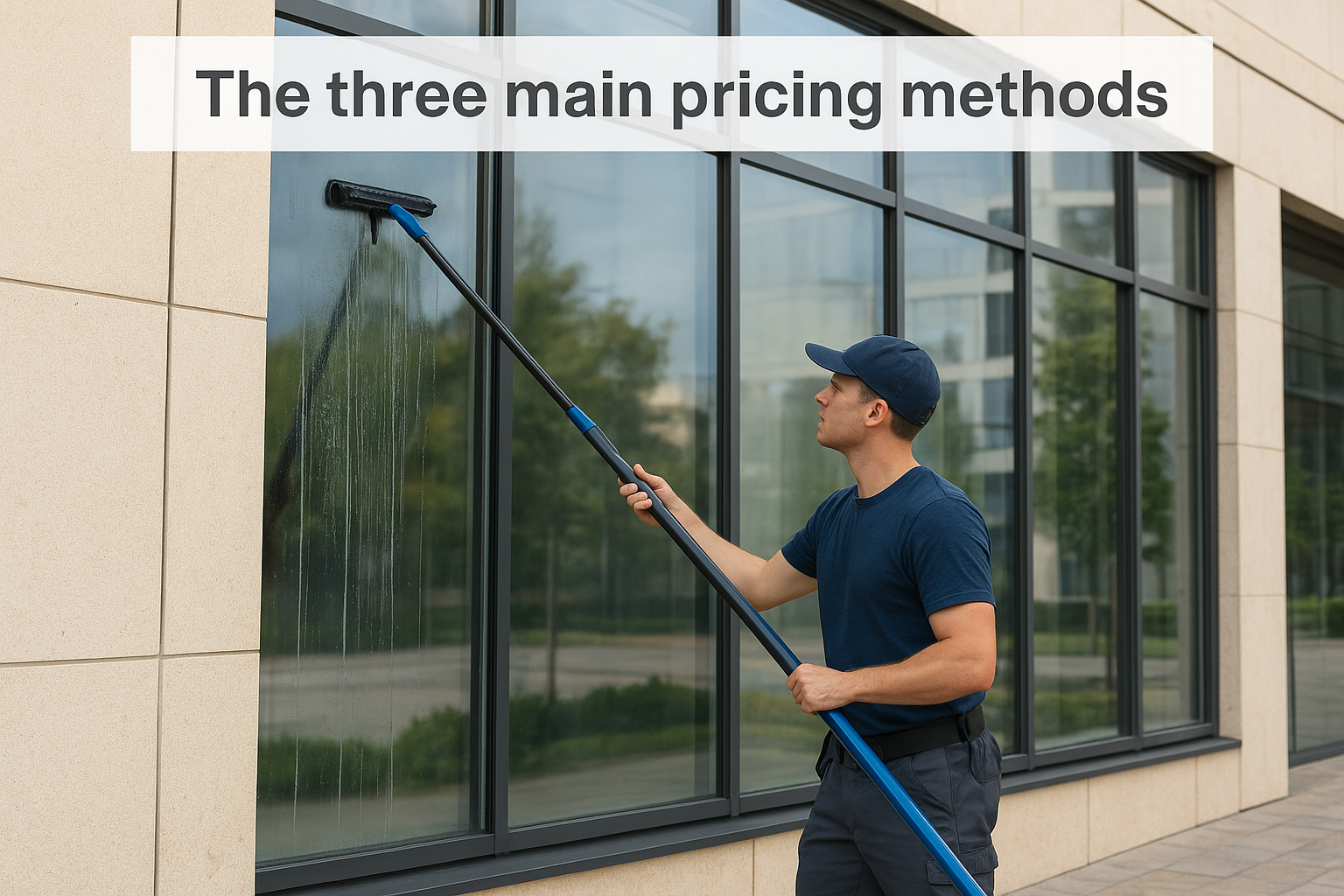
The three main pricing methods
Hourly pricing gives contractors a straightforward way to cover labor time, especially when the job scope is unclear before starting. It works well for small office suites or situations with unpredictable access. Per-pane pricing assigns a fixed cost to each individual window pane, and it’s the most widely used model for standard commercial buildings because both parties can calculate the total before anyone shows up on site. Per-square-foot pricing suits large glass facades, curtain wall systems, or storefronts where counting panes individually would take longer than the job itself.
| Pricing Method | Best Used For | Typical Range |
|---|---|---|
| Hourly | Small or undefined-scope jobs | $50-$80 per cleaner/hour |
| Per pane | Standard multi-story buildings | $4-$12 per pane |
| Per square foot | Large glass facades, storefronts | $0.25-$0.50 per sq ft |
What drives prices higher or lower
Building height is the most significant variable in commercial window cleaning rates. Ground-floor access requires basic equipment and minimal setup time. Anything above the second floor typically needs ladders, boom lifts, or rope-access systems, which add both equipment rental costs and specialized labor. A four-story office building can cost three to four times more per pane than a single-story retail space even when the total glass area is similar.
Beyond height, several other job-specific factors directly affect what you’ll pay or charge:
- Frequency: Ongoing contracts (weekly, monthly, or quarterly) lower the per-visit rate compared to one-time services.
- Window condition: Heavy buildup from construction residue, paint overspray, or mineral deposits requires longer dwell times and stronger treatments.
- Interior and exterior scope: Cleaning both sides roughly doubles labor, so clarify this upfront before any quote is accepted.
- Access restrictions: Security protocols, pedestrian traffic, or confined loading areas add measurable setup time to every visit.
- Location: Urban markets like New York carry higher baseline labor costs than suburban or rural areas.
Understanding these factors early means you can identify pricing gaps in any estimate you receive and ask the right questions before signing off on anything.
Typical commercial window cleaning rates in 2026
Current commercial window cleaning rates reflect both rising labor costs in urban markets and increased demand for professional services across high-traffic commercial spaces. Knowing the benchmarks before you call a vendor or write your first quote keeps you from accepting the first number you hear without any basis for comparison.
Hourly and per-pane benchmarks
Most providers in New York price routine exterior-only cleaning at $4 to $8 per pane for accessible ground-level windows, and this figure jumps to $8 to $15 per pane once equipment like boom lifts enters the equation. Hourly rates in the region typically run $55 to $85 per cleaner, depending on experience level and the complexity of the job.
Always confirm whether a quoted rate covers exterior-only or both sides of the glass before you compare estimates side by side.
| Job Type | Price Range |
|---|---|
| Ground-floor exterior only | $4-$8 per pane |
| Multi-story with lift equipment | $8-$15 per pane |
| Interior + exterior combined | $6-$14 per pane |
| Hourly rate (urban markets) | $55-$85 per cleaner/hour |
| Large glass facades | $0.25-$0.50 per sq ft |
Contract pricing and volume discounts
Recurring contracts reduce your per-visit cost significantly compared to one-time jobs. A building owner scheduling monthly service can expect rates 10 to 20 percent lower than what a single appointment would cost, because the provider can plan logistics and cut setup time across visits.
Volume also plays a role for large properties. A 50-pane retail strip under a recurring agreement might see a rate of $5 per pane, while a single-location business paying for a one-time visit could pay $9 or more per pane. Locking in a regular schedule is the most direct way to reduce your annual window cleaning spend without sacrificing service quality.
Step 1. Scope the job and count what matters
Before any pricing model applies, you need accurate job data. Scoping a commercial window cleaning job means walking the property with a notepad and recording everything that affects the final price. Skipping this step leads to underbidding or costly surprises mid-job, and neither outcome works in your favor.
A five-minute site walk before you quote will save you far more time in dispute resolution after the job is done.
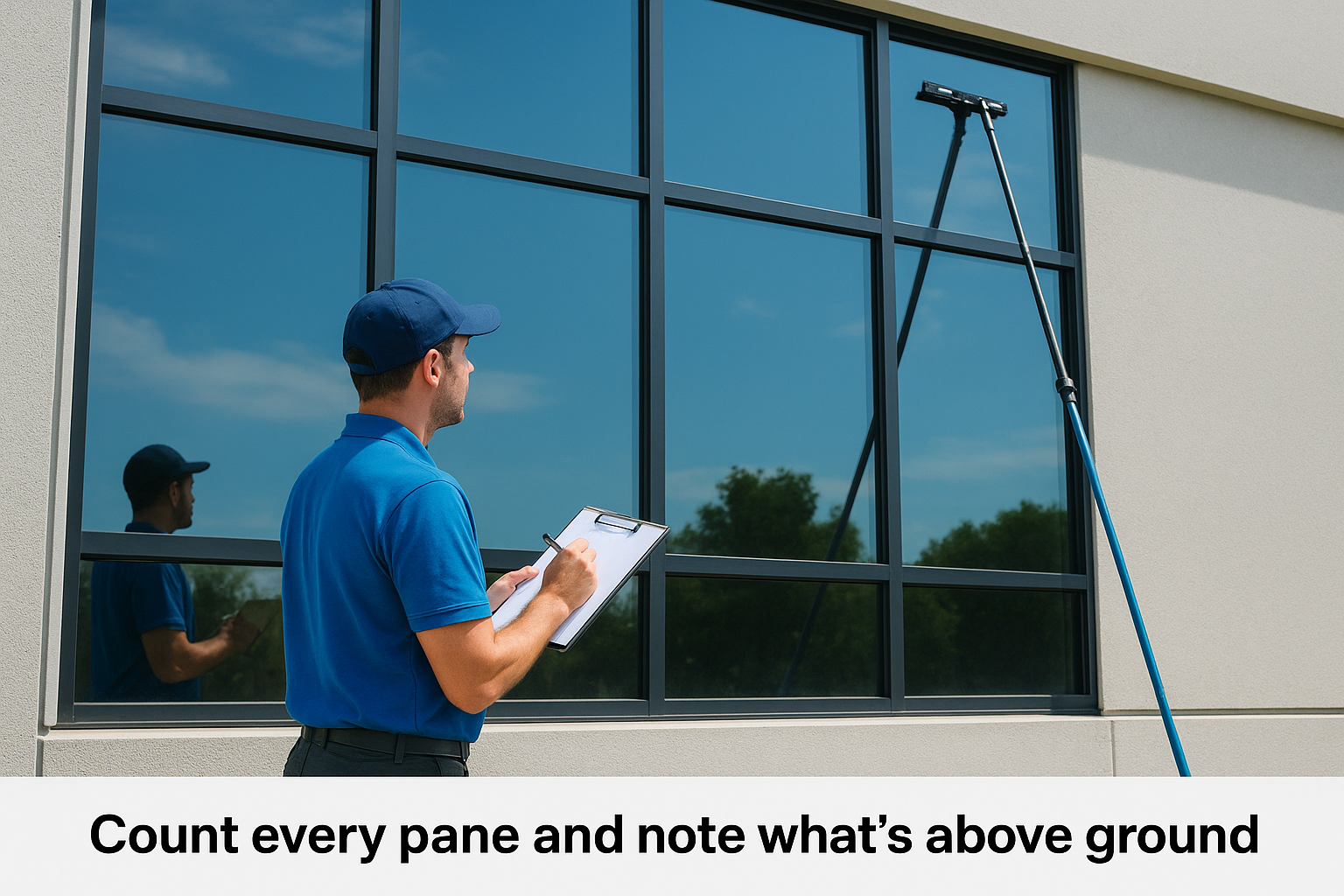
Count every pane and note what’s above ground
Your pane count is the foundation of any per-pane or hourly estimate. Walk the full perimeter of the building and count each individual pane separately. A single window unit with four glass sections counts as four panes, not one. Record each floor separately so you know exactly how many panes require lift equipment versus basic ladder or pole access.
Use a simple field tally like this:
| Floor | Pane Count | Access Method |
|---|---|---|
| Ground (1st) | 24 | Squeegee on pole |
| 2nd floor | 18 | Extension ladder |
| 3rd floor | 16 | Boom lift |
| Total | 58 |
Document access conditions before you quote
Once you have your pane count, record every access constraint on the property. Note whether sidewalks are active during business hours, whether loading docks restrict equipment staging, and whether the building has security check-in requirements that add measurable time to each visit.
A straightforward site checklist keeps your scope notes consistent across multiple quotes:
- Interior cleaning required: Yes / No
- Both sides of glass: Yes / No
- Window condition (standard / heavy buildup): note specifics
- Roof anchors or tie-off points available: Yes / No
- Parking or staging restrictions: note hours and locations
These details directly shape commercial window cleaning rates on any job and protect you from absorbing costs you never anticipated when writing the original quote.
Step 2. Pick a pricing model: hour, pane, or sq ft
With your pane count and access notes ready, you can now match the right pricing model to the job. Each model has a specific context where it performs best, and picking the wrong one creates confusion for clients and exposes you to margin risk or lost contracts. Using hourly on a large, predictable multi-floor building, for example, signals uncertainty to a buyer who expects a fixed number upfront before they approve any work.
When hourly makes sense
Hourly pricing works best when job scope is genuinely uncertain before you start. Small office suites, interior-only cleans with a variable window count, or first-time visits where you haven’t completed a full site walk all justify an hourly rate. In the New York market, charge $55 to $85 per cleaner per hour and log your time by zone so you can convert the job to per-pane pricing on the next contract cycle with real data behind your number.
Track your hours on the first visit so you can offer a confident fixed per-pane rate at contract renewal.
When per-pane is the right call
Per-pane pricing is the most transparent model for standard commercial buildings because both parties know the total before the crew arrives. Set your rate by floor level: $4 to $8 per pane for ground-floor access and $8 to $15 per pane for anything requiring lift equipment. Keep your interior and exterior rates separate so clients can adjust scope without renegotiating the entire contract from scratch.
When square footage fits
Large glass facades, curtain walls, and floor-to-ceiling storefront windows make individual pane counting impractical. Measure the total glass area and price at $0.25 to $0.50 per square foot, which aligns with current commercial window cleaning rates for facade work in urban markets. Confirm your measurement method with the client before the job starts, and note it directly on the quote document so there is no dispute when the invoice arrives.
Step 3. Build a quote that covers risk and profit
With your scope data and pricing model locked in, the final step is translating those numbers into a quote that protects your margin. Many cleaning businesses get this wrong by pricing only the labor they expect, with no room for the variables that always surface on commercial jobs: broken lift reservations, extra interior floors a client added last minute, or windows that turn out to be far dirtier than the site walk suggested. Your quote is a financial document, and it needs to treat risk as a real line item.
A quote that only covers your expected costs will lose money the moment anything on the job goes differently than planned.
Add a buffer for risk and overhead
Calculate your base cost first: multiply your pane count by your per-pane rate (or your estimated hours by your hourly rate), then add equipment, travel, and any consumables you’ll use on site. Once you have that subtotal, add a 15 to 20 percent buffer for risk, overhead, and profit. In competitive urban markets like New York, this buffer keeps your commercial window cleaning rates sustainable across a full contract year without forcing you to renegotiate every time a job runs longer than planned.
Structure your quote document clearly
A clear quote prevents disputes and signals professionalism to the client. Use a consistent template on every proposal so nothing gets missed before the client signs.
| Quote Line Item | Example |
|---|---|
| Total pane count | 58 panes |
| Base rate per pane (by floor) | $6 ground / $11 upper |
| Subtotal (labor + equipment) | $510 |
| Risk and overhead buffer (18%) | $92 |
| Total quoted price | $602 |
Keep your interior and exterior pricing as separate line items so clients can remove scope without triggering a full requote, which saves time on both sides of the negotiation.
Putting it into practice
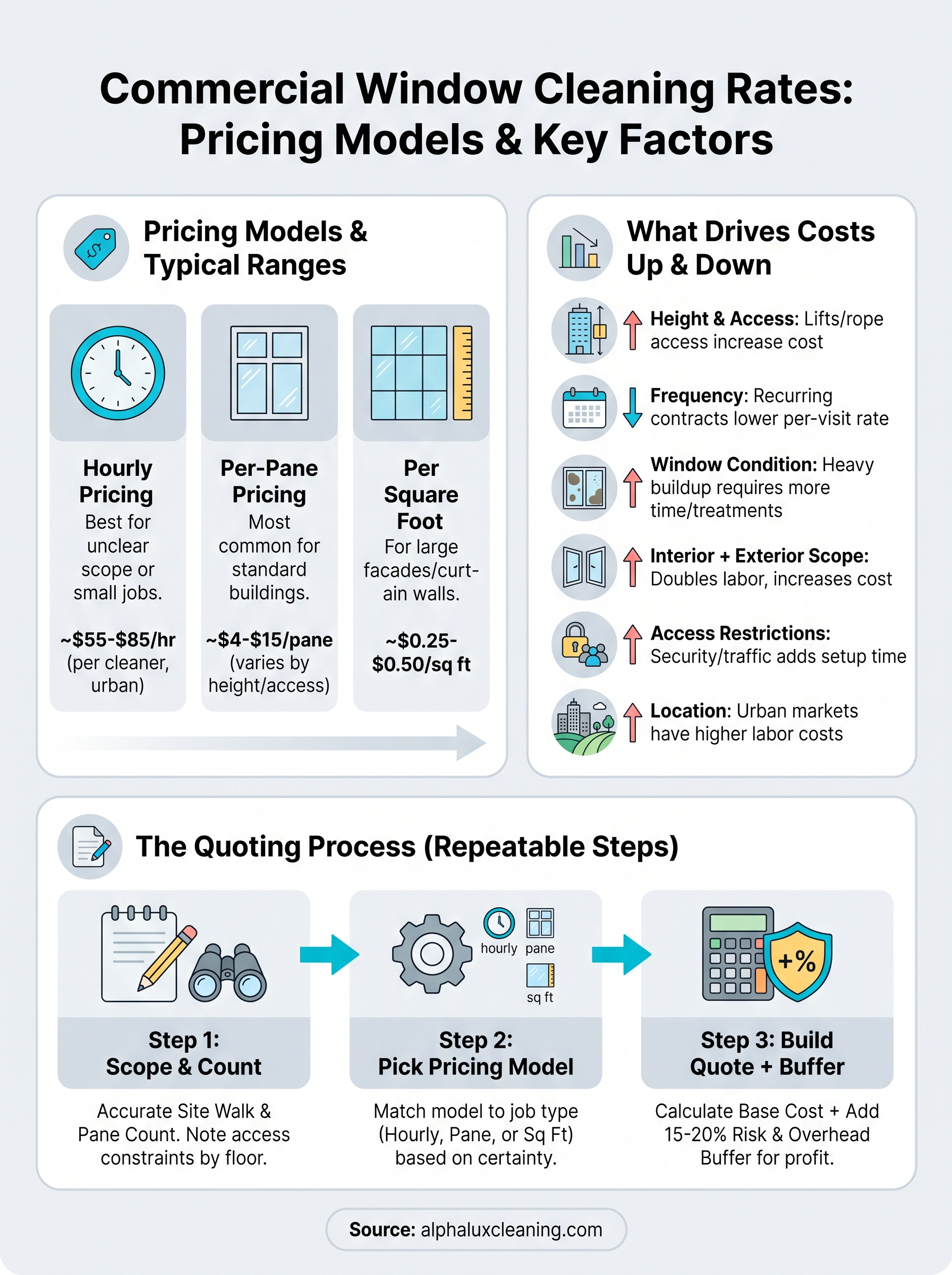
You now have everything you need to approach commercial window cleaning rates with confidence, whether you’re writing your first quote or reviewing a vendor proposal. The process comes down to three repeatable steps: scope the job accurately, match the right pricing model to the work, and build a quote that covers your actual costs plus a buffer for risk. Skip any of these steps and you expose yourself to margin loss or a client dispute that could have been avoided before anyone signed anything.
Start with your site walk, record your pane count by floor, and document every access constraint before you pick a number. Apply your pricing model consistently across every job so your rates stay defensible and your contracts stay profitable. If you need a professional cleaning team that brings the same structured approach to every commercial job, contact AlphaLux Cleaning to request a free estimate for your property.