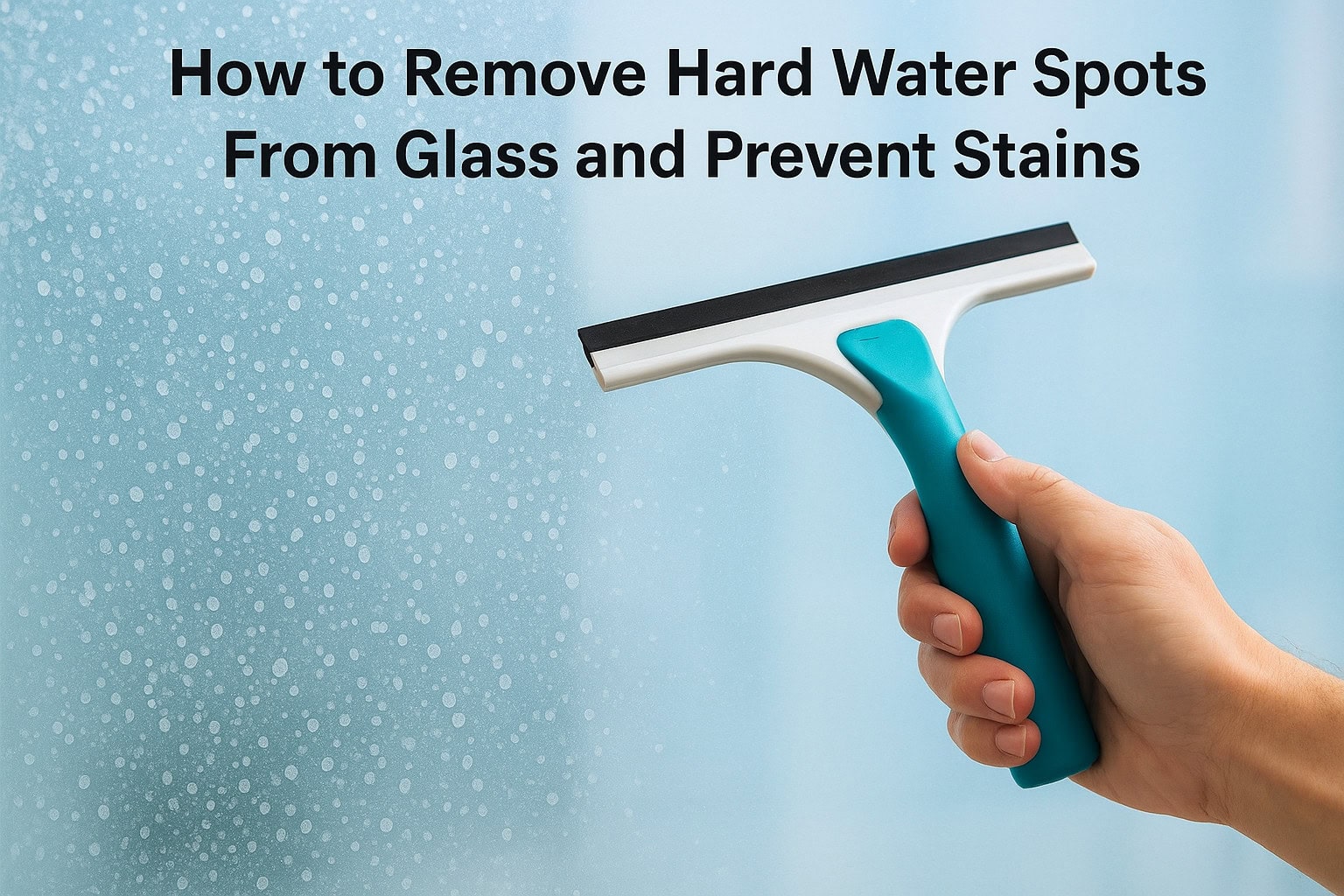
Those cloudy, white streaks on your shower doors and windows aren’t dirt, they’re mineral deposits left behind by evaporating water. If you’ve ever scrubbed at them with regular glass cleaner and gotten nowhere, you already know how stubborn they can be. Knowing how to remove hard water spots from glass takes more than elbow grease; it takes the right approach. Left untreated, these mineral stains can etch permanently into the surface, making them impossible to remove without professional help.
The good news? Most hard water spots respond well to common household products you probably already own. From white vinegar and baking soda to commercial-grade mineral removers, there’s a solution for every level of buildup. At AlphaLux Cleaning, we deal with hard water stains across New York homes and businesses regularly, they’re one of the most common issues our deep cleaning teams tackle on glass surfaces like shower enclosures, mirrors, and interior windows.
This guide walks you through proven removal methods step by step, explains what causes hard water stains in the first place, and shares practical prevention tips so you can keep your glass looking spotless longer. Whether you’re handling it yourself or deciding it’s time to call in a professional crew, you’ll have everything you need right here.
What hard water spots are and why they stick
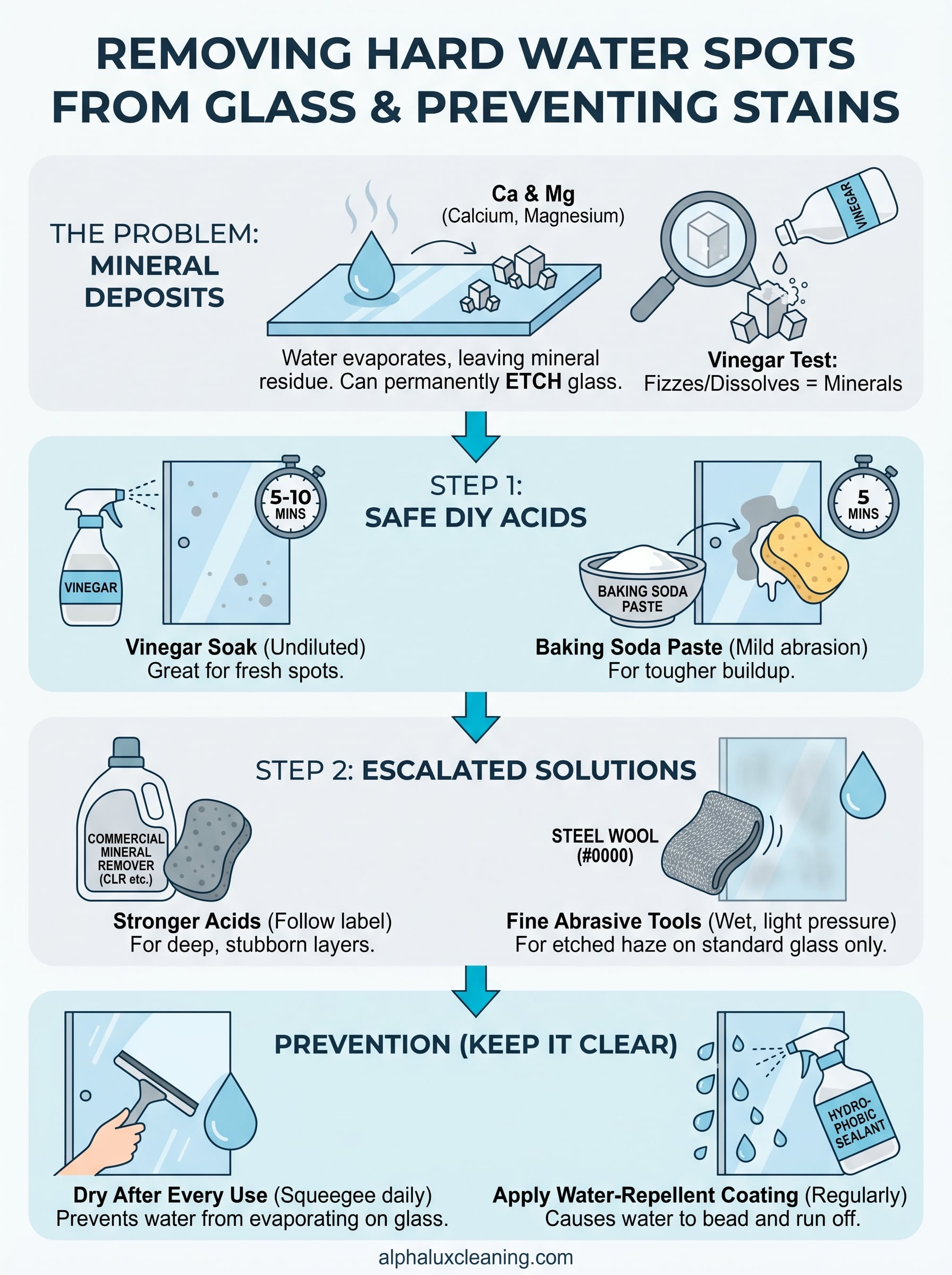
Hard water contains dissolved minerals, primarily calcium and magnesium, picked up as groundwater moves through limestone and chalk deposits underground. When water lands on a glass surface and then evaporates, those minerals stay behind as a white or gray residue. This is a common issue across New York, where municipal water supplies carry moderate to high mineral content depending on the region. The spots aren’t harmful, but they bond chemically to the glass rather than sitting loosely on top of it, which is why a quick wipe with a damp cloth accomplishes nothing.
How mineral deposits build up on glass
Every time water touches your shower door, window, or mirror and then dries, it leaves behind a thin layer of calcium carbonate or magnesium hydroxide. Over days and weeks, those layers stack on top of each other and harden into the crusty white buildup you’re dealing with now. Warm environments like bathrooms speed this process up because heat accelerates evaporation, leaving concentrated mineral residue behind faster than in cooler spaces. The longer deposits accumulate without removal, the thicker and more stubborn the stain becomes.
The longer you let hard water deposits sit without treatment, the more they crystallize into the glass surface, making them significantly harder to remove.
Why glass is especially vulnerable to etching
Glass has a slightly porous surface at the microscopic level, and mineral ions from hard water work their way into those tiny gaps as water evaporates. Once trapped, they react with the silica in the glass and begin forming a chemical bond. This process is called etching, and it explains why old, neglected stains often look frosted or permanently dull even after a thorough cleaning attempt. Newer deposits sit closer to the surface and respond well to acid-based treatments. Older, etched stains may require more aggressive intervention, which is exactly why acting early matters when you’re learning how to remove hard water spots from glass.
Step 1. Confirm you have mineral spots
Before you grab any cleaner, verify that mineral deposits are actually what you’re dealing with. Hard water spots have a distinct appearance: they look white, chalky, or gray and tend to cluster where water frequently sits and dries, like along the bottom edge of shower doors or around faucet splash zones. Soap scum can look similar, but it usually has a filmy, slightly yellowish tint rather than the bright white crystalline look of mineral buildup.
The vinegar test
The fastest way to confirm hard water deposits is the vinegar test. Apply a small amount of undiluted white vinegar to the suspicious spot and let it sit for 30 to 60 seconds. If the spot softens, dissolves partially, or wipes away more easily than before, you’re dealing with mineral deposits, because acid breaks down calcium and magnesium compounds on contact. If the spot doesn’t respond at all, you may have soap scum, oxidation, or a different surface issue that needs a different approach.
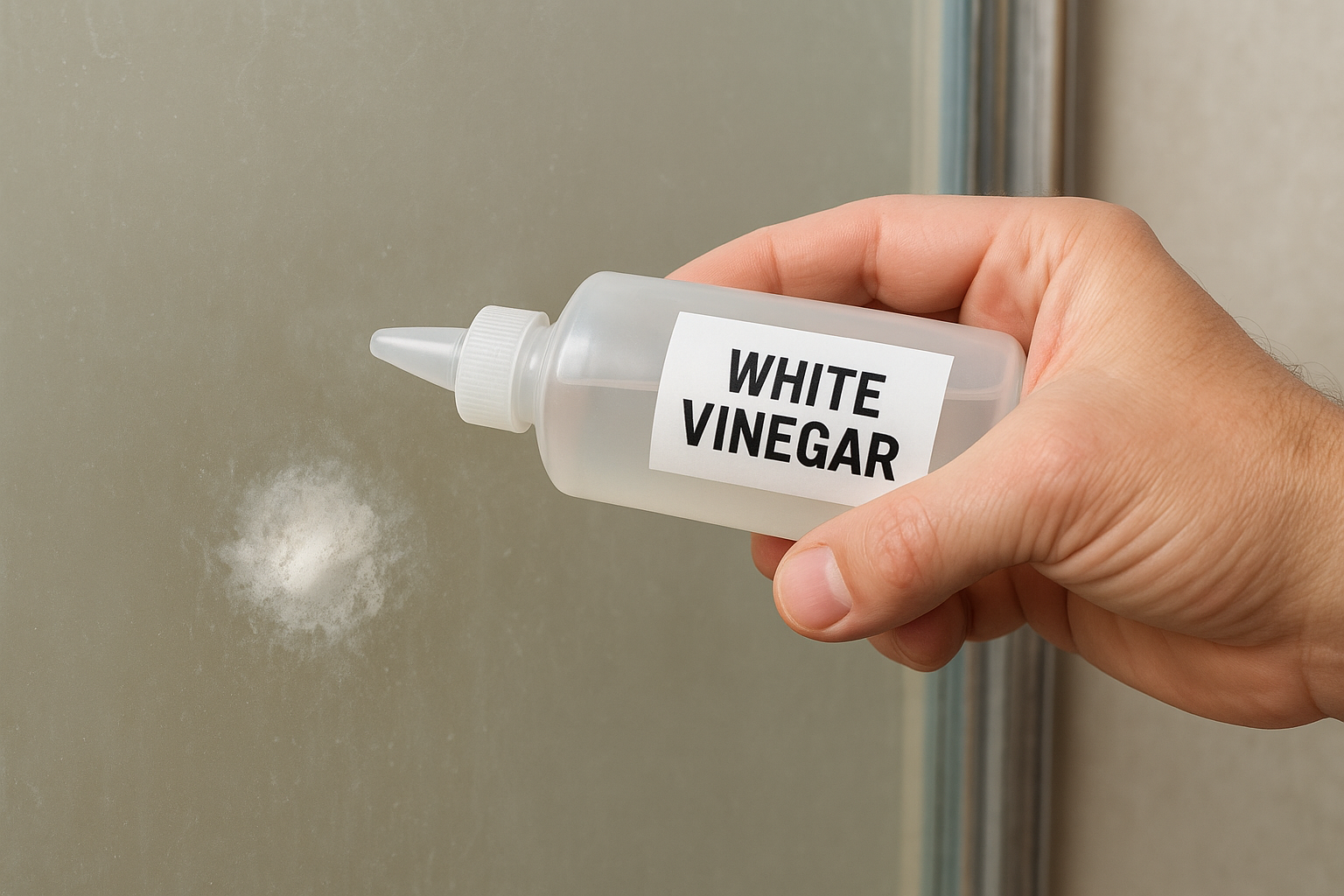
If the vinegar test produces a fizzing or bubbling reaction, that’s a strong sign the deposits are heavily mineralized and will need more than a single application to clear.
What to check before cleaning
Run through these quick checks before you start learning how to remove hard water spots from glass:
- Location: spots near faucets, showerheads, or water runoff zones confirm mineral buildup
- Texture: rough or gritty under your fingernail means etching has already started
- Color: pure white or gray points to calcium; yellow-brown suggests iron content in your water supply
Step 2. Remove spots with safe DIY acids
Mild acids break down calcium and magnesium deposits by reacting chemically with the minerals and loosening their bond to the glass. This is the most effective first step for anyone learning how to remove hard water spots from glass, and both methods below use products you likely already have at home. Work in a well-ventilated area and protect your hands with rubber gloves before you start.
White vinegar soak method
White vinegar is the go-to solution for fresh and moderate hard water stains because its acetic acid content (typically around 5%) dissolves calcium carbonate without scratching or damaging your glass surfaces.
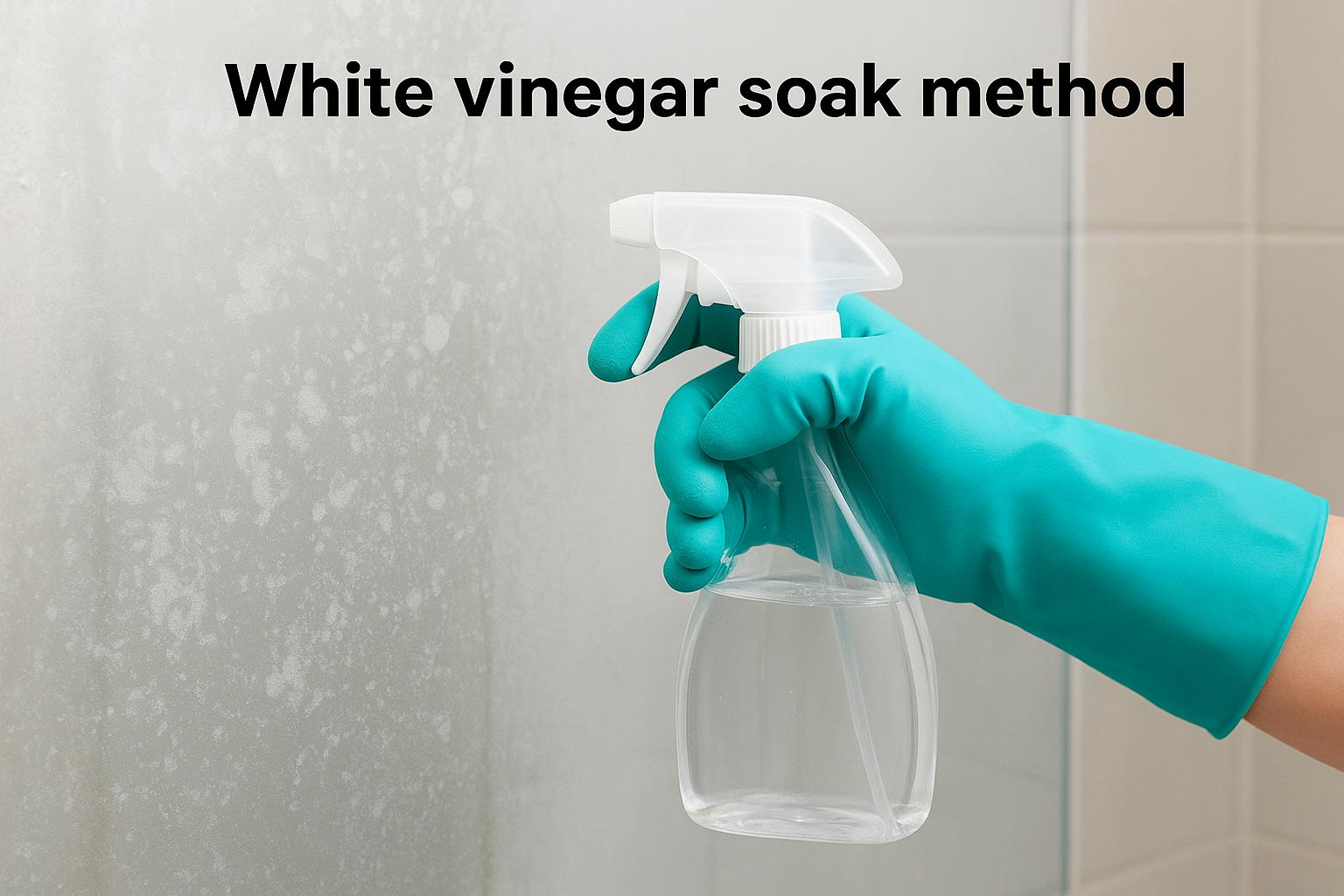
Follow these steps:
- Pour undiluted white vinegar into a spray bottle
- Spray the stained surface generously and let it sit for 5 to 10 minutes
- Scrub in circular motions using a non-scratch sponge or microfiber cloth
- Rinse with clean water and dry immediately with a lint-free cloth
For shower doors with heavy buildup, soak paper towels in vinegar, press them directly onto the glass, and leave them for 20 to 30 minutes before scrubbing.
Baking soda paste for tougher spots
When vinegar alone doesn’t fully clear the stain, a baking soda paste adds gentle abrasion that lifts stubborn mineral layers without scratching your glass. The combination of a mild alkali and a weak acid creates a short fizzing reaction that helps break the mineral bond.
Mix two tablespoons of baking soda with just enough white vinegar or water to form a thick paste. Apply it directly to the stain, let it sit for five minutes, then scrub with a damp sponge and rinse clean.
Step 3. Escalate for stubborn stains
When DIY acids don’t fully clear the buildup, you need to move up to stronger solutions. Commercial mineral removers and fine abrasive tools are designed specifically for the kind of deeply etched deposits that vinegar and baking soda can’t fully dissolve. This is the stage of how to remove hard water spots from glass where patience and the right product make the difference between a clean surface and a permanently damaged one.
Commercial mineral removers
Products like CLR (Calcium, Lime, and Rust Remover) and Bar Keepers Friend are formulated with stronger acids and surfactants that break through mineral layers household acids can’t penetrate. Apply the product directly to the stain following the manufacturer’s instructions, let it dwell for the recommended time, then scrub with a non-scratch pad and rinse thoroughly. Always test on a small, hidden area first, since stronger acids can damage certain glass coatings or tinted surfaces if left on too long.
Never mix commercial mineral removers with other cleaning products, especially bleach, since the chemical reaction can release harmful fumes.
Fine abrasive tools for etched glass
If chemical treatments still leave a haze behind, superfine steel wool (grade #0000) or a cerium oxide polishing compound can physically buff out light etching without scratching standard glass. Wet the surface first, apply the compound or steel wool with light circular pressure, and keep the area lubricated throughout the process. Work in small sections and check progress frequently to avoid over-polishing.
Use this approach only on:
- Standard clear float glass (shower doors, windows)
- Surfaces with no anti-reflective or protective coating
- Areas where chemical treatments have already loosened the top layer of buildup
Step 4. Prevent spots from coming back
Knowing how to remove hard water spots from glass is only half the job. Once you’ve cleared the mineral deposits, a few consistent habits will keep them from rebuilding and save you from repeating the whole removal process. Prevention takes far less time than treatment, and most of the steps below add only a minute or two to your routine.
Dry glass surfaces after every use
The single most effective thing you can do is remove standing water before it gets a chance to evaporate and leave minerals behind. Keep a squeegee on your shower wall and run it across the glass after every shower, taking no more than 30 seconds per session. For windows exposed to sprinkler systems or rain splash, a quick wipe with a microfiber cloth after water exposure makes a real difference over time.
Squeegee use alone can reduce hard water buildup by up to 90% compared to untreated glass in the same water conditions.
Apply a water-repellent coating
Hydrophobic glass sealants like Rain-X cause water to bead up and roll off the surface rather than spreading and evaporating flat against the glass. Apply the sealant to clean, dry glass according to the product label, typically every one to three months depending on traffic and water exposure. Treated shower doors and windows shed water far more efficiently, which means mineral deposits have far less opportunity to form in the first place. Reapply after any deep cleaning session, since scrubbing removes the protective layer along with the stains.
Keep glass clear going forward
Hard water spots are a maintenance problem, not a permanent one. Now that you know how to remove hard water spots from glass at every level of severity, from a quick vinegar spray to a cerium oxide polish, you have a repeatable process you can apply whenever deposits start to build. The real key going forward is consistency: squeegee after each shower, reapply your water-repellent coating every few months, and treat new spots early before they have time to etch into the surface.
Some situations still call for a professional hand, particularly when deposits have etched deeply into older glass or when you’re managing a commercial property with multiple glass surfaces that need regular upkeep. If that sounds like your situation, AlphaLux Cleaning’s professional cleaning services cover residential and commercial properties across New York, with trained teams who handle stubborn mineral buildup as part of thorough deep cleaning visits.