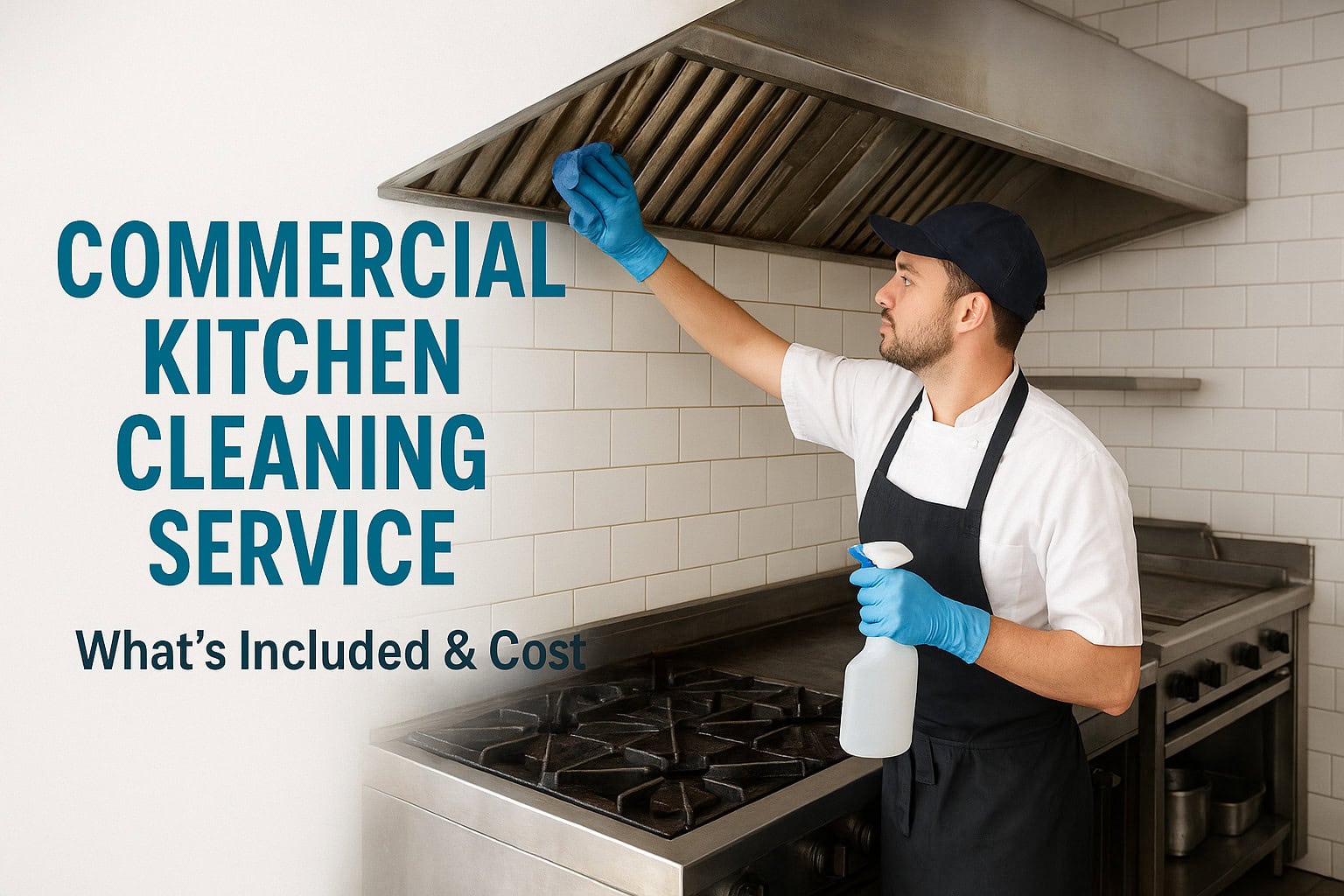
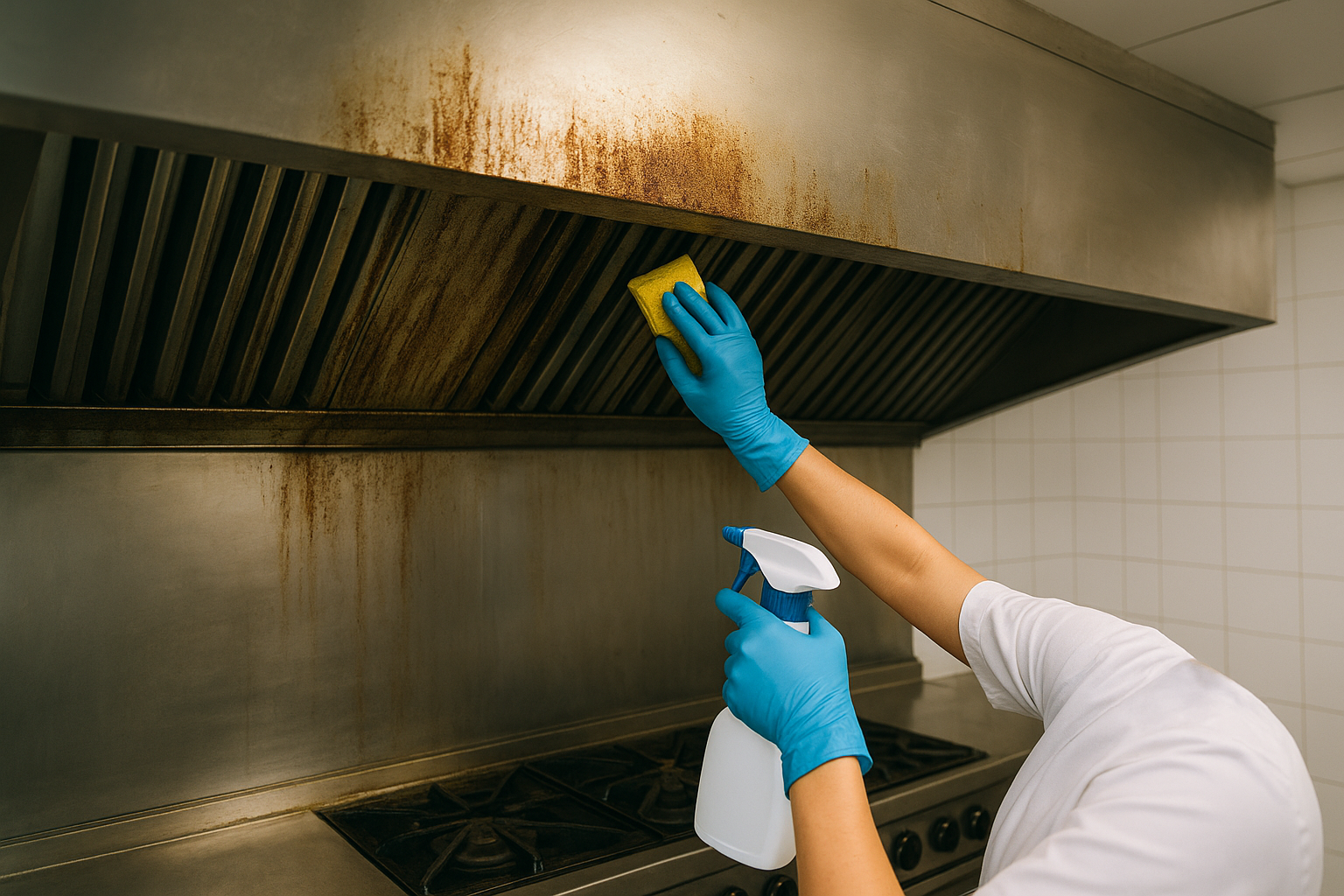
A grease-coated hood, sticky floors, and buildup behind heavy equipment, that’s the reality of any busy kitchen that doesn’t have a solid cleaning routine in place. Hiring a commercial kitchen cleaning service isn’t just about appearances. It’s about passing health inspections, preventing fire hazards, and keeping your kitchen safe for the people who work in it every day.
But what does a professional service actually do once they walk through the door? And more importantly, how much should you expect to pay for it? These are fair questions, especially if you’re comparing providers or booking this type of service for the first time. The answers depend on your kitchen’s size, condition, and the specific tasks you need covered, from exhaust hood degreasing to floor-to-ceiling deep cleans.
At AlphaLux Cleaning, we provide commercial cleaning services across New York with trained, insured professionals and eco-friendly products that get the job done without cutting corners. Below, we break down exactly what’s included in a commercial kitchen cleaning service, what drives the cost, and how to choose a provider you can trust.
Why commercial kitchen cleaning matters
Running a commercial kitchen means working under strict health codes and safety regulations that don’t leave much room for error. Regular cleaning isn’t optional for any food service operation; it’s a legal requirement in New York and across the country. If your kitchen fails a health inspection because of grease buildup, pest activity, or unsanitary surfaces, you risk fines, temporary closure, or losing your operating license entirely.
Health code compliance and inspections
The FDA Food Code sets baseline sanitation standards that state and local agencies enforce through regular inspections. In New York, the Department of Health conducts unannounced visits and grades your facility based on cleanliness, equipment condition, and food handling practices. A professional commercial kitchen cleaning service covers the areas inspectors look at most closely, including grease traps, ventilation hoods, prep surfaces, and floor drains.
Failing a single inspection can cost you thousands in fines and damage your reputation far beyond what any deep clean would have cost in the first place.
Inspectors also look at documentation and cleaning logs. Some cleaning companies provide written records of what was cleaned and when, which gives you evidence of due diligence if questions arise during a visit.
Fire safety and equipment lifespan
Grease is the leading cause of commercial kitchen fires, and the National Fire Protection Association’s NFPA 96 standard outlines how often exhaust systems need to be cleaned based on cooking volume. Skipping that schedule doesn’t just put your kitchen at risk; it can also void your insurance coverage if a fire occurs and records show the system wasn’t maintained on schedule.
Regular cleaning also extends the life of your equipment. Ovens, fryers, and ventilation systems that collect grease and grime work harder, wear out faster, and cost significantly more to repair or replace.
What’s included in a commercial kitchen cleaning
A commercial kitchen cleaning service covers far more than wiping down counters at the end of a shift. Providers work through a structured list of high-risk areas that accumulate grease, bacteria, and debris over time, areas your staff’s nightly cleaning won’t fully address.
Surface and Equipment Degreasing
Professional cleaners break down built-up grease on cooking equipment, including ovens, fryers, flat-tops, and grills. They also sanitize prep surfaces, cutting boards, and countertops using food-safe methods that eliminate bacteria your standard cleaning products typically miss.
Equipment that gets degreased on a consistent schedule runs more efficiently and breaks down far less often, which directly lowers your repair and replacement costs.
Hood, Ventilation, and Drain Cleaning
Your exhaust hood and ventilation system collect grease faster than any other area in the kitchen. Crews remove and degrease hood filters, clean accessible ductwork, and clear floor drains and grease traps to prevent blockages and odors. Beyond the primary surfaces, most services also cover:
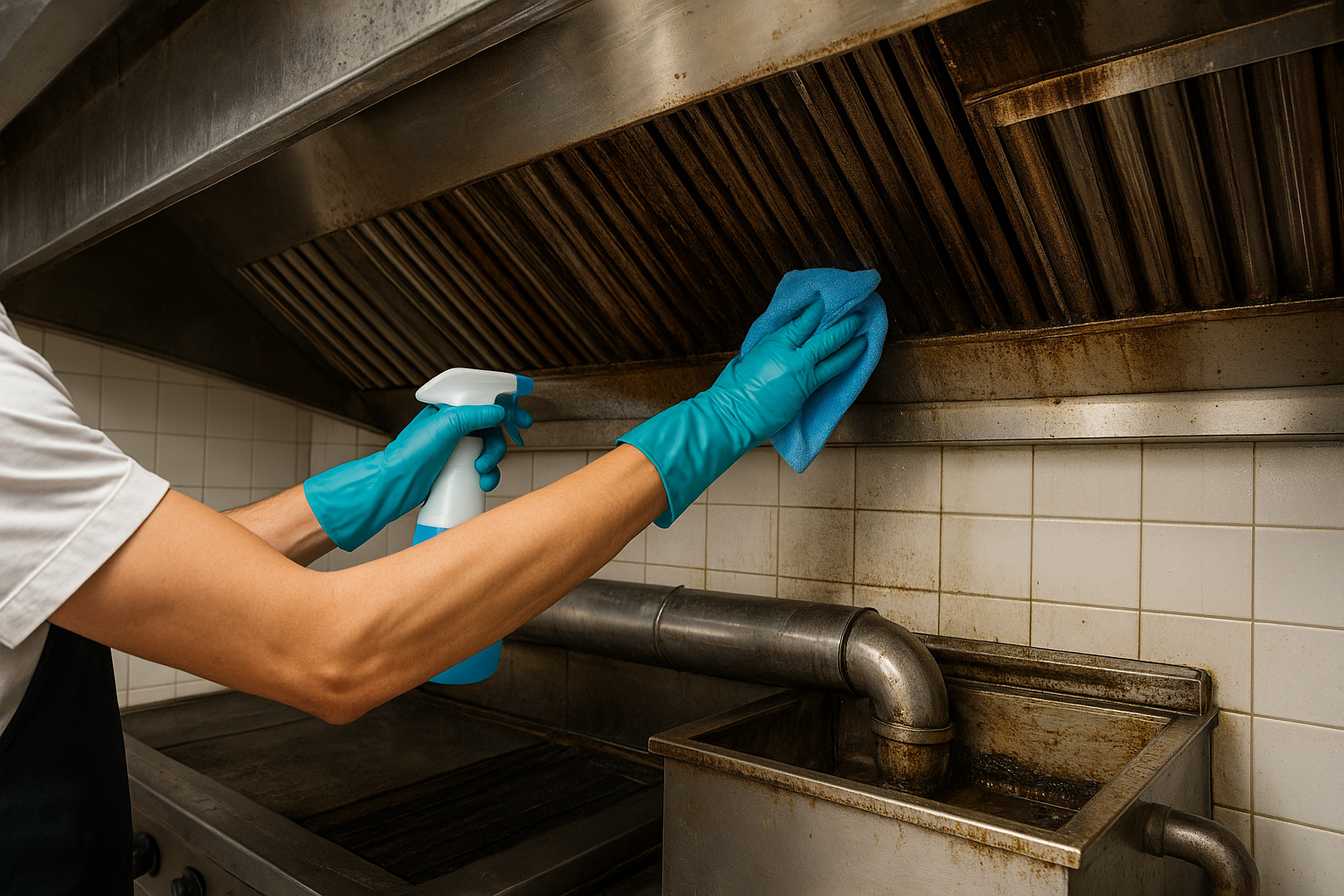
- Walls and backsplashes behind cooking equipment
- Floor surfaces beneath and around heavy appliances
- Cold storage units and walk-in cooler interiors
These areas stay untouched during daily cleaning but carry real risk during inspections if they’re neglected.
Commercial kitchen cleaning cost and pricing factors
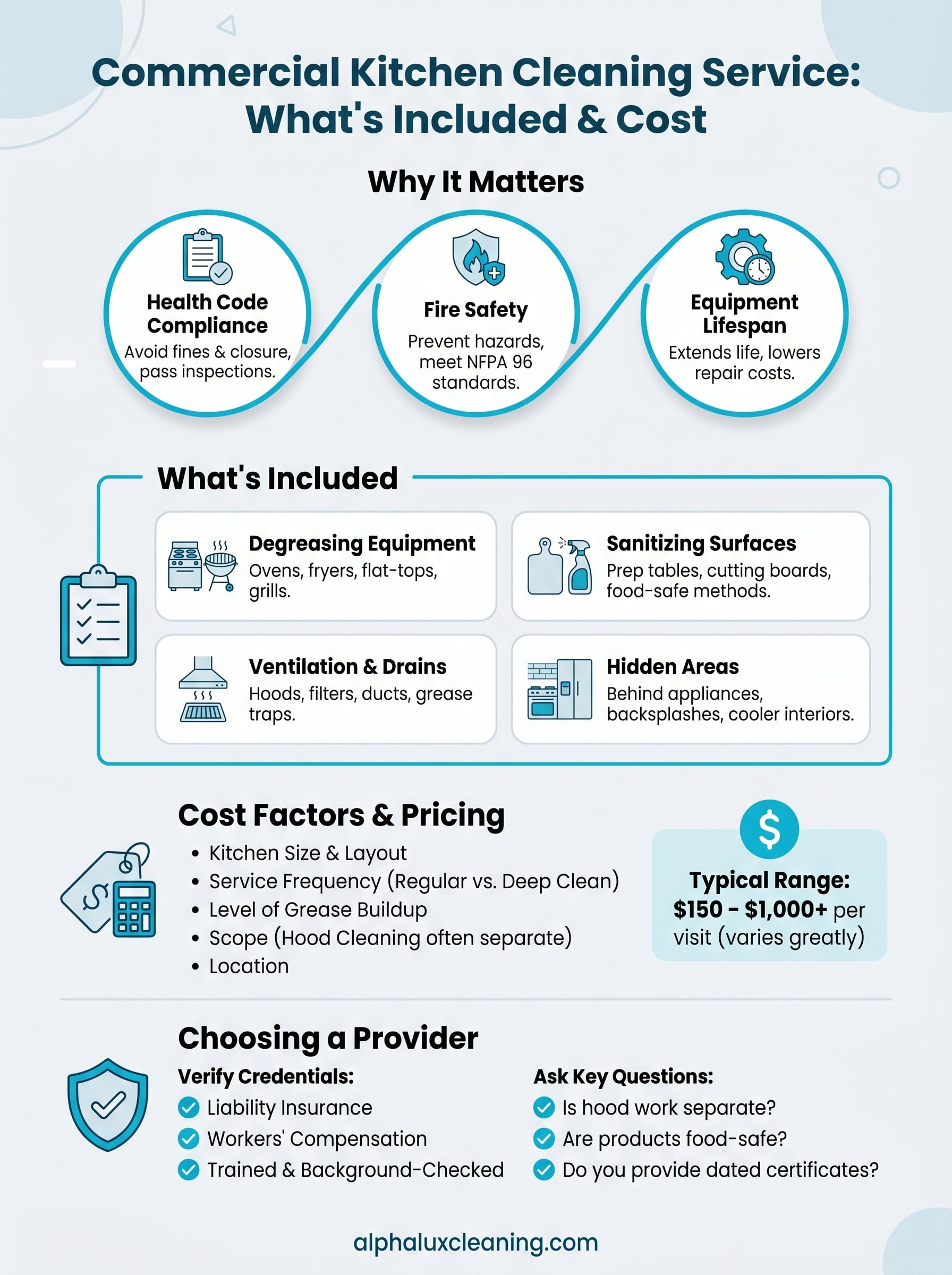
Pricing for a commercial kitchen cleaning service varies based on several factors, and getting a clear estimate upfront saves you from unexpected costs. Most providers charge between $150 and $1,000 or more per visit, depending on the scope of work and the condition of your kitchen.
Key factors that affect your quote
The size of your kitchen is the biggest driver. A small café costs less to clean than a large restaurant or hotel kitchen with multiple cooking stations and heavy equipment. Beyond size, these factors push your price up or down:
- Frequency of service: Regularly scheduled cleanings cost less per visit than one-time deep cleans
- Level of buildup: Heavy grease accumulation takes more time and labor to remove
- Hood and duct cleaning: Exhaust system work is often priced separately from general kitchen cleaning
- Location: Urban areas in New York typically carry higher service rates than suburban ones
Getting a detailed, written quote that breaks down each service line prevents billing surprises and helps you compare providers accurately.
Your best move is to request itemized estimates from at least two providers before committing, so you know exactly what each one covers and can hold them to it.
How often to schedule commercial kitchen cleaning
Cleaning frequency depends on how heavily your kitchen operates and what type of cooking you do. A high-volume restaurant running two shifts daily needs far more frequent professional attention than a small café with limited fry cooking. The NFPA 96 standard provides a baseline for hood cleaning intervals, but your overall cleaning schedule should cover much more than just the exhaust system.
Daily, Weekly, and Monthly Tasks
Your staff should handle basic sanitation every day, including wiping down surfaces, cleaning equipment exteriors, and clearing floor drains. A professional service steps in for the deeper work your team can’t realistically complete during a shift.
Most food service operations benefit from scheduling a professional commercial kitchen cleaning service at least once a month, with more frequent visits during peak seasons or high-volume periods.
Quarterly Deep Cleans and Hood Service
Hood and exhaust system cleaning follows its own schedule based on cooking volume. High-volume fryer operations typically require cleaning every three months, while moderate-use kitchens may qualify for semi-annual service under NFPA 96 guidelines. A quarterly deep clean also gives you a chance to catch equipment buildup and structural issues before they become health code violations or costly repairs. Ask your provider to leave a dated cleaning certificate after each visit.
How to choose a commercial kitchen cleaner in NY
Not every commercial kitchen cleaning service operates at the same standard, and in New York, that gap becomes obvious the moment an inspector walks through your door. Choosing the right provider means looking past a low quote and focusing on what actually protects your kitchen and your license.
Credentials and Insurance to Verify
Before you hire anyone, confirm they carry liability insurance and workers’ compensation coverage. If a crew member gets injured on your property or damages equipment, you need that protection in place. Also ask whether technicians are background-checked and trained specifically for commercial kitchen environments, not just general janitorial work.
A provider who hesitates to share proof of insurance or certifications before booking is a provider worth avoiding.
Questions to Ask Before You Book
Pin down the specifics before signing anything. Ask what’s included in each cleaning visit and whether hood and duct work is part of the base price or quoted separately. Find out if they provide dated cleaning certificates after each visit, since those records carry real weight during health inspections.
- Do they use food-safe, non-toxic products?
- Can they work around your kitchen’s operating hours?
- Do they offer a written scope of work upfront?
Next steps for a safer, cleaner kitchen
A clean kitchen is not something you achieve once and move on from. It requires consistent scheduling, the right provider, and a clear scope of work that matches how your kitchen actually operates. Whether you run a high-volume restaurant or a small café, the risks of skipping professional service are the same: failed inspections, fire hazards, and equipment that breaks down faster than it should.
Your next move is straightforward. Request written estimates from at least two providers, verify their insurance and certifications, and confirm exactly what each visit covers before signing anything. Pinning down those details upfront saves you from billing surprises and gives you a realistic picture of what consistent maintenance will cost.
If you’re in New York and want a team that brings trained, insured professionals and eco-friendly products to every job, AlphaLux Cleaning provides a reliable commercial kitchen cleaning service with customized plans built around your schedule and your kitchen’s specific needs.