You just had your carpets cleaned, and now you’re standing in the doorway wondering, how long does carpet take to dry after cleaning? Maybe you’re tiptoeing around in socks, debating whether it’s safe to move the furniture back. It’s a fair question, and the answer matters more than you might think. Walking on damp carpet too soon can attract dirt, cause re-soiling, and even create conditions for mold growth.
The short answer is that most carpets dry within 6 to 24 hours, but that range depends on several factors: the cleaning method used, humidity levels, airflow, carpet thickness, and more. Some situations dry out in just a couple of hours, while others can stretch well past a full day.
At AlphaLux Cleaning, we handle carpet and deep cleaning jobs across New York, so we get this question regularly from our clients. Below, we’ll break down exactly what affects drying time, which cleaning methods dry fastest, and the most effective ways to speed things up so you can get back to using your space.
Typical carpet drying times by cleaning method
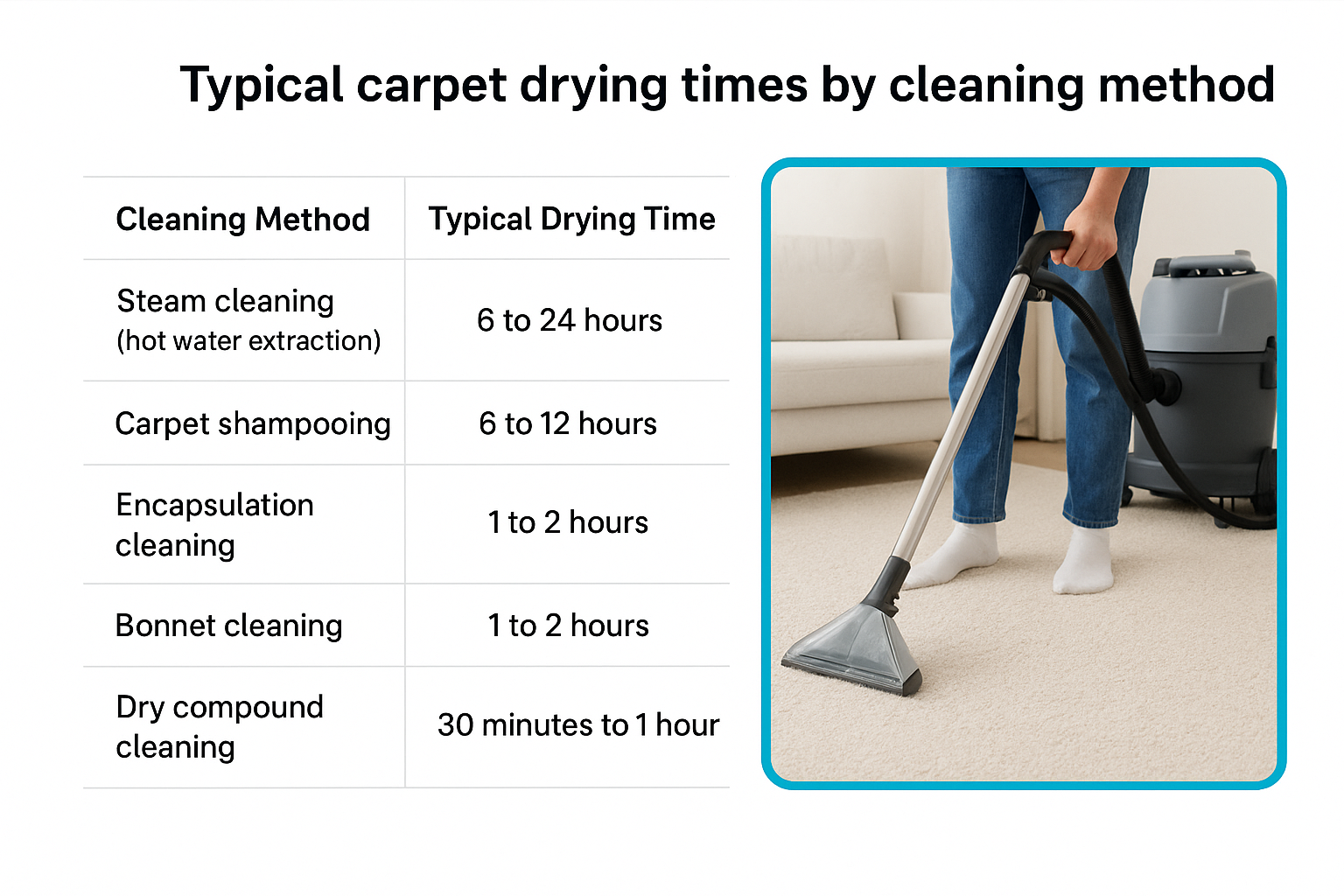
The cleaning method makes the biggest difference in how long carpet takes to dry after cleaning. Some methods push water deep into the fibers and backing, while others use little to no moisture at all. Knowing what to expect from each approach lets you plan your schedule and avoid stepping on damp carpet before it’s ready.
| Cleaning Method | Typical Drying Time |
|---|---|
| Steam cleaning (hot water extraction) | 6 to 24 hours |
| Carpet shampooing | 6 to 12 hours |
| Encapsulation cleaning | 1 to 2 hours |
| Bonnet cleaning | 1 to 2 hours |
| Dry compound cleaning | 30 minutes to 1 hour |
Steam cleaning (hot water extraction)
Steam cleaning is the most common professional method, and it leaves carpets the dampest of any approach. The process injects hot water and cleaning solution deep into the fibers, then uses powerful suction to pull most of that moisture back out. Even with strong extraction equipment, a fair amount of water stays behind in the fibers and the carpet backing.
Drying times typically fall between 6 and 24 hours, depending on how powerful the extraction equipment is and how thick your carpet pile is. Professional truck-mounted systems extract far more water than portable rental machines, so hiring a professional service generally cuts your drying time compared to doing it yourself.
With a truck-mounted professional setup and decent airflow in your home, most carpets are fully dry within 6 to 12 hours.
Carpet shampooing
Carpet shampooing works by applying a foamy cleaning solution to the carpet surface, scrubbing it in with a rotary brush machine, and then rinsing and extracting the residue. Because this process uses a significant volume of water, your drying time will typically land in the 6 to 12 hour range under normal indoor conditions.
One thing worth knowing: shampooing can leave detergent residue behind if the rinse step is rushed or skipped. That residue slows drying further and tends to attract new dirt once the carpet dries, which is part of why this method has fallen out of favor with many professional cleaners.
Encapsulation and dry compound cleaning
Encapsulation cleaning applies a low-moisture foam or liquid that surrounds dirt particles, then dries into crystals that a vacuum pulls away. Dry compound cleaning follows a similar logic, working an absorbent powder into the fibers to capture soil before vacuuming it out. Both methods leave your carpet dry and walkable within 30 minutes to 2 hours.
These methods are a strong choice when you need your space back quickly, which is why you see them used frequently in offices, hotels, and retail spaces. The trade-off is that neither reaches as deep into the carpet backing as hot water extraction does, so they work best for regular maintenance rather than heavy-duty cleaning jobs.
What affects how fast your carpet dries
Several variables work together to determine how long does carpet take to dry after cleaning, and understanding them helps you set realistic expectations before the job even starts. No two rooms dry at the same rate, because your specific conditions matter as much as the cleaning method itself.
Humidity and airflow
Humidity is the single biggest environmental factor in carpet drying time. When your indoor air is already saturated with moisture, it has limited capacity to pull more water from your carpet fibers. In humid summer conditions or in poorly ventilated rooms, drying times can push toward the upper end of any estimate you’ve been given.
Running your air conditioning or a dehumidifier during and after cleaning makes a noticeable difference in how quickly your carpet reaches a fully dry state.
Airflow works hand in hand with humidity. Still, stagnant air slows evaporation significantly. Rooms with open windows, ceiling fans, or floor fans circulating air consistently dry faster than closed-off spaces with no air movement.
Carpet thickness and fiber type
Thicker carpets and dense pile styles hold more water than low-pile or commercial-grade carpets. A plush bedroom carpet naturally takes longer to dry than a tight, flat-weave carpet in an office hallway. The backing material matters too. Some carpet backings absorb and retain water, while others release moisture more readily during extraction.
Synthetic fibers like nylon and polyester tend to release moisture faster than natural fibers like wool, which can hold a surprising amount of water deep in the pile.
How much water was used
Overwetting during cleaning is a common cause of extended drying times, especially with DIY rental machines that lack the extraction power of professional equipment. The more water pushed into the fibers, the longer your carpet stays damp. Professional-grade extraction equipment removes significantly more water per pass, which is one of the most practical reasons to hire a trained crew rather than rent a machine.
How to dry carpet faster after cleaning
Knowing how long does carpet take to dry after cleaning is useful, but cutting that time down is even better. A few deliberate steps taken right after cleaning finishes can shave hours off the process and get your space back in order without the long wait.
Increase airflow immediately
Open windows and doors as soon as the cleaning crew finishes, even if the weather outside feels slightly warm or humid. Moving air pulls moisture from carpet fibers far more effectively than still indoor air does. Place box fans or floor fans directly on the carpet surface, angled toward open windows or room vents to push damp air out. Ceiling fans help circulate air, but floor-level fans aimed at the carpet move moisture out at a much faster rate.
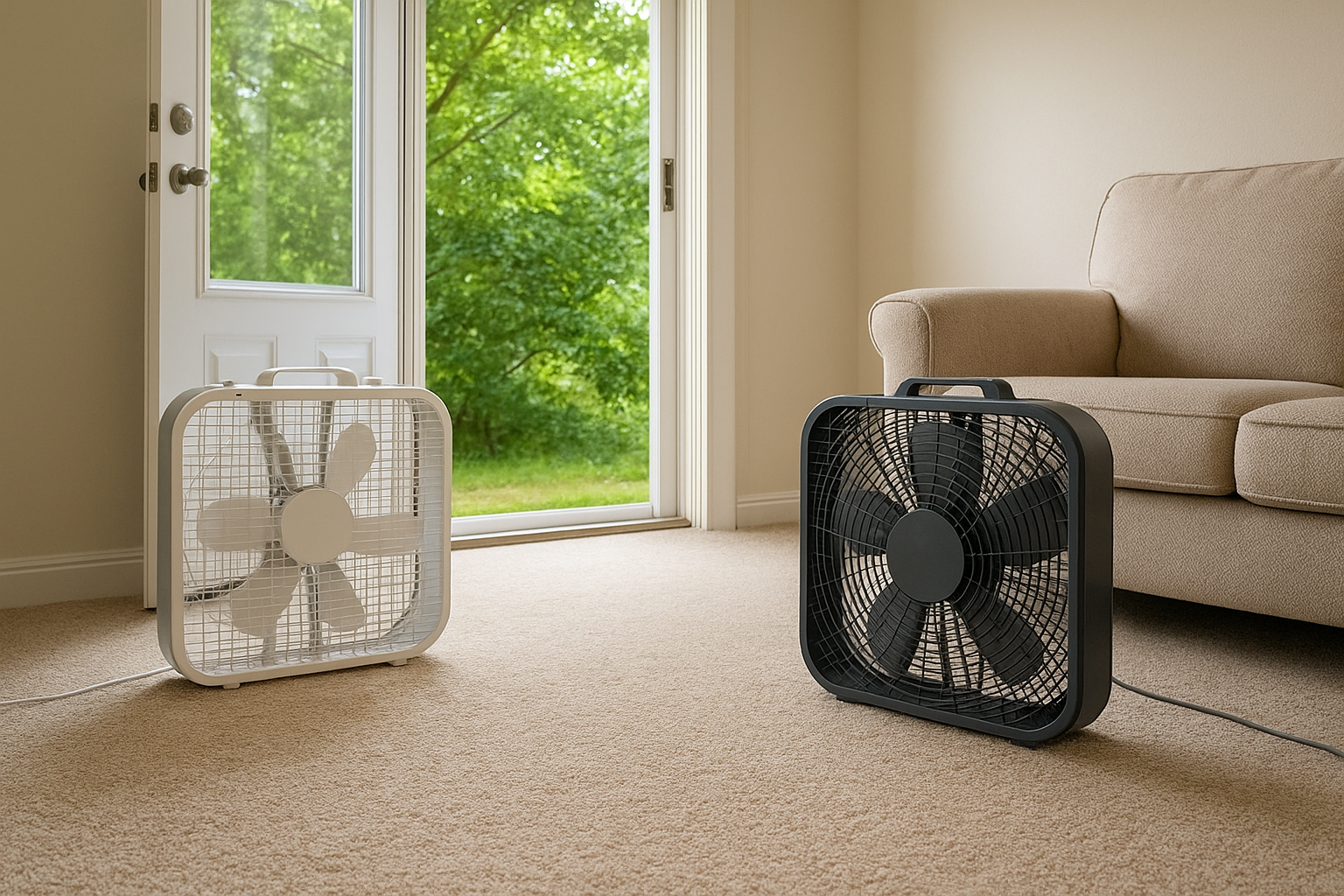
Running two or three fans in a cleaned room can cut drying time by several hours compared to leaving the space sealed off.
Control indoor humidity
Your air conditioner does more than cool the room; it actively removes moisture from indoor air, which helps carpet dry faster. Turn it on during and after cleaning, even when outdoor temperatures feel mild. If you own a standalone dehumidifier, run it in the cleaned room throughout the drying period. Keeping indoor relative humidity below 50% gives the air enough capacity to absorb moisture from the fibers consistently.
Here are the most effective ways to manage humidity while your carpet dries:
- Run your AC on a consistent setting throughout the drying period
- Close windows if outdoor humidity is higher than indoor levels
- Use a dehumidifier set between 40% and 50% relative humidity
Keep furniture off the carpet until it’s dry
Placing furniture back too early traps moisture beneath legs and bases, creating stubborn damp spots that take far longer to clear and can leave stains in the fibers. If you absolutely need to move pieces back before the carpet is ready, use plastic furniture coasters or small squares of aluminum foil under each leg to prevent direct contact with the damp surface.
Wait until the carpet feels completely dry to the touch before you return anything heavy to its spot.
When it’s safe to walk and move furniture back
Even when the carpet surface feels dry to the touch, the fibers deeper in the pile and the backing beneath can still hold significant moisture. Rushing back onto a damp carpet tracks in fresh dirt immediately, since wet fibers act like a magnet for soil from your feet and shoes. Bare feet or socks on a damp surface can also push grit and oils into the pile, creating stains that are harder to remove than the original mess.
Testing for dryness before walking
The most reliable way to check if your carpet is ready is the back-of-hand test: press the back of your hand firmly against the carpet surface and hold it there for five seconds. If you feel any coolness or moisture transfer, the carpet needs more time. A dry carpet will feel close to room temperature with no detectable dampness against your skin.
This check matters especially when asking how long does carpet take to dry after cleaning in rooms with poor ventilation, since surface dryness can be misleading while the backing stays wet underneath.
You can also verify readiness by pressing a dry white cloth firmly against the carpet and lifting it. Any visible moisture on the cloth means the carpet is not ready for foot traffic or furniture, regardless of how dry the top layer feels.
Returning furniture safely
Heavy furniture pieces carry the most risk because their weight compresses the fibers while moisture is still present, which can create permanent indentations and trap dampness in concentrated areas. Wait until the carpet passes the hand test across multiple spots in the room before moving anything back.
When returning furniture, start with lighter pieces first and check each placement zone individually. Corners and areas near windows or exterior walls often dry more slowly than the center of the room, so give those spots extra fan time before placing anything heavy on them.
If your carpet is still damp after 24 hours
A carpet that hasn’t dried within 24 hours is a problem that needs your immediate attention. Prolonged moisture creates the right conditions for mold and mildew growth in the carpet backing and padding beneath, and that kind of damage is expensive to reverse. If you’re still finding dampness when you press the back of your hand to the surface, don’t assume it will work itself out without action on your part.
Mold can begin developing in wet carpet within 24 to 48 hours, so acting quickly matters more than waiting to see if conditions improve on their own.
What might be causing the problem
Several specific issues can push drying time beyond a full day. The most common culprits are poor airflow, high indoor humidity, and overwetting during the cleaning process. In some cases, the carpet padding underneath has absorbed more water than the fibers themselves and is holding moisture that can’t escape without direct intervention. Rooms without windows, basements, and tightly sealed spaces are especially prone to this problem.
Steps to take right away
Add more fans to the room immediately and point them directly at the dampest areas. If you haven’t been running a dehumidifier, start one now and keep the door to the room closed so it works efficiently on that specific space. You can also carefully lift a corner of the carpet to check whether the padding beneath is wet. If the padding is soaked, you may need to pull it up temporarily to let both surfaces dry separately.
When to call a professional
If the carpet is still damp after 36 hours despite your best efforts, contact a water damage or restoration professional to assess the situation. Figuring out how long does carpet take to dry after cleaning becomes secondary when mold risk enters the picture. A professional can use moisture meters and industrial drying equipment to fully clear the problem before permanent damage sets in.
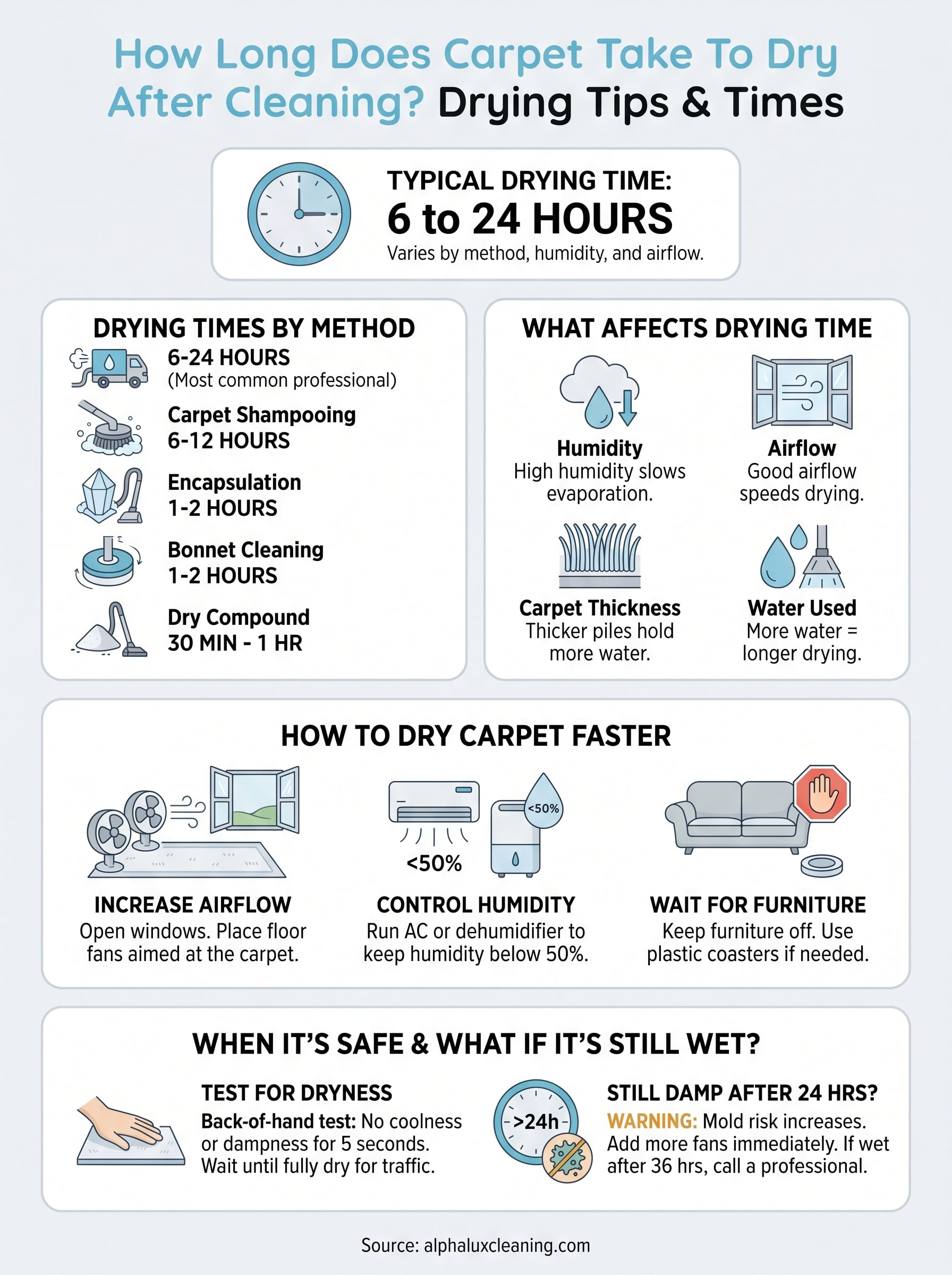
A quick recap
Most carpets fall into the 6 to 24 hour drying range, but how long does carpet take to dry after cleaning comes down to the method used, your indoor humidity, airflow, and carpet thickness. Steam cleaning takes the longest, while dry compound and encapsulation methods get you back on your feet within an hour or two. Running fans, keeping your AC on, and holding furniture off the carpet until it passes the hand test will cut your wait time significantly.
If your carpet is still damp past 24 hours, act quickly to add airflow and manage humidity before mold gets a chance to develop. And if you want the job done right the first time, with professional-grade extraction that pulls out more water and leaves less moisture behind, book a cleaning with AlphaLux Cleaning and let a trusted New York crew handle it for you.