Dirty window screens do more than block your view, they trap dust, pollen, and grime that eventually circulate through your home every time a breeze passes through. Knowing how to clean window screens the right way keeps your indoor air cleaner and your windows looking sharp. Yet most people either skip this task entirely or approach it with methods that risk damaging the mesh.
Whether you want to pull the screens out for a thorough scrub or need a quick method that works while they stay in place, this guide covers both approaches with clear, step-by-step instructions. At AlphaLux Cleaning, we handle window and deep-cleaning tasks like these across New York State every day, and our team knows exactly what works, and what doesn’t. Below, we’re sharing the same techniques our professionals rely on so you can get your screens looking like new on your own schedule.
What to do before you start
Rushing into the task without a plan wastes time and risks damaging your screens before you even get them clean. Taking five minutes to prepare sets you up so the whole process of how to clean window screens runs without interruptions or costly mistakes down the road.
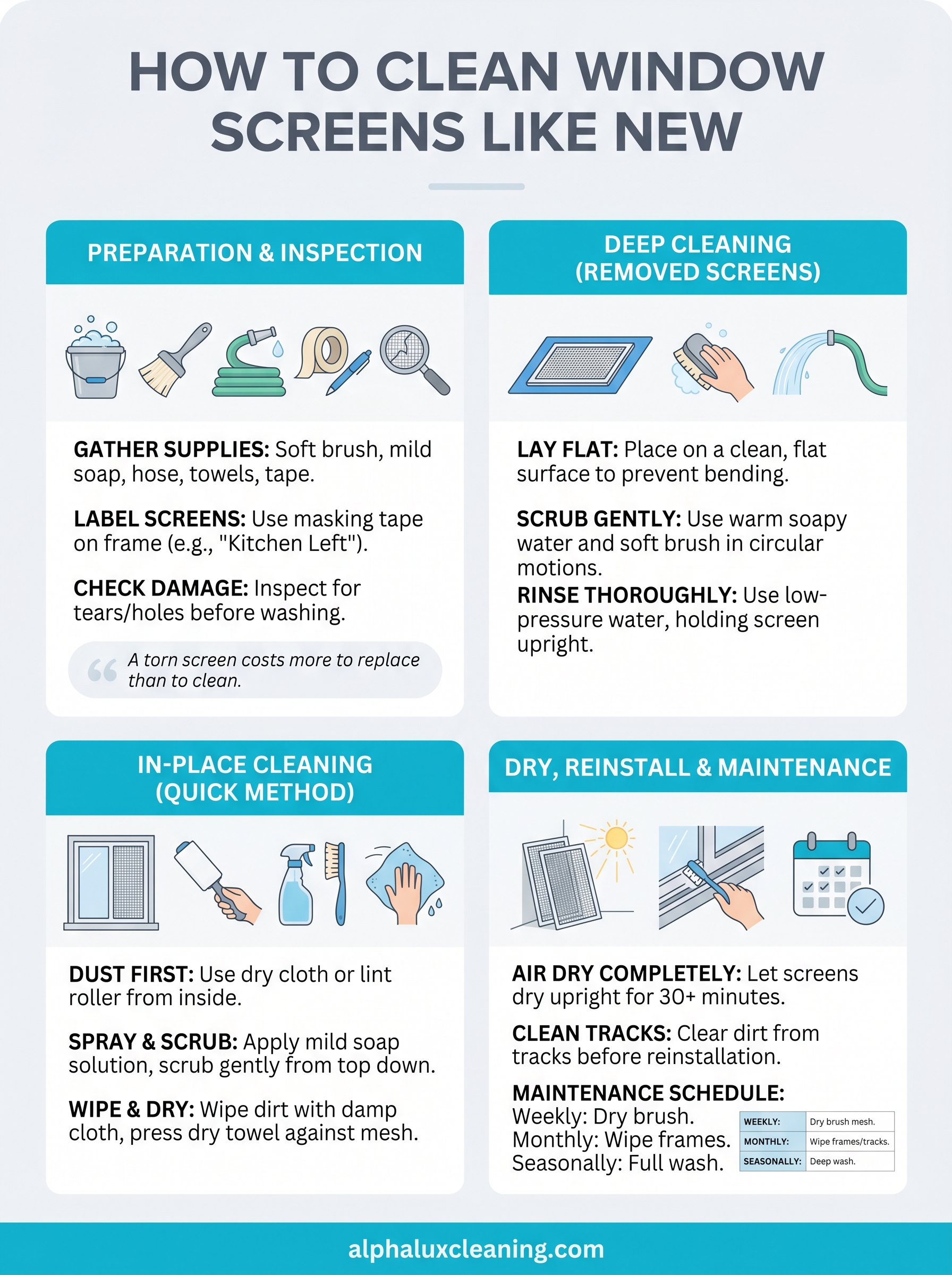
A torn or bent screen costs far more to replace than it ever costs to clean, so a little preparation goes a long way.
Gather your supplies
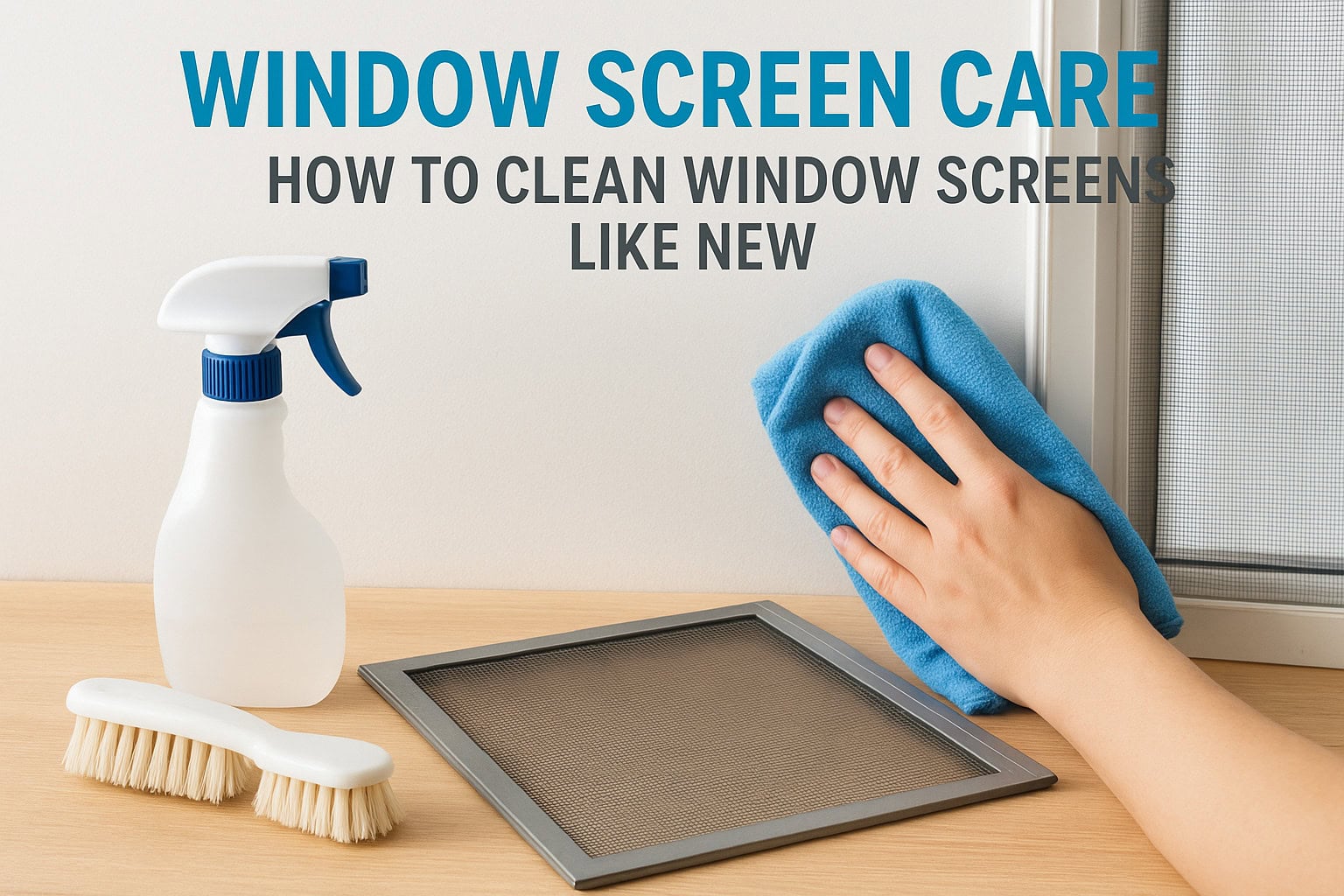
You likely have most of what you need at home already. Pull everything together before you start so you are not stopping mid-task to search for a missing brush or cloth. Here is what to collect:
- Soft-bristle brush or microfiber cloth for scrubbing without tearing the mesh
- Bucket or utility tub
- A few drops of mild dish soap
- Garden hose or shower attachment
- Dry microfiber towels
- Marker or masking tape for labeling each screen
Pick the right conditions
Warm, low-humidity days are ideal for this task because screens air-dry quickly and you have enough outdoor space to lay them flat. Avoid cleaning screens right before rain, since wet mesh that goes back into the frame can trap moisture and encourage mold growth along your window edges.
Your indoor option is the bathtub or a utility sink, which works fine on rainy days. Just plan for longer drying time and run a fan or open nearby windows to speed things up before reinstalling each screen.
Step 1. Prep, label, and inspect each screen
Before you touch a single screen, take a moment to organize your approach. Most windows look similar, and mixing screens up during reinstallation leads to poor fits and gaps that let insects in. A quick prep routine also reveals any screens that need repair or replacement before you waste time cleaning them.
Label each screen before removal
Pull out a strip of masking tape and mark each screen with its window location, for example "kitchen left" or "bedroom south." Stick the tape to the frame edge, not the mesh, so it stays put through the whole cleaning process.
Labeling takes less than two minutes and saves you the frustration of trial-and-error reinstallation later.
Check for damage before washing
Run your fingers lightly along the mesh and frame to spot tears, holes, or bent corners before you start scrubbing. Washing a damaged screen can make small tears worse. Note any problems now so you can decide whether to repair or replace that screen before moving forward with the rest of the job.
Step 2. Deep clean screens after you remove them
Once your screens are labeled and inspected, lay them flat on a clean surface like a patio, driveway, or bathtub. A flat surface keeps the mesh from bending or stretching while you work, which is the most important setup step when learning how to clean window screens without causing new damage in the process.
Wash, scrub, and rinse each screen
Fill your bucket with warm water and a few drops of mild dish soap. Dip your soft-bristle brush into the solution and scrub both sides of the mesh using gentle circular motions, working from top to bottom. Do not press hard; let the soapy water do the work for you.
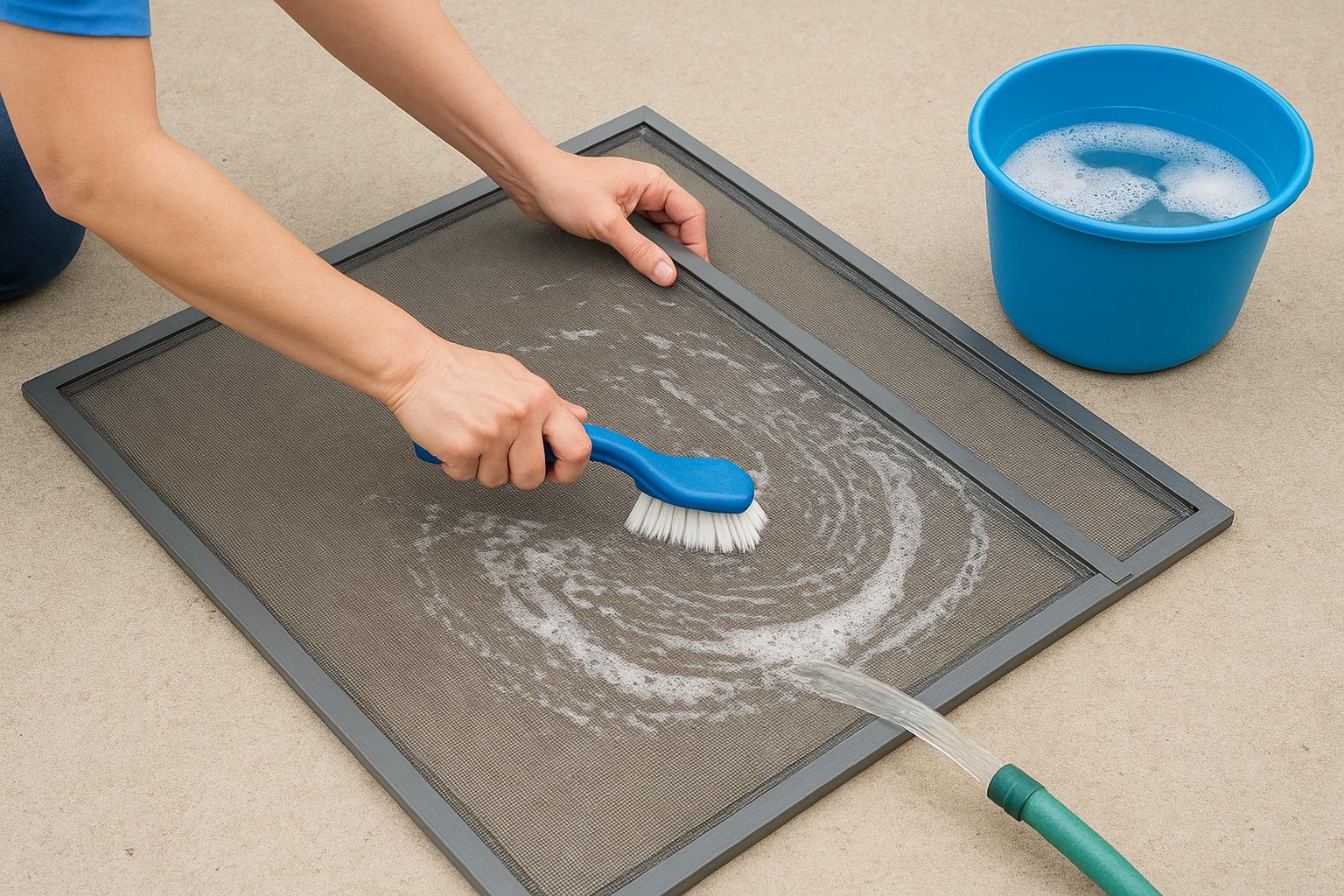
Scrubbing too aggressively tears mesh fibers, so keep your pressure light and consistent throughout.
Rinse each screen thoroughly with a garden hose on a low-pressure setting or a showerhead attachment. Hold the screen upright so water runs straight through the mesh rather than pooling inside the frame and soaking into the spline groove.
Step 3. Clean screens without removing them
Sometimes removing every screen is not realistic, especially in upper-floor windows or when you need a fast result. This in-place method covers how to clean window screens efficiently without pulling them out, and it works well for light to moderate buildup between your deeper seasonal cleanings.
Work from top to bottom
Start by using a dry microfiber cloth or a lint roller to knock loose dust off the mesh from the inside of your home. Then mix a small amount of mild dish soap with warm water in a spray bottle. Spray the solution directly onto the screen and scrub gently with a soft brush, moving from the top edge down toward the bottom.
Wipe away loosened dirt with a damp cloth rather than rinsing, since water running inside can damage your windowsill.
Finish by pressing a dry towel firmly against the mesh on both sides to pull out moisture, then leave the window open so the screen air-dries completely before you close it.
Step 4. Dry, reinstall, and clean tracks and frames
Getting your screens fully dry before reinstallation is just as important as the wash itself. Wet screens pushed back into the frame trap moisture that breeds mold along the window edge over time. Give each screen at least 30 minutes of upright air-drying time so both sides get adequate airflow before you bring them back inside.
Clear the tracks before sliding screens back in
Before you reinstall anything, run a damp microfiber cloth or an old toothbrush along each window track to clear out the dirt and debris that accumulated while the screens were out. This step is the one most people skip when learning how to clean window screens, but grimy tracks undo your hard work fast by pulling dirt right back onto the mesh.
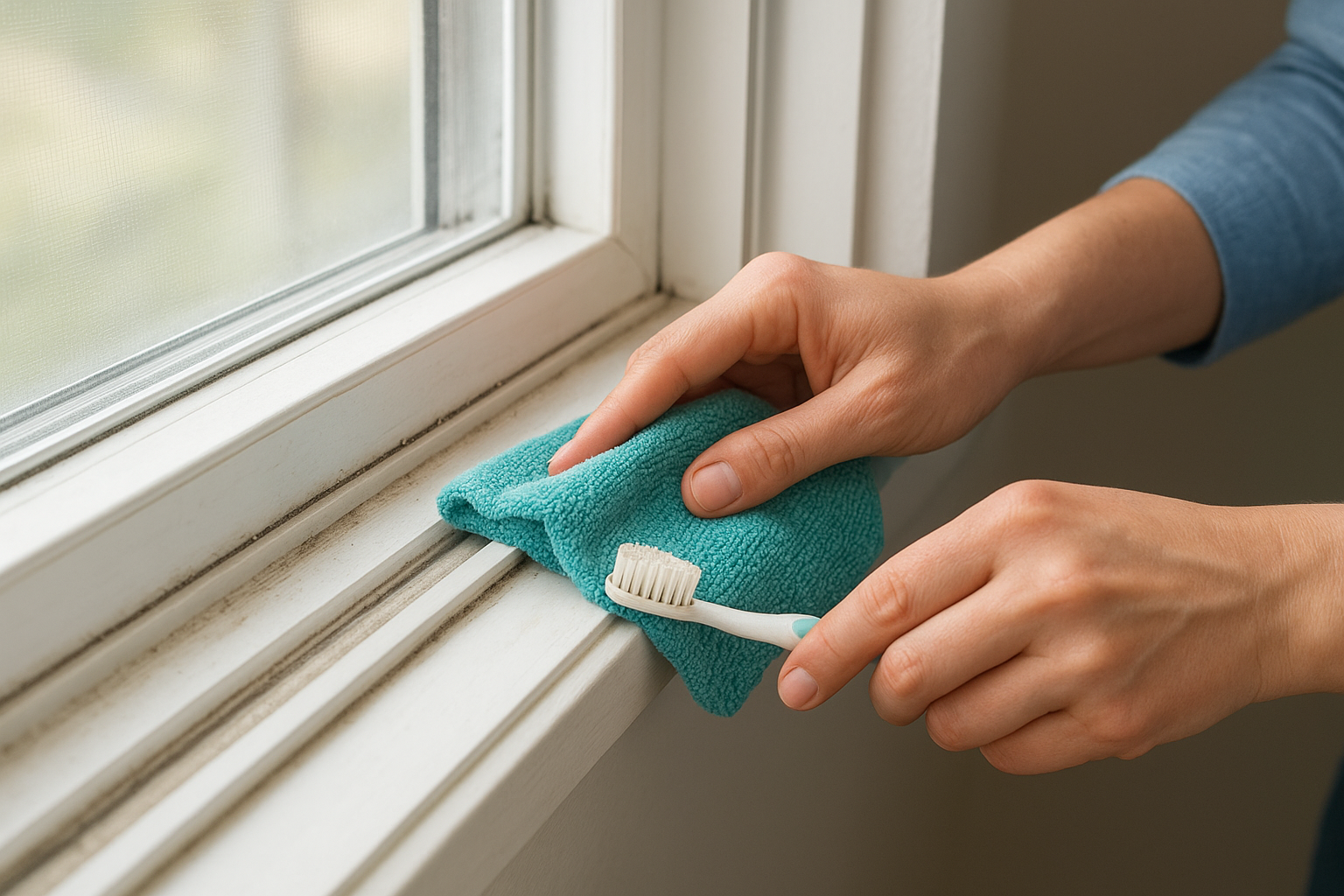
Clean tracks let screens slide in smoothly and sit flush, which keeps insects out and maintains a proper seal around the frame.
Slide each screen back into its labeled position and press the frame corners firmly inward to confirm a snug, gap-free fit before moving on.
Step 5. Keep screens looking new longer
Cleaning your screens once a year is a solid effort, but consistent light maintenance between sessions is what actually prevents heavy buildup from forming in the first place. A few small habits make the next full wash far easier and extend the life of your mesh and frames by several seasons.
Regular upkeep takes less than five minutes per window and saves you hours of scrubbing later.
Build a simple maintenance schedule
A clear schedule removes the guesswork from knowing how to clean window screens regularly and keeps your windows looking sharp year-round. Start with the routine below and adjust the frequency based on how quickly dust and pollen accumulate in your area, especially if you live near a busy road or open fields.
| Frequency | Task |
|---|---|
| Weekly | Brush mesh lightly with a dry microfiber cloth |
| Monthly | Wipe frames and tracks with a damp cloth |
| Seasonally | Full wash using the deep-clean method from this guide |
Following this schedule cuts your cleaning time noticeably each season and protects the mesh from premature wear.
Final takeaways
Knowing how to clean window screens correctly protects your mesh, keeps your home’s air cleaner, and extends the life of your frames season after season. The process comes down to a few consistent habits: label before you remove, use gentle pressure when scrubbing, dry completely before reinstalling, and clear your tracks every time you put screens back in.
Between full washes, a quick weekly wipe-down with a dry microfiber cloth prevents buildup from hardening and makes your next deep clean far faster. Small, regular efforts do more for your screens than one aggressive annual scrub ever will.
If your home needs more than just clean screens, our team handles the deep cleaning tasks that take up your time so you can focus on everything else. From window cleaning to full-home detail work across New York State, AlphaLux Cleaning brings a higher standard of clean directly to your door.