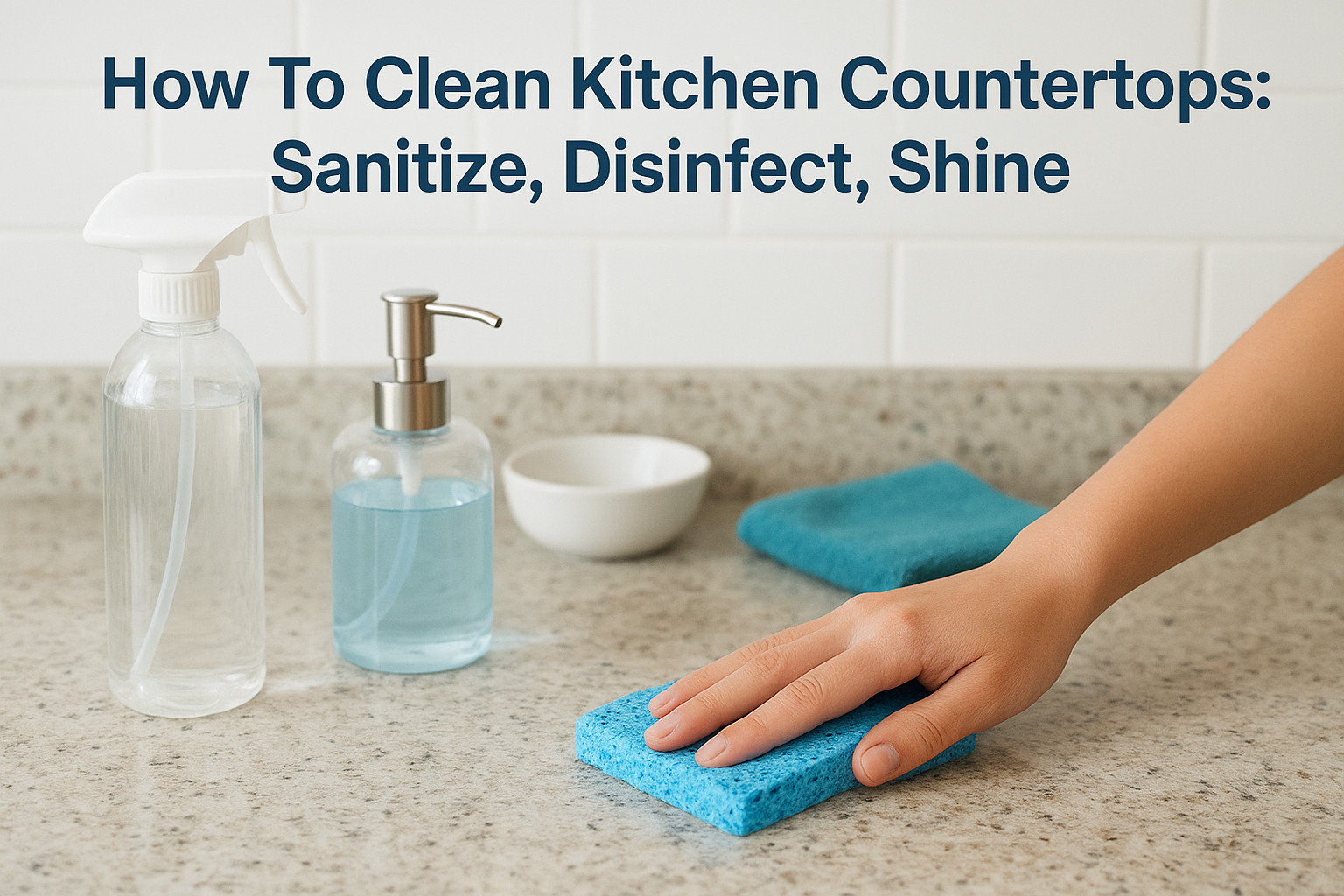
Your kitchen countertops handle more daily abuse than almost any other surface in your home, from raw meat and sticky spills to hot pans and grocery bags. Knowing how to clean kitchen countertops the right way matters because the wrong product or technique can dull a granite finish, etch marble, or leave bacteria behind on butcher block. The stakes are both cosmetic and health-related.
At AlphaLux Cleaning, we clean kitchens across New York State every single day, and countertops are one of the surfaces our teams pay the most attention to. We’ve learned firsthand that each material needs a different approach, what works beautifully on quartz can ruin a natural stone surface. That hands-on experience is exactly what shaped this guide.
Below, you’ll find step-by-step instructions for cleaning, sanitizing, and disinfecting your countertops based on what they’re actually made of. We’ll cover the safest products, the techniques that protect your surface long-term, and a few mistakes that are surprisingly common. Whether you’re doing a quick daily wipe-down or a thorough deep clean, this guide will help you get it right.
What to use and what to avoid on countertops
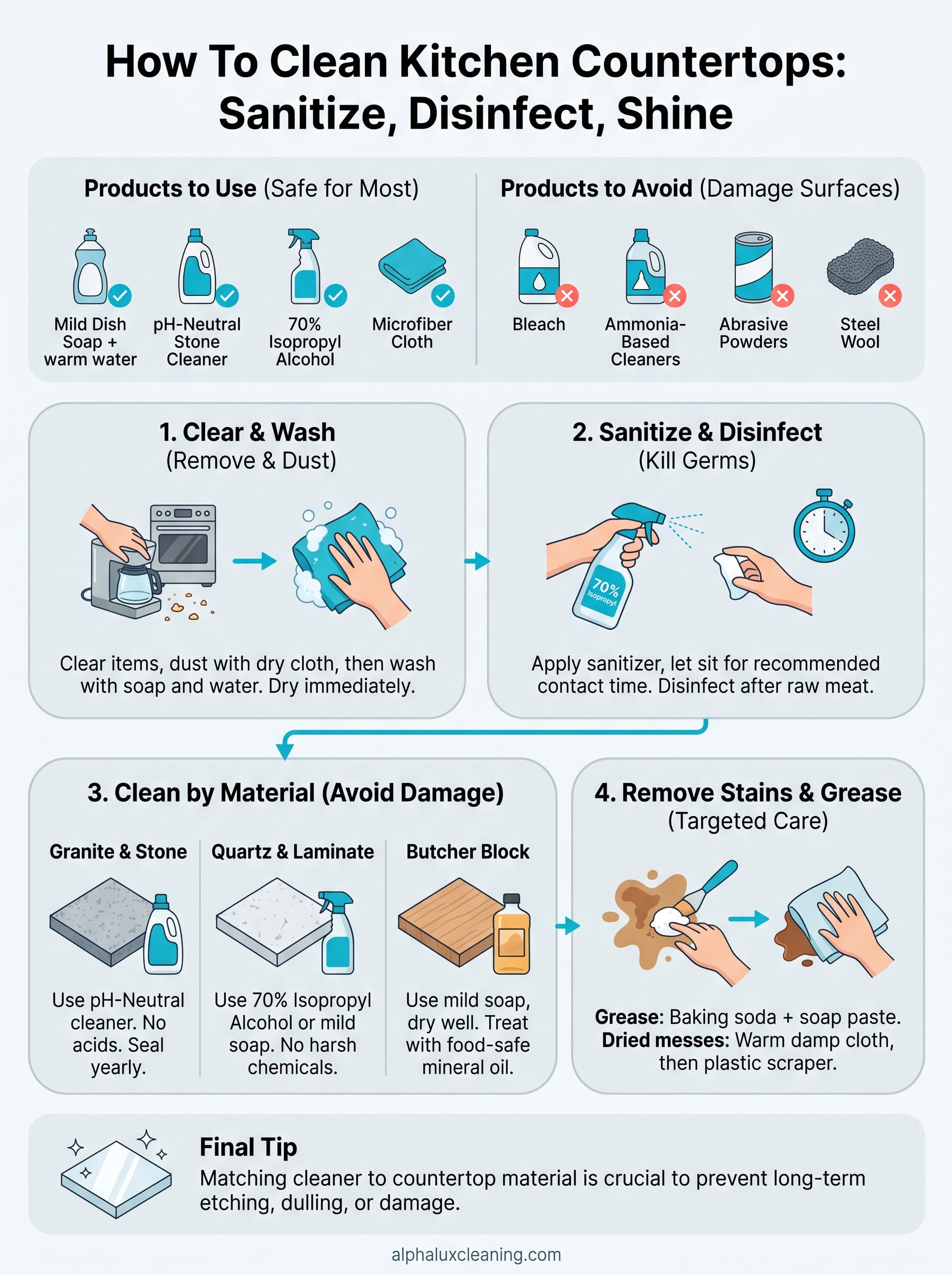
Before you learn how to clean kitchen countertops step by step, you need to know which products are safe and which ones will quietly damage your surfaces over time. Many people grab whatever cleaner is within reach, not realizing that bleach, acidic sprays, and abrasive scrubbers can strip sealants, etch natural stone, and leave permanent marks behind. Getting this foundation right from the start saves you money and protects your surfaces.
The wrong cleaner does more damage to your countertops than a messy spill ever could.
Products that work well on most surfaces
For everyday cleaning, a few simple options handle the job without causing harm to your countertops. Mild dish soap mixed with warm water works on nearly every countertop material. pH-neutral multipurpose cleaners are a solid choice for sealed natural stone like granite or quartzite. Pair these with a microfiber cloth, which lifts debris without scratching, and you’re in good shape for most routine cleaning tasks.
| Product | Best For |
|---|---|
| Dish soap + warm water | All surfaces, daily wipe-downs |
| pH-neutral stone cleaner | Granite, marble, quartzite |
| 70% isopropyl alcohol | Quartz, laminate, tile (sanitizing) |
| Diluted white vinegar | Tile grout only, never on stone |
Products that can damage your countertops
Several common household cleaners cause real, lasting damage when used on the wrong surface. Bleach and ammonia-based cleaners break down the sealant on granite and marble over time, leaving them open to deep staining. Abrasive scrubbing powders scratch quartz and solid-surface materials, and undiluted acidic cleaners like straight vinegar or lemon-based sprays will etch marble and limestone on contact.
- Bleach on natural stone or colored grout
- Ammonia-based glass cleaners
- Abrasive powders like Comet
- Undiluted vinegar or citrus-based sprays on stone
- Steel wool or rough scrubbing pads
Step 1. Clear, dust, and wash with soap and water
Start by removing everything from the counter: appliances, cutting boards, fruit bowls, anything sitting on the surface. You can’t clean properly around objects, and lifting them exposes the grime that collects underneath. Once the surface is clear, use a dry microfiber cloth or a soft brush to sweep away loose crumbs, dust, and debris before introducing any liquid.
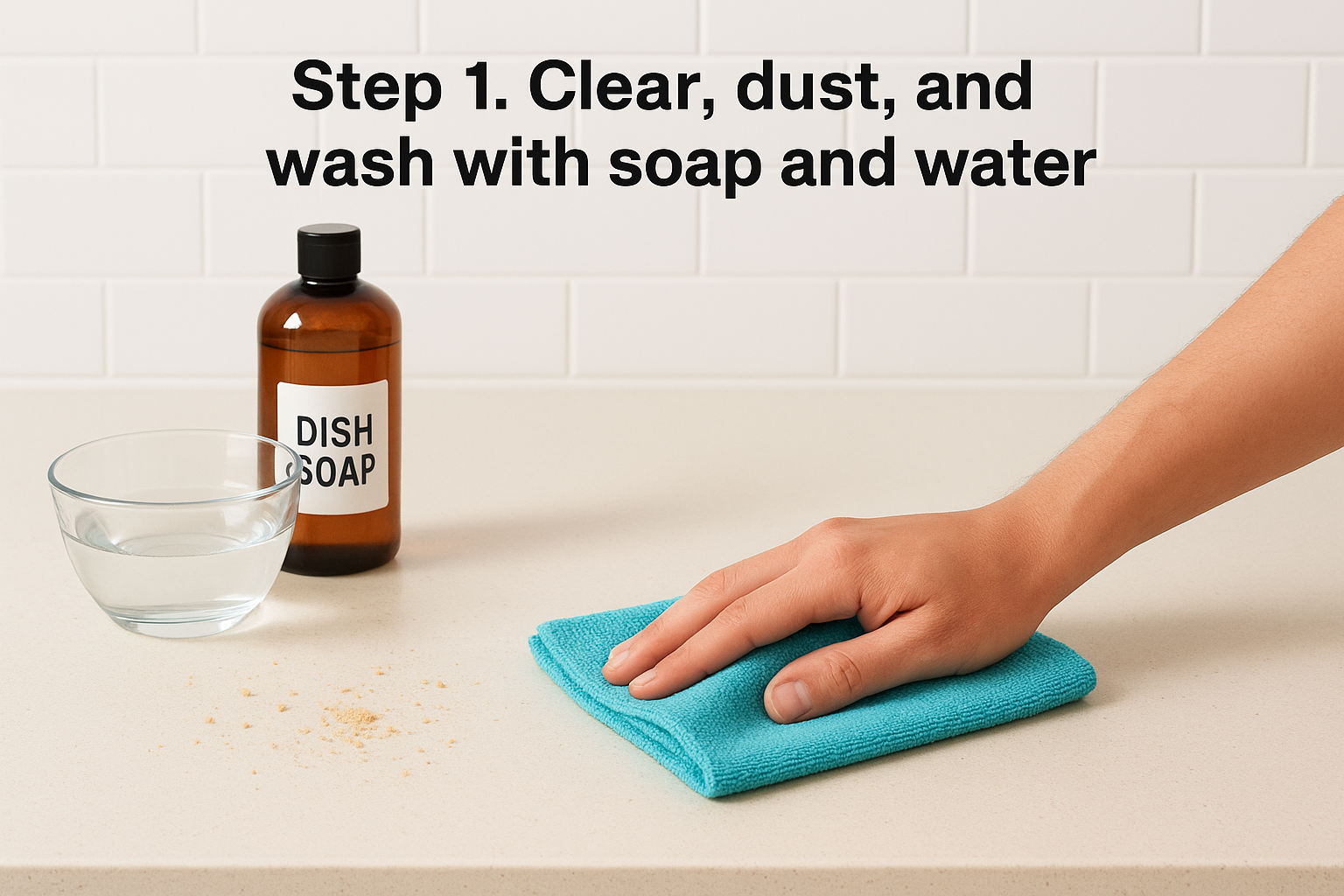
Skipping the dry sweep and going straight to a wet cloth just spreads crumbs around instead of removing them.
Wash the surface with dish soap and warm water
Fill a small bowl with warm water and a few drops of mild dish soap, then dampen your microfiber cloth and wipe the entire surface in sections. Work from back to front so you push debris toward you rather than over a clean area. This basic wash handles grease, food residue, and surface-level bacteria on almost every countertop material, making it the essential first step when you learn how to clean kitchen countertops properly.
Rinse your cloth frequently and wring it out well so you’re not dragging dirty water across the surface. Finish by wiping the counter with a clean damp cloth to remove any soap film, then dry it immediately with a fresh towel to prevent water spots.
Step 2. Sanitize or disinfect the right way
Once your counter is clean and dry, you can move on to killing bacteria and pathogens. Cleaning removes visible dirt, but it does not eliminate germs on its own. Sanitizing reduces bacteria to safe levels, while disinfecting kills a broader range of viruses and pathogens. After handling raw meat or during cold and flu season, disinfecting is the right call.
Don’t skip the soap-and-water step before sanitizing. Sanitizers and disinfectants work best on already-clean surfaces.
Choosing the right product for the job
Isopropyl alcohol at 70% concentration is one of the most effective and surface-safe options when figuring out how to clean kitchen countertops without causing damage. It works well on quartz, laminate, tile, and stainless steel. For a stronger result on tile or laminate, an EPA-registered disinfectant spray handles the job. Apply your chosen product, let it sit for the contact time listed on the label, then wipe the surface clean with a fresh cloth.
| Product | Best Surface | Contact Time |
|---|---|---|
| 70% isopropyl alcohol | Quartz, laminate, stainless steel | 30 seconds |
| EPA-registered disinfectant | Tile, laminate | Per label instructions |
| Hydrogen peroxide (3%) | Sealed stone, laminate | 1 minute |
Step 3. Clean by material without damaging the surface
Once you’ve sanitized, the material-specific step is where knowing how to clean kitchen countertops properly really matters. Each surface has different tolerances, and using the wrong product once can cause permanent etching, dulling, or discoloration. Follow the guidance below based on what your countertop is actually made of.
Granite and natural stone
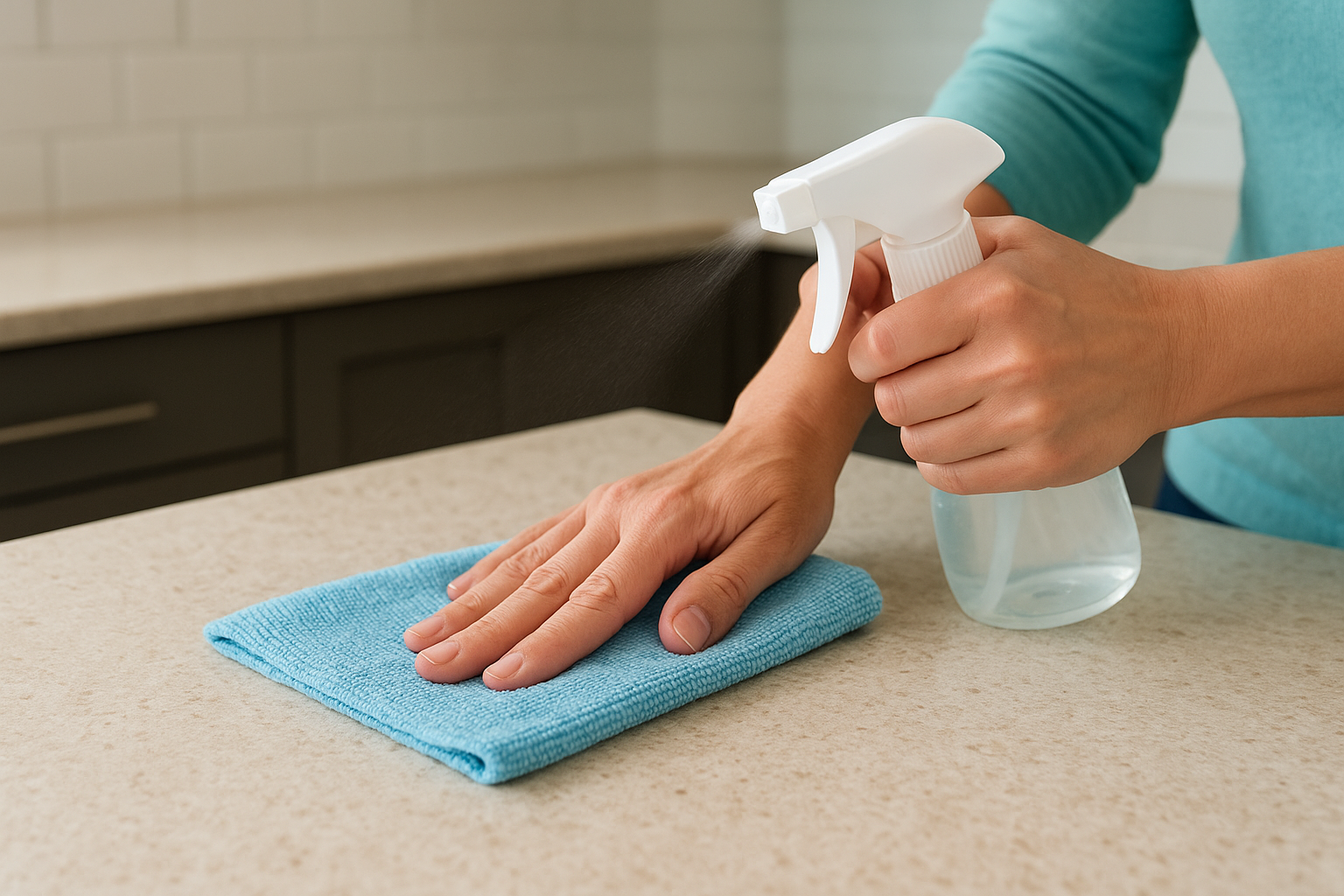
Granite, marble, and quartzite all need a pH-neutral cleaner and nothing acidic. Wipe with your dish soap and water solution, then dry immediately to prevent water marks. Avoid leaving wet cloths sitting on the surface for any length of time.
Sealing granite every 12 months protects the stone and makes routine cleaning far more effective long-term.
Quartz and laminate
Quartz is engineered and more forgiving, but it still reacts badly to harsh chemicals like bleach. Use 70% isopropyl alcohol or a mild soap solution for daily cleaning. Laminate handles similar products well, though you should avoid soaking it since moisture can seep into seams and cause swelling over time.
Butcher block
Butcher block benefits from a food-safe mineral oil treatment every few months to stay conditioned and crack-free. For daily cleaning, use mild dish soap and water, then dry the surface thoroughly right away to prevent warping.
Step 4. Remove stains, grease, and dried-on messes
Stains and dried messes need a more targeted approach than a routine wipe-down. Knowing how to clean kitchen countertops when something stubborn has set means matching the method to the specific mess, not scrubbing harder and risking surface damage. Act fast when possible since fresh spills lift far more easily than dried residue.
The longer a stain sits on your countertop, the deeper it penetrates, especially on porous surfaces like natural stone.
Cutting through grease buildup
Baking soda mixed with a small amount of dish soap creates a gentle paste that pulls grease off the surface without scratching. Apply it to the area, let it sit for two to three minutes, then wipe away with a damp microfiber cloth. This works reliably on quartz, laminate, and tile.
Lifting stains and dried-on spills
For dried food or sticky residue, soften the mess first by placing a warm damp cloth over it for one minute before wiping. Use a plastic scraper rather than a metal one to avoid scratching the surface underneath.
- Red wine or juice on quartz: 3% hydrogen peroxide applied with a cloth
- Coffee or tea on laminate: baking soda paste, rinse clean
- Dried grease on tile: dish soap and warm water, let it soak for two minutes
Leave your counters fresh and food-safe
Now you have a complete picture of how to clean kitchen countertops the right way, from the first dry sweep all the way to material-specific stain removal. The right products, the right technique, and a consistent routine protect your surfaces from long-term damage while keeping bacteria and food residue off your prep area every single day.
Building these habits into your routine doesn’t take much time, but the difference shows up fast. Matching your cleaner to your countertop material is the single most important thing you can do to avoid etching, dulling, or stripping your surfaces over time. A few minutes after cooking keeps your kitchen looking clean, smelling fresh, and safe for food prep.
When your kitchen needs a more thorough clean than a daily wipe-down can handle, professional kitchen cleaning services from AlphaLux Cleaning cover homes and businesses across New York State with reliable, detail-focused results.