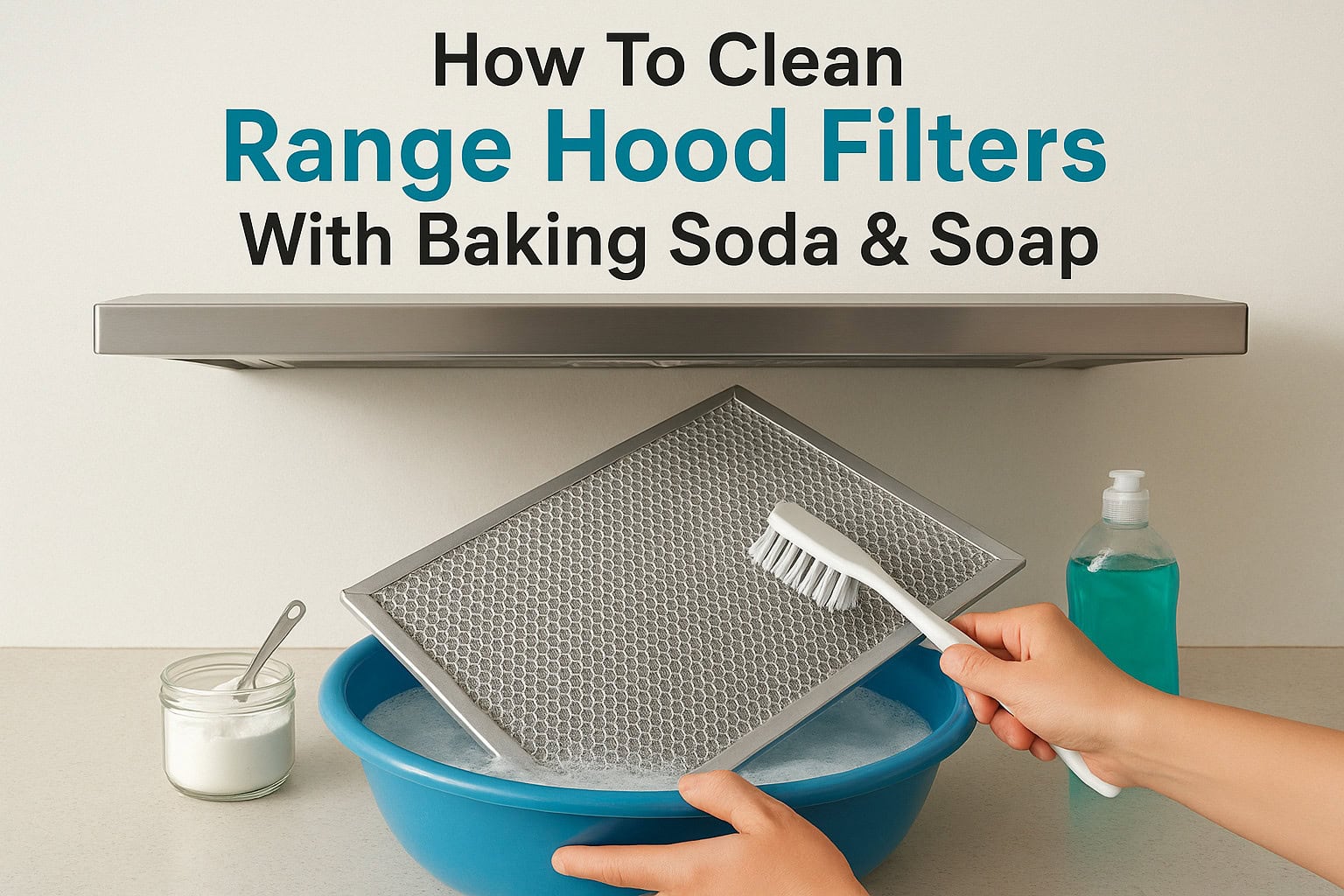
That greasy, sticky film coating your range hood filters didn’t appear overnight. It built up slowly, meal after meal, until one day you noticed the hood wasn’t pulling smoke and steam like it used to. If you’ve been wondering how to clean range hood filters without buying a specialty degreaser, the answer is probably already sitting in your kitchen cabinet. Baking soda, dish soap, and a little hot water can cut through even months of caked-on grease.
At AlphaLux Cleaning, we handle deep kitchen cleaning across New York State on a daily basis, and range hood filters are one of the most neglected spots we encounter. Most people don’t realize how much trapped grease affects air quality and ventilation efficiency in their home. When filters are clogged, your hood works harder, odors linger, and grease particles settle on nearby surfaces and cabinets.
This guide walks you through the exact process, step by step, using simple household supplies you likely already own. Whether you tackle it yourself or decide your kitchen needs a professional deep clean, you’ll know exactly what it takes to get those filters back to working condition and looking like new.
Before you start: filter type, tools, and safety
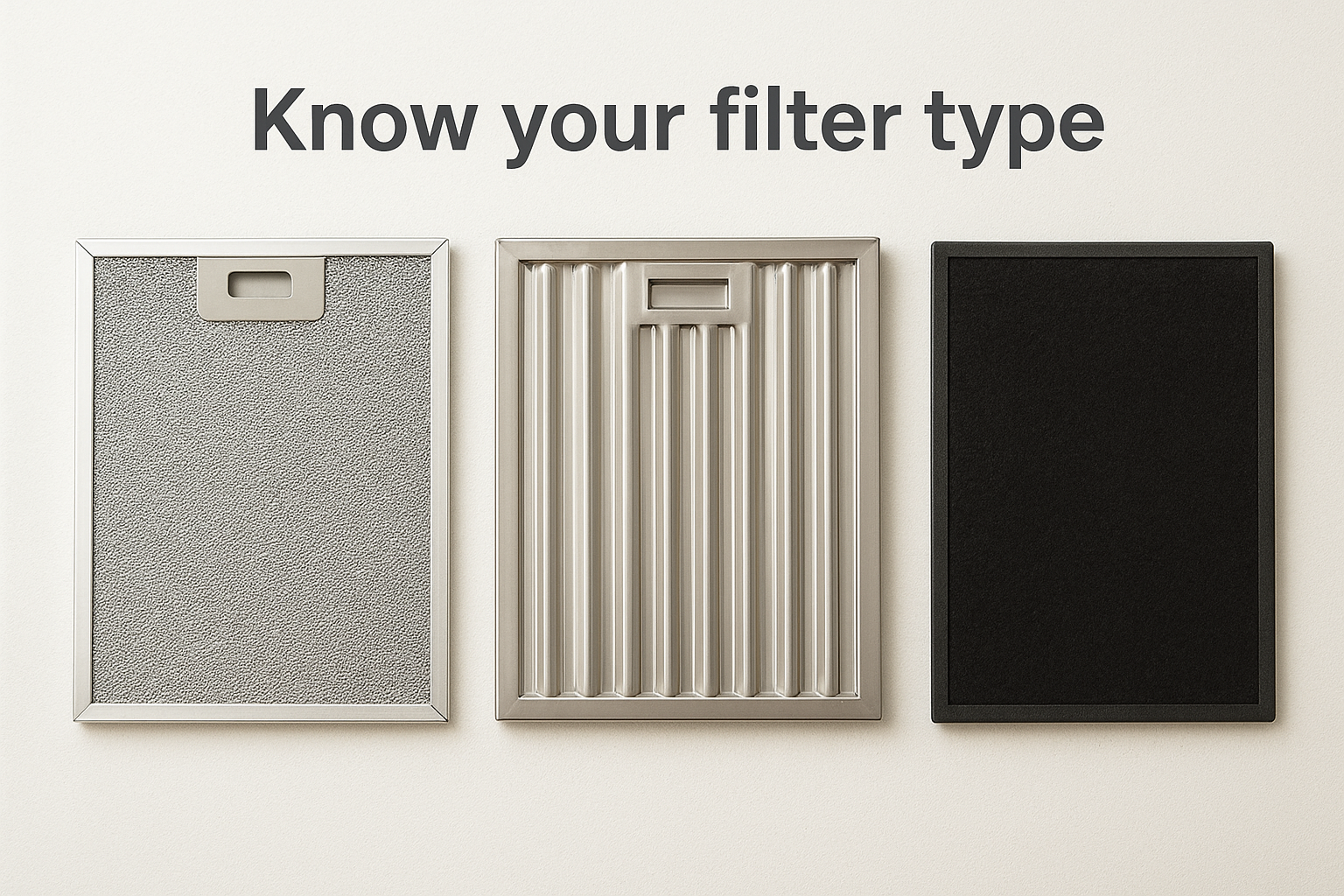
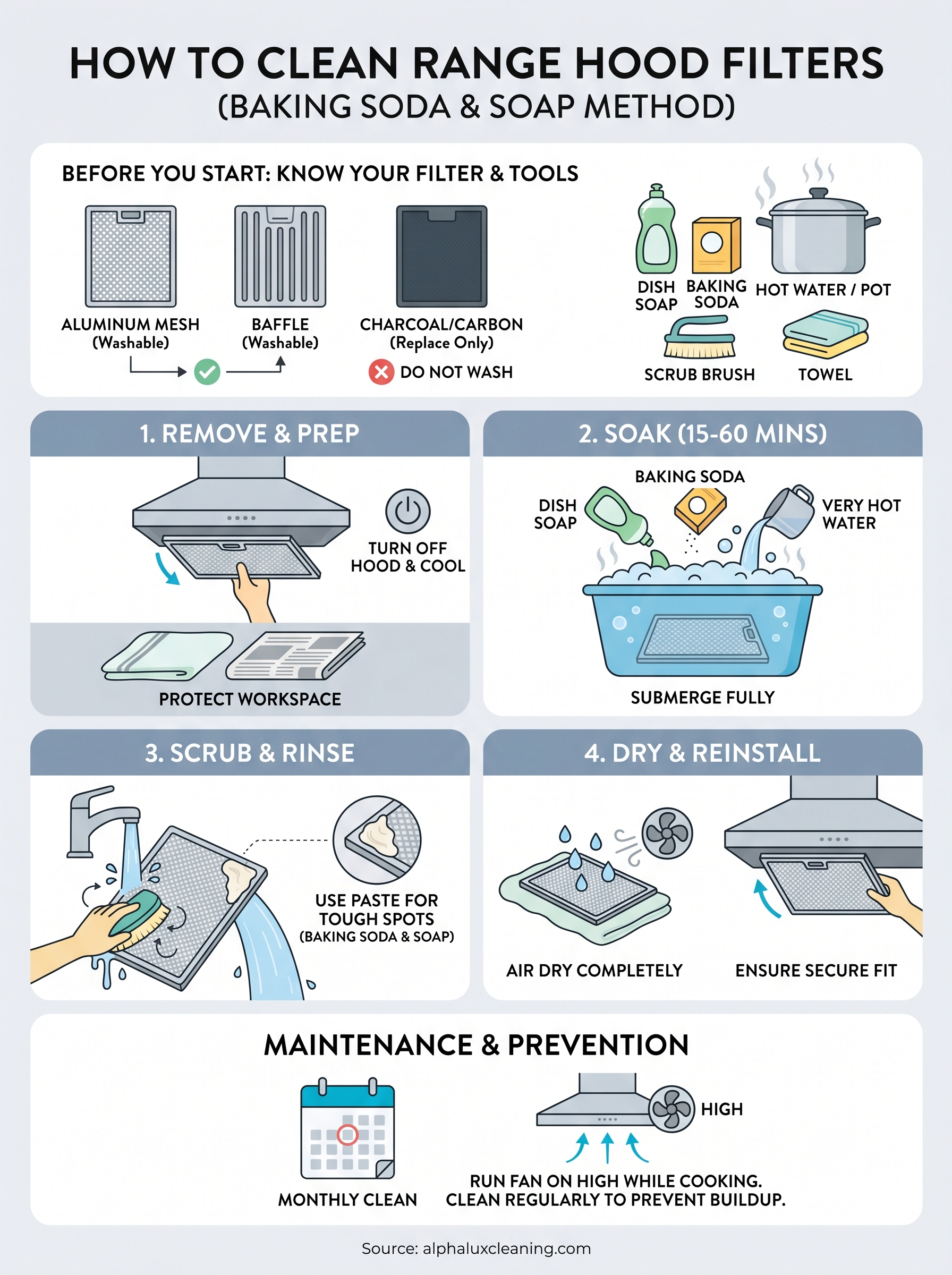
Not every range hood filter cleans the same way, so identifying what you have before you start saves time and prevents damage. Most residential hoods use aluminum mesh filters or baffle filters, both of which are safe to hand-wash using the baking soda and soap method in this guide. A smaller number of hoods rely on charcoal or carbon filters, which you cannot wash at all. Those need to be replaced entirely, typically every three to six months depending on how often you cook.
Know your filter type
Pull the filter out and inspect it closely before you do anything else. Aluminum mesh filters are thin, layered, and feel lightweight in your hand, while baffle filters are heavier with deep parallel ridges, usually made from stainless steel. If your filter is soft, dark, and crumbles when handled, it is a charcoal filter, and soaking it in water will ruin it. Check your hood’s model number if you are not certain.
| Filter Type | Material | Washable? |
|---|---|---|
| Aluminum mesh | Aluminum layers | Yes |
| Baffle | Stainless steel | Yes |
| Charcoal/carbon | Activated carbon | No, replace only |
If you’re unsure which filter type your hood uses, check the manufacturer’s model number before you start to avoid ruining a charcoal filter by mistake.
What you’ll need
Gathering your supplies first keeps the process smooth and avoids searching for something mid-task. You don’t need specialty products or tools to tackle how to clean range hood filters effectively at home.
- Dish soap (a degreasing formula works best)
- Baking soda
- A large pot, sink, or bin deep enough to fully submerge the filter
- Very hot or boiling water
- A non-scratch scrub brush or old toothbrush
- Dry cloth or paper towels
Safety notes
Hot water and loosened grease create slippery, messy conditions, so take a few basic precautions first. Work over a stable, waterproof surface and wear rubber gloves to protect your hands from heat and grease throughout the entire process.
If you are boiling water on the stove, carry the pot carefully and pour slowly to avoid splashing. Lay a towel underfoot if your kitchen floor gets slick when wet.
Step 1. Remove the filter and prep the area
Before any cleaning starts, turn off your range hood completely and let it cool down if you have been cooking recently. Grease and metal components hold heat longer than you might expect, and touching a warm filter makes the process uncomfortable and slippery. The first step in how to clean range hood filters correctly is removing them without bending the frame or dropping loose grease onto your stovetop.
How to remove the filter
Most filters slide out or unclip from the underside of the hood with a simple push or pull motion. Look for a small tab, latch, or pull handle along one edge of the filter panel, push it inward, then tilt the filter down and slide it out. Some baffle filters lift straight out of their tracks. If you feel significant resistance, check your owner’s manual rather than forcing it, since a bent frame makes the filter much harder to reinstall cleanly.
Hold the filter over the sink or a trash bin as you remove it, since loose grease and debris fall as soon as you tilt it.
Prep your workspace
Lay down a few layers of newspaper or an old towel on your counter before you set the filter down. Grease transfers fast, and protecting your surface now saves you extra cleanup later. Clear enough space around your sink so you have an open, comfortable working area ready for the soaking and scrubbing steps ahead.
Step 2. Soak with hot water, soap, and baking soda
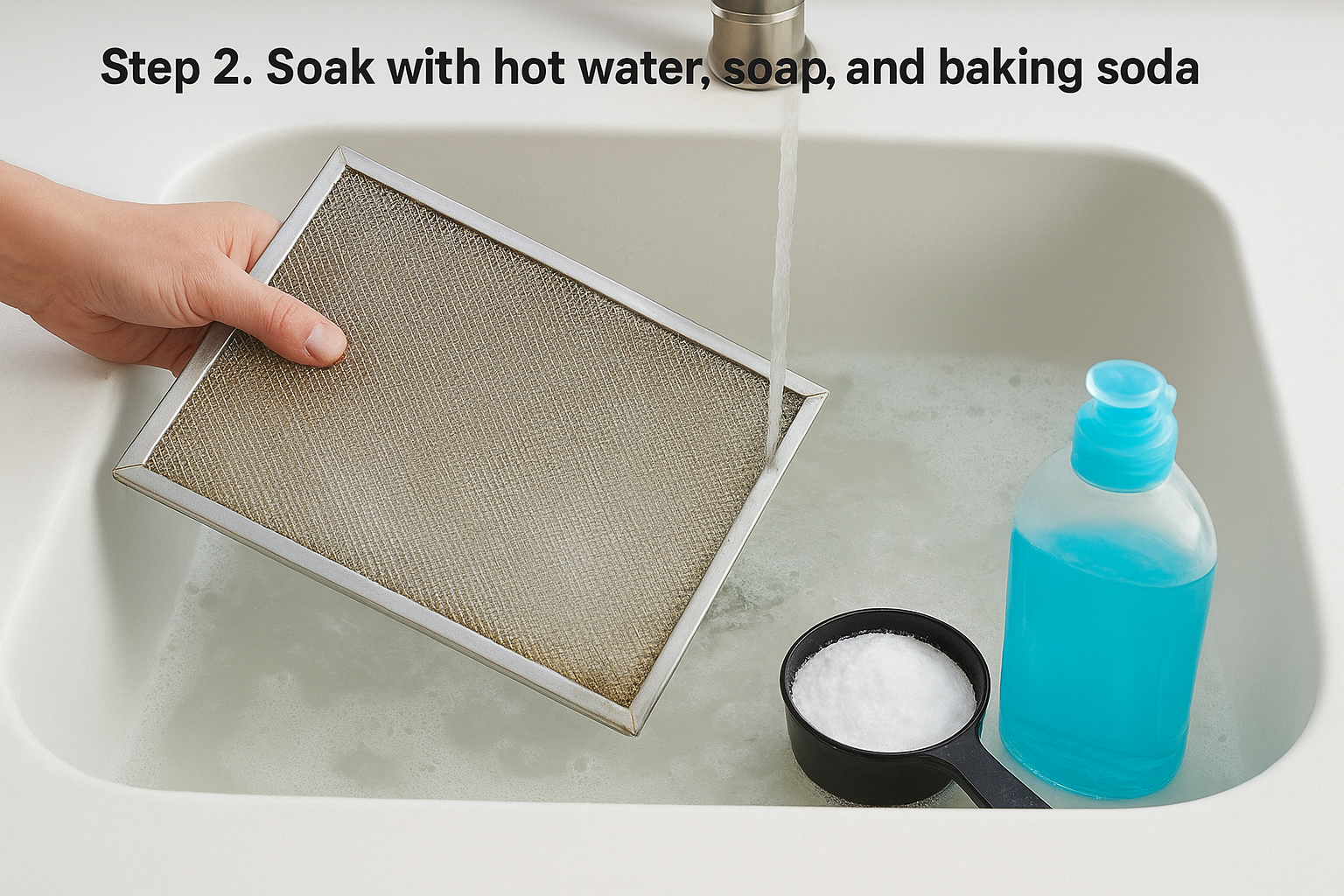
This is where the real work happens. The combination of heat, dish soap, and baking soda breaks down grease at a chemical level, lifting it off the mesh without harsh scrubbing. Fill your sink, pot, or bin with the hottest water you can get, then add your cleaning agents directly to the water before submerging the filter.
Mix the cleaning solution
Add your ingredients in the right amounts so the solution is strong enough to cut through months of buildup. Too little baking soda and the soak does not work effectively, so don’t be shy with it.
- Dish soap: 2 to 3 generous squirts
- Baking soda: 1/4 cup for light buildup, 1/2 cup for heavy grease
- Water temperature: As hot as possible, near boiling if using a pot
Stir the water briefly to dissolve the baking soda fully before you lower the filter in. Make sure the filter is completely submerged so every part of the mesh gets full contact with the solution.
How long to soak
Let the filter sit for at least 15 to 30 minutes for moderate grease. If your filter is part of the reason you’re searching how to clean range hood filters after months of skipping it, give it a full 45 to 60 minutes to loosen the heaviest deposits.
The hotter the water stays during the soak, the less scrubbing you’ll need in the next step.
Step 3. Scrub, rinse, and handle stubborn grease
After soaking, most of the grease will have loosened and you won’t need aggressive scrubbing to finish the job. Pull the filter out of the water and work over the sink so the runoff goes straight down the drain.
Scrubbing technique
Use your scrub brush or old toothbrush to work in small circular motions across the mesh, paying close attention to the areas with the heaviest buildup. Apply light pressure and let the loosened grease do most of the work. Pushing too hard on aluminum mesh can bend the thin layers and reduce airflow once the filter is back in place.
Scrub both sides of the filter, not just the surface facing down into the hood.
When grease won’t budge
Some filters, especially those that have gone several months without cleaning, hold onto thick, hardened deposits in the corners and along the frame edges. If scrubbing doesn’t clear those spots, make a paste using baking soda and a small amount of dish soap, apply it directly to the stubborn area, let it sit for five minutes, then scrub again. This targeted approach is one of the most reliable methods for how to clean range hood filters with serious buildup.
Once the mesh looks clear, rinse the filter thoroughly under hot running water until the water runs clean with no soap residue left behind.
Step 4. Dry, reinstall, and prevent future buildup
Getting the filter completely dry before you put it back is just as important as the cleaning itself. A wet filter traps moisture inside the hood, which can lead to mold growth and rust on the frame over time. Shake off as much water as you can, then set the filter on a clean dry towel and let it air dry for at least 30 minutes before reinstalling.
Drying the filter properly
Pat both sides of the filter firmly with a dry cloth to pull moisture out of the mesh layers. If you need to speed up the process, place the filter near an open window or use a fan on low to move air across it. Avoid using a high-heat setting from a hair dryer, since intense heat can warp aluminum mesh filters.
A fully dry filter reinstalls more smoothly and seals against the hood frame without slipping.
Reinstalling correctly
Slide the filter back into the hood tracks using the same motion you used to remove it, then press or click the latch firmly until it locks in place. Give it a gentle tug to confirm it is seated securely before you turn the hood on.
Preventing future buildup
Knowing how to clean range hood filters is only half the job. Run your hood on a higher fan setting while cooking to pull grease into the filter before it spreads. A quick monthly rinse with hot soapy water keeps buildup from hardening between deep cleans.
Keep it clean going forward
Now that you know how to clean range hood filters, the hardest part is staying consistent. Cleaning your filters once a month keeps grease from hardening into the thick deposits that take an hour to remove. A quick 15-minute soak with hot water and dish soap handles light buildup easily, so monthly maintenance takes far less effort than tackling a full seasonal deep clean.
Your cooking habits also affect how fast grease accumulates. Frying, searing, and high-heat cooking push more grease-laden air through the filter than simmering or baking, so adjust your cleaning schedule based on what you actually cook. Running the hood on its highest fan setting during every cooking session extends how long your filters stay clear between washes.
When your entire kitchen needs a deeper reset, professional kitchen cleaning services in New York from AlphaLux Cleaning cover the details that go well beyond what a weekend project can reach. Vetted, insured cleaners handle everything from cabinet exteriors to countertops, giving you back your time and leaving your kitchen genuinely spotless.