Apartment Cleaning Service Cost: 2026 Rates By Bed/Bath

Hiring someone to clean your apartment sounds simple enough, until you start comparing quotes. One company charges $120, another charges $350, and neither explains why. Understanding apartment cleaning service cost comes down to a few concrete factors: the size of your space, the type of cleaning you need, and where you live. We put this guide together because pricing transparency matters. At AlphaLux Cleaning, we provide customized cleaning plans across New York state, and we know firsthand that clients want real numbers before they commit, not vague ranges or hidden fees. Whether you’re booking a routine clean for a studio or a deep clean for a three-bedroom, you deserve to know what you’re paying for. Below, you’ll find 2026 rate breakdowns organized by bedroom and bathroom count, cleaning type (standard, deep, and move-in/move-out), and regional averages. Use these benchmarks to budget accurately and evaluate quotes with confidence. Why apartment cleaning costs vary in 2026 No single rate applies to every apartment cleaning job, and that’s not a pricing trick. Cleaning companies base quotes on real, measurable variables: the size of your apartment, the condition it’s in, and the type of service you need. Knowing these factors before you call for a quote puts you in a much better position to evaluate whether a price is fair. Apartment Size and Layout Square footage is the most direct driver of your apartment cleaning service cost. A 500-square-foot studio takes roughly 1.5 to 2 hours to clean, while a 1,500-square-foot three-bedroom can take four hours or more. More rooms mean more surfaces, more fixtures, and more time, which translates directly into a higher price on your invoice. Layout also matters beyond raw square footage. An apartment with three small bedrooms and two full bathrooms will cost more to clean than a two-bedroom with a single bath, even if the total square footage is similar. Bathrooms and kitchens are the most labor-intensive rooms in any apartment, so the count of each directly affects your final quote. The number of bathrooms in your apartment often has a bigger impact on your cleaning quote than the number of bedrooms. Condition and Cleaning Frequency How often you schedule cleaning affects the price per visit significantly. If you book a cleaner every week or every two weeks, your apartment stays at a manageable baseline and each visit takes less time. First-time cleans and one-time visits almost always cost more because cleaners start without any baseline and spend extra time on buildup in grout lines, behind appliances, and along baseboards. Your apartment’s current condition shapes the quote just as much as the frequency. A unit that hasn’t been professionally cleaned in months requires significantly more labor than one that gets regular attention. Letting a professional assess your space before quoting is the most reliable way to get an accurate number rather than a rough estimate based on bedroom count alone. Location Within New York Labor rates, cost of living, and local demand all influence what cleaning companies charge in a given area. In New York City, you’ll generally pay more than you would in a suburban Long Island town for the same apartment size and service type. Higher operating costs in dense metro areas get reflected in pricing, which is why comparing quotes from companies in your specific market matters more than relying on national averages. Travel distance and parking logistics can also add small fees in certain parts of New York, particularly in Manhattan and other high-density neighborhoods where parking is a genuine operational cost that service providers factor into their rates. 2026 apartment cleaning service cost by bed and bath The table below gives you a practical starting point for budgeting your apartment cleaning service cost in 2026. These figures reflect standard cleaning rates for apartments in New York state, accounting for typical square footage ranges and bathroom counts at each tier. Actual quotes may run slightly higher or lower depending on your specific location and the company you hire. Studio and One-Bedroom Apartments A studio apartment typically falls in the $100 to $140 range for a standard clean, assuming one bathroom and under 700 square feet. One-bedroom units with a single bath generally land between $120 and $170. The gap between these two tiers is smaller than most people expect because both apartment types share a similar labor footprint: one kitchen, one bathroom, and a limited number of surfaces to work through. If your one-bedroom has two bathrooms, expect your quote to jump closer to the two-bedroom range, not the one-bedroom range. Two- and Three-Bedroom Apartments Pricing increases noticeably once you move into multi-bedroom units, where additional bathrooms push labor time up significantly. A two-bedroom with one bathroom averages $160 to $210, while the same size unit with two bathrooms typically runs $190 to $250. Three-bedroom apartments commonly fall between $220 and $320 for a standard clean, with the upper end of that range applying to units that have two or more full bathrooms. Apartment Size Bathrooms Estimated Standard Clean Cost Studio 1 $100 – $140 1 Bedroom 1 $120 – $170 1 Bedroom 2 $170 – $210 2 Bedrooms 1 $160 – $210 2 Bedrooms 2 $190 – $250 3 Bedrooms 2+ $220 – $320 These ranges apply to routine standard cleaning visits only. Deep cleans and move-in or move-out services carry different rates, which the next section covers in detail. Cost by cleaning type in 2026 The size of your apartment sets the baseline, but the type of cleaning you book determines how far your final price moves from that baseline. Standard, deep, and move-in/move-out services involve different scopes of work, different time commitments, and different price points. Understanding each type helps you choose the right service and avoid paying for more than you need, or less than your space actually requires. Standard Cleaning Standard cleaning covers the recurring tasks that keep a regularly maintained apartment in good shape: vacuuming, mopping, wiping down surfaces, cleaning bathrooms, and tidying the kitchen. This is the
Airbnb Cleaning Services NYC: The Host’s Guide to 5-Star Turnovers in 2026

What if your Superhost status didn’t depend on your ability to be in two places at once? In the high-stakes NYC rental market, where Local Law 18…
Residential Window Cleaning Prices: By Window And Home Size

Before you hire someone to clean your windows, or before you grab a squeegee and attempt it yourself, you need to know what the job should actually cost. Residential window cleaning prices vary based on a handful of factors, from the number of windows in your home to their size, accessibility, and condition. Without a clear picture of these costs, it’s easy to overpay for a basic job or underestimate what a thorough cleaning really involves. At AlphaLux Cleaning, we handle window cleaning as part of our professional cleaning services across New York State, so we see these pricing questions come up constantly. Homeowners want straight answers about what they’ll spend, and business owners exploring the trade want to know how to price competitively. Both deserve real numbers instead of vague estimates. This guide breaks down residential window cleaning costs per window, per pane, and by home size. You’ll also learn what drives prices up or down, like second-story windows, hard water stains, or interior-versus-exterior cleaning, so you can budget with confidence and recognize a fair quote when you see one. What affects residential window cleaning prices Residential window cleaning prices don’t follow a single flat rate. Most professional cleaners factor in several variables before giving you a quote, and understanding those variables helps you spot the difference between a fair price and one that’s padded with unnecessary charges. The main drivers are how many windows you have, what condition they’re in, and how difficult they are to reach safely. Number of windows and panes The single biggest factor in your final cost is how many windows your home has. Most cleaners charge per window or per pane, so a 3-bedroom ranch with 15 windows will cost significantly less than a 5-bedroom colonial with 30. A standard window typically means a single double-hung unit counted as two panes, one interior and one exterior. French windows with divided glass or bay windows count as multiple panes each, which pushes the total up fast. Here’s a typical per-window price range you can use as a baseline: Window Type Average Price Per Unit Standard window (both sides) $8 – $15 Large or picture window $15 – $25 French or divided-light window $20 – $40 Skylight $25 – $50 Window size, type, and condition Larger windows take more time and product, so cleaners charge more for them. A standard double-hung window is quick to clean. A floor-to-ceiling picture window or a wide bay window requires more labor and more squeegee passes. Beyond size, the condition of your windows matters just as much. Windows coated in hard water stains, paint overspray, or oxidation require specialized treatments that add real cost to the job. If your windows haven’t been cleaned in two or more years, expect a higher quote for the first visit. After that initial deep clean, routine maintenance visits are significantly cheaper because the buildup never gets a chance to accumulate again. A window that looks clean from the inside can still carry significant mineral deposits on the exterior, which require additional product and labor time to remove properly. Access difficulty and home height [Ground-floor windows](https://alphaluxcleaning.com/best-way-to-clean-outside-windows/) are the cheapest to clean because they’re safe and quick to reach. The moment a cleaner needs an extension ladder, the price goes up. Second-story windows typically add $2 to $5 per window, and three-story access can double the per-window rate due to the equipment and safety protocols involved. Your home’s physical layout matters too. Steep roof lines, narrow side yards, landscaping close to the house, and restricted entry points all slow a crew down and get factored into the final quote. Step 1. Pick a pricing model that fits the job Before you can calculate residential window cleaning prices for your home or set rates for a job, you need to know which pricing model applies. Most professional cleaners use one of three approaches: per window, per pane, or flat rate by home size. Each model works better in different situations, and picking the right one keeps your quote accurate instead of inflated or undercut. Per-window pricing Per-window pricing is the most common model for standard residential jobs. You charge or pay one rate for each window unit, regardless of how many panes it contains. This works well for homes with mostly uniform, double-hung windows where the job moves at a predictable pace. Here are typical per-window rates broken down by service scope: Service Scope Price Per Window Exterior only $4 – $8 Interior only $4 – $8 Both sides $8 – $15 Both sides + screen cleaning $10 – $18 Per-window pricing breaks down quickly on homes with large picture windows or French-style divided lights, where each unit takes two to three times longer to clean than a standard double-hung. Per-pane or flat-rate pricing Per-pane pricing gives you more granular control on complex jobs. Instead of counting window units, you count every individual glass surface, including divided lights, sidelights, and transoms separately. This model protects you against underpricing jobs with irregular windows. Flat-rate pricing by home square footage or bedroom count works best for recurring service contracts where the scope stays consistent visit to visit. A 2,000-square-foot home might carry a flat rate of $150 to $200 for a full exterior clean, which simplifies billing and makes it easier for homeowners to budget predictably across the year. Step 2. Count windows and note access issues An accurate window count is the foundation of any honest quote. Before you call a cleaning company or put together your own estimate, walk through your home and log every window, including the ones in closets, garages, and basements that people routinely forget. Skipping this step leads to surprise charges on the day of service, and that erodes trust fast. How to count your windows accurately Start on the ground floor and move room by room in one direction so you don’t skip or double-count. Write down each window unit, then note whether it has divided lights, a sidelight panel,
The Ultimate Commercial Office Cleaning Checklist for 2026

What if the quiet satisfaction of a truly pristine workspace was the secret to reclaiming your team’s focus and vitality? You’ve likely noticed those…
Is Your Office Making The Right First Impression? Why Commercial Cleaning Matters In Glen Cove, Long Beach & Medford, NY
Move-Out Cleaning 101: How to Get Your Security Deposit Back (Without the Stress)

Reclaim Your Weekend: Expert House Cleaning Services Across Long Island
How To Hire A Maid Service: Costs, Questions, And Tips

Deciding to hire a maid service sounds simple enough, until you start comparing options. Suddenly you’re sorting through dozens of companies, trying to figure out who’s legit, what a fair price looks like, and what questions you should even be asking. It’s easy to feel stuck before you’ve even made a phone call. The truth is, choosing the right cleaning service matters more than most people realize. You’re letting someone into your home or business, trusting them with your space, your belongings, and your time. A bad hire means wasted money and frustration. A good one means walking into a spotless room without lifting a finger, and that’s worth getting right. At AlphaLux Cleaning, we’ve helped homeowners and businesses across New York find exactly that kind of reliable, professional clean. We know what separates a great maid service from a mediocre one because we’ve built our company around that difference, vetted staff, eco-friendly products, and cleaning plans shaped around each client’s actual needs. This guide breaks down everything you need to know: what maid services typically cost, the right questions to ask before booking, and practical tips to make sure you end up with a team you trust. What to decide before you hire a maid service Before you start searching for companies, spend five minutes getting clear on what you actually need. Walking into the process without a plan makes it harder to compare quotes accurately, and you risk booking a service that doesn’t match your situation. Making these decisions upfront saves time and sets you up to evaluate every provider on equal footing. Decide what type of cleaning you need Not all cleaning services are the same, and the type you book will directly affect both the price and the provider you choose. Standard recurring cleans cover routine tasks like vacuuming, mopping, wiping surfaces, cleaning bathrooms, and tidying kitchens. A deep clean goes further, tackling baseboards, inside appliances, grout lines, light fixtures, and areas that a standard visit skips entirely. Move-in and move-out cleans are a separate category built around making a space rental-ready or move-in ready from top to bottom. Think about where your home or office stands right now. If it hasn’t had a professional clean in months, most services will recommend starting with a deep clean before moving to a regular schedule. That first session brings everything up to a solid baseline so ongoing maintenance visits stay efficient and actually thorough. Figure out how often you want service Cleaning frequency shapes your entire budget, so it’s worth working out before you call anyone. Common options include weekly, bi-weekly (every two weeks), monthly, or a one-time visit. Weekly service works well for busy households with kids, pets, or high foot traffic. Bi-weekly is the most popular choice for most households because it balances cost and cleanliness without feeling excessive. If you’re unsure which frequency fits, start with a one-time deep clean and then decide on a recurring schedule after seeing what the service covers and how long it takes your space to need attention again. One-time cleans make sense for special occasions, seasonal resets, or post-construction cleanups. Monthly visits work for smaller households or spaces that stay relatively tidy between sessions. Being honest about your lifestyle and how quickly your space gets messy will help you pick a frequency that holds up in practice. Know your priorities and any non-negotiables Before you hire a maid service, write down anything that matters specifically to you. Eco-friendly or non-toxic cleaning products are a firm requirement for many households, especially those with young children, pets, or anyone with allergies or chemical sensitivities. Some providers use whatever is cheapest; others work exclusively with safe, effective products designed to clean thoroughly without harsh residues. You should also decide which rooms matter most and flag any special conditions. Priority areas give the team direction so the hours they spend go where they count. Other details worth noting upfront include pets on the premises, fragile items needing careful handling, building access instructions, and whether you want the team to bring their own supplies or use yours. Getting all of this sorted before the first conversation makes every quote you receive more accurate. Decision to make Why it matters Type of clean needed Determines scope, time, and price Cleaning frequency Sets your ongoing budget Product preferences Affects health, safety, and provider fit Priority rooms or areas Ensures the team focuses where it counts Special requirements Prevents surprises on the day of the clean Step 1. Find and compare local maid services Once you know what you need, the next task is finding solid candidates. Searching "maid service near me" will return dozens of results, but volume doesn’t equal quality. Your goal at this stage is to build a short list of two to four companies that you’ll evaluate more closely before making any calls. Where to search for maid services Start with Google Search and Google Maps for your city or neighborhood. Look at the star ratings, but more importantly, read the actual reviews. A company with 80 detailed reviews mentioning punctuality, thoroughness, and communication tells you far more than one with 200 generic five-star ratings. Ask neighbors, coworkers, or local community groups for recommendations too. People who’ve used a service firsthand give you honest, unfiltered feedback that no review platform can replicate. A personal referral from someone in your area is often the fastest way to find a reliable service you can trust from day one. Keep your results strictly local. A cleaning company serving your specific area will know local access requirements, typical property layouts, and have staff who can realistically reach your space on schedule. What to look for when comparing companies Before contacting anyone, check each company’s website for a few key signals. Do they list their insurance and bonding status? Do they describe how they screen employees? Are their services and pricing explained clearly, or do you have to call just to find out the basics? When you
Premium Apartment Cleaning Services in Long Island City: Your 2026 Guide

Does the state of your living room dictate the state of your mind after a demanding day in Manhattan? Living in a premier high-rise in Long Island…
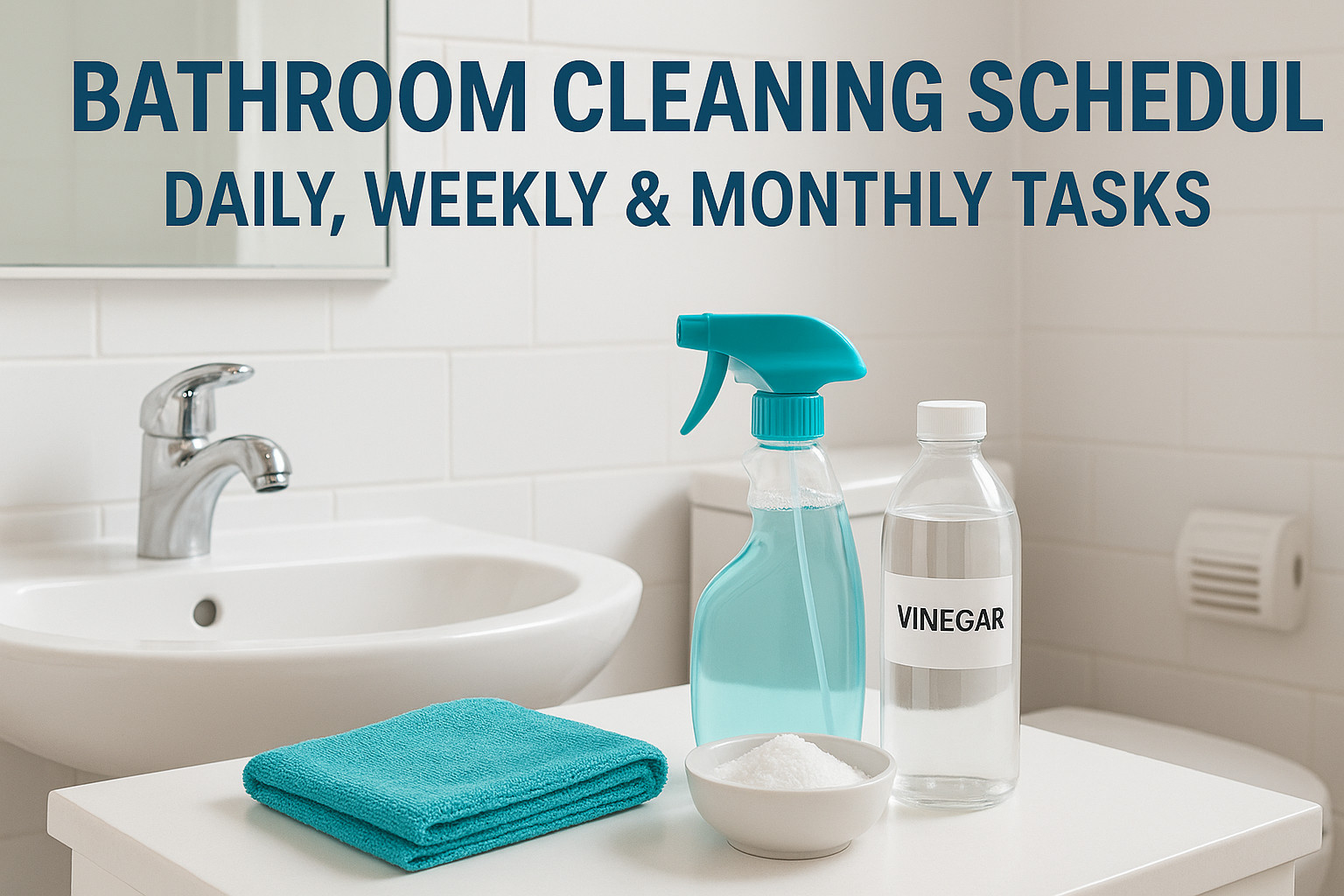
Bathroom Cleaning Schedule: Daily, Weekly & Monthly Tasks
A clean bathroom doesn’t happen by accident, it happens with a plan. Without a structured bathroom cleaning schedule, soap scum builds up on glass, grime settles into grout lines, and that fresh feeling disappears faster than you’d expect. The good news? Keeping your bathroom spotless doesn’t require hours of scrubbing every day. It just requires the right tasks at the right frequency. At AlphaLux Cleaning, we maintain bathrooms across New York homes and businesses on a daily basis, so we know exactly which tasks matter most and how often they actually need to be done. We built this guide from the routines our own cleaning professionals follow, practical steps that prevent buildup and keep every surface hygienic between deep cleans. Below, you’ll find a clear breakdown of daily, weekly, and monthly bathroom cleaning tasks you can start using right away. Whether you handle it yourself or bring in professional help, this schedule gives you a reliable framework to keep your bathroom fresh, sanitary, and consistently maintained. What a realistic bathroom schedule looks like Most people either clean their bathroom too infrequently or try to tackle everything in one long, exhausting session. A realistic bathroom cleaning schedule splits the work across three distinct time frames: daily, weekly, and monthly. Each tier handles specific tasks based on how quickly dirt, bacteria, and moisture actually accumulate on different surfaces in your space. Breaking cleaning into small, frequent tasks prevents the heavy scrubbing sessions that most people put off for weeks at a time. The three-tier framework Think of your bathroom in layers. Daily tasks handle the surfaces you touch and use every single day, like faucets, countertops, and the toilet seat. These take under five minutes and stop bacteria from spreading before it has a chance to settle into porous surfaces. Weekly tasks go a level deeper, covering the toilet bowl, mirrors, sink basin, and floor, typically taking 20 to 30 minutes when you stay current with your daily resets. Skipping the daily work adds significant time to your weekly session because buildup compounds fast. Here’s a quick overview of how the three tiers break down: Frequency Time Required Focus Areas Daily 5 minutes Sink, toilet seat, countertop, mirror Weekly 20-30 minutes Toilet bowl, floor, shower walls, fixtures Monthly 45-60 minutes Grout, showerhead, vents, cabinets Why monthly tasks matter Monthly and seasonal tasks handle the buildup that weekly cleaning consistently misses: grout lines, showerhead mineral deposits, cabinet interiors, and exhaust fan vents. Skipping them for too long doesn’t cause immediate visible problems, but after three or four months, you’ll find stubborn staining and persistent odors that require far more time and product to clear. Staying consistent across all three tiers keeps your bathroom in a state that’s easy to maintain rather than one that needs full restoration. Daily 5-minute resets Your daily reset is the foundation of any effective bathroom cleaning schedule. Five minutes each day prevents the soap scum, water spots, and bacteria that make weekly cleaning so much harder. You don’t need a full kit, just a microfiber cloth, a disinfecting spray, and a toilet wand stored within arm’s reach of the bathroom at all times. The daily task checklist Running through the same sequence every day builds the habit fast. Start at the sink and countertop, wipe down the faucet handles and basin with a disinfecting spray, and clear any products left out. Move to the toilet seat and handle, which harbor the most bacteria from daily use, and wipe both surfaces thoroughly. Finish by giving the mirror a quick wipe and straightening anything on the counter. Keeping your supplies visible and within reach is the single biggest factor in whether you actually follow through on your daily routine. Here’s the exact five-minute sequence to follow: Spray and wipe the sink basin and faucet handles Wipe down the toilet seat, lid, and flush handle Spot-clean the mirror with a dry microfiber cloth Clear the counter and straighten toiletries Hang towels straight and swap out any damp ones Weekly 20 to 30 minute clean Your weekly session is where the real cleaning happens. While your daily resets prevent surface bacteria from spreading, they don’t reach the toilet bowl, shower walls, or floor grout that collect buildup over seven days. Staying consistent with your daily routine means your weekly clean genuinely takes 20 to 30 minutes rather than an hour of heavy scrubbing. The weekly task checklist This is the core of your bathroom cleaning schedule for the week. Start with the toilet bowl, apply a bowl cleaner, let it sit for a few minutes, then scrub and flush. Move to the shower or tub, spray the walls and floor with a cleaning solution, scrub the tiles and fixtures, then rinse thoroughly. Wipe the sink basin, clean the mirror fully, and mop or scrub the floor from corner to corner. Cleaning from top to bottom every session prevents you from re-contaminating surfaces you’ve already cleaned. Follow this sequence each week: Apply toilet bowl cleaner and let it sit before scrubbing Scrub and rinse the shower or tub walls and floor Clean the sink basin and faucet thoroughly Wipe the full mirror, not just visible spots Mop or scrub the bathroom floor Monthly and seasonal deep-clean tasks Monthly tasks handle the surfaces your daily and weekly routines can’t fully reach. These are the areas where mineral deposits, mold spores, and dust accumulate slowly enough that you won’t notice until the buildup becomes a real problem. Scheduling these tasks into your bathroom cleaning schedule once a month keeps them manageable rather than turning into a major restoration project. What to tackle each month Your monthly session focuses on grout lines, the showerhead, and cabinet interiors. Grout absorbs moisture and product residue weekly, making it a prime spot for mold growth. Scrub it with a stiff brush and a baking soda paste, working in small sections. Soak your showerhead in white vinegar for 30 minutes to dissolve mineral buildup that quietly reduces water pressure