
Before you hire someone to clean your windows, or before you grab a squeegee and attempt it yourself, you need to know what the job should actually cost. Residential window cleaning prices vary based on a handful of factors, from the number of windows in your home to their size, accessibility, and condition. Without a clear picture of these costs, it’s easy to overpay for a basic job or underestimate what a thorough cleaning really involves.
At AlphaLux Cleaning, we handle window cleaning as part of our professional cleaning services across New York State, so we see these pricing questions come up constantly. Homeowners want straight answers about what they’ll spend, and business owners exploring the trade want to know how to price competitively. Both deserve real numbers instead of vague estimates.
This guide breaks down residential window cleaning costs per window, per pane, and by home size. You’ll also learn what drives prices up or down, like second-story windows, hard water stains, or interior-versus-exterior cleaning, so you can budget with confidence and recognize a fair quote when you see one.
What affects residential window cleaning prices
Residential window cleaning prices don’t follow a single flat rate. Most professional cleaners factor in several variables before giving you a quote, and understanding those variables helps you spot the difference between a fair price and one that’s padded with unnecessary charges. The main drivers are how many windows you have, what condition they’re in, and how difficult they are to reach safely.
Number of windows and panes
The single biggest factor in your final cost is how many windows your home has. Most cleaners charge per window or per pane, so a 3-bedroom ranch with 15 windows will cost significantly less than a 5-bedroom colonial with 30. A standard window typically means a single double-hung unit counted as two panes, one interior and one exterior. French windows with divided glass or bay windows count as multiple panes each, which pushes the total up fast.
Here’s a typical per-window price range you can use as a baseline:
| Window Type | Average Price Per Unit |
|---|---|
| Standard window (both sides) | $8 – $15 |
| Large or picture window | $15 – $25 |
| French or divided-light window | $20 – $40 |
| Skylight | $25 – $50 |
Window size, type, and condition
Larger windows take more time and product, so cleaners charge more for them. A standard double-hung window is quick to clean. A floor-to-ceiling picture window or a wide bay window requires more labor and more squeegee passes. Beyond size, the condition of your windows matters just as much. Windows coated in hard water stains, paint overspray, or oxidation require specialized treatments that add real cost to the job.
If your windows haven’t been cleaned in two or more years, expect a higher quote for the first visit. After that initial deep clean, routine maintenance visits are significantly cheaper because the buildup never gets a chance to accumulate again.
A window that looks clean from the inside can still carry significant mineral deposits on the exterior, which require additional product and labor time to remove properly.
Access difficulty and home height
[Ground-floor windows](https://alphaluxcleaning.com/best-way-to-clean-outside-windows/) are the cheapest to clean because they’re safe and quick to reach. The moment a cleaner needs an extension ladder, the price goes up. Second-story windows typically add $2 to $5 per window, and three-story access can double the per-window rate due to the equipment and safety protocols involved.
Your home’s physical layout matters too. Steep roof lines, narrow side yards, landscaping close to the house, and restricted entry points all slow a crew down and get factored into the final quote.
Step 1. Pick a pricing model that fits the job
Before you can calculate residential window cleaning prices for your home or set rates for a job, you need to know which pricing model applies. Most professional cleaners use one of three approaches: per window, per pane, or flat rate by home size. Each model works better in different situations, and picking the right one keeps your quote accurate instead of inflated or undercut.
Per-window pricing
Per-window pricing is the most common model for standard residential jobs. You charge or pay one rate for each window unit, regardless of how many panes it contains. This works well for homes with mostly uniform, double-hung windows where the job moves at a predictable pace.
Here are typical per-window rates broken down by service scope:
| Service Scope | Price Per Window |
|---|---|
| Exterior only | $4 – $8 |
| Interior only | $4 – $8 |
| Both sides | $8 – $15 |
| Both sides + screen cleaning | $10 – $18 |
Per-window pricing breaks down quickly on homes with large picture windows or French-style divided lights, where each unit takes two to three times longer to clean than a standard double-hung.
Per-pane or flat-rate pricing
Per-pane pricing gives you more granular control on complex jobs. Instead of counting window units, you count every individual glass surface, including divided lights, sidelights, and transoms separately. This model protects you against underpricing jobs with irregular windows.
Flat-rate pricing by home square footage or bedroom count works best for recurring service contracts where the scope stays consistent visit to visit. A 2,000-square-foot home might carry a flat rate of $150 to $200 for a full exterior clean, which simplifies billing and makes it easier for homeowners to budget predictably across the year.
Step 2. Count windows and note access issues
An accurate window count is the foundation of any honest quote. Before you call a cleaning company or put together your own estimate, walk through your home and log every window, including the ones in closets, garages, and basements that people routinely forget. Skipping this step leads to surprise charges on the day of service, and that erodes trust fast.
How to count your windows accurately
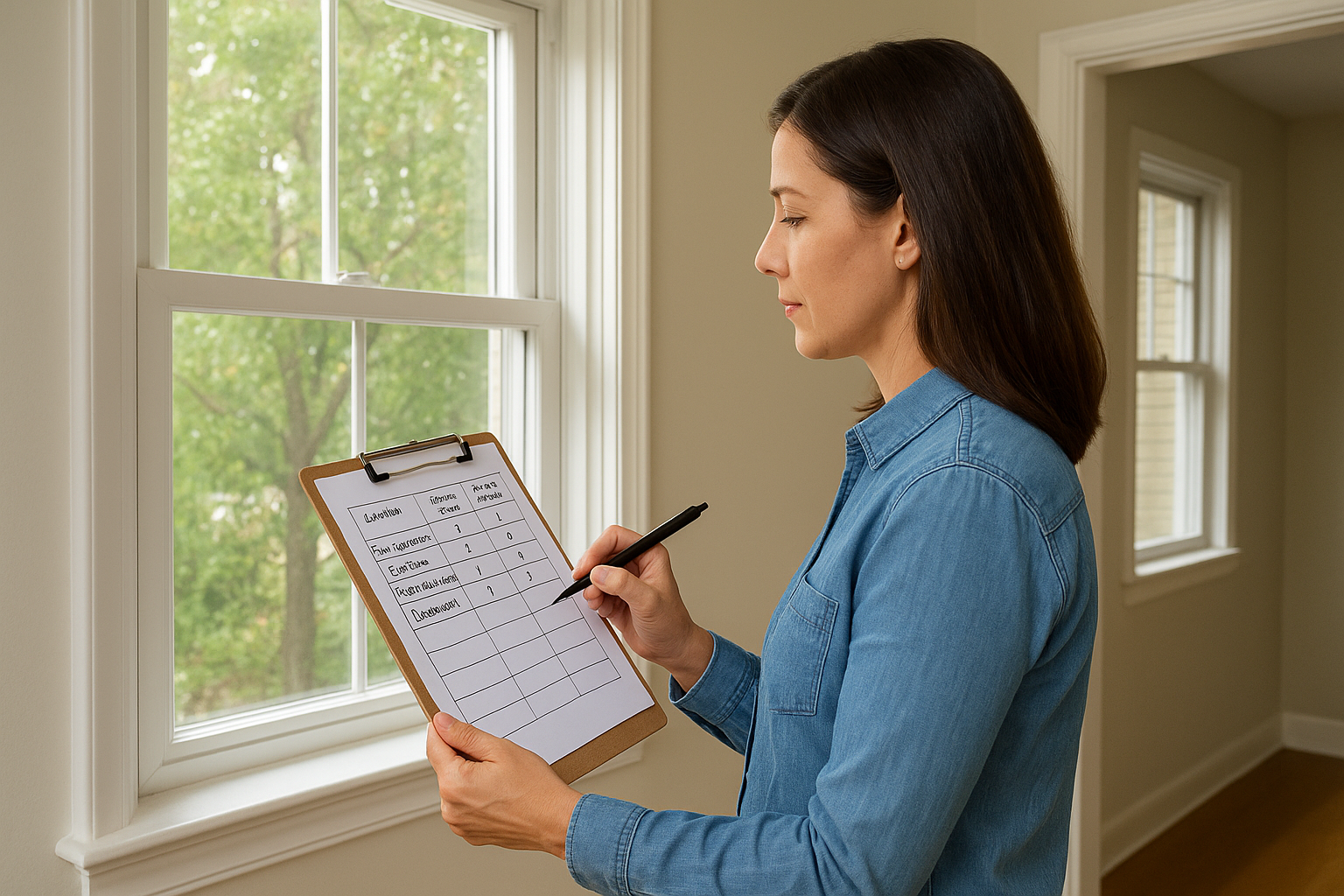
Start on the ground floor and move room by room in one direction so you don’t skip or double-count. Write down each window unit, then note whether it has divided lights, a sidelight panel, or a transom above the frame, because those each count separately under pane-based pricing. Use a simple log like this:
| Location | Window Units | Panes Per Unit | Total Panes | Notes |
|---|---|---|---|---|
| Living room | 2 | 2 | 4 | Bay window, counts as 3 units |
| Kitchen | 1 | 2 | 2 | Standard double-hung |
| Master bedroom | 2 | 2 | 4 | Second floor |
| Basement | 2 | 1 | 2 | Exterior only |
Once you fill in this table, you have a clear, documented count that makes comparing residential window cleaning prices between providers straightforward and fair.
Homes built before 1990 often have non-standard window sizes and older storm windows that require separate removal and cleaning, which adds both time and cost to any quote.
Flagging access problems before the job starts
After you finish counting, go back and mark every window above the first floor or blocked by landscaping, fencing, or a deck structure. A cleaner needs to know about a 20-foot oak tree pressing against your second-story window before they show up, not during the job. Identify which windows need ladder access and which sit above sloped ground, since uneven terrain requires additional stabilization equipment and always adds to the final price.
Step 3. Price add-ons and tough conditions
Once you have your base window count and access notes, you need to account for add-on services and job conditions that push residential window cleaning prices above the standard rate. These aren’t hidden fees when a cleaner explains them upfront, but they will surprise you if you only budgeted for a basic clean. Knowing them in advance puts you in control of the final number.
Common add-ons that raise the total
Screen cleaning, track cleaning, and hard water stain removal are the three add-ons that appear most often on residential quotes. Each one is priced separately because each adds measurable labor time to the job. Use this table to factor them into your budget:
| Add-On Service | Typical Price Range |
|---|---|
| Screen removal and cleaning | $2 – $5 per screen |
| Window track and sill cleaning | $1 – $3 per window |
| Hard water stain removal | $15 – $30 per window |
| Paint or construction overspray removal | $20 – $50 per window |
| Storm window removal and cleaning | $5 – $10 per unit |
Hard water stain removal often costs more than the base window cleaning itself, so if your windows show white mineral deposits, get a separate line item for it in your quote.
Tough conditions and how they adjust pricing
Windows that haven’t been cleaned in several years or sit near saltwater, heavy traffic, or construction zones require more product, more passes, and more time. You should expect a first-time cleaning surcharge of 15 to 25 percent above the standard rate for heavily soiled windows, with the price dropping back to the base rate on follow-up visits once the buildup is cleared. Ask your cleaner to define "heavily soiled" in their quote so there’s no disagreement on the day of service.
Step 4. Build a clear quote homeowners accept
A quote that wins the job is one that leaves nothing ambiguous. When homeowners see a single number with no breakdown, they hesitate or push back on price. When they see exactly what they’re paying for, trust goes up and objections go down. This step shows you how to structure a written quote that covers your costs, reflects accurate residential window cleaning prices, and makes it easy for the homeowner to say yes.
Structure your quote line by line
Break every charge into its own line so the homeowner can follow the logic. Group base cleaning, add-ons, and access surcharges separately rather than rolling them into one total. Here is a simple quote template you can adapt:
| Line Item | Details | Price |
|---|---|---|
| Exterior window cleaning | 18 standard windows, ground floor | $126.00 |
| Interior window cleaning | 18 standard windows | $126.00 |
| Second-floor access surcharge | 8 windows, ladder required | $32.00 |
| Screen cleaning | 16 screens | $48.00 |
| Hard water stain removal | 3 windows, west-facing | $60.00 |
| Total | $392.00 |
A quote with labeled line items closes faster than a lump-sum number because the homeowner can see exactly where their money goes.
Set expectations around timing and follow-up
After you send the quote, include an estimated service duration so the homeowner knows how long your crew will be on the property. A job with 18 windows, screens, and stain removal typically runs three to four hours for a two-person team, and stating that upfront prevents scheduling friction.
Follow up within 48 hours if you haven’t received a response. A short message confirming you’re available on their preferred date is often all it takes to convert a quote into a confirmed booking.
A quick way to sanity-check your quote
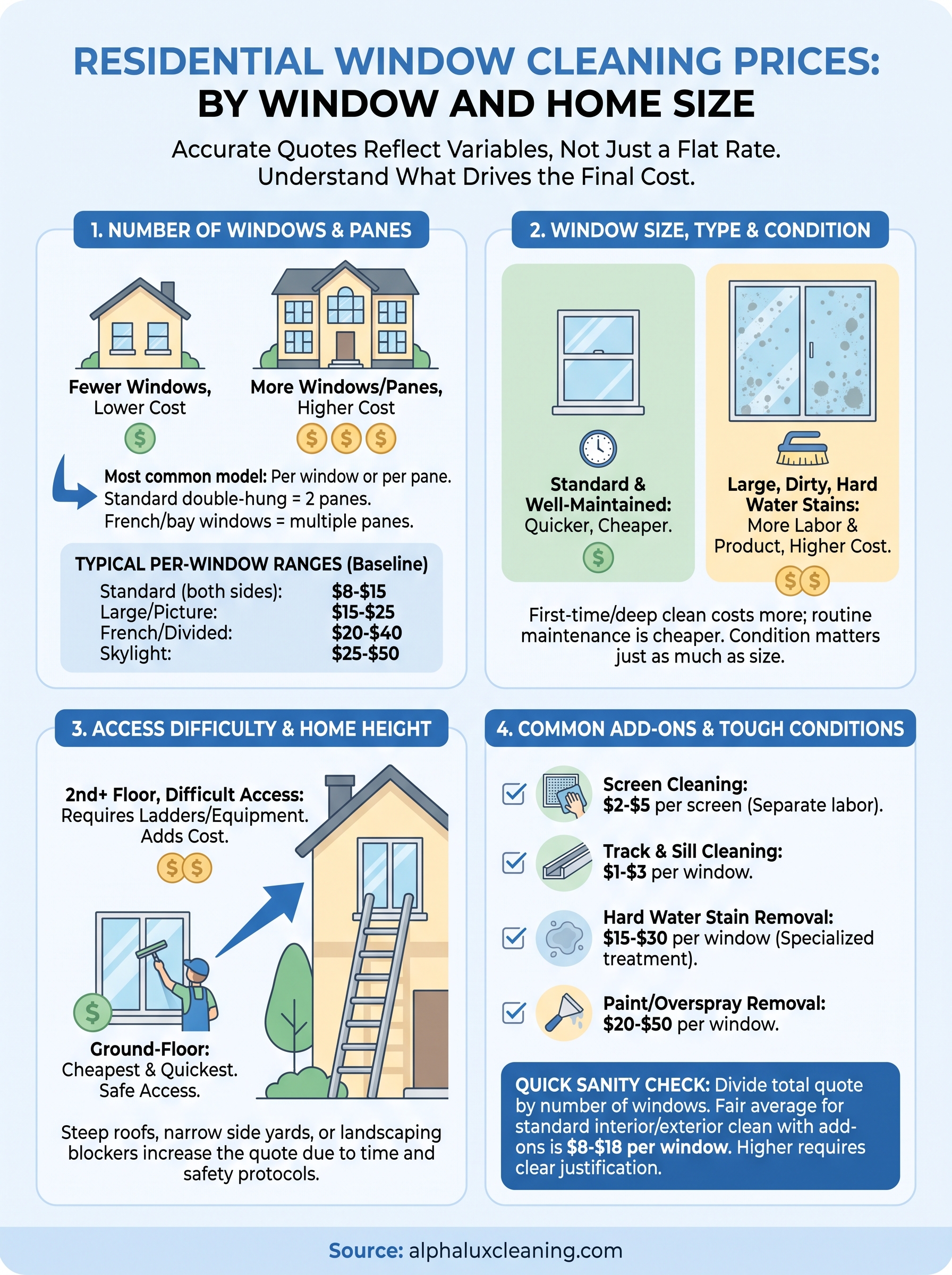
Before you approve any quote, run a fast cross-check using your total price and your window count. Divide the final number by the number of windows, and see where that per-window average lands. For a standard residential job with interior and exterior cleaning, a fair per-window rate sits between $8 and $18 after add-ons like screens and track cleaning are included. If your average comes out above $25 per window without a documented reason like hard water stain removal or third-floor ladder access, ask the cleaner to walk you through the line items.
Tracking residential window cleaning prices this way takes less than a minute and catches inflated quotes before you commit. If you want a professional team that prices jobs transparently and shows up prepared, schedule a free estimate with AlphaLux Cleaning and get a detailed breakdown before any work begins.